


Scene 1
The Falcon of Yamamah and the East Wind
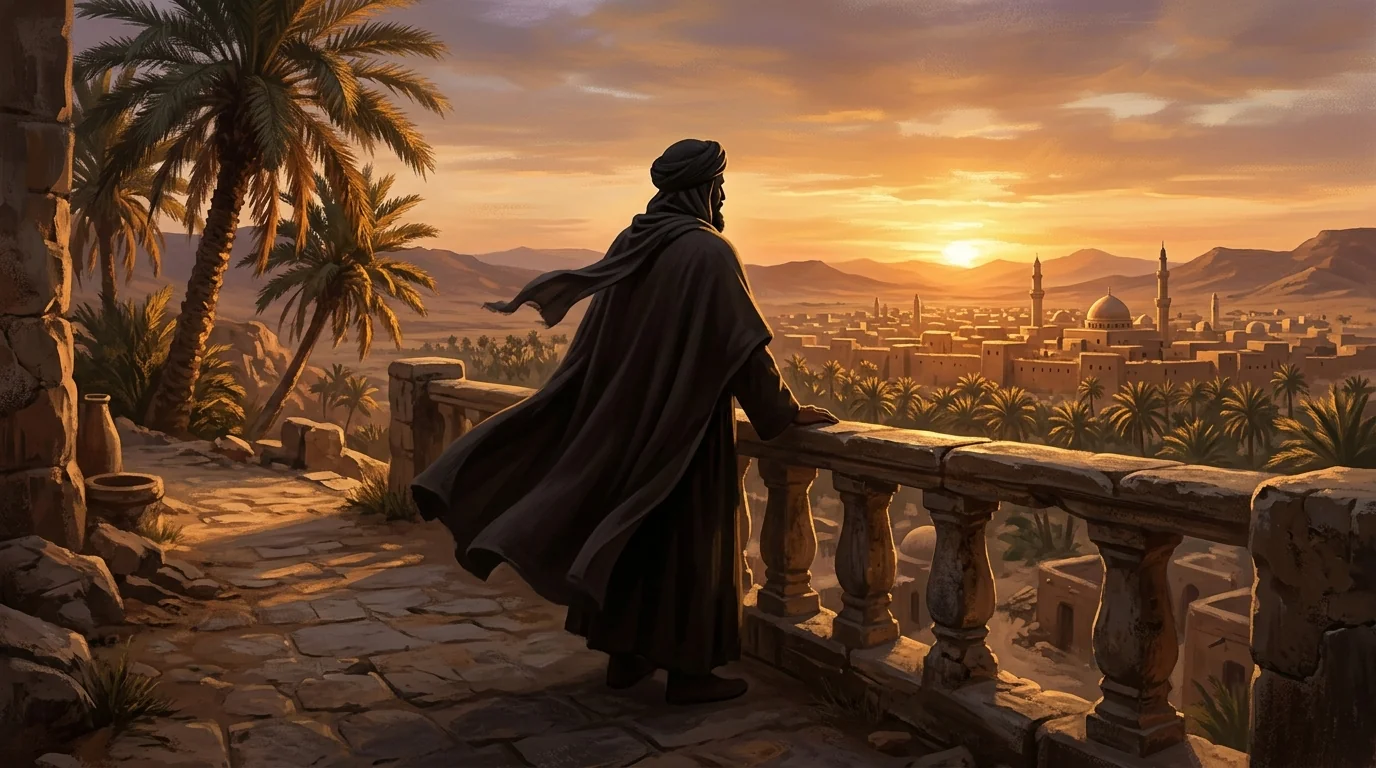
"Whenever the east wind blows, I find in it the scent of Zaid," said Omar ibn al-Khattab. The author hears in these words the child still living inside the giant, crying for his elder brother. He pictures the two boys racing in Mecca's pastures, Zaid slowing to let Omar win, though he would precede him to Islam and martyrdom.
Scene 2
True Brotherhood and the Race to Two Blessings
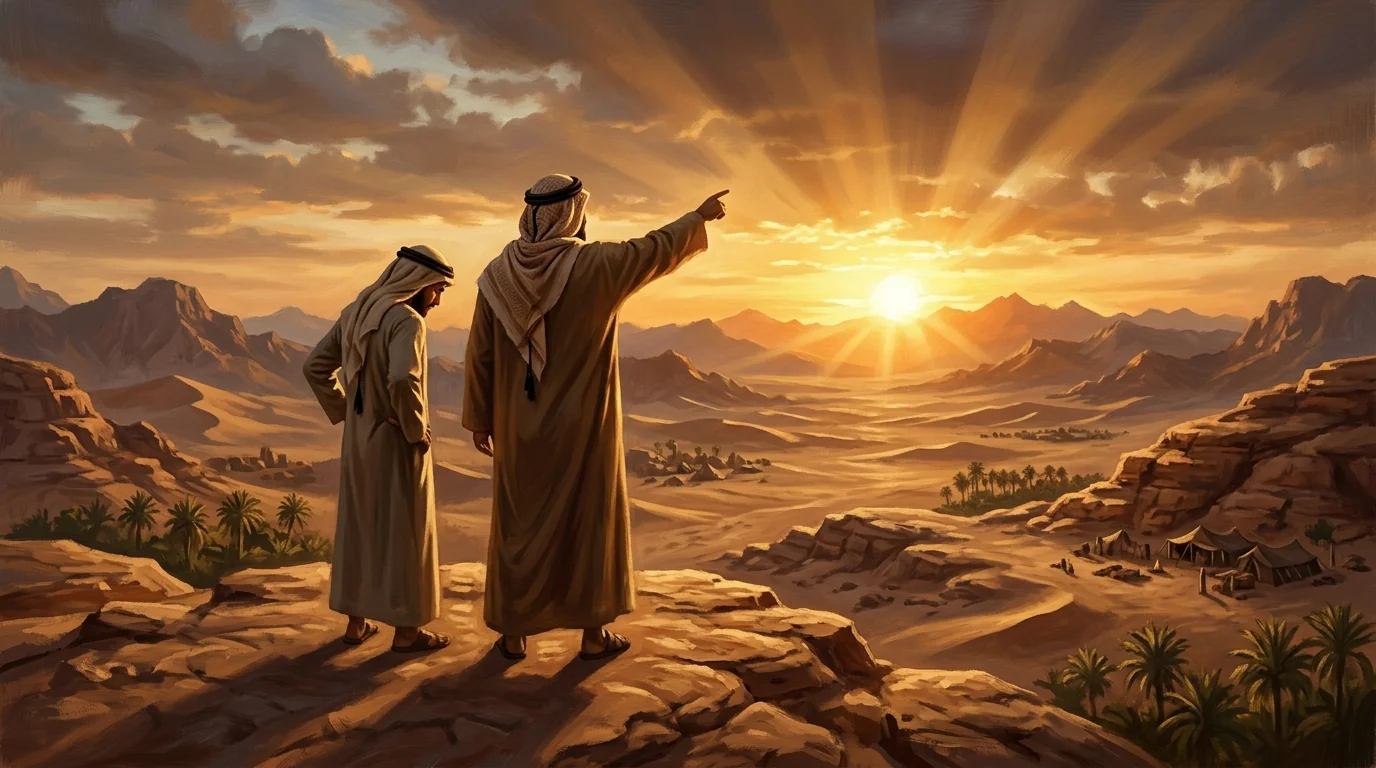
The author admits a history book should avoid emotion, but says this figure cannot be separated from it: Omar himself wished he could compose poetry to mourn him. At first he wondered at al-Faruq's weakness whenever Zaid was mentioned; reading his life, he understood. This is the self-sacrificing hero Zaid ibn al-Khattab.
Scene 3
Two Heroes Raised in Mecca
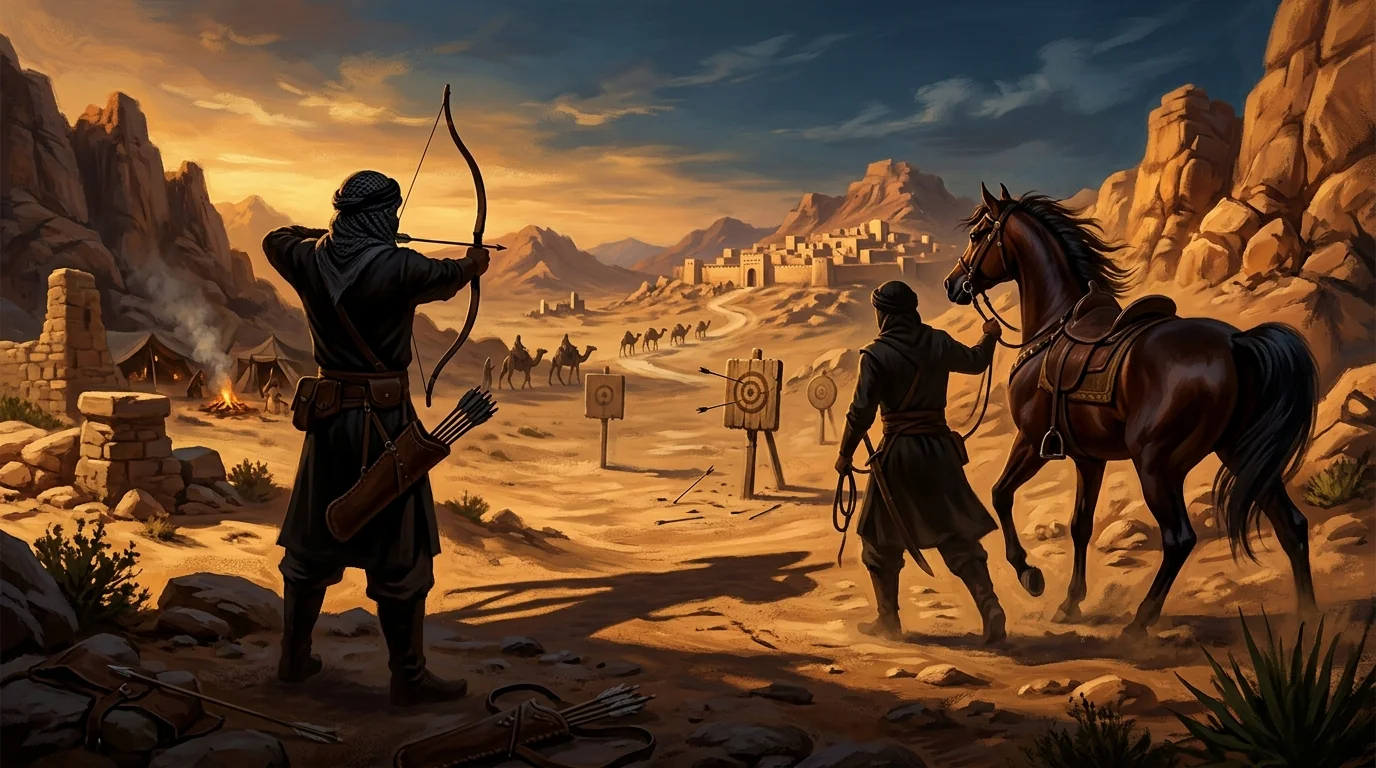
Zaid and Omar were raised in the house of al-Khattab ibn Nufayl with a tough Arab upbringing, and Zaid embraced Islam first. At Uhud, Omar saw his brother's armour fall and offered his own. Zaid smiled and said he wanted martyrdom as Omar did, so Omar threw the armour down and both fought unprotected.
Scene 4
The Apostasy Crisis and What Was Really at Stake
After the Prophet ﷺ died, many Arab tribes unaccustomed to unity apostatised: some claimed prophethood, some wanted fewer prayers, some refused zakat, and al-Siddiq sent army after army against them. Were these wars for zakat money, a financial tax, as some Orientalists "and their followers among the hypocrites" portray? The book answers that Islam stood at a crossroads: dropping one pillar would lead to bargaining away prayer, hajj, fasting and even the two testimonies. The economic factor never counted; most Companions died poor, and Orientalists stress it to depict Islam as purely materialistic.
Scene 5
Musaylimah's Arrogance and the Prophet's Reply
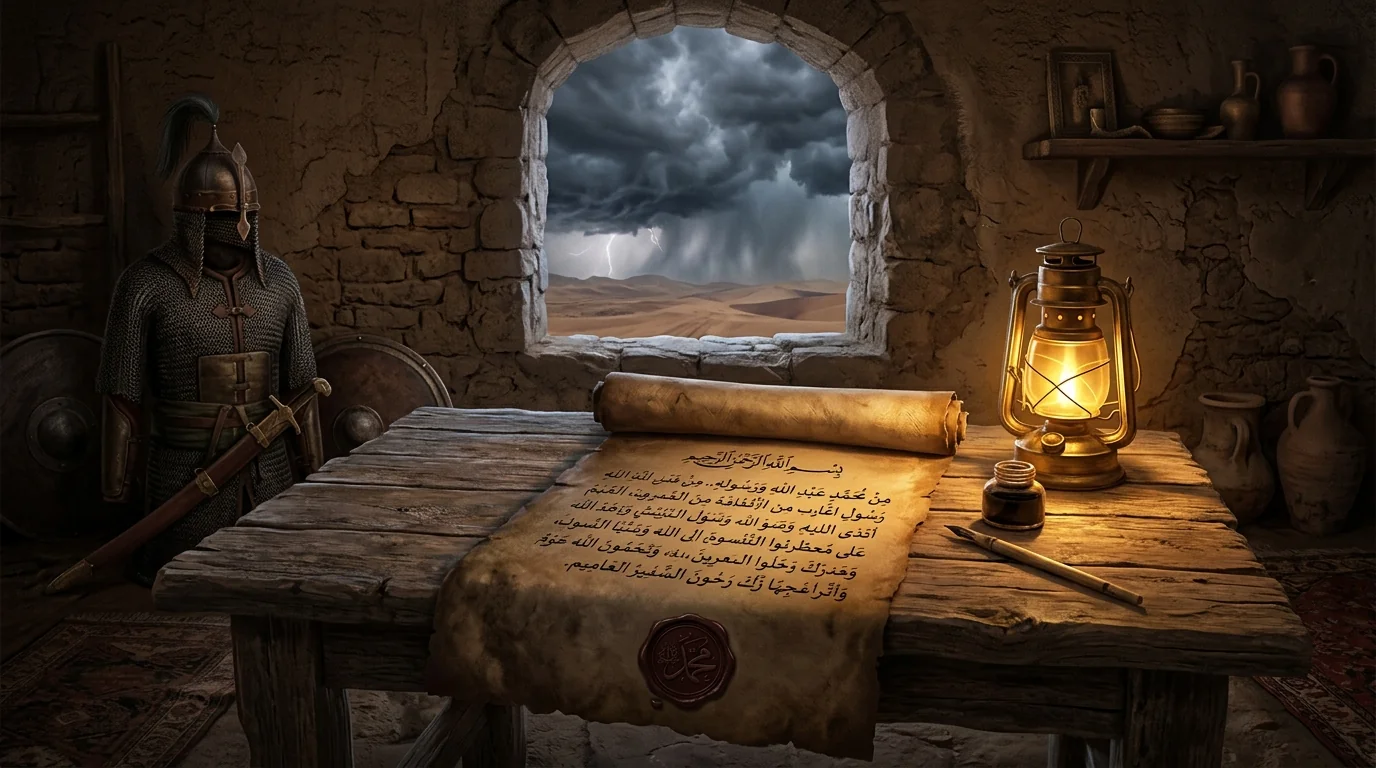
Mention of the apostates brings mention of "the enemy of Allah" Musaylimah the Liar, whose madness showed even before the Prophet's ﷺ death. "This lying idiot" wrote claiming to share in the matter and demanding half the earth; the Prophet ﷺ replied: "From Muhammad the Messenger of Allah to Musaylimah the Liar... the earth belongs to Allah; He bequeaths it to whom He wills of His servants." Most of Yamama did not believe Musaylimah until a dangerous figure appeared: "the criminal" al-Rajjal ibn Unfuwa.
Scene 6
Al-Rajjal's Betrayal and the March on Yamamah
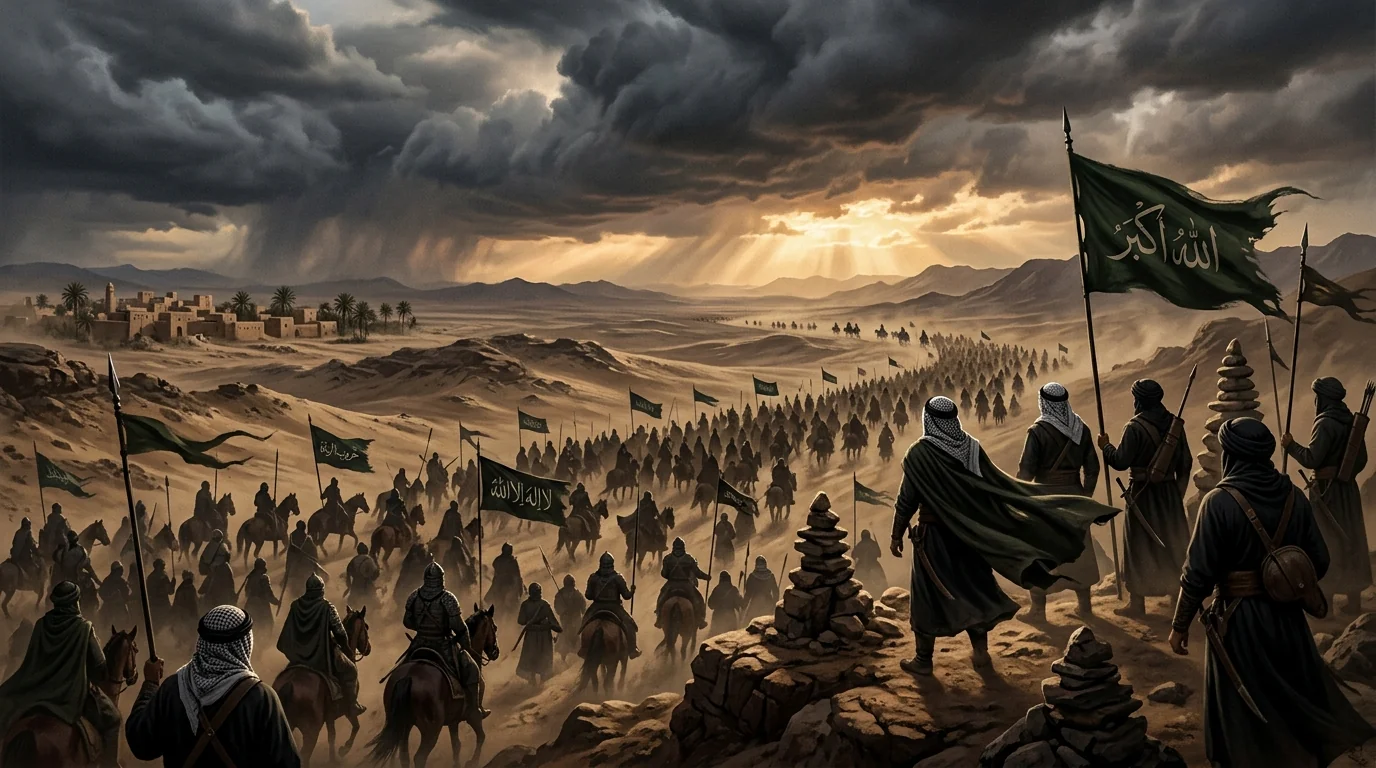
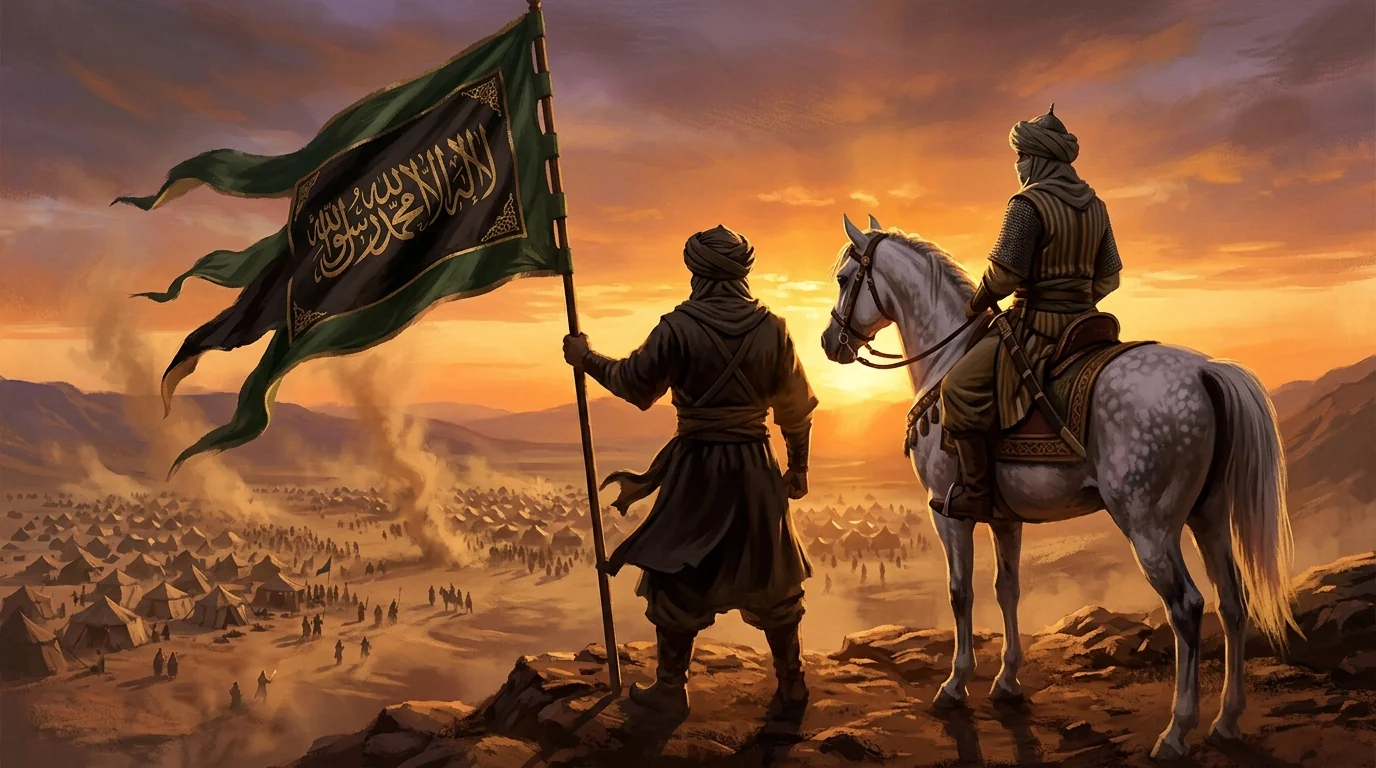
Al-Rajjal had pledged Islam to the Prophet ﷺ, and after his death persuaded Abu Bakr to send him as envoy to Yamama. There "his treacherous soul" sought a place in the Liar's state: he told the people he had heard the Prophet ﷺ say he shared the matter with Musaylimah. Most of Yamama apostatised because of "this criminal", and the remaining Muslims were killed, making him more dangerous than Musaylimah the Liar himself. Zayd ibn al-Khattab, burning to meet "this criminal impostor", declined command because he wanted martyrdom, and was chosen to carry the banner under Khalid ibn al-Walid.
Scene 7
The Battle of Yamamah and the Ansari's Valour
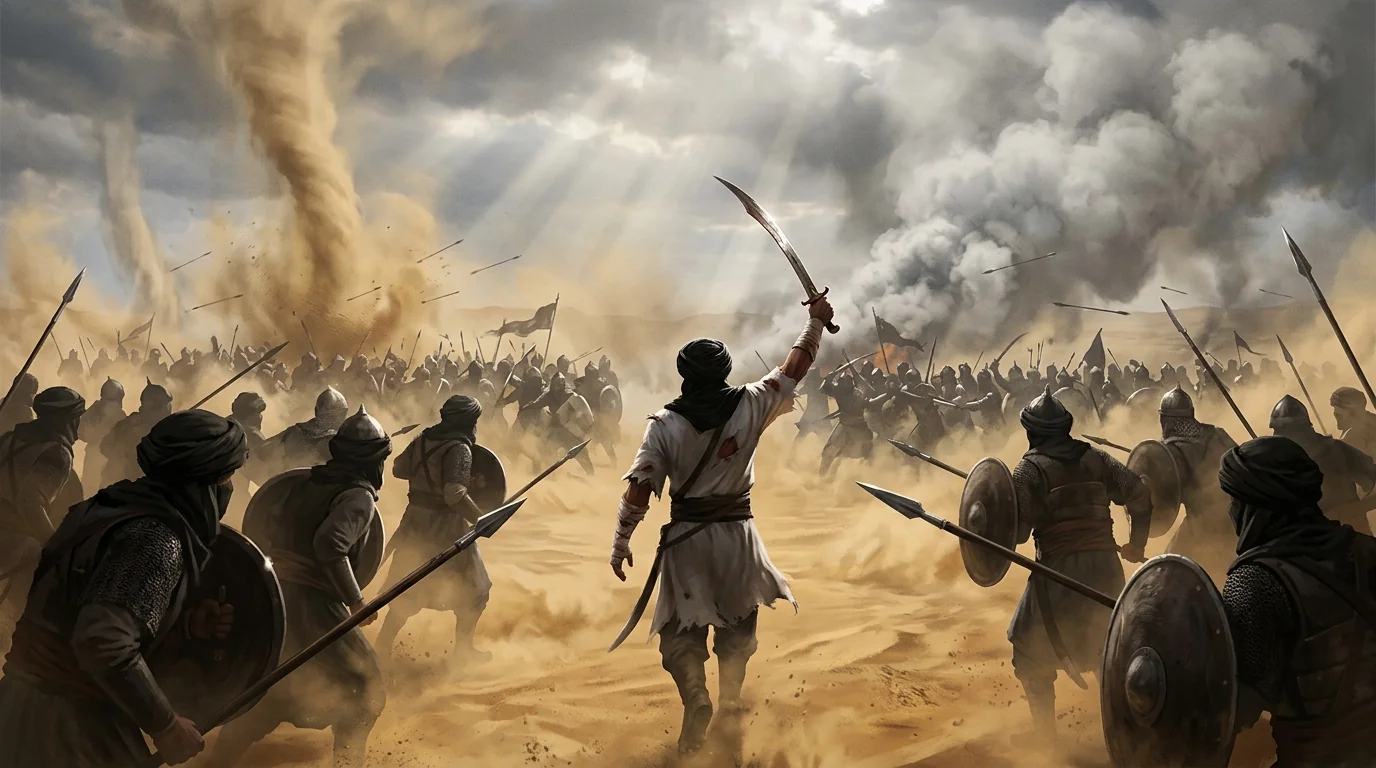
At Yamamah one hundred thousand apostates faced twenty-one thousand Muslims. The first wounded was Abu Aqil al-Ansari, struck by an arrow in the shoulder and carried unconscious by Abdullah ibn Omar to the tent. Hearing the call to the Ansar, he insisted on answering even if crawling, took his sword, fought on and was martyred.
Scene 8
The Falcon Strikes al-Rajjal and Attains Martyrdom
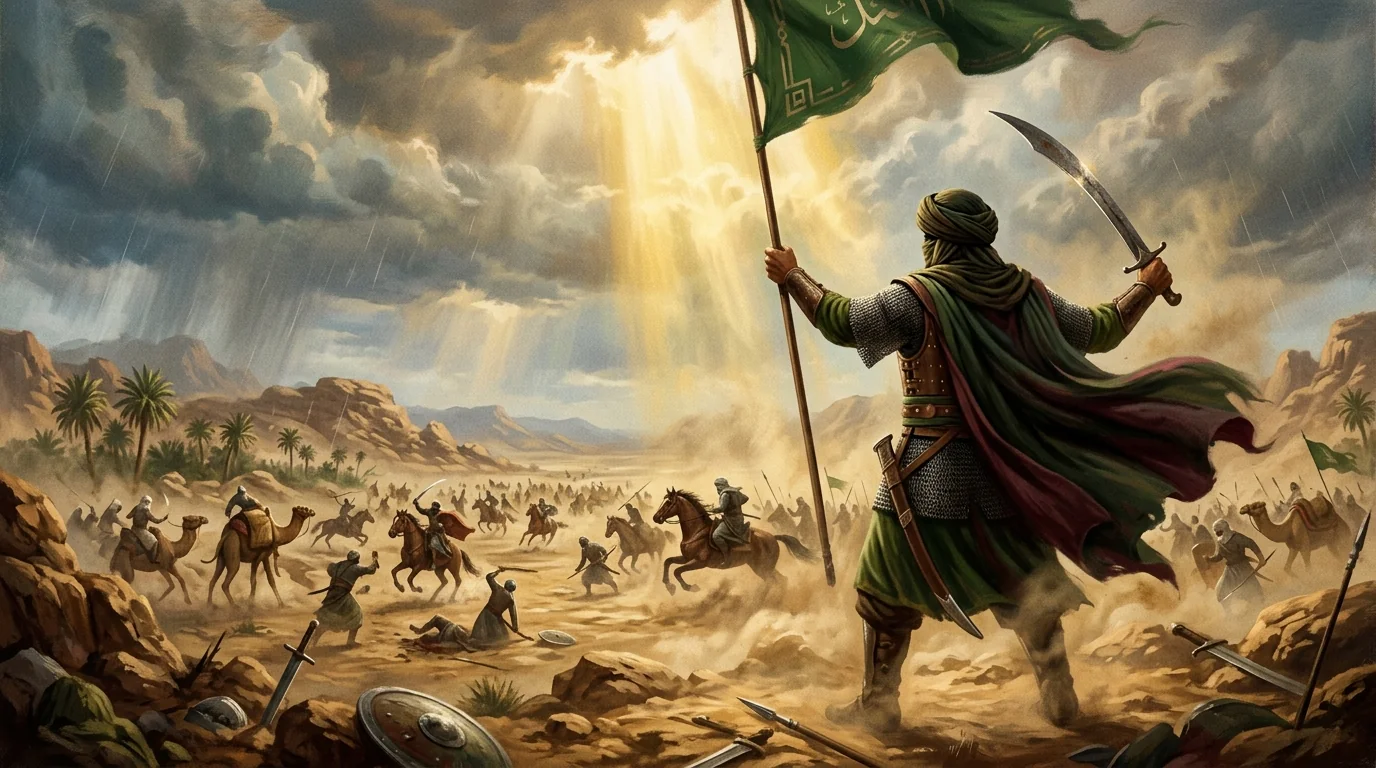
With the Muslims a hair's breadth from defeat, the standard-bearer Zayd ibn al-Khattab cried: "Bite down on your molars, strike your enemy and press on. By Allah, I will not speak until Allah defeats them or I meet Him." Silent, he searched like a falcon for "the greatest traitor" al-Rajjal ibn Unfuwa, smashed the skulls of his apostate guards, and reached the caliphate's most wanted man, "the filthy traitor", splitting his head in two with one blow. The battle turned; Zayd, longing for martyrdom, fought until a whole battalion of apostates tore his body apart without his uttering a sound.
Scene 9
Storming the Garden of Death
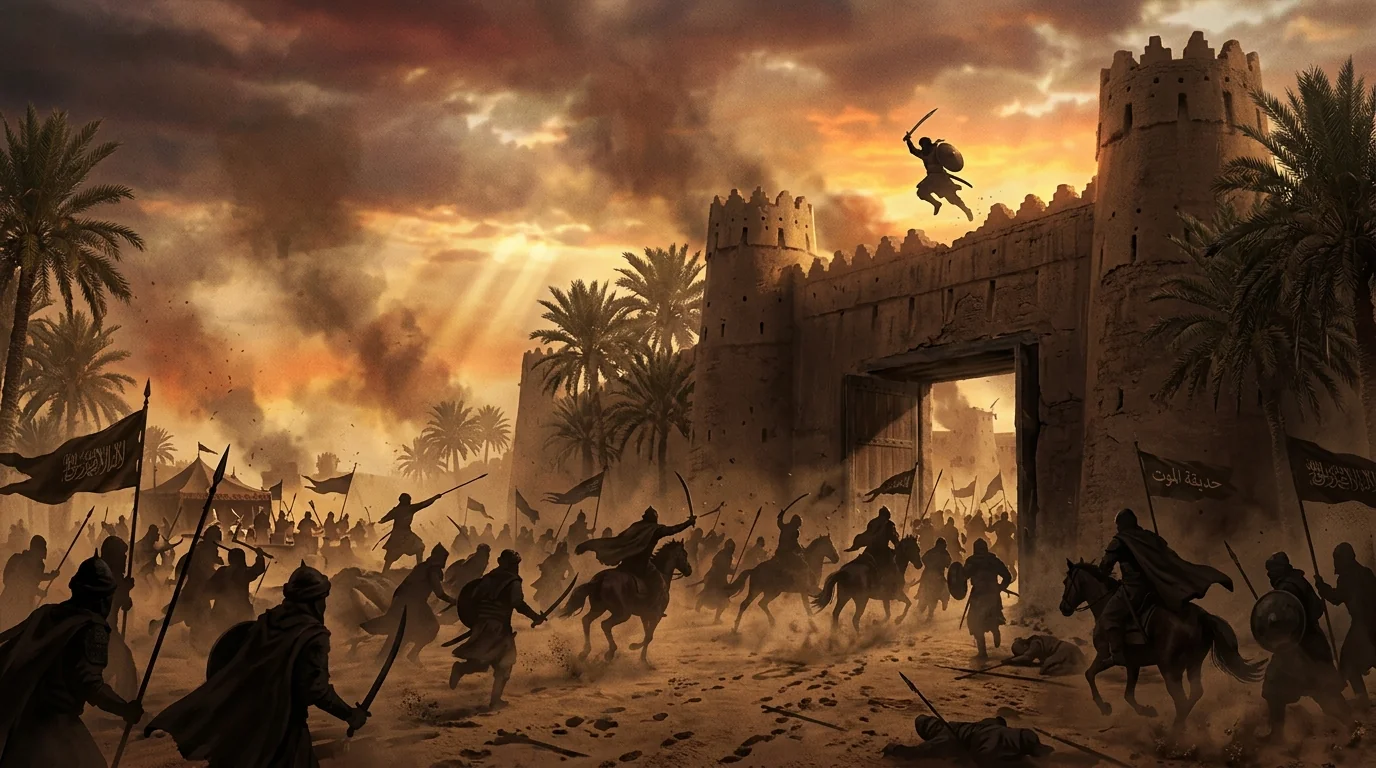
At the cry "Wa Muhammadah!" Allah cast terror into the heart of Musaylimah the Liar, who fled to his fortress, later called the "Garden of Death". The commando Companion al-Bara ibn Malik had himself thrown over the wall and, stabbed by dozens of apostates, crawled bleeding to open the gate, and the Muslims poured in killing "the enemies of Allah". Wahshi ibn Harb, wishing to atone for killing Hamzah ibn Abd al-Muttalib, pierced Musaylimah's chest with a spear, sending "the greatest liar of the earth's liars" to "the dustbin of history".

Scene 10
Al-Faruq's Tears and the Legacy of Monotheism
In Medina, Omar searched the returning ranks for his tall brother in vain and wept: Zaid had beaten him to both blessings, Islam and martyrdom. Later, people in Najd came to venerate Zaid's grave, circling it and making vows, until a new great figure arose from the Najd desert calling people back to God's oneness.
These are English scene notes. The full chapter text, as the author wrote it, is in the app.