


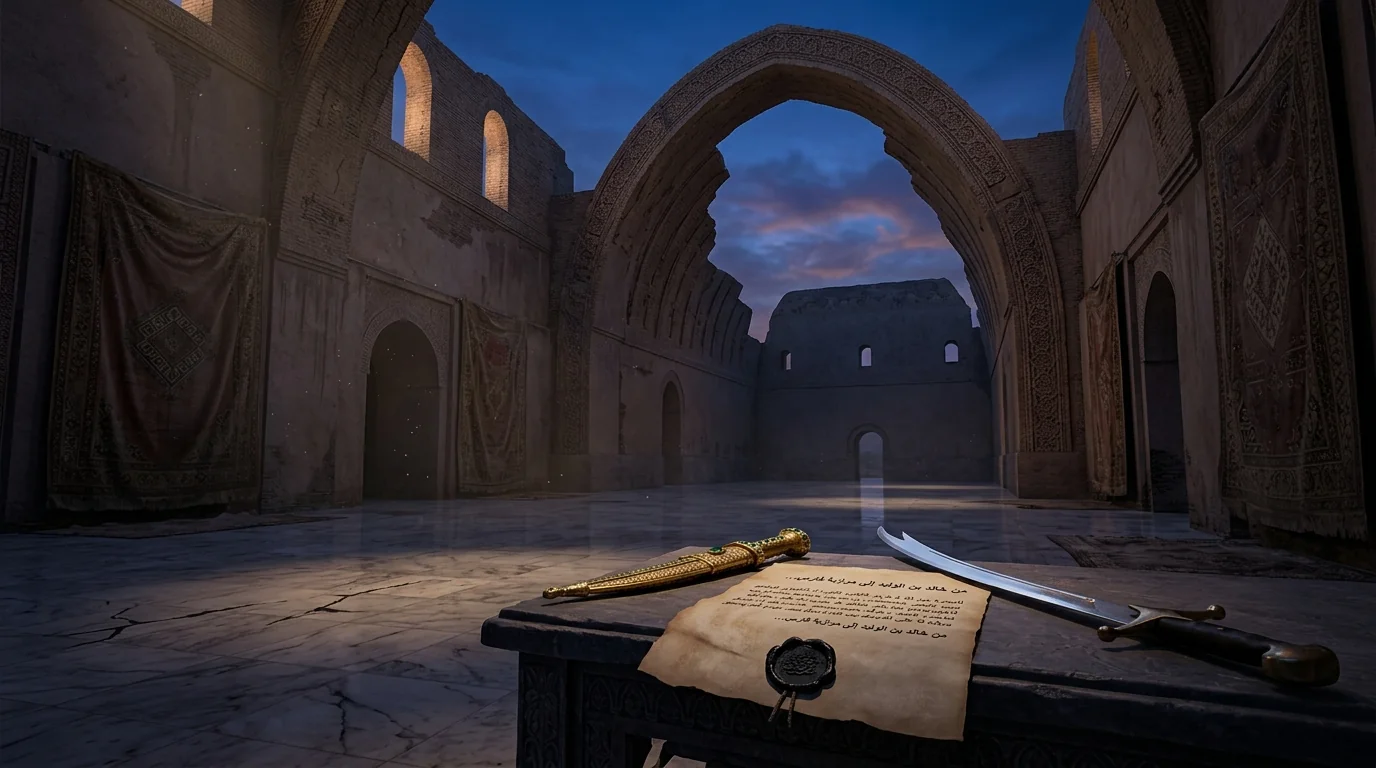
Scene 1
The Drawn Sword of God and the Letter to the Persian Governors
The chapter opens with Khalid ibn al-Walid's letter to the Persian governors, demanding tribute or facing men who love death as they love life. The author lists his commands against Persia, Byzantium and the apostates, and his battles at Yarmouk, Yamama, Dhat al-Salasil and Mu'tah, where three thousand faced two hundred thousand.
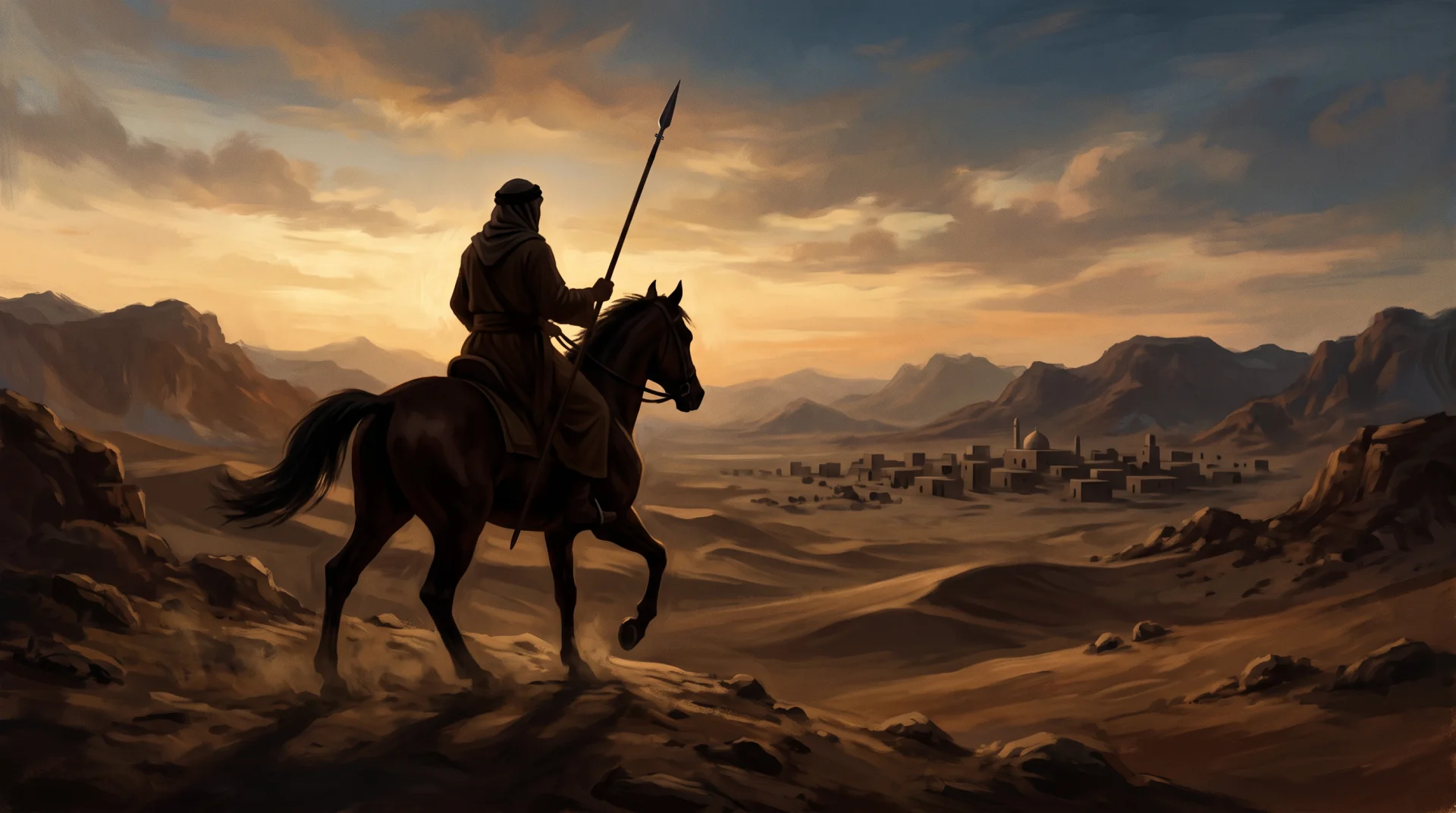
Scene 2
From Leading the Pagans at Uhud to a Sword of God
Before his heroics, the author recalls Khalid's pre-Islamic past to show how Islam turns "the greatest hater of Islam" into one of Allah's swords. He was the son of al-Walid ibn al-Mughira, the greatest man of Quraysh, yet trained himself in the barren desert; his clan Banu Makhzum handled Mecca's military affairs, so he led the polytheists to victory at Uhud and wanted to kill the Prophet ﷺ personally at Hudaybiyyah. After embracing Islam he took command at Mu'tah and, the book says, won with three thousand mujahideen against two hundred thousand Christian Romans and their Levantine Christian allies.
Scene 3
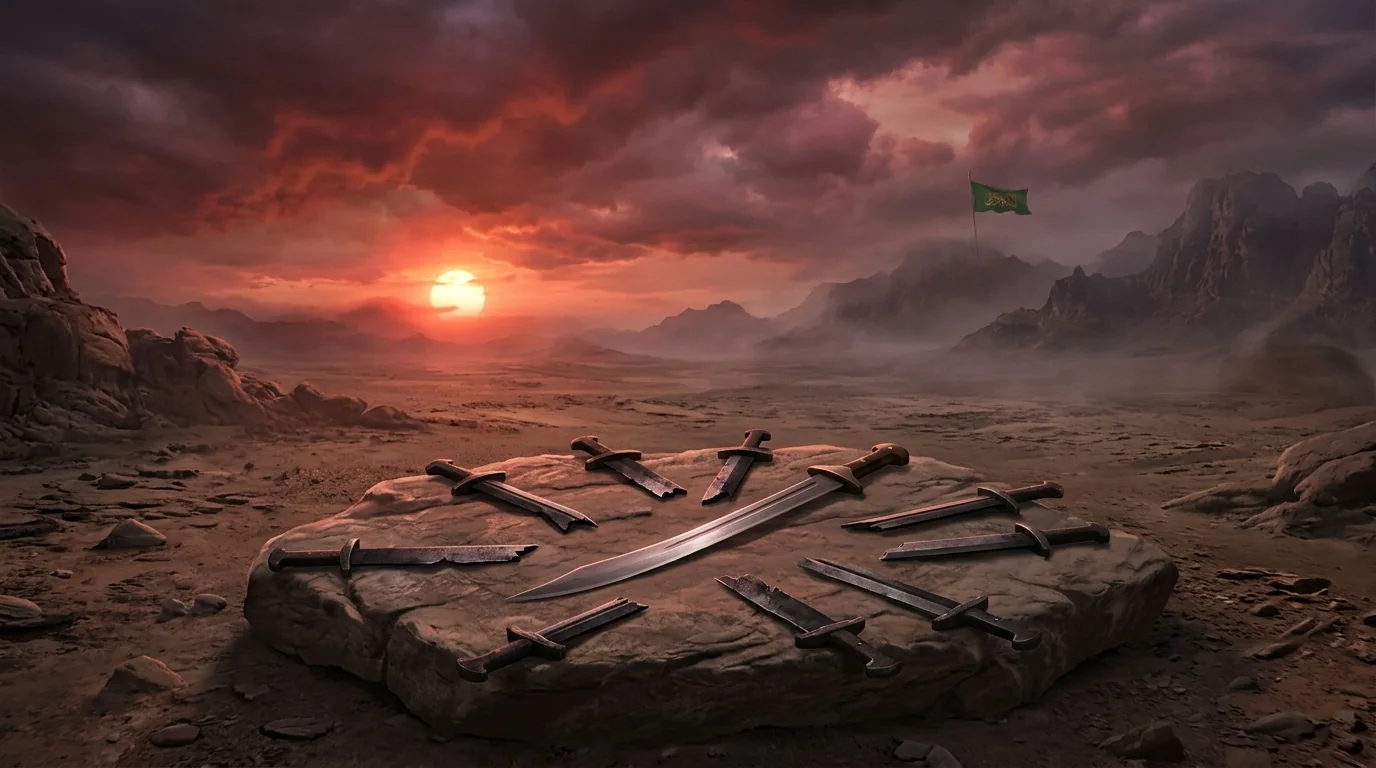
The Epic of Mu'tah and Nine Swords
To grasp the brilliance of Khalid's plan, the author takes readers to Mu'tah in southern Jordan, 130 km south of Amman. There two hundred thousand Romans and allied Levantine Christians surrounded a small Arab force outnumbered sixty-six to one. The Muslims fought until darkness fell, and then came zero hour for carrying out the plan.

Scene 4
Khalid's Plan and the Genius of the Desert
Khalid had horses raise dust all night, swapped his wings, vanguard and rear so the Romans saw new faces and banners, posted men on a hill to raise dust and shout takbir, then withdrew gradually into the desert. Fearing reinforcements and an ambush, the Romans dared not pursue. Twelve Muslims were martyred, and nine swords broke in Khalid's hands.
Scene 5
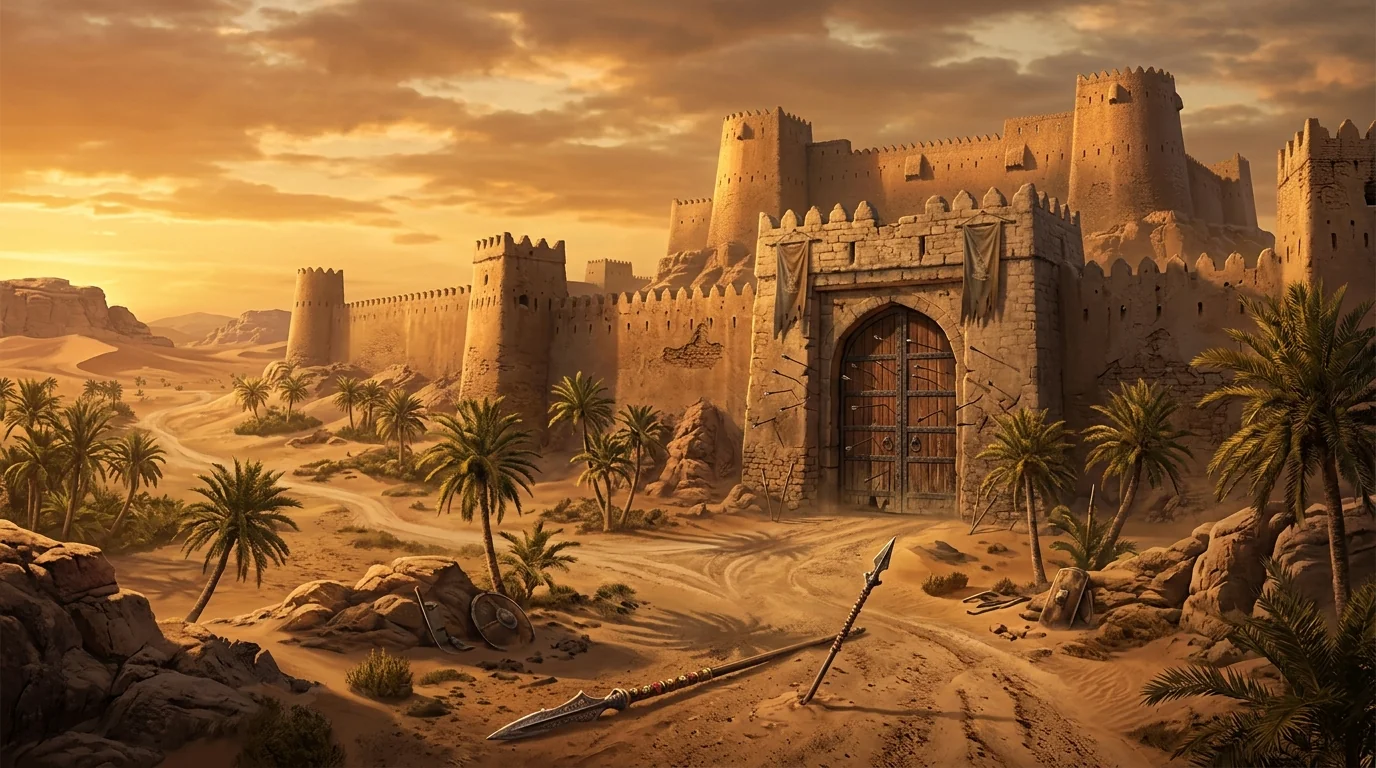
The Battle of Yamama and the Garden of Death
From Jordan to Najd, to al-Yamama, where Musaylimah the Liar claimed prophethood: the future of Islam would have been in danger had Allah not provided humanity with Abu Bakr al-Siddiq, who ordered the Islamic armies to unite at Yamama under Khalid ibn al-Walid, and the Muslims won under this great hero. The book promises the full story of this valiant battle and of the Garden of Death later, in the account of another of the hundred greats.

Scene 6
The Conquests of Iraq and the Crossing of the Syrian Desert
From Najd to Iraq and the Persian Empire: Khalid fought the Persians in 15 battles, all Muslim victories, the greatest being Dhat al-Salasil, in which "the Magian Persians" chained their soldiers so they would not flee in fear of the Arab mujahideen. In Iraq Khalid captured a Christian boy from a remote church, whom the Muslims freed; seeing Islam's tolerance and justice he converted and became a great commander. His name was Nusayr, father of Musa ibn Nusayr, one of the greatest Muslim commanders in history.
Scene 7
The Victory of Yarmouk and the Selflessness of Believers
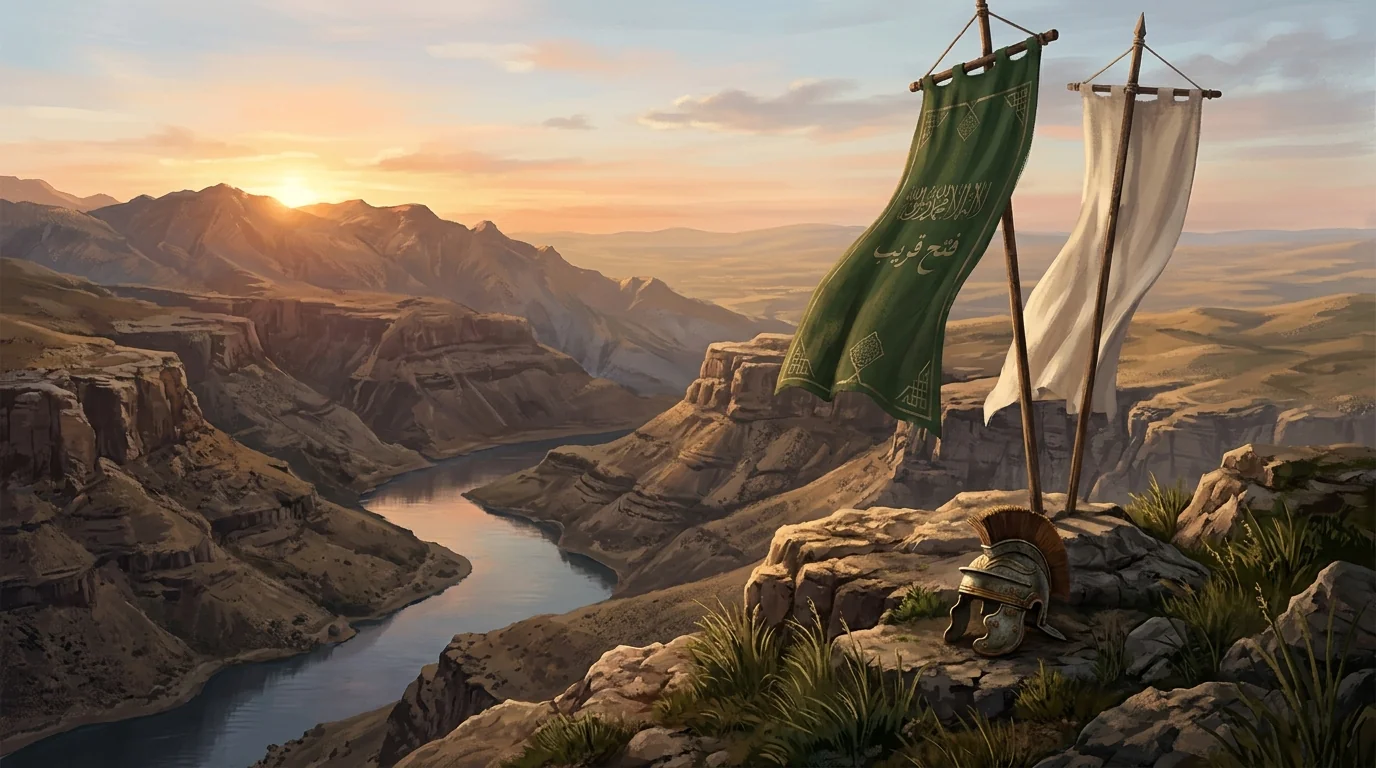
After Persia came Byzantium's turn. Abu Bakr decided to terrify "the Christian Romans" as he had terrified "the Magian Persians" with Khalid, declaring: "By Allah, I will make the Romans forget the whisperings of Satan with Khalid ibn al-Walid!" From Iraq Khalid crossed the barren Anbar desert with his army in a fantastic crossing. The author refers readers for Khalid's negotiations with the Roman commander Bahan and his feats at Yarmouk to islamstory.com of Dr Ragheb al-Sirjani, whose research he calls the basis of this entire book.

Scene 8
The War of Smears Against Khalid After His Death
The author says Khalid's battles still rage centuries after his death: Orientalists hurl accusations at random to distort the nation's history. The Persians never forgave what he did to them in a single year but found nothing, since he died before the strife that "the Persian Shia scholars" use to create myths for cursing the Prophet's ﷺ wives and Companions. So "the new Safavids" recently invented "a stupid story" claiming Umar, Khalid and Sa'd ibn Abi Waqqas stormed Ali's house and beat Fatimah, making her miscarry and breaking her rib: the "fabricated" tale the Shia call the "Grievance of al-Zahra".
Scene 9
The Brotherhood of the Companions and the Refuting of Falsehoods
First, Shia books have Ali hiding at home while three strange men beat his wife; and Arabs do not let their women open doors to strangers, so the narrator used by "those liars", the author says, is no Arab and thinks Arab women are like their own. Second, the three accused are the very men who wiped the "Magian" Sasanian Persian empire off the earth: the forgers are "the Magian Persians and their Safavid descendants". He marvels at Muslims who swallow slanders by "the degenerate and the Orientalist agents" that reduce Khalid to a man motivated only by sex.
Scene 10
Khalid's Victory over Himself and Umar's Decision to Dismiss Him
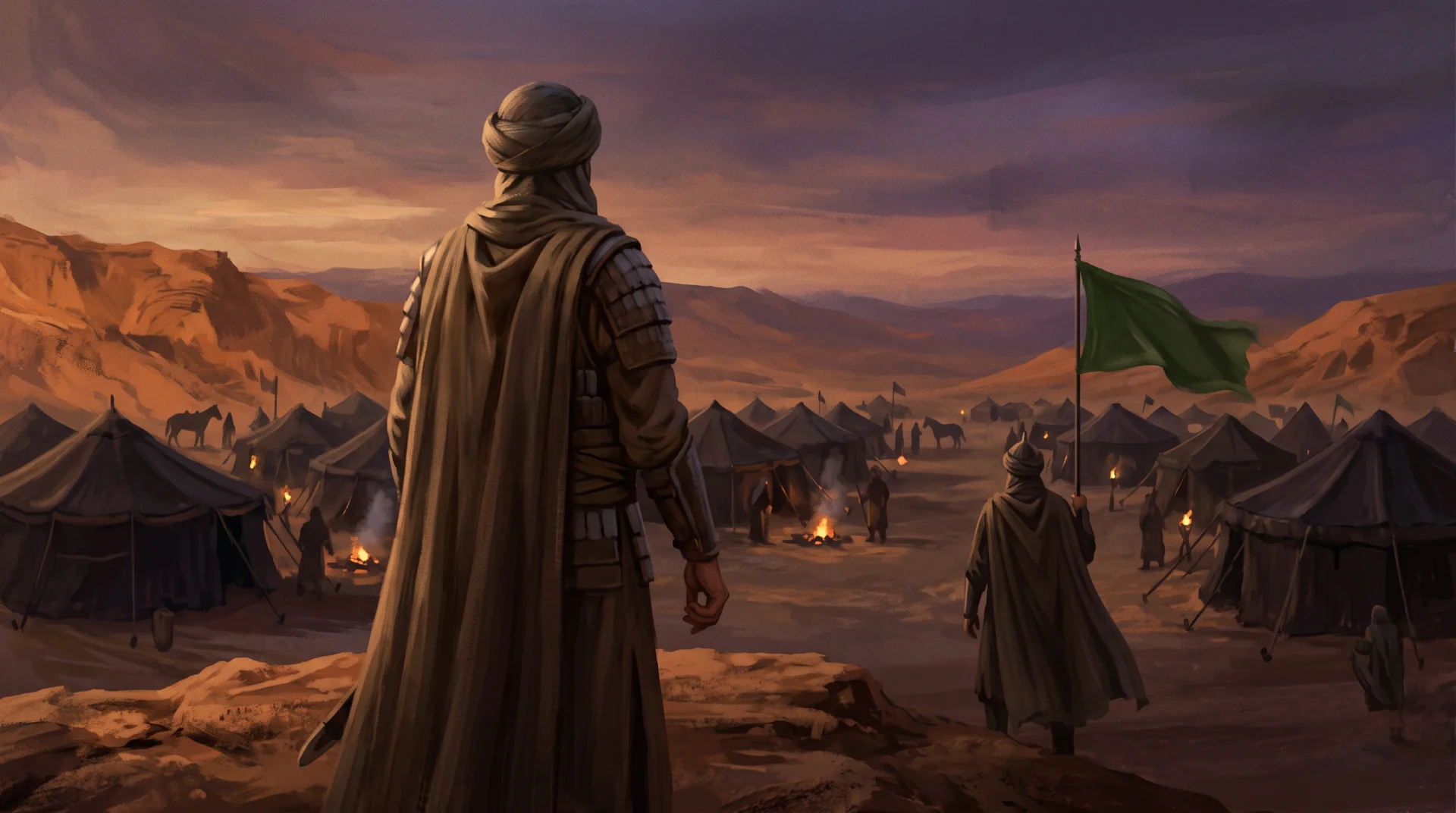
Khalid's greatest victory was over himself on the day Umar ibn al-Khattab dismissed him, fearing Muslims would credit triumph to Khalid rather than to God. Khalid accepted gladly and became an ordinary soldier, knowing the banner matters more than its bearer. The author then asks who took command and became the nation's trustee.
These are English scene notes. The full chapter text, as the author wrote it, is in the app.