


Scene 1
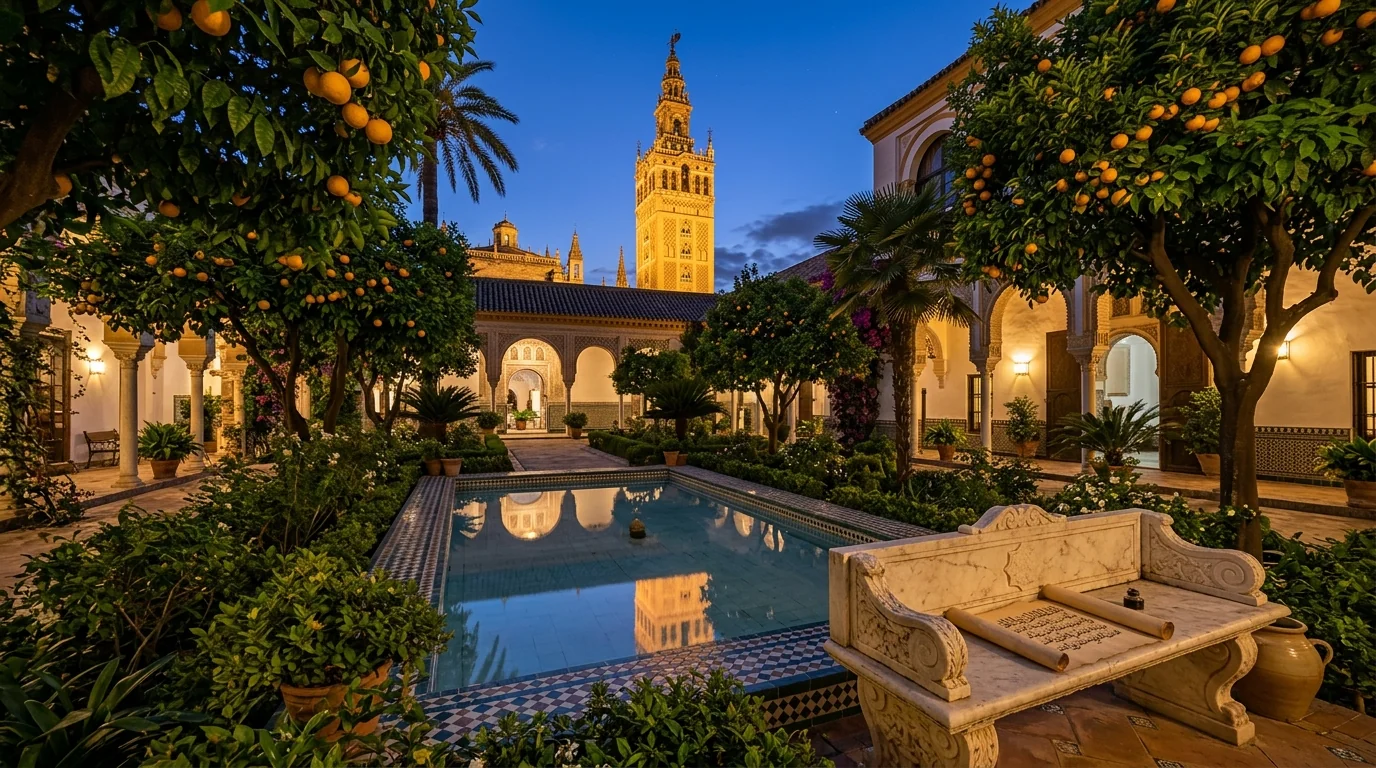
An Almoravid Fan and the Orange Trees of Seville
Walking through Seville on a summer night in 2009, the author pictured Alfonso VI's siege of the city. Seeing its orange trees, Cordoba's gardens and Granada's Alhambra, he asked himself frankly whether, as a Taifa prince, he would have given up his throne or risked fighting Alfonso rather than paying tribute to stay.
Scene 2
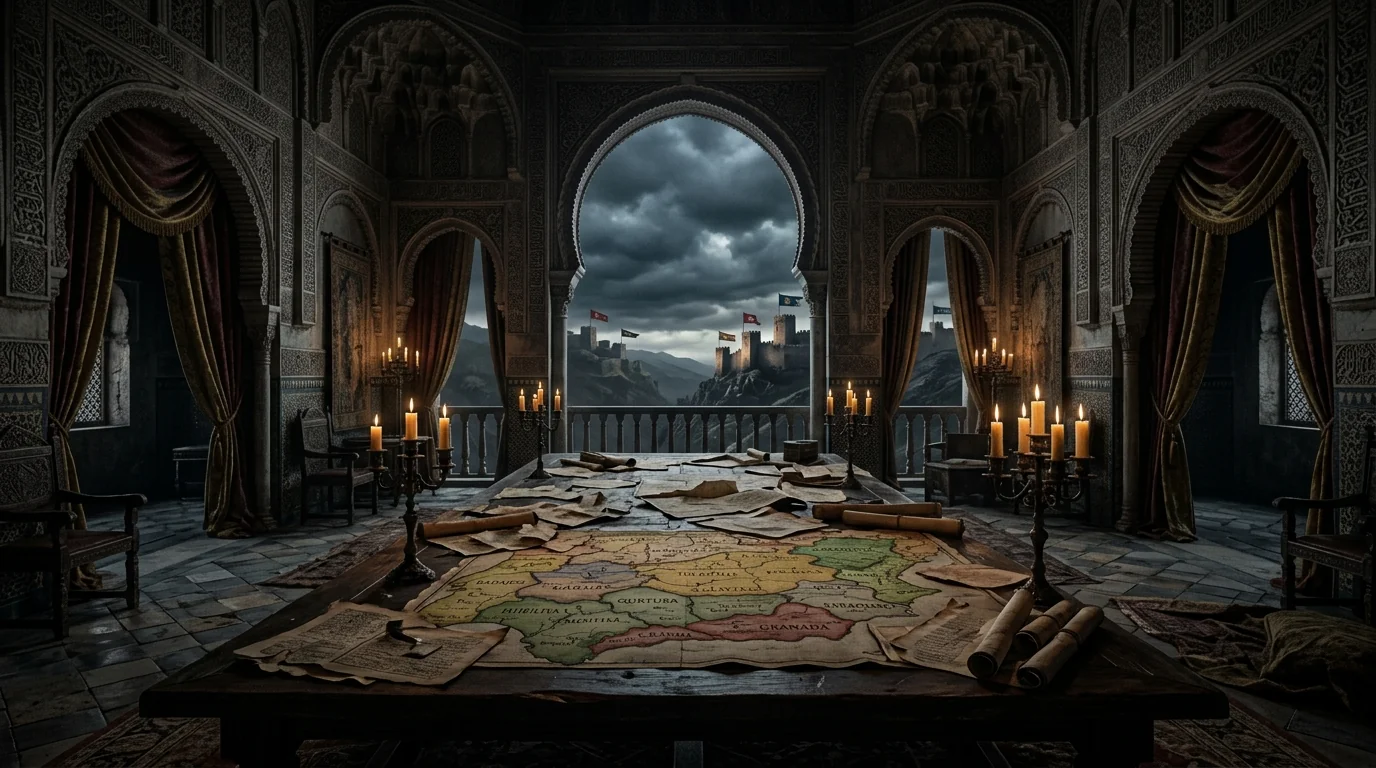
The Andalusian Complex: Division and Dependence
The author finds no excuse for the Taifa kings' humiliation, yet grasps the temptation of that enchanting land. He observed in Spain that every city is ringed by natural borders of mountains, rivers and seas, pushing each to become its own statelet, as Catalonia's autonomy and Basque demands for independence still show.
Scene 3
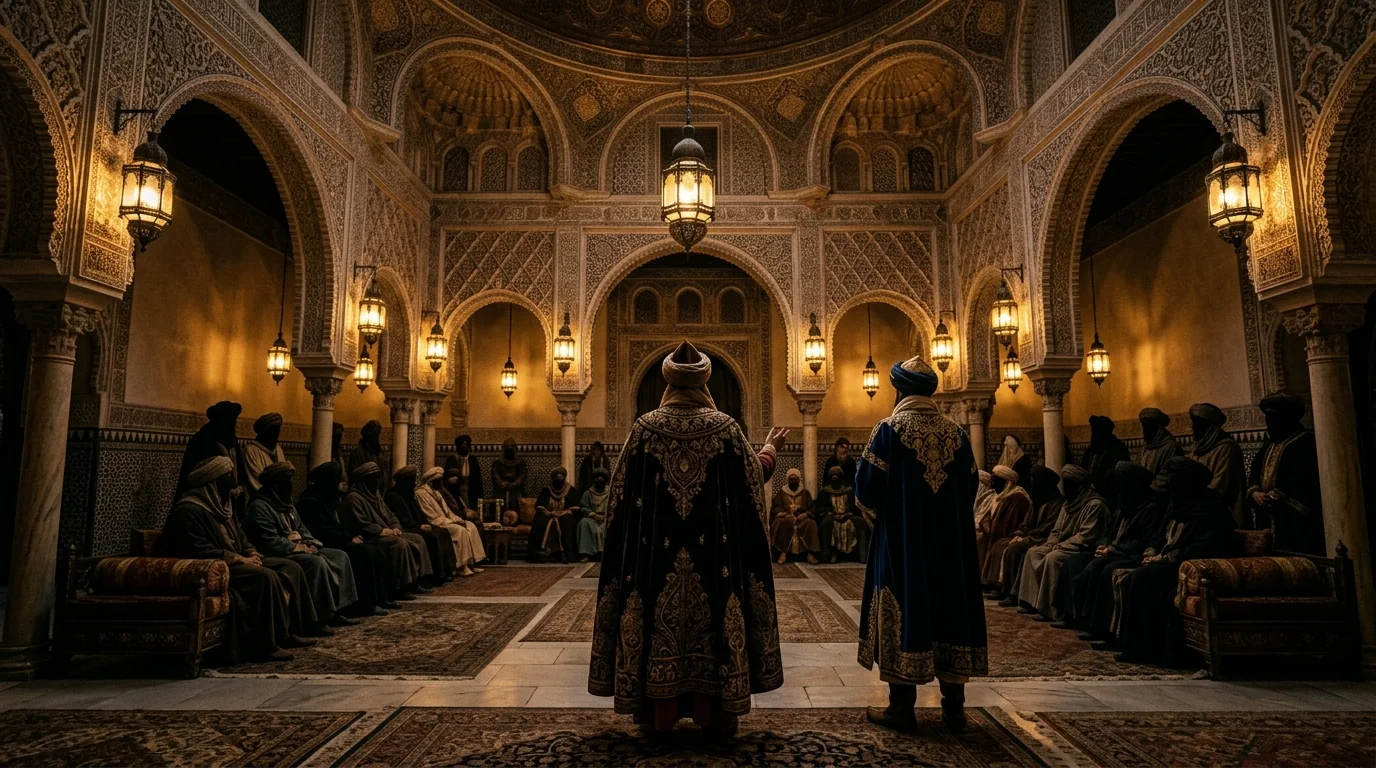
The Taifa Summit and the Camels of the Maghreb
After Alfonso VI's mocking letter asking for a fan, Ibn Abbad wrote on its back: "By Allah, if you do not go back I will fan you with a fan of Almoravids!", and Alfonso fled. Ibn Abbad then convened the first emergency summit of the 22 taifa statelets, proposing to call the Almoravids. One objected to bringing "these Bedouin camel-herders" who would take their rule. Al-Mu'tamid replied: "By Allah, herding camels in the desert of the Maghreb is better for me than herding pigs in Europe!" Al-Mutawakkil ibn al-Aftas of Badajoz and Abdullah ibn Buluggin of Granada agreed.
Scene 4
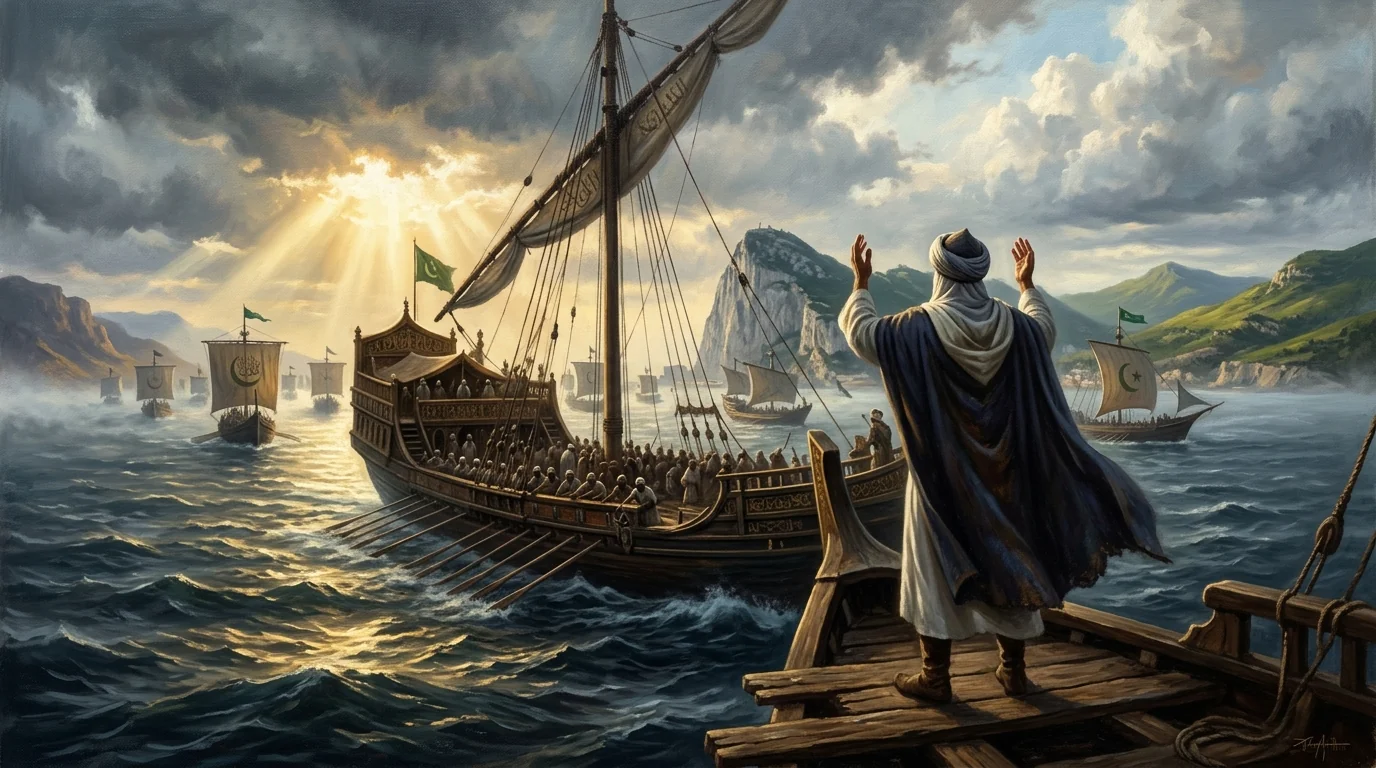
Crossing the Strait and a Prayer in the Storm
Yusuf ibn Tashfin, leader of the Almoravids and cousin of Abu Bakr ibn Omar, sailed for al-Andalus. A storm rose mid-strait; he prayed that God ease the crossing if it held good for the Muslims, and the wind stilled. Welcomed with joy, he marched north with thirty thousand men to a place called Zallaqa.
Scene 5
Europe's Crusader Host and the Vatican's Call
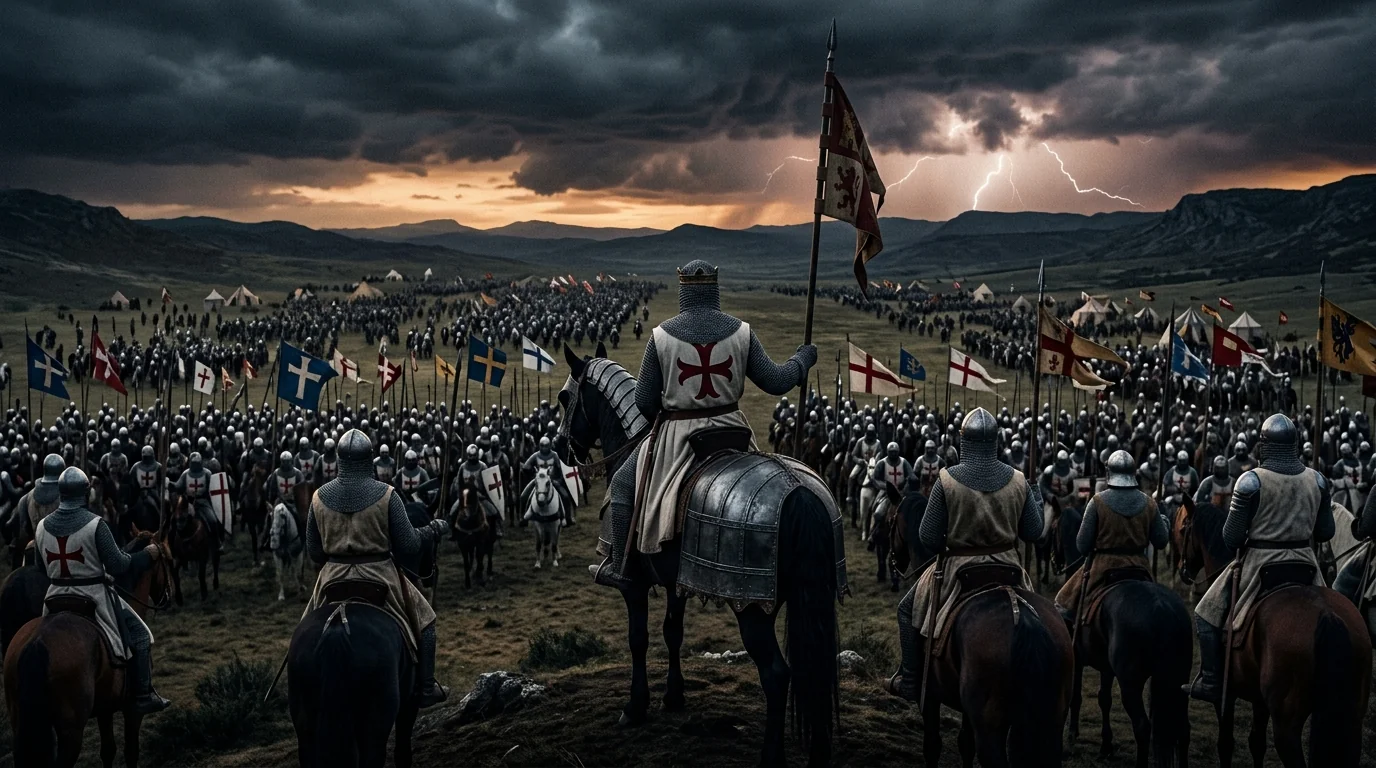
The Vatican declared an emergency across Europe; the pope promised forgiveness and a key to Paradise for all who fought. Knights gathered from France, Italy, Germany and England, giving Alfonso VI twice the Muslims' number. He boasted that with this army he would fight jinn, men and angels. Both sides camped at Zallaqa on Thursday.
Scene 6
Ibn Tashfin's Letter and the Castilian Truce Ruse
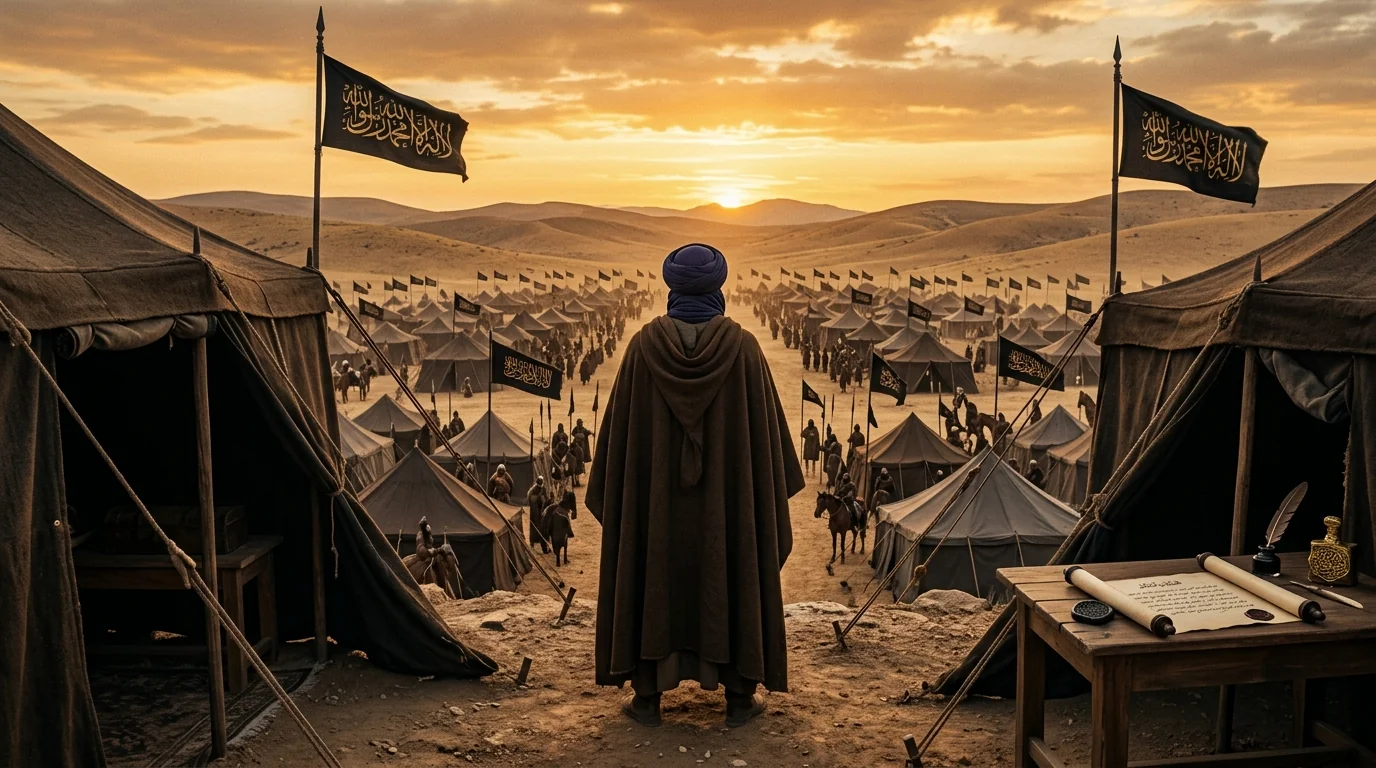
Ibn Tashfin did what the Taifa kings had long forgotten: he wrote to Alfonso offering Islam, tribute or war within three days. Enraged, Alfonso tried a ruse, proposing to delay battle until Monday because of the Muslim, Jewish and Christian holy days. Ibn Tashfin, distrusting the promise, kept his soldiers alert.
Scene 7
The Elephant Dream and the Muslim Sheikh's Reading
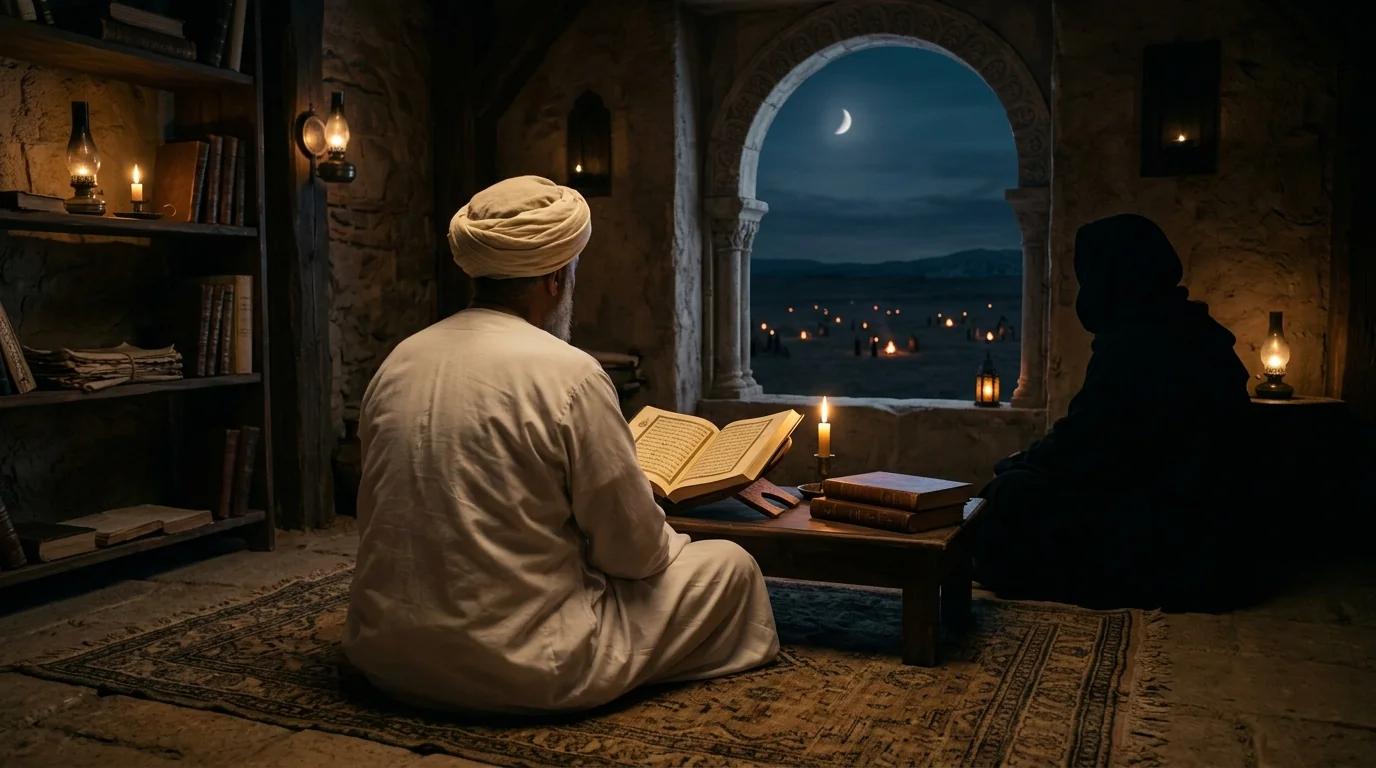
Alfonso dreamed he was riding an elephant and beating a drum. His priests could not explain it, so he sent a Jewish man to a Muslim sheikh, who saw the dream was the king's and read it as a sign of great calamity, citing the Quranic verses on the People of the Elephant and the trumpet.
Scene 8
Ibn Rumaylah's Vision and the Dawn Takbirs
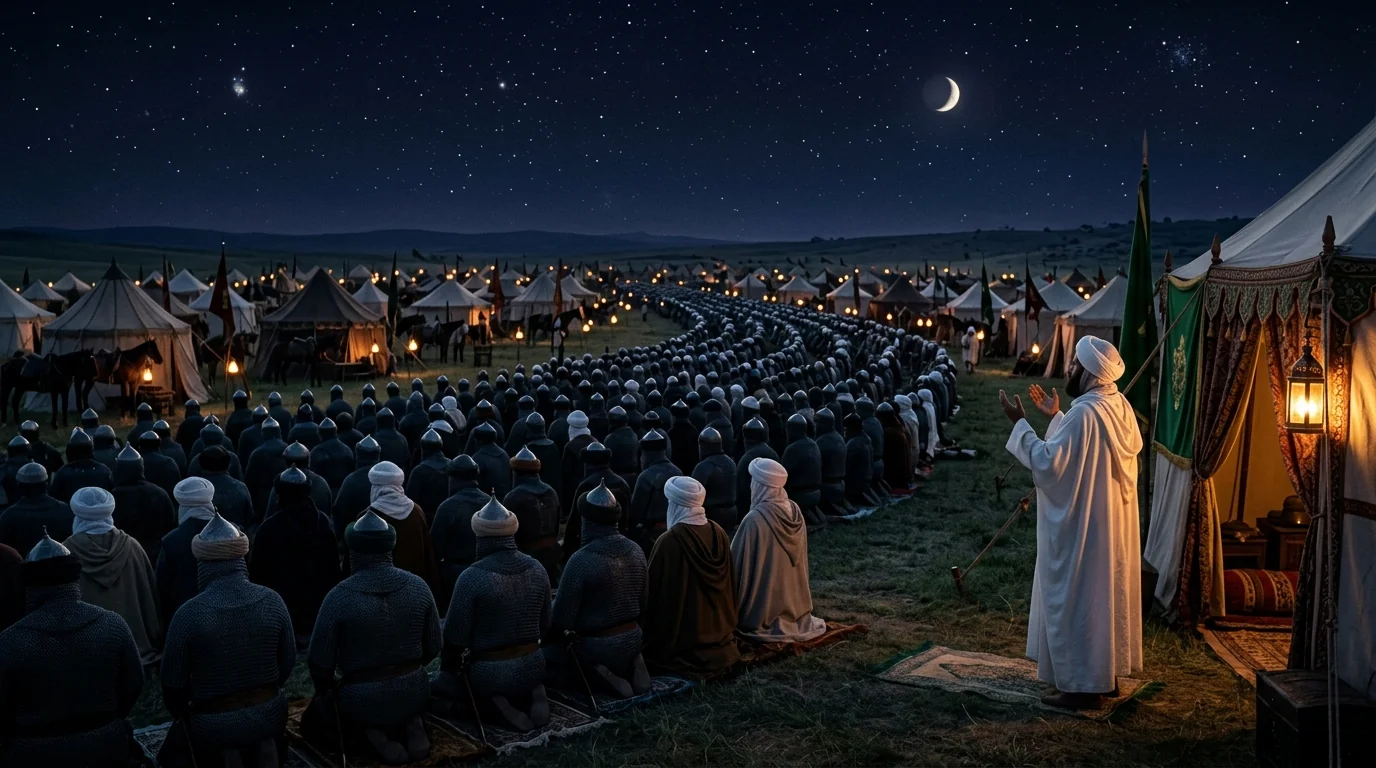
In the middle of that night the scholar Ibn Rumaylah ran to Ibn Tashfin's tent: he had seen the Prophet ﷺ, who told him they would be victorious and that he would meet him. Ibn Tashfin's takbir woke the army; he ordered Surat al-Anfal recited and night prayer, and the soldiers wept, longing for martyrdom.
Scene 9
The Battle of Zallaqa and Castile Broken
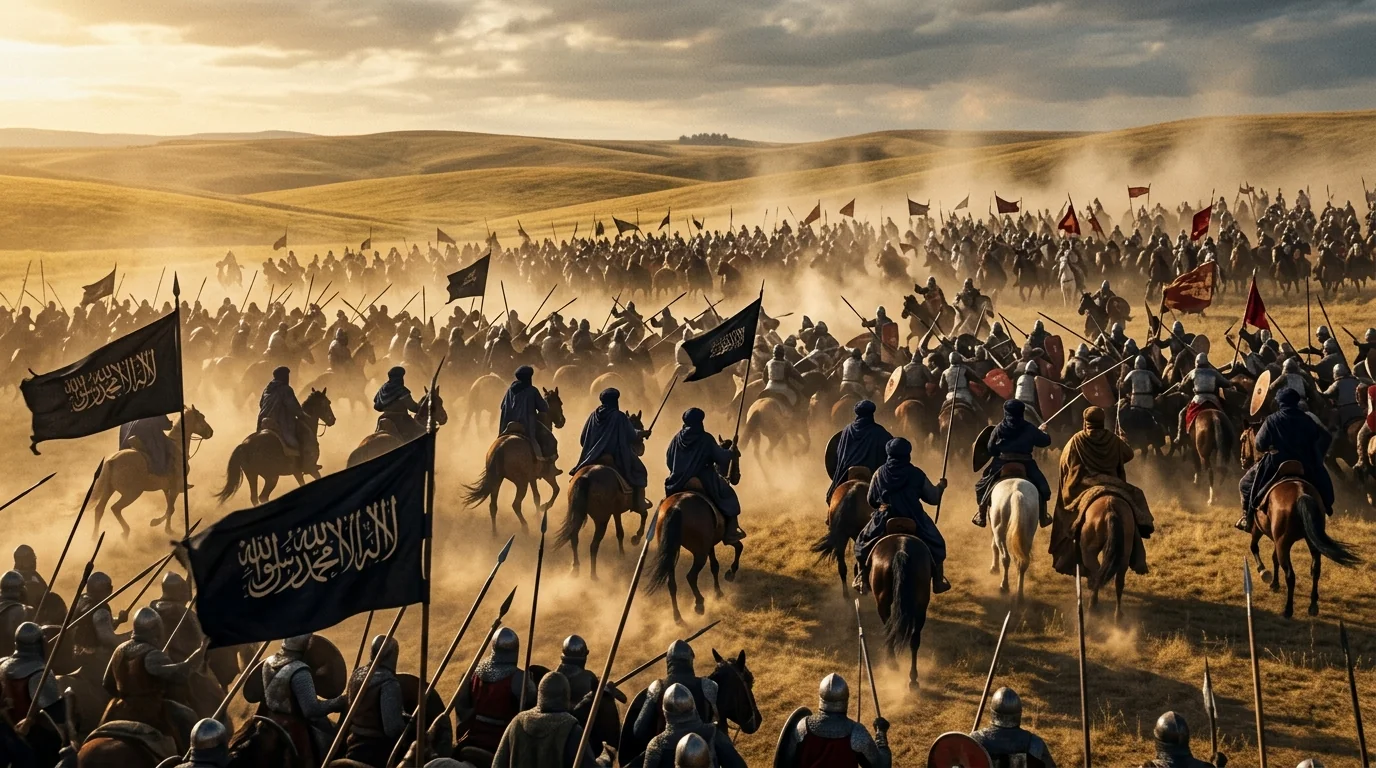
After the dawn prayer on Friday, "the filthy Crusader Alfonso" acted treacherously as Ibn Tashfin had expected, advancing to surprise the Muslims at dawn, but found them waiting after that vision of the Prophet ﷺ. The valiant battle of Zallaqa followed and the Muslims won for the first time in decades under Emir Yusuf ibn Tashfin: of 60,000 Crusaders only 100 fighters remained, among them Alfonso VI with one leg, who fled to Castile and died a year later of grief. Ibn Tashfin and the Almoravids took none of the vast spoils and returned to the Maghreb.
Scene 10
Al-Ghazali's Fatwa and a United Andalus
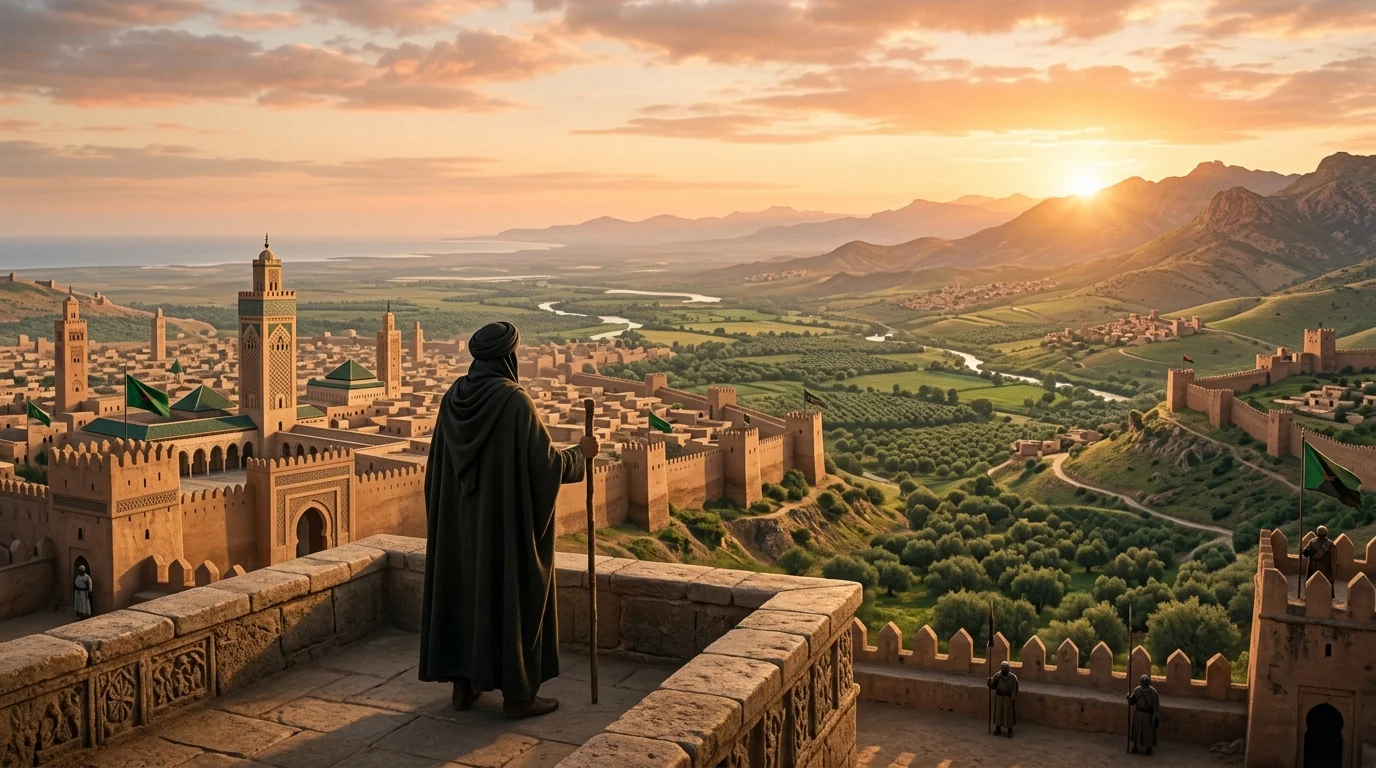
The Taifa kings resumed their quarrels and the people begged Ibn Tashfin to free them. He hesitated to fight Muslims until fatwas arrived, including one from al-Ghazali in Baghdad, then annexed al-Andalus. The author salutes these former camel herders whom God honoured, and asks about al-Andalus before the Taifas and its greatest king.
These are English scene notes. The full chapter text, as the author wrote it, is in the app.