


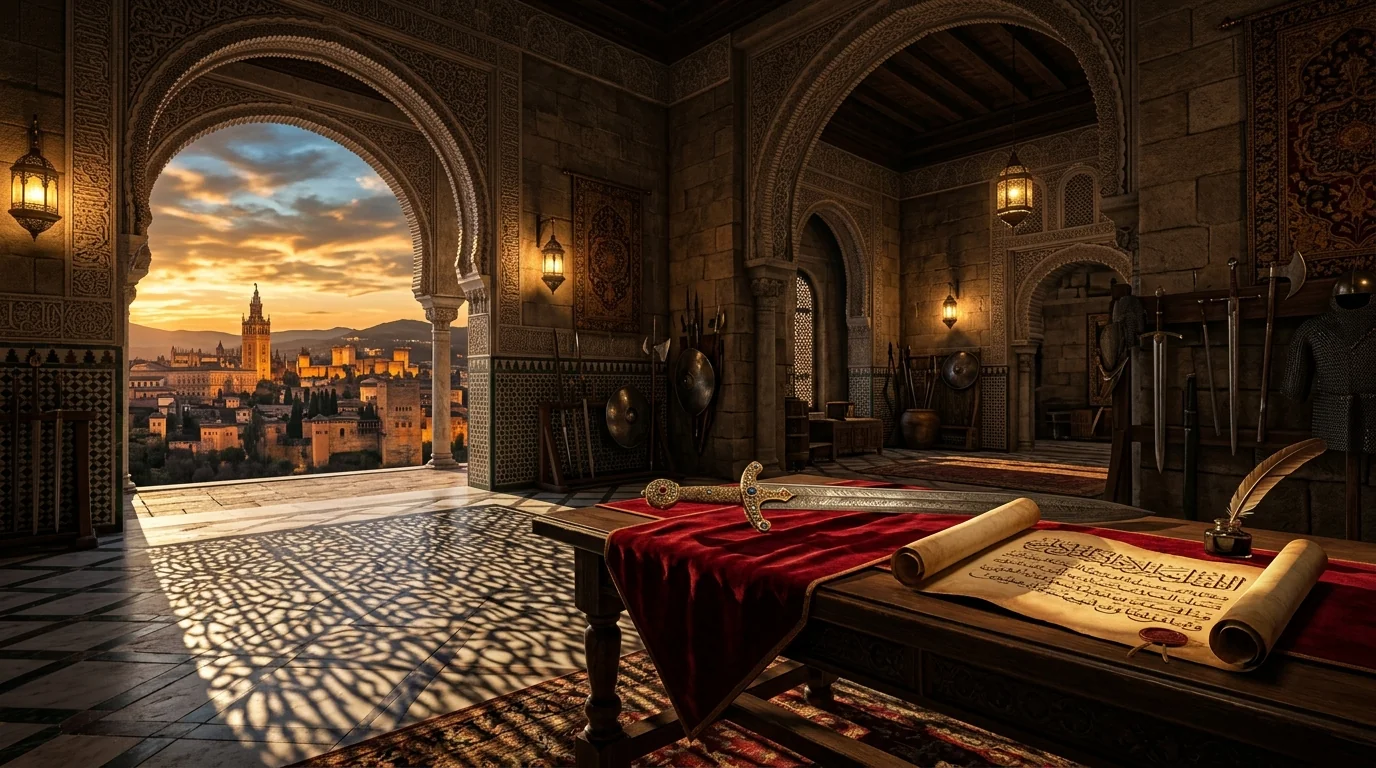
Scene 1
Honour in an Age of Humiliation and the Amazigh Heroes
The author jokes that, did he not know his own Qahtani lineage, he might suspect he was Berber, so often has he praised Berber heroes. He is surprised by how much the Amazigh gave the nation, and adds one more: to be great in an age when greatness is rare, he says, is true greatness.

Scene 2
The Taifa Kings and the Idea of Historical Invasion
Al-Mutawakkil ibn al-Aftas was a Berber king of the Taifa period, 422–479 AH, only 57 of more than 800 years of Muslim rule in al-Andalus. The author argues that dwelling on that period applies the "historical invasion" idea, making youth think their history dark, and says the coming battle is to rewrite it for its lessons.
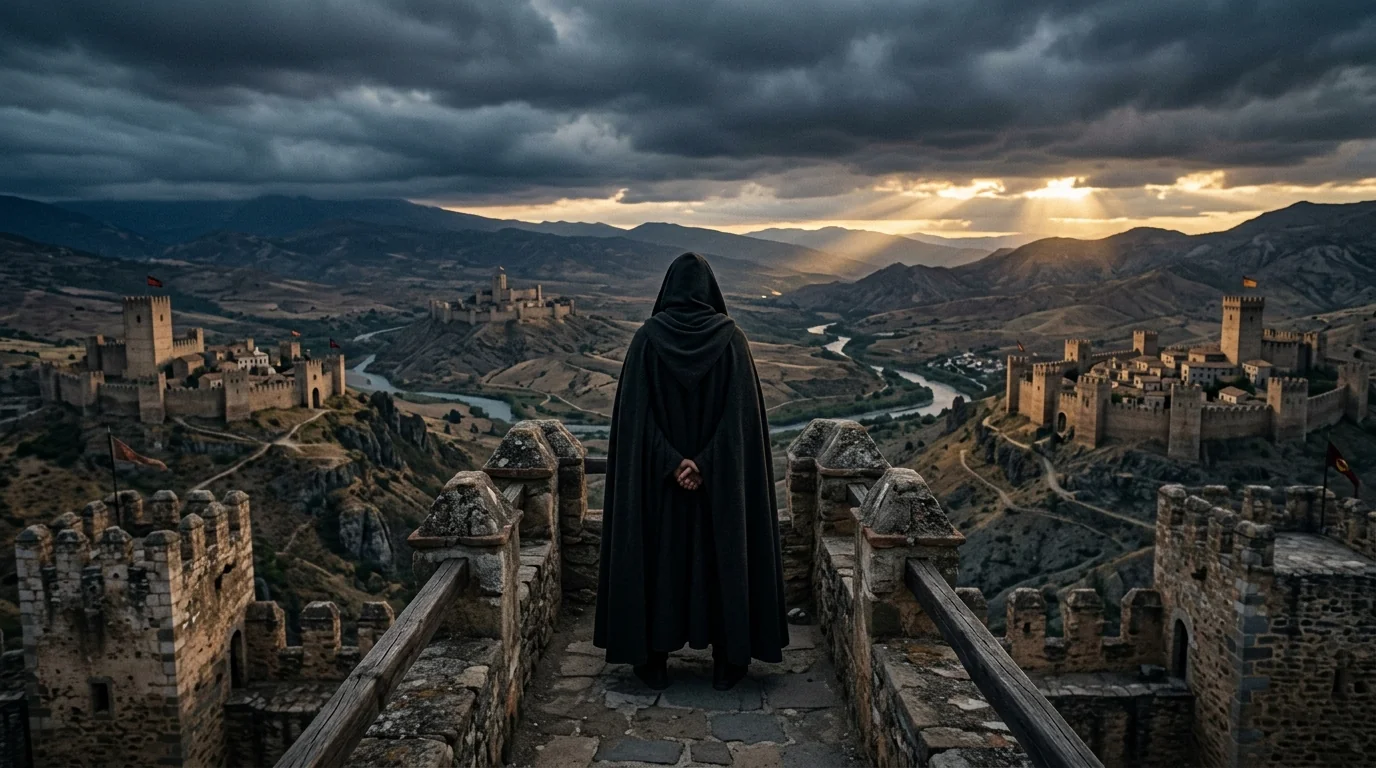
Scene 3
A Fragmented Andalus and Lost Prestige
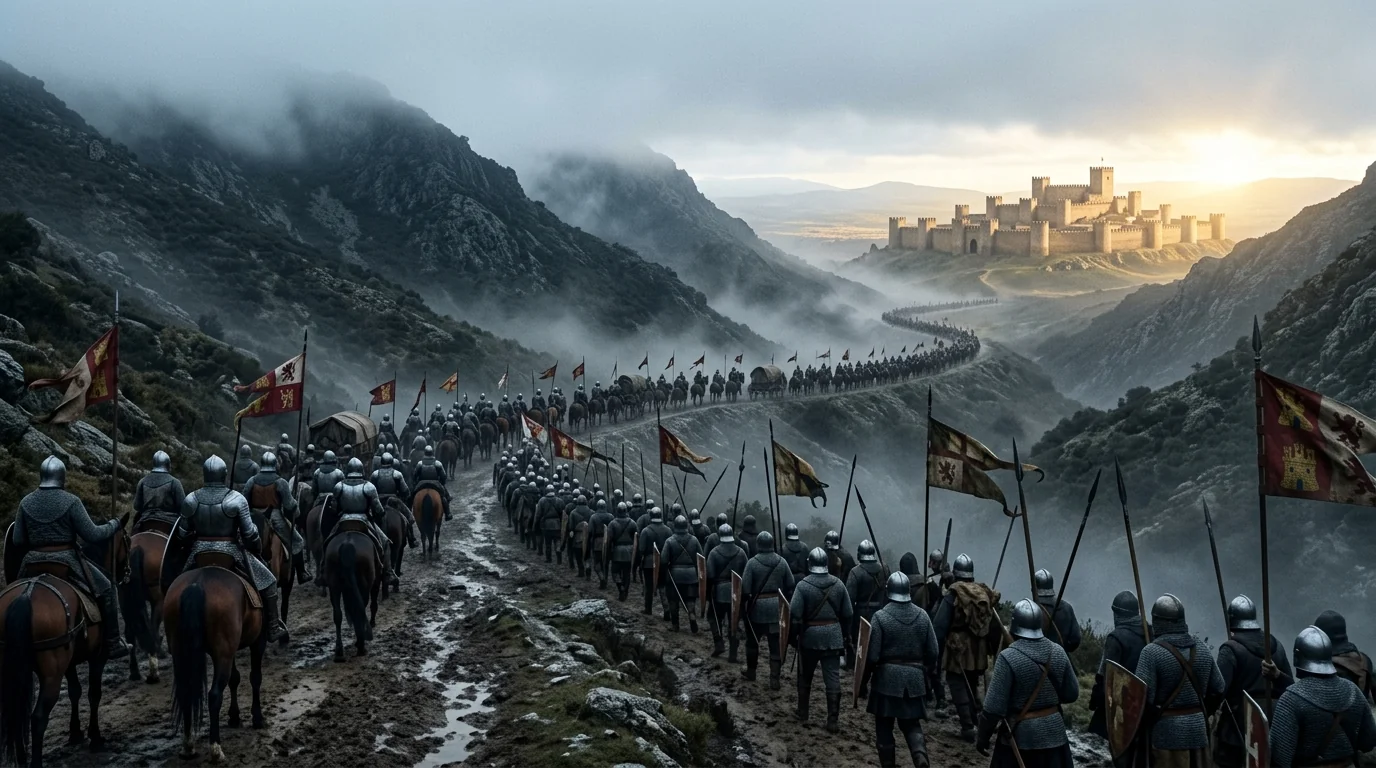
To measure al-Mutawakkil's greatness, the author describes his time: al-Andalus split into twenty-two states under Arab, Berber and Muwallad kings who raided one another. Castile, which had recently paid tribute to the Umayyad caliphs, now collected it from them, and Alfonso VI used that money to equip armies and seize their cities one by one.
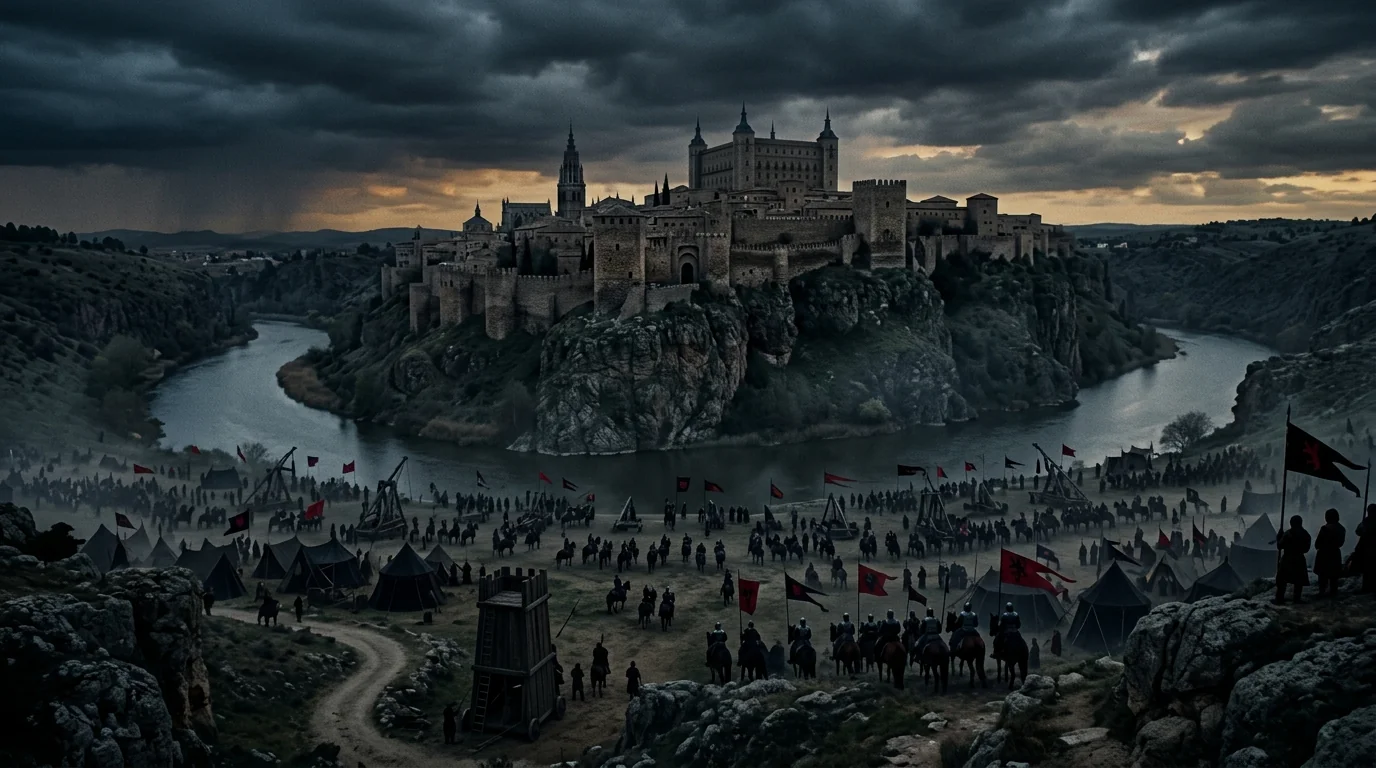
Scene 4
The Fall of Toledo and Alfonso VI's Treachery
Toledo fell, the greatest city of al-Andalus, opened by Tariq ibn Ziyad at the dawn of the conquests. The bitter irony, the author says, is that its king Ibn Dhi al-Nun had hosted Alfonso VI in its palaces when his own brothers expelled him, and Alfonso used the stay to scout the city's approaches.
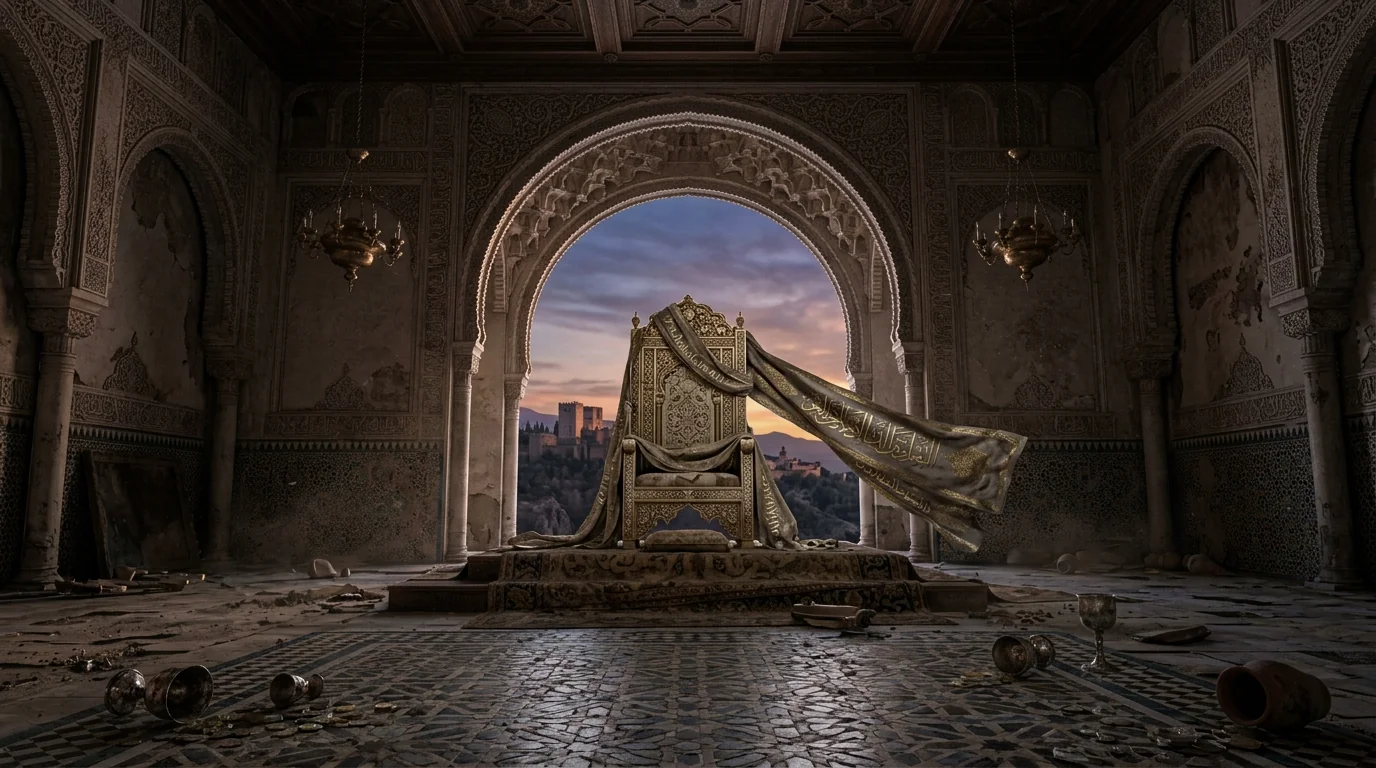
Scene 5
The Tragedy of Barbastro and Empty Caliphal Titles
The king of Zaragoza enlisted the Christians of Aragon against his own brother to regain Barbastro, where a hundred thousand Muslims were killed in one day and thousands of girls sent as a gift to Constantinople. Meanwhile the Taifa kings multiplied and took grand caliphal titles, mocked by the poet Ibn Ammar as a cat mimicking a lion.

Scene 6
The Cry of Badajoz: No Humiliation in Religion
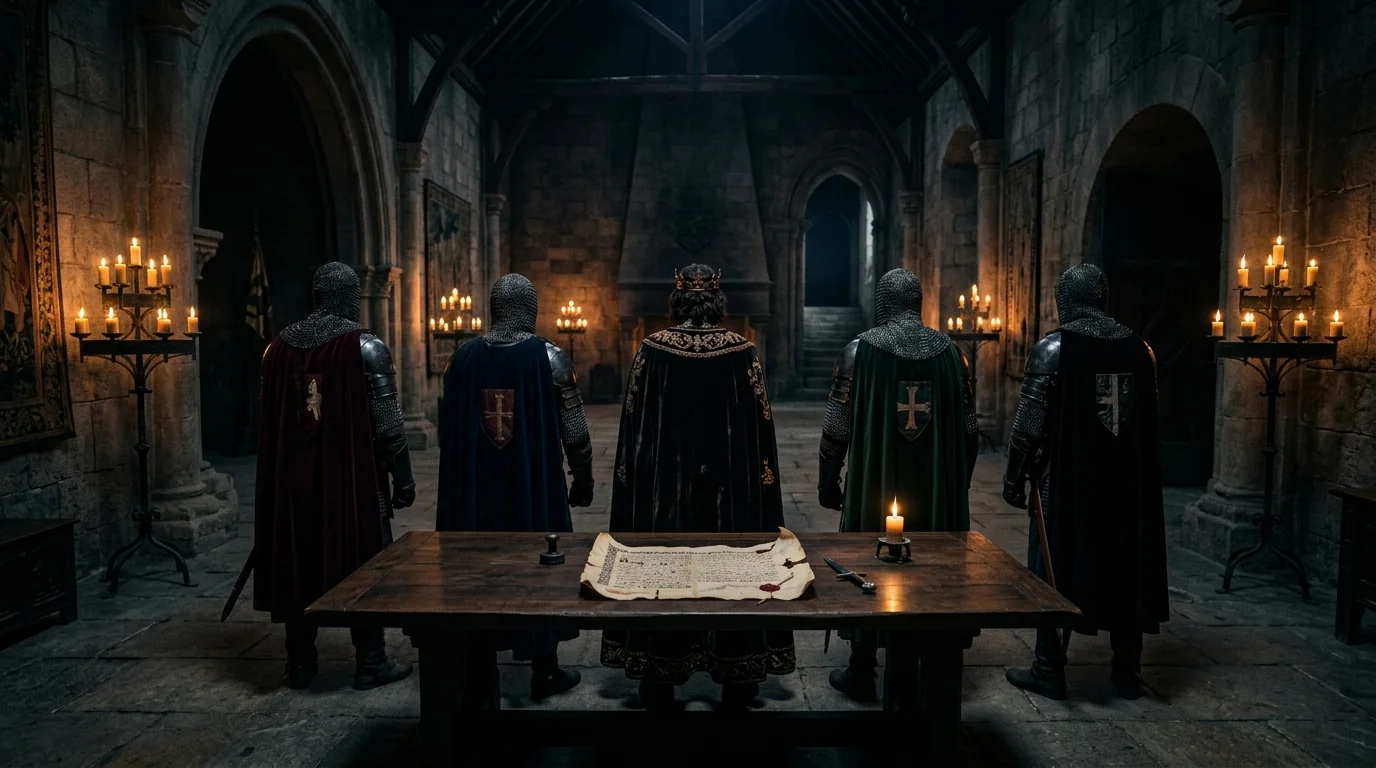
While every Taifa king paid tribute to keep his throne, one alone refused humiliation in his religion: the Berber king of Badajoz, al-Mutawakkil ibn al-Aftas. That stand alone earns him a place among the hundred, the author says. When Alfonso threatened war unless he paid like the others, he sent back a forceful letter.
Scene 7
Al-Mutawakkil's Letter: Truth in the Face of Tyranny
Al-Mutawakkil's letter reads: a letter has reached us from the chief of the Romans, a pretender who thunders and flashes and threatens with his abundant soldiers. Had he but known that Allah has soldiers by whom He honoured Islam, mighty against the infidels, striving in Allah's cause without fear! If a flash gleams from behind the Romans, it is by Allah's leave, to distinguish the wicked from the good and to know the hypocrites. The Muslims' weakness comes from heaped-up sins; only yesterday al-Mansur forced your forefathers to pay the jizya, until your predecessor gifted him his daughters.
Scene 8
The Edge of the Sword and Castile's Retreat
The letter ends: though few and without human aid, nothing lies between us but swords to which your people's necks will testify; we await either victory or martyrdom. Reading it, Alfonso VI knew this man was unlike the other Taifa kings and withdrew to Castile. Al-Mutawakkil alone never paid tribute.
Scene 9
Ibn Shalib's Head and the Siege of Seville
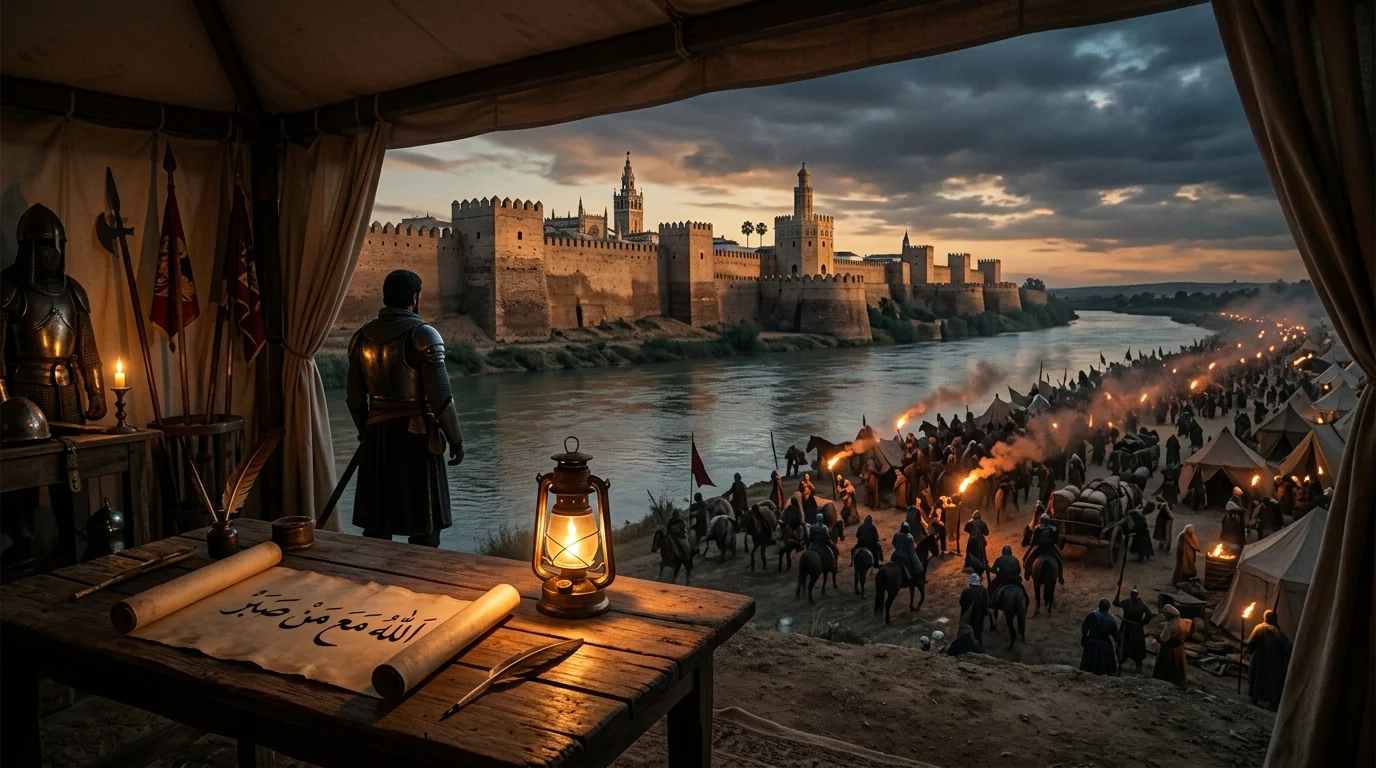
Things changed when Alfonso VI sent his minister Ibn Shalib to al-Mu'tamid ibn Abbad of Seville and Cordoba, demanding that his queen give birth beside the pulpit of Cordoba's mosque. Al-Mu'tamid offered double tribute instead; the minister refused and insulted him, so he cut off his head and sent it with word of no more tribute.
Scene 10
The Promised Dawn of Zallaqa
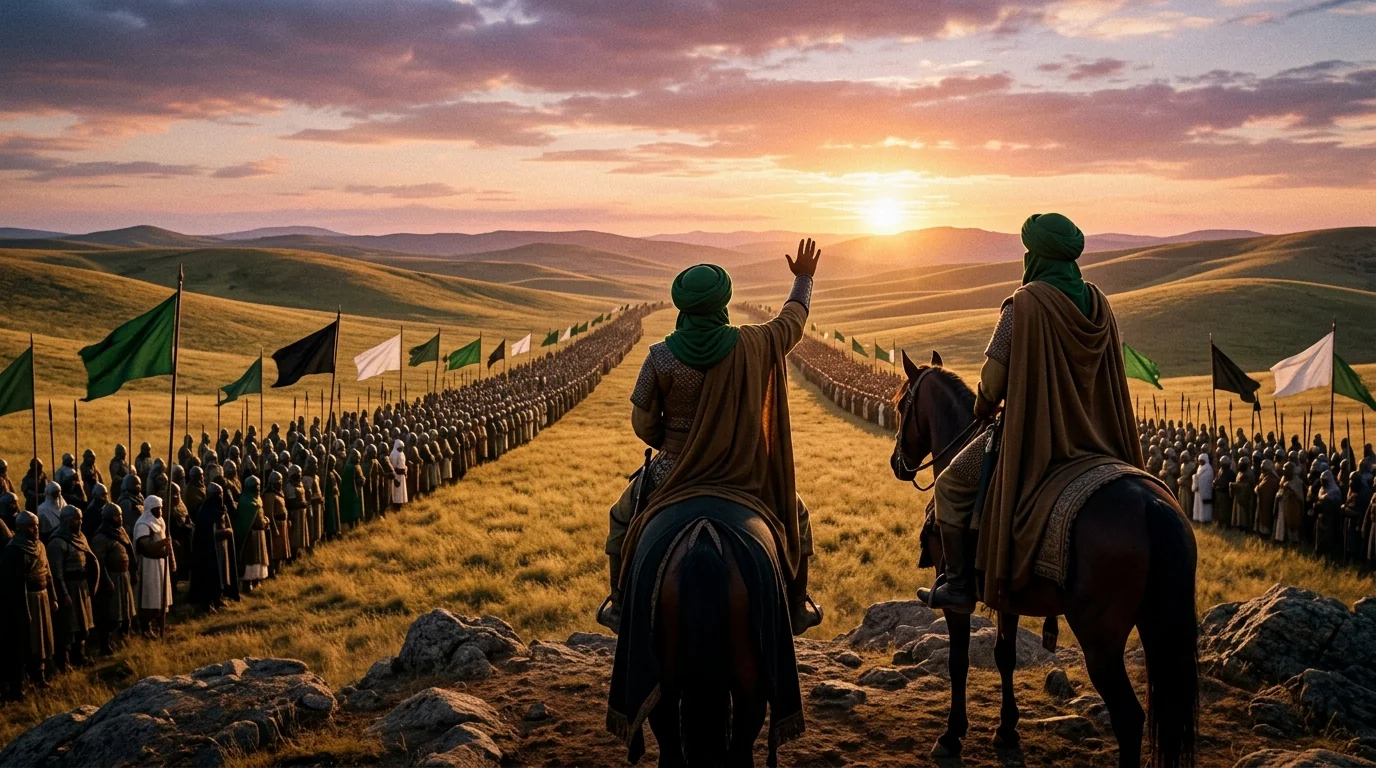
Furious, Alfonso besieged Seville and wrote mockingly that the flies bothered him and asked for a fan. Al-Mu'tamid wrote a one-sentence reply on the back; on reading it Alfonso trembled and ordered immediate withdrawal to Castile. The author asks what that sentence was and what the story of the battle of Zallaqa is.
These are English scene notes. The full chapter text, as the author wrote it, is in the app.