


Scene 1
The Martyr Who Walks the Earth
The chapter on Talha ibn Ubaydullah opens with the Quranic verse about believers who were true to their covenant with God, some of whom have fulfilled their vow while others still wait, never changing. It is followed by the Prophet's ﷺ words about Talha: that he is one of those who have fulfilled their vow.
Scene 2
Talha the Good, the Generous, the Bountiful
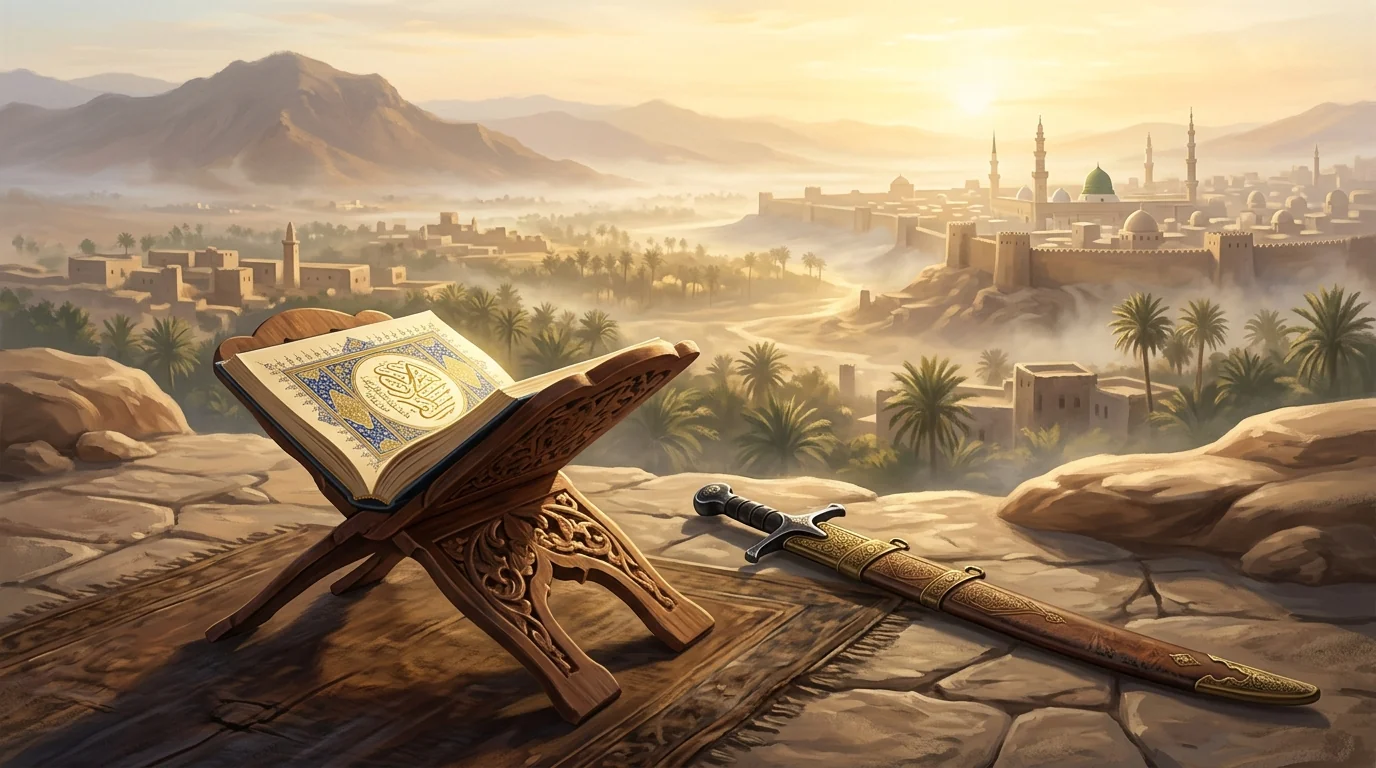
Talha was one of the ten promised Paradise, one of the first eight to embrace Islam, and one of the six men of the council with whom the Prophet ﷺ was pleased when he died. The Prophet named him Talha the Good at Uhud, and on other occasions Talha the Bountiful and Talha the Generous.
Scene 3
Talha, Who Averted Catastrophe at Uhud
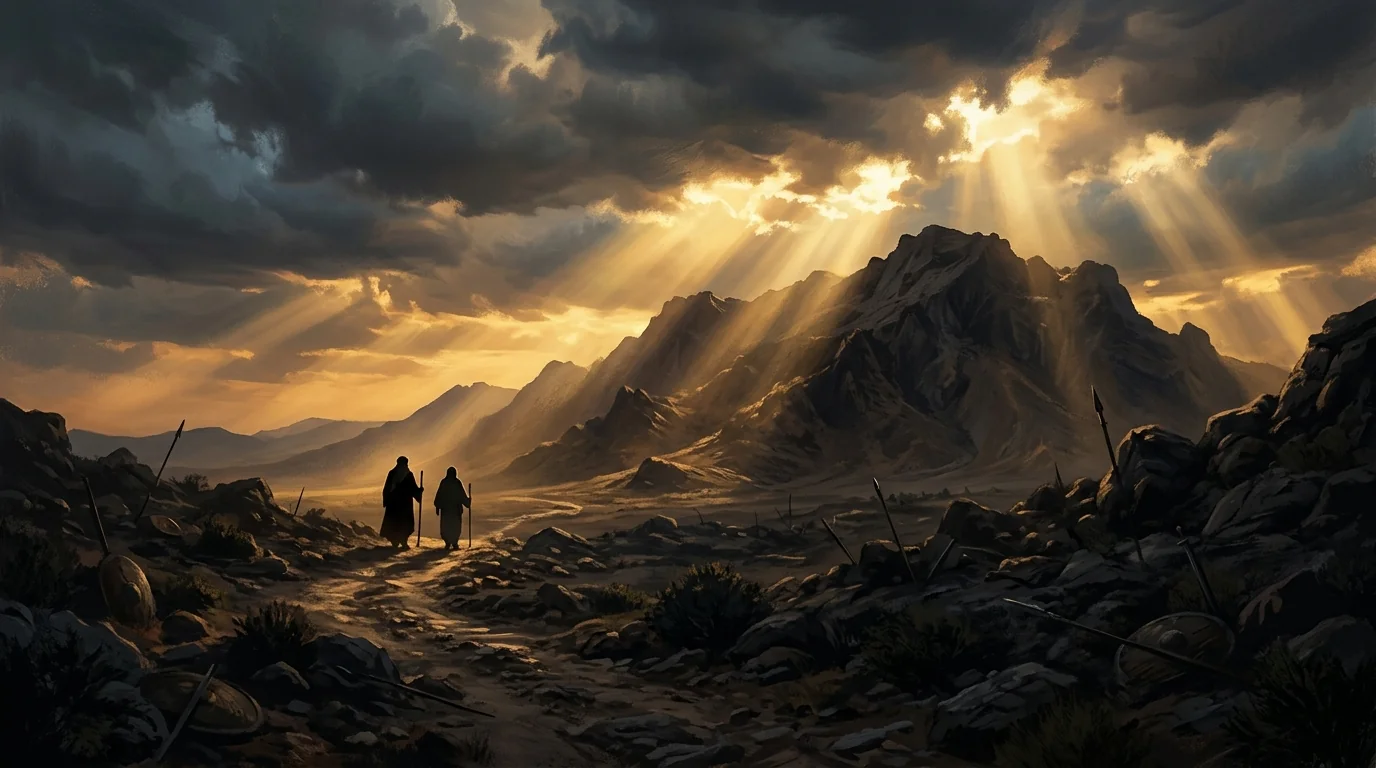
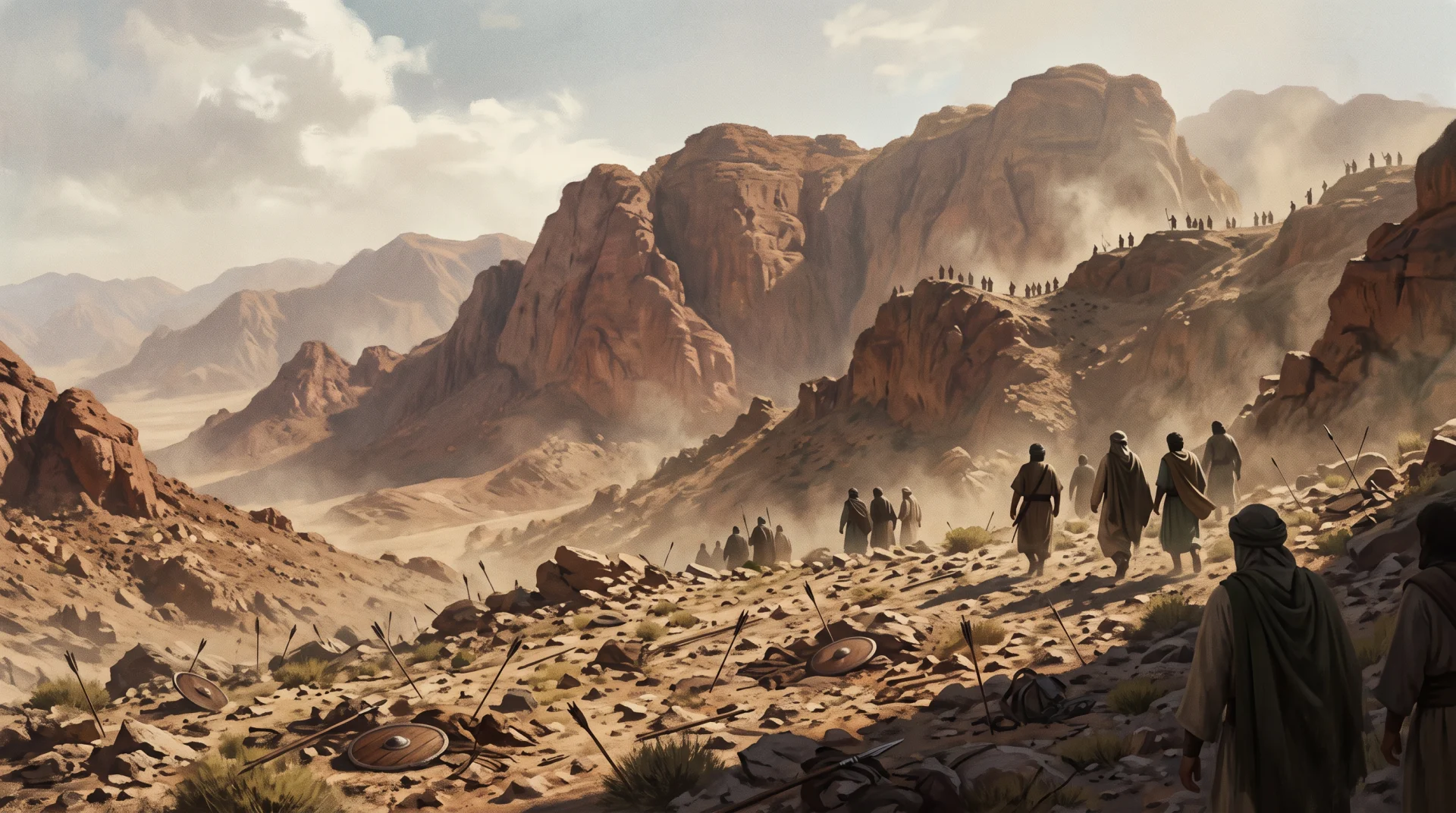
Talha, little known and absent from school curricula, prevented what the author calls the greatest crime humanity could have witnessed. He pictures Abu Bakr running breathlessly toward Mount Uhud, where the Prophet ﷺ was surrounded by enemies bent on killing him; seven of his nine defenders had fallen and only two remained beside him.
Scene 4
A Race Against Time Around Mount Uhud
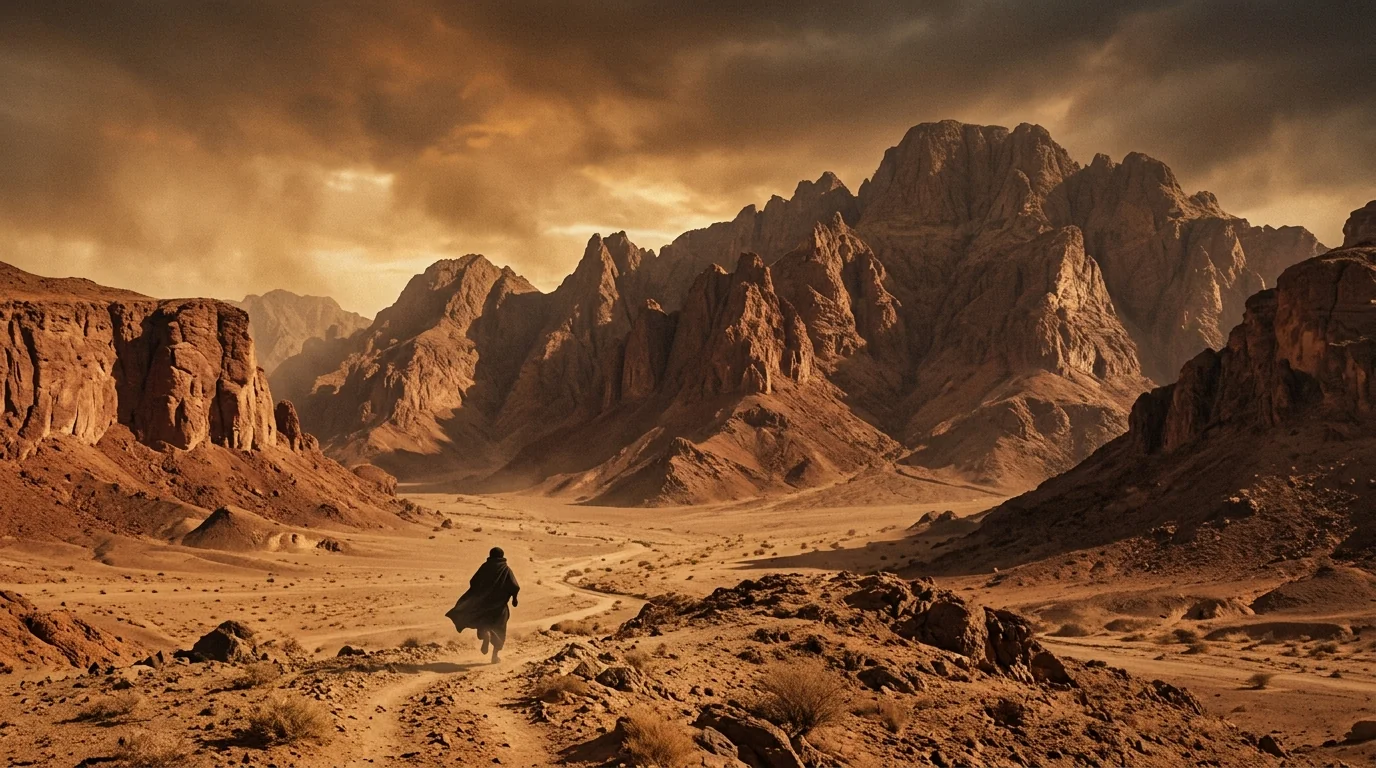
Racing on, almost out of breath, Abu Bakr glimpsed from afar a man moving like a phantom and fighting like a tiger before a band of Qurayshi horsemen, taking the arrows and spears aimed at the Prophet ﷺ. He hoped aloud that it was Talha, and his hope proved true: it was Talha ibn Ubaydullah.
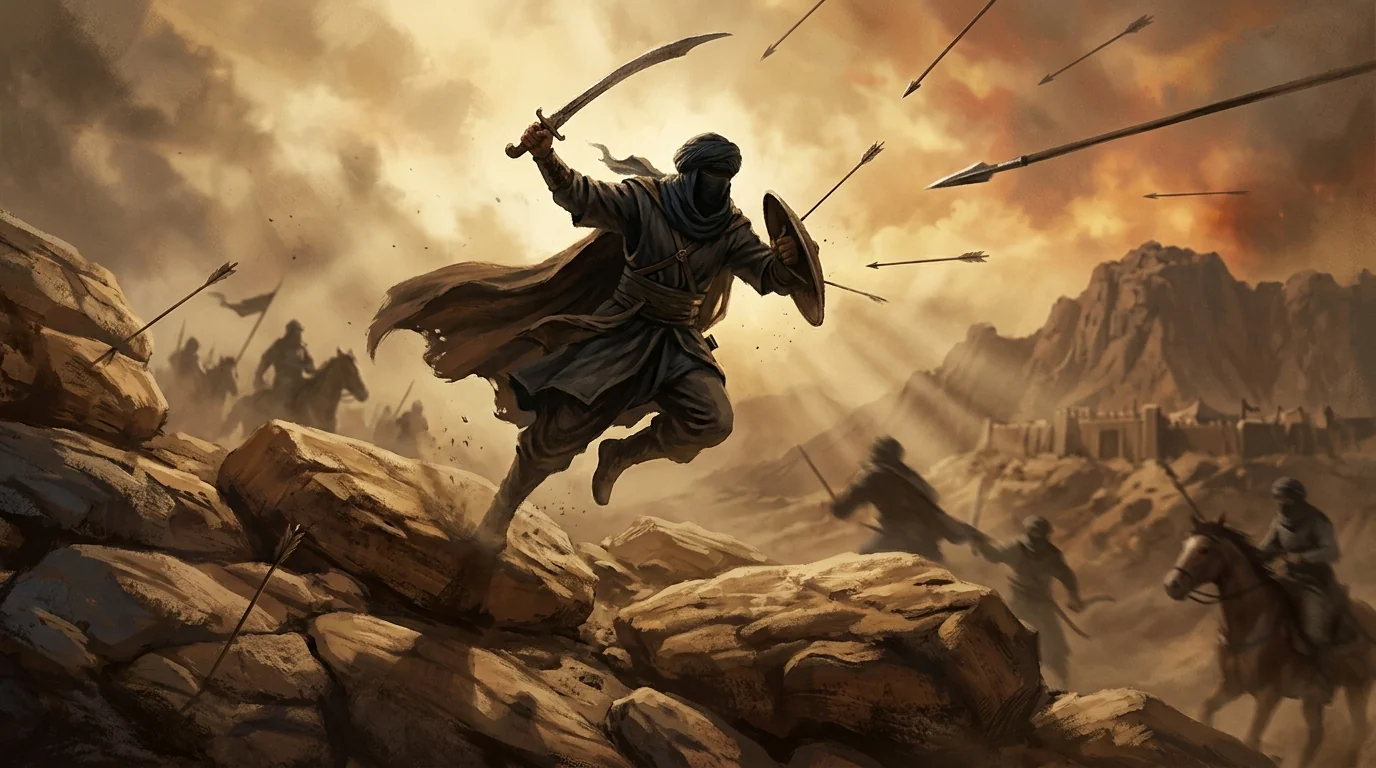
Scene 5
The Devoted Defender Who Fought Like a Tiger
Talha fought with unmatched courage, defending the Prophet ﷺ with his body, soul and whole being. Whenever arrows flew toward the Prophet, he sprang like a tiger to shield him and took them himself, then returned again to fight the disbelievers with his sword while blood poured from every part of his body.
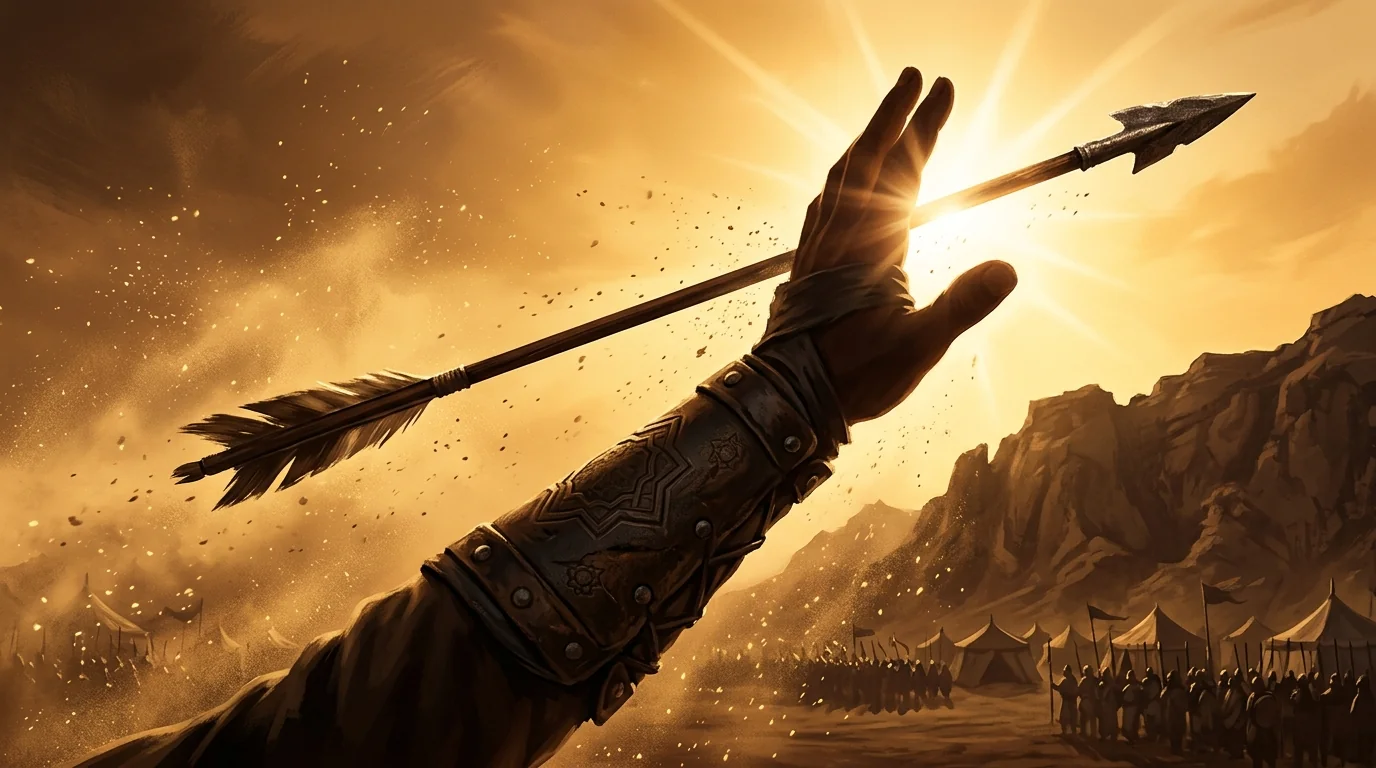
Scene 6
Catching the Arrow with His Noble Hand
An arrow from the best archer among the Arabs flew straight at the Prophet's ﷺ chest, and Talha darted to catch it in his own hand. The Prophet told him that had he said "in the name of God" the angels would have lifted him up, then told Abu Bakr and Abu Ubaida to tend their brother.
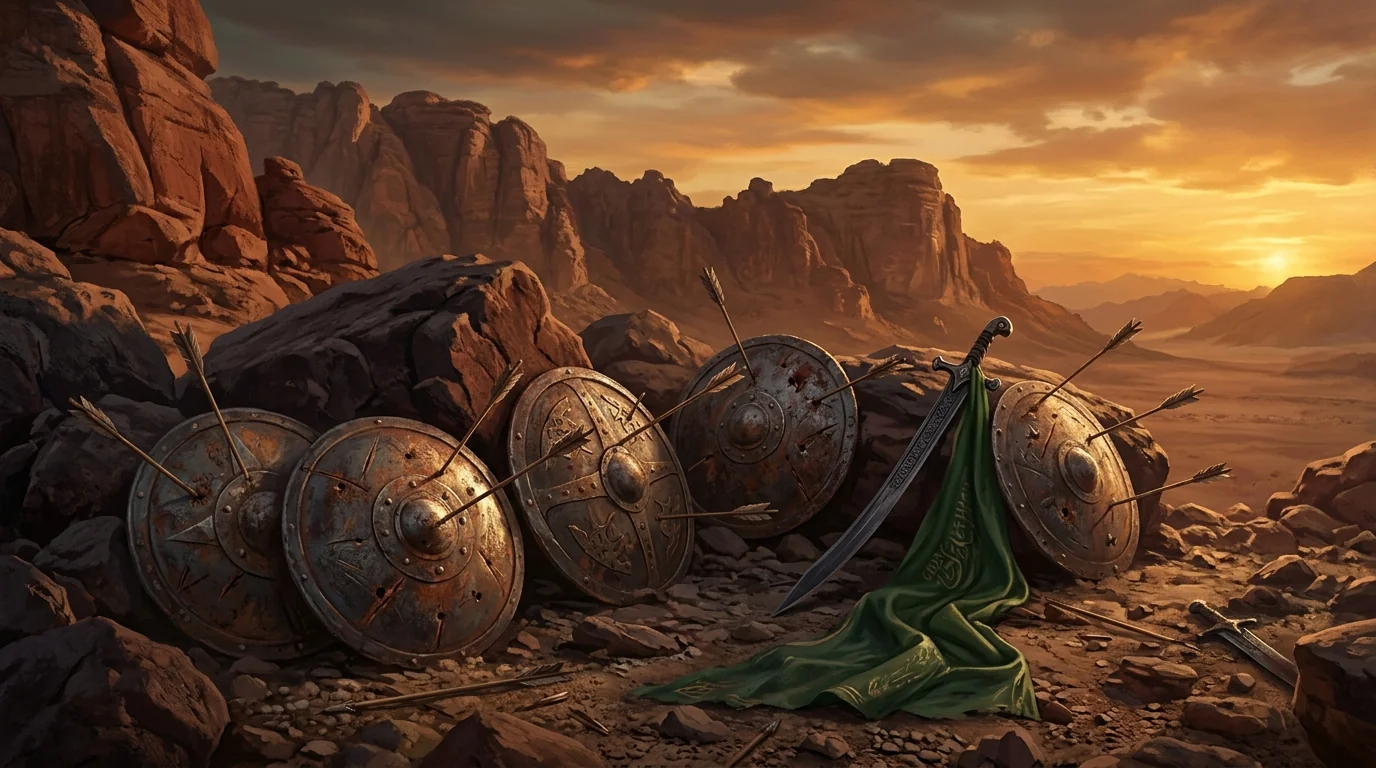
Scene 7
Sixty-Odd Wounds of Honour and Sacrifice
Abu Bakr could hardly believe what he saw when he reached him. He found Talha's body stained with blood down to the soles of his feet, bearing sixty-odd wounds from sword strokes, spear thrusts and arrow shots, every one of them received while defending the Prophet ﷺ on the day of Uhud.
Scene 8
Talha and al-Zubayr, the Prophet's Neighbours in Paradise
The author asks whether readers knew of Talha and al-Zubayr's greatness, and why the Prophet ﷺ called them his neighbours in Paradise. The nation's enemies, he says, know its heroes better than Muslims do, citing Iran's president Ahmadinejad, who he says publicly reviled the two men on air during his 2009 election campaign.
Scene 9
The Turkish Falcon Coming from Anatolia
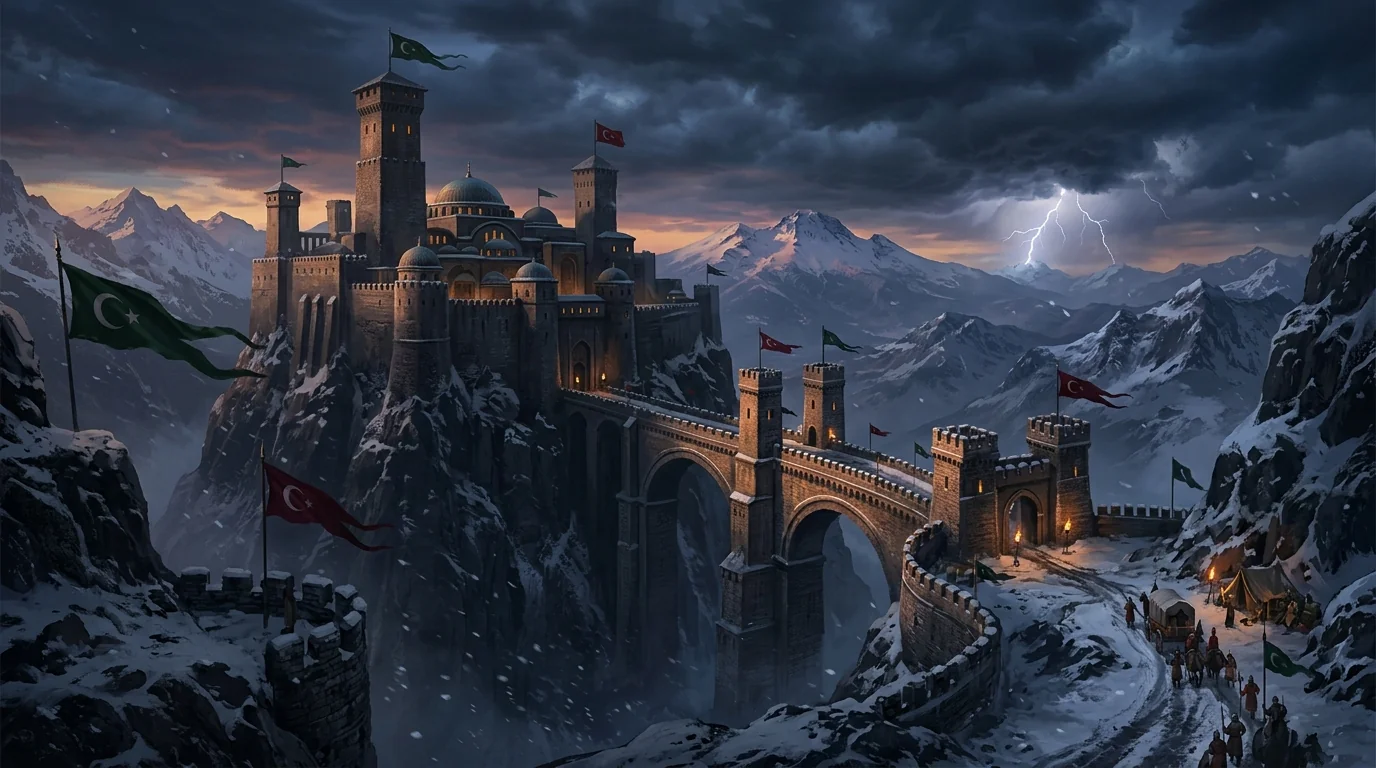
The chapter closes with questions: why does Nejad, president of the state of Iran, hate the Prophet's two neighbours in Paradise? Who are the new Safavids, and what are their schemes? And who is that Turkish falcon who set out from the mountains of Anatolia to smash the fortresses of "the Magian Safavids" down upon their heads, and what is his heroic story? To be continued.
These are English scene notes. The full chapter text, as the author wrote it, is in the app.