


Scene 1
Noble Lineage and the Disciple of the Best of Mankind
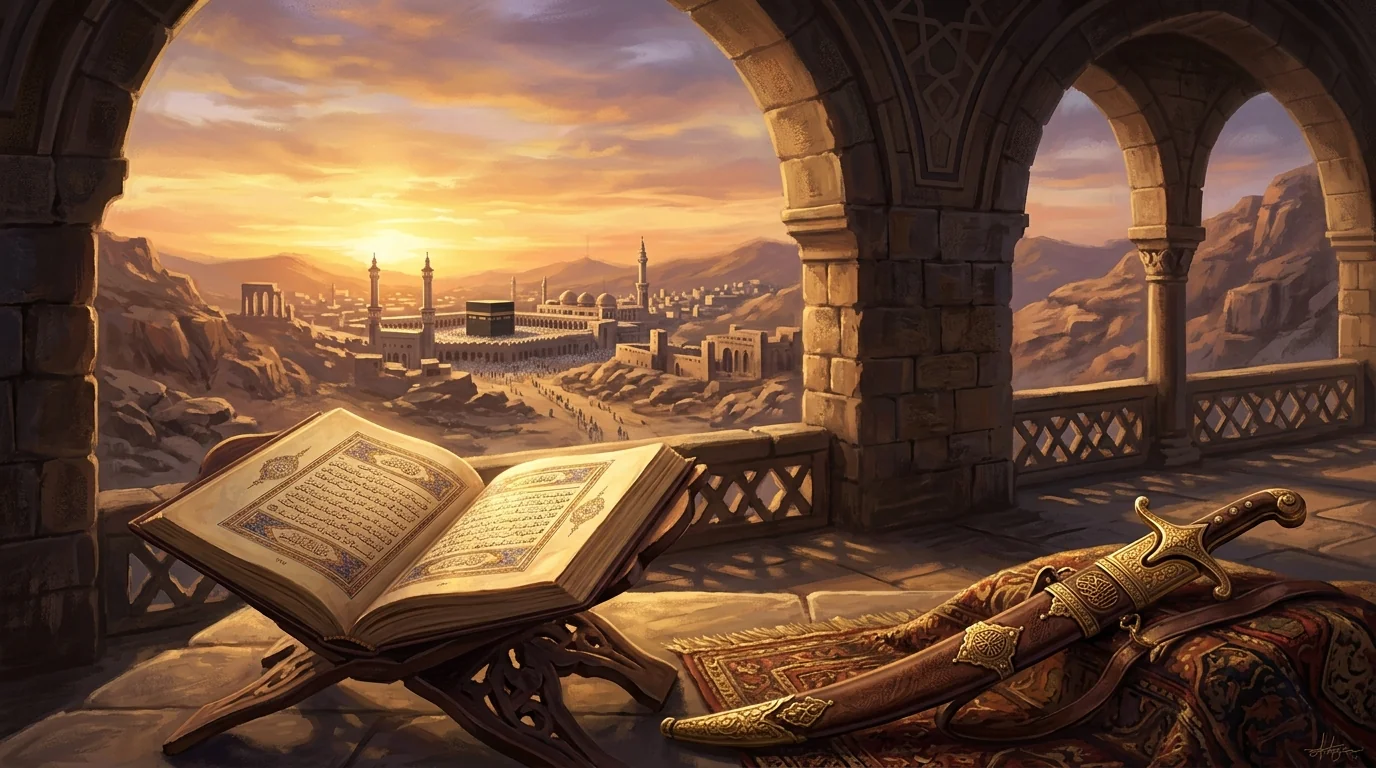
The chapter opens with the Prophet's ﷺ saying that every prophet has a disciple and his is al-Zubayr. The author lists his honours: son of the Prophet's aunt, nephew of Khadija and Hamza, husband of Abu Bakr's daughter, one of the ten promised Paradise, and the man in whose form Gabriel and fifty thousand angels descended.
Scene 2
The Meaning of Hawari and the Traits of the Prophet's Helper
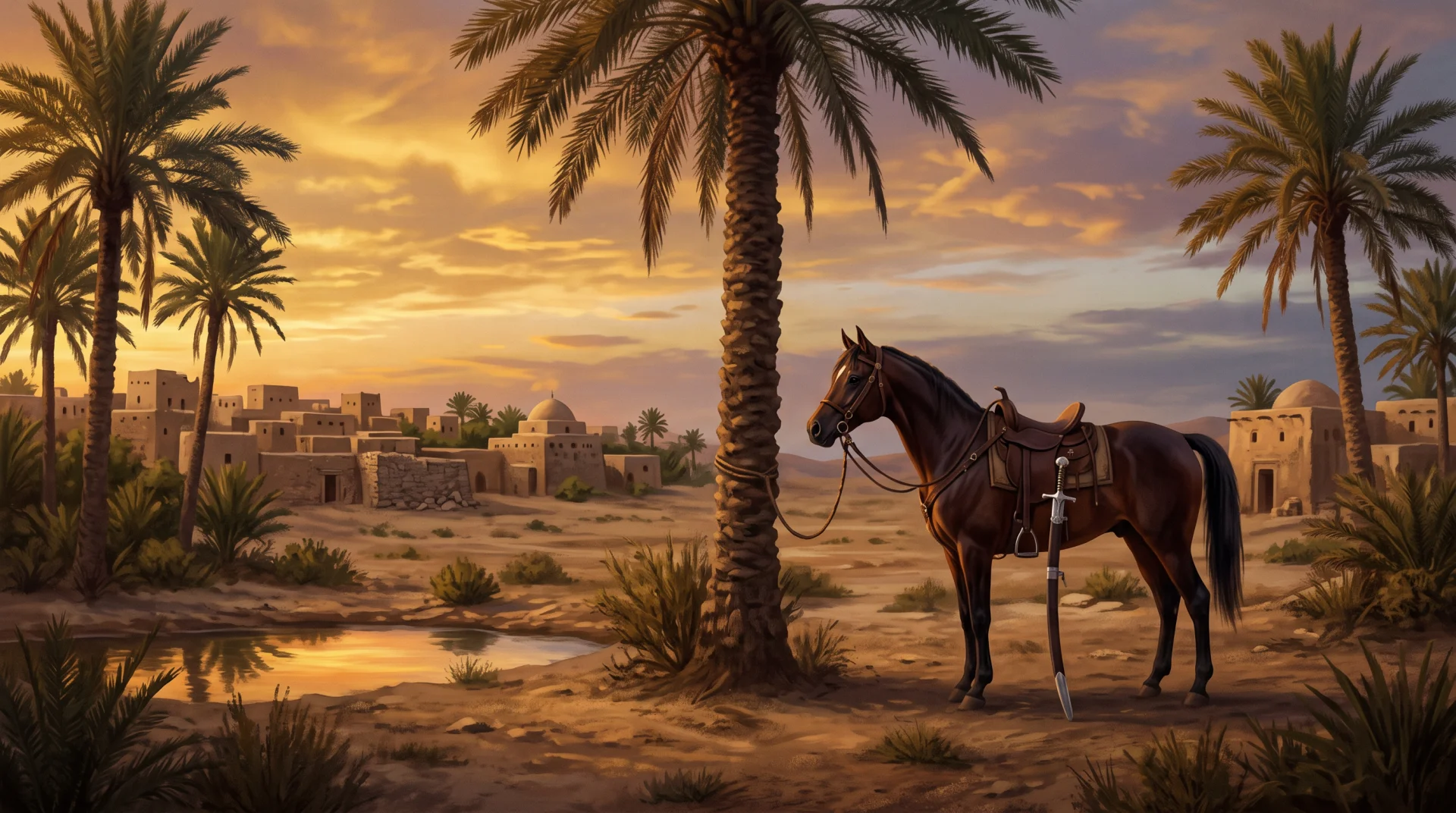
A hawari is a prophet's helper from among his chosen ones, a man who goes to great lengths in supporting his prophet and is pure of every fault. To understand why al-Zubayr earned this title from the Prophet ﷺ, the author invites readers back to Mecca in the earliest years of the mission.
Scene 3
The First Sword Drawn in God's Cause
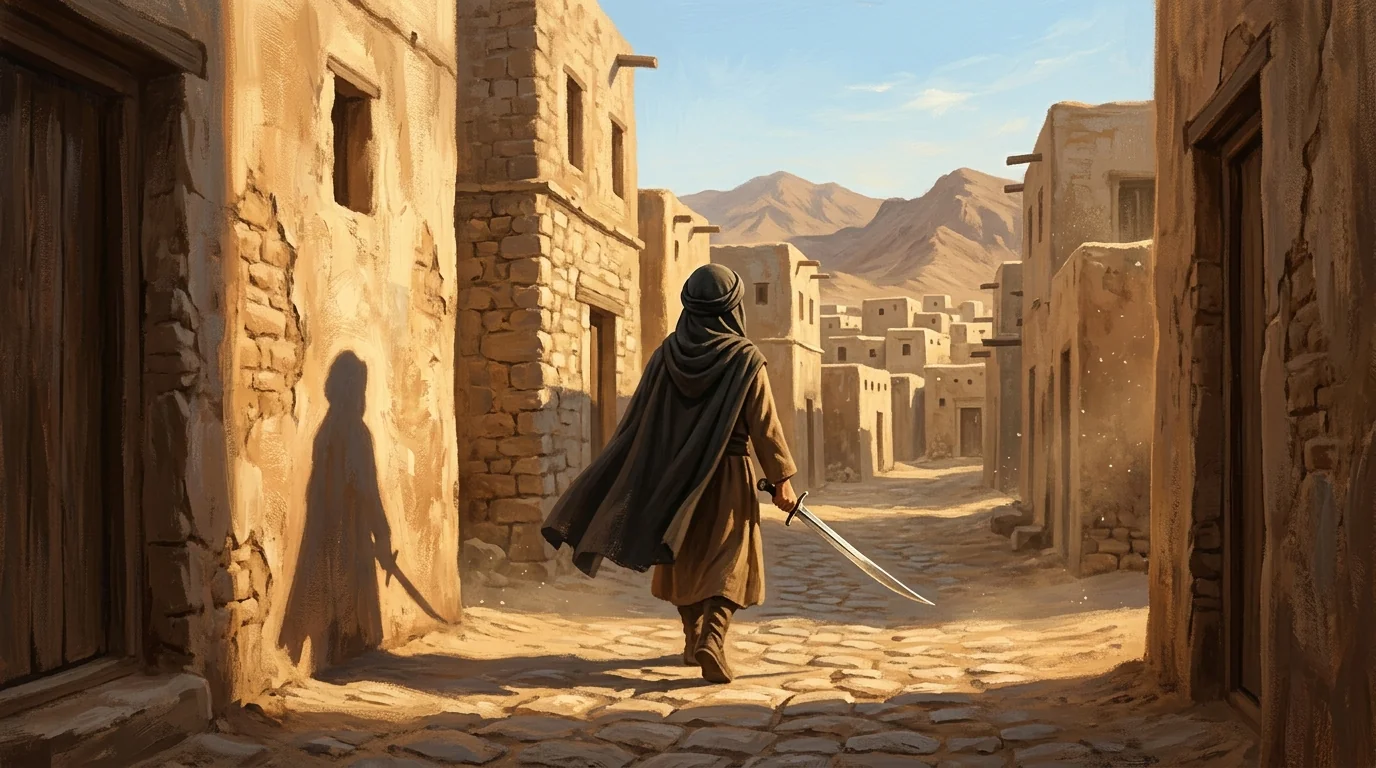
In the streets of Mecca people were amazed to see a young boy striding with a drawn sword, his eyes flashing. The Prophet ﷺ saw him and asked what was wrong. Al-Zubayr replied that he had heard the Prophet had been seized and killed, and had come to strike whoever had taken him.
Scene 4
The Battle of Uhud and the Duel with the Ram of the Battalion
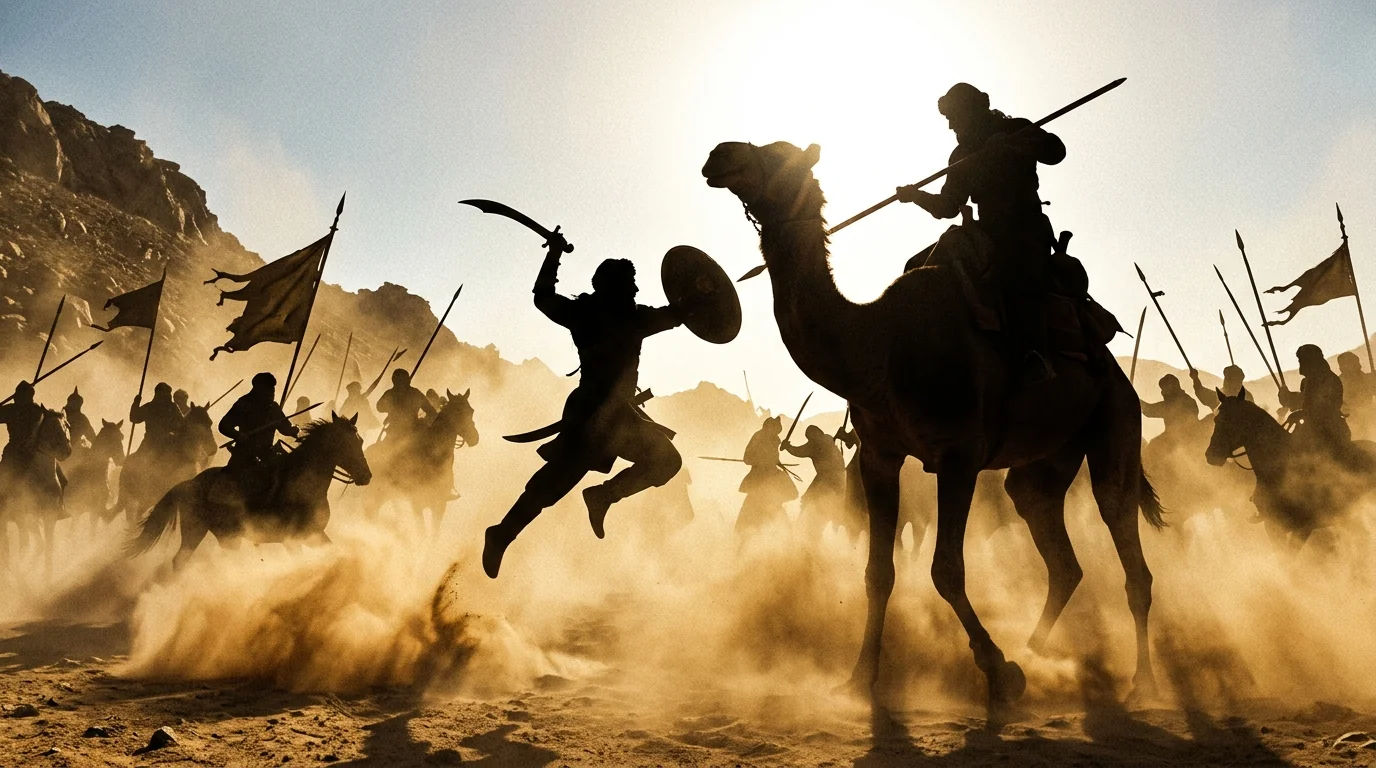
At Uhud, before the armies met, the fiercest Qurayshi warrior, Talha ibn Abi Talha al-Abdari, called the Ram of the Battalion, rode out on a huge camel carrying the banner and demanded a duel. Al-Zubayr strode forward, leapt onto the camel, dragged rider and beast down and beheaded him, and the Prophet ﷺ cried "Allahu Akbar".
Scene 5
The Epic of Yarmouk and the Knight of Two Swords
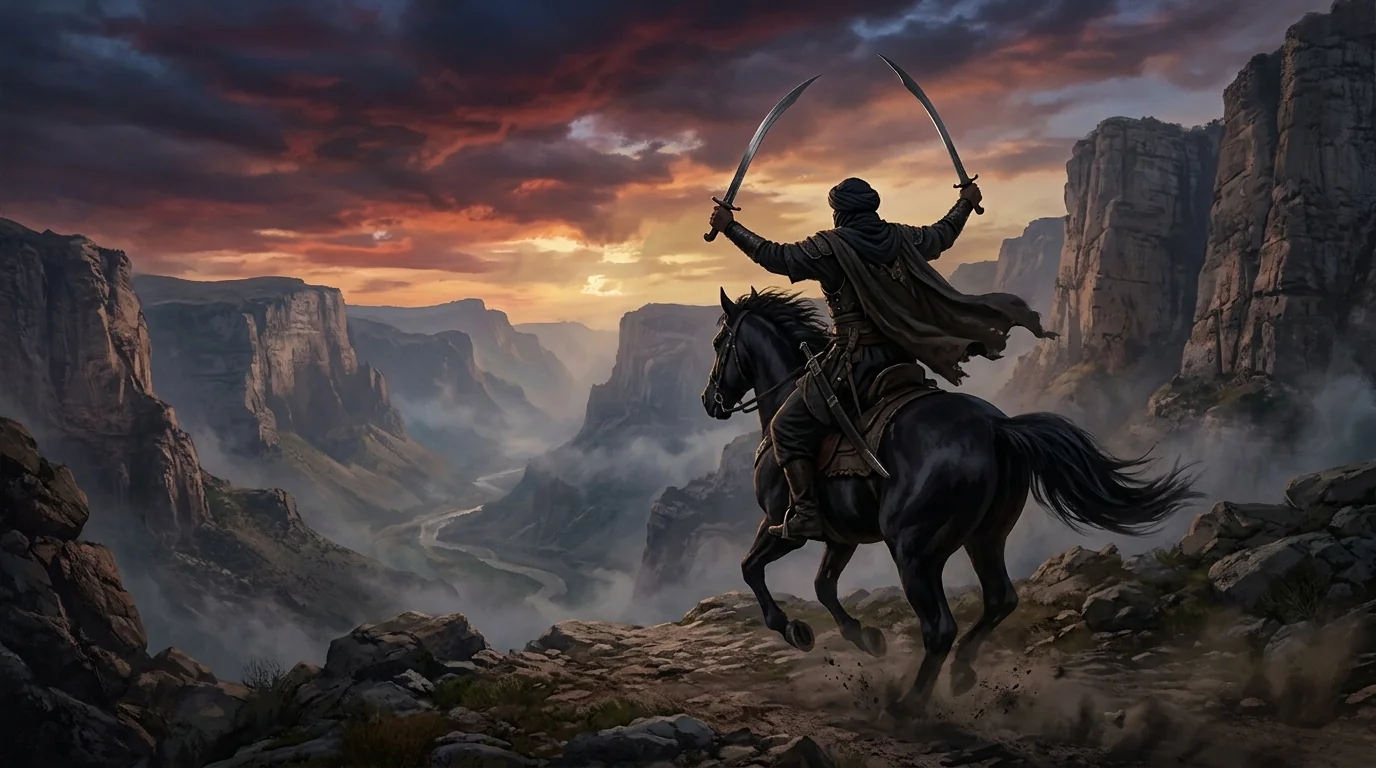
From Uhud the author moves north to Yarmouk in the Levant. There the Romans marvelled at a veiled horseman who advanced alone before the battle began and broke through their army with a sword in each hand, fighting with both at once and felling men right and left. That veiled rider was al-Zubayr ibn al-Awwam.
Scene 6
The Conquest of Egypt and Scaling the Fortress of Babylon
In Egypt the Romans held the fortress of Babylon for seven months against Amr ibn al-Aas's army. Umar sent reinforcements of men for hard missions, among them Muhammad ibn Maslama and al-Zubayr. The Romans were stunned to see a powerfully built warrior scale the walls and within moments stand on the fortress's highest point.

Scene 7
Al-Zubayr's Takbir on the Wall and the Romans' Collapse
Atop the fortress the daring al-Zubayr raised his sword to the sky and cried "Allahu Akbar" in a voice like thunder, and the Romans fled their barracks in terror at the sight. This giant, the author says, was the very man in whose form Gabriel had descended, the disciple of the Prophet ﷺ.

Scene 8
A Drop in the Ocean, and the Prophet's Neighbours in Paradise
These lines, the author says, are only a drop from the true legend of al-Zubayr, a hero whose life young Muslims should study now that the age of imitation is over. His name is tied to another knight, his fellow neighbour of the Prophet ﷺ in Paradise, who became a martyr while still alive.
These are English scene notes. The full chapter text, as the author wrote it, is in the app.