


Scene 1
I Am Sultan of the Three Continents and the Seven Seas
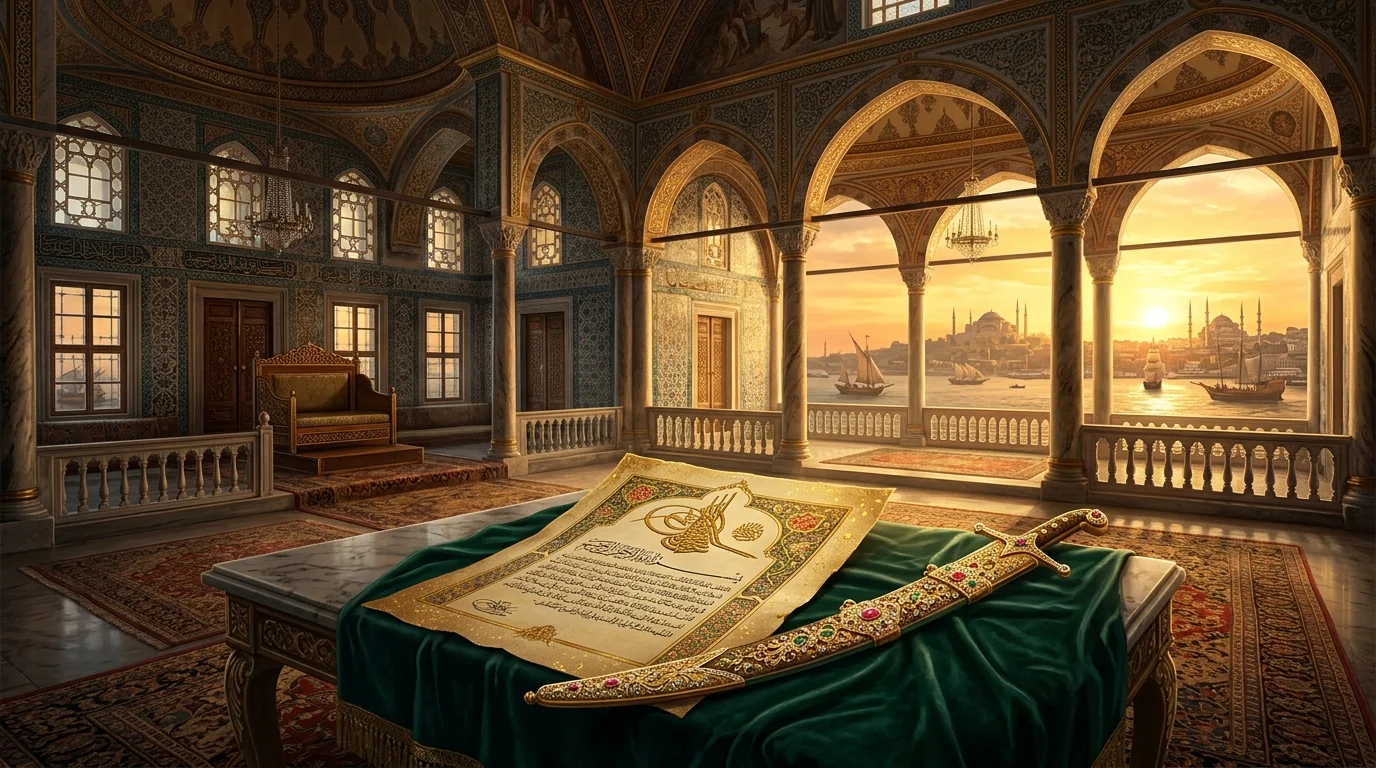
The chapter opens with Suleiman's letter to Francis of France, listing the seas and lands under his rule. The West calls him Suleiman the Magnificent, and many historians consider him the greatest king in history, ruling capitals across Asia, Africa and Europe; a German historian called him more dangerous than Saladin himself.
Scene 2
The Conquest of Belgrade's Fortress and the Island of Rhodes
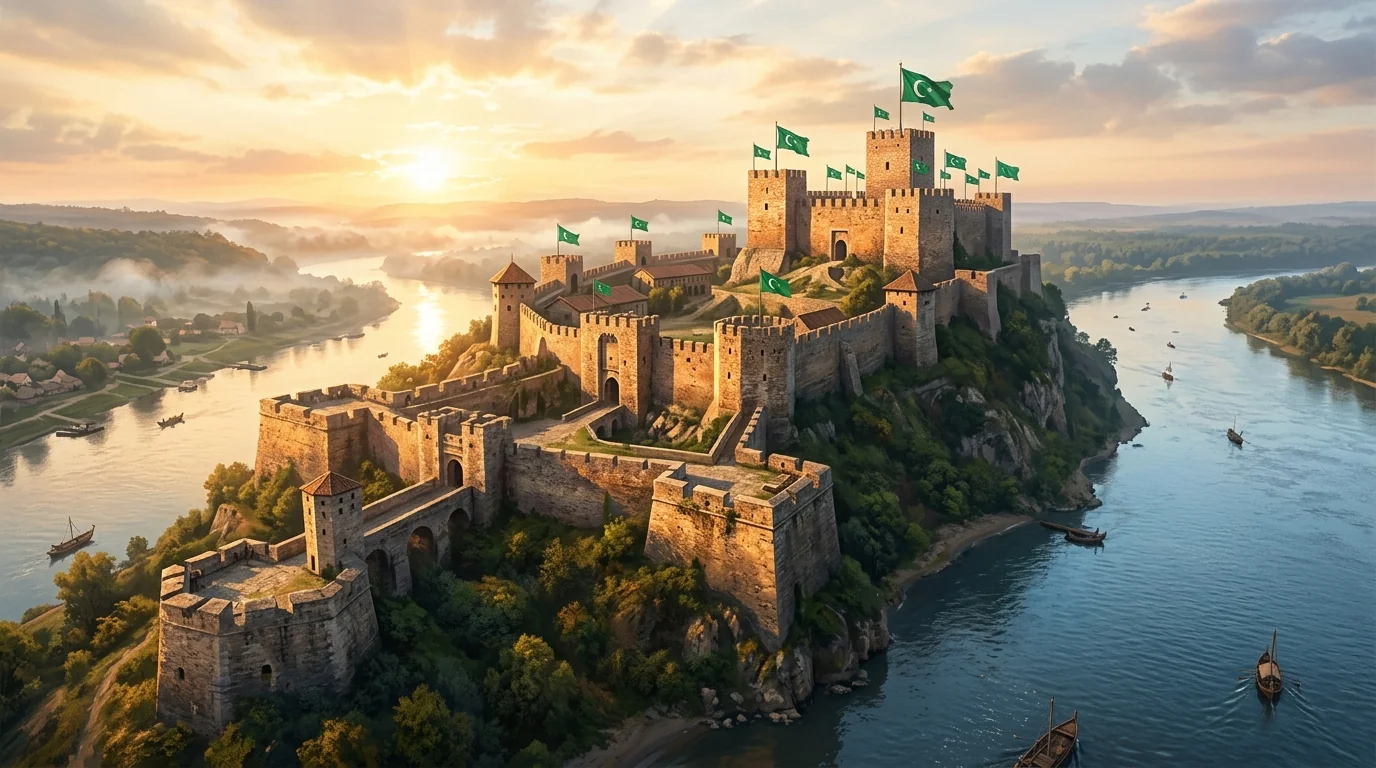
Son of Selim I, Suleiman spread justice, enacted the Ottoman laws that gave him the name the Lawgiver, restored Jerusalem and built roads and schools. Becoming caliph at twenty-six, he surprised his enemies by taking Belgrade, which had defied Mehmed the Conqueror, then sailed to Rhodes and destroyed the state of the Knights of St John.
Scene 3
Mustering 100,000 Janissaries for the Plain of Mohács
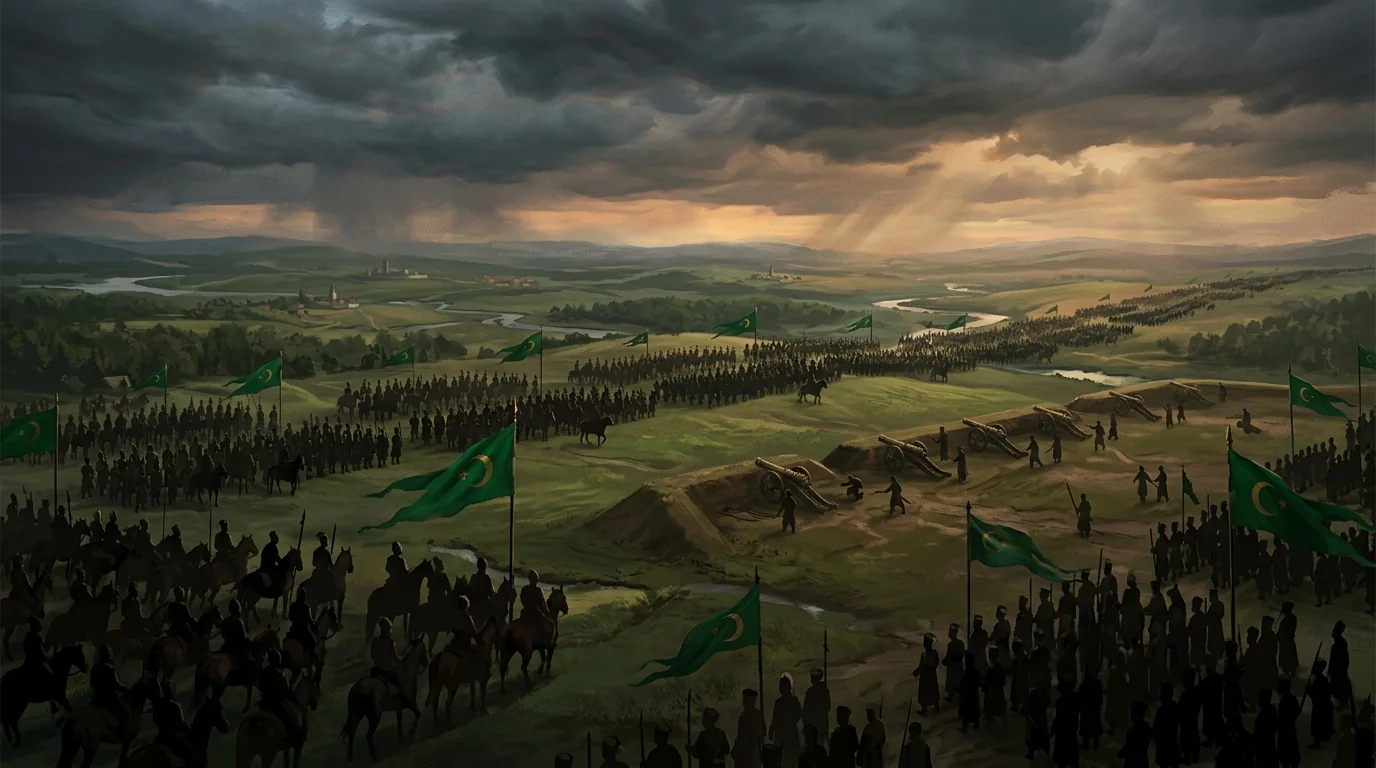
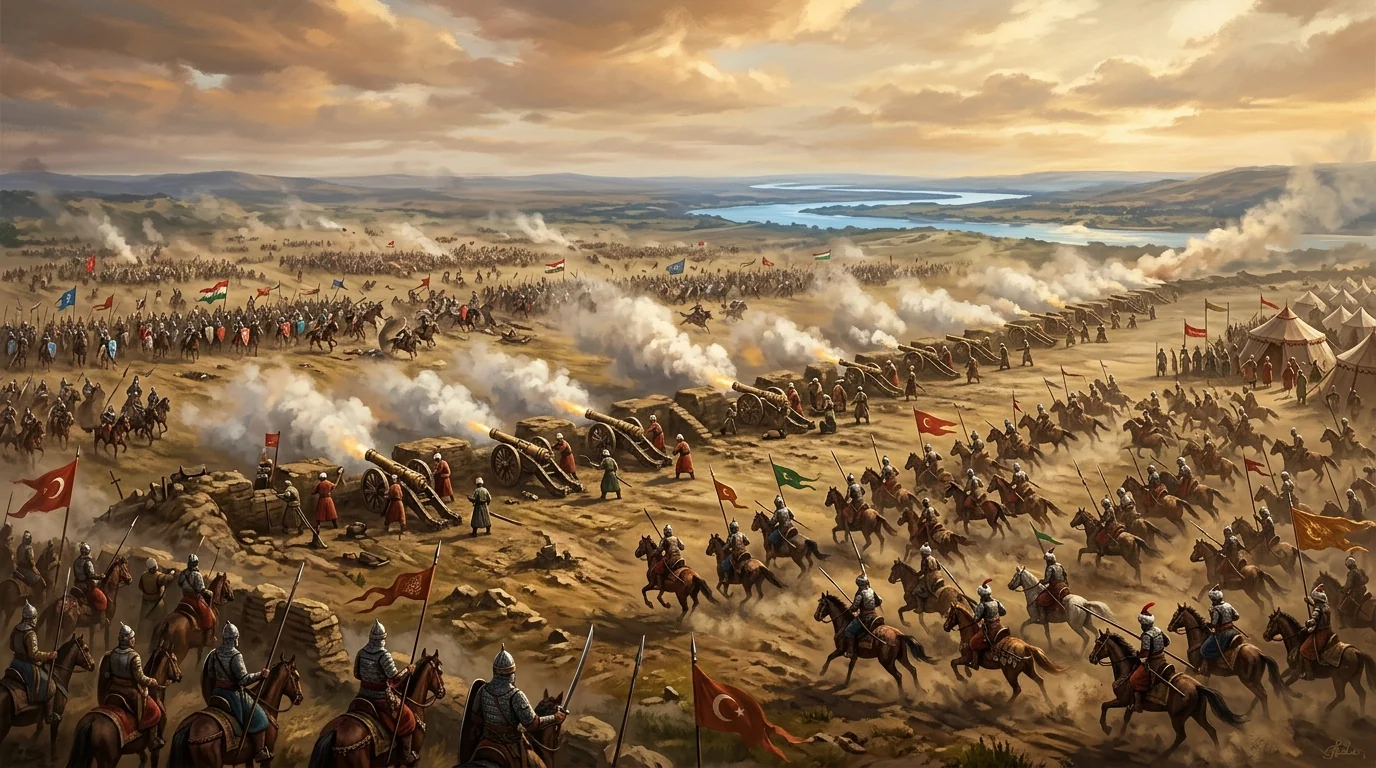
Europe's kings hurried to pay tribute to Istanbul, but Louis II of Hungary killed the caliph's envoy. Suleiman marched on Hungary himself with a hundred thousand Janissaries. Rome declared an emergency, the Pope offered indulgences, and the armies of Hungary, Croatia, the Czechs, Spain, Germany and Serbia gathered in the valley of Mohács.
Scene 4
A Moving Dawn Prayer and the Pledge of Martyrdom
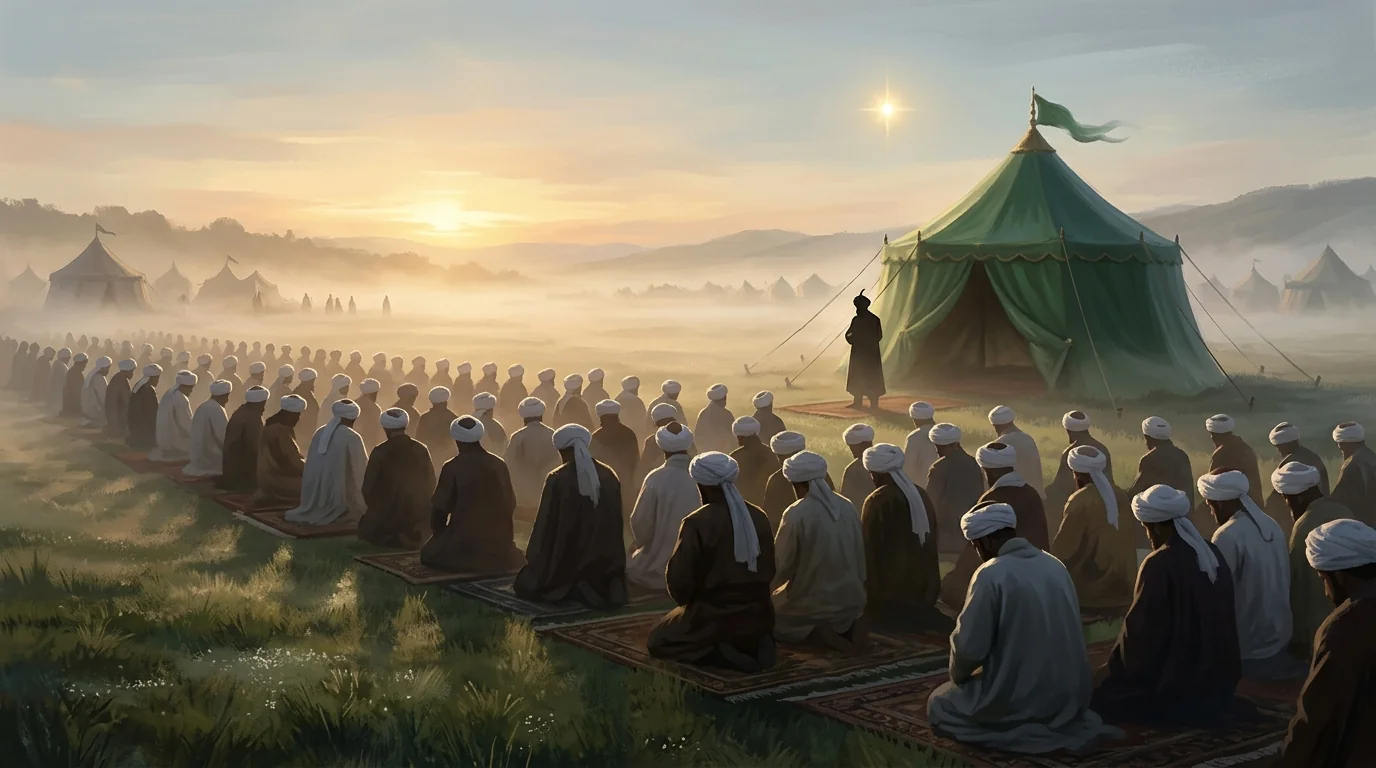
At dawn on the day of the battle, the Ottoman caliph Suleiman the Lawgiver led his army in the Fajr prayer. When it was over he turned and looked at his soldiers with great pride, and told them that it was as though he could see the Prophet ﷺ looking at them at that very moment.
Scene 5
The Immortal Victory at Mohács and the Danube
The soldiers wept, embraced and pledged to die in God's cause and meet in Paradise. On 20 Dhu al-Qada 932 AH, 28 August 1526, the Muslims under Suleiman routed the allied army at Mohács, and Louis II fled and drowned in the Danube. The author adds that a new Safavid betrayal was then discovered.
Scene 6
Cleansing Baghdad and Restoring Imam Abu Hanifa's Tomb
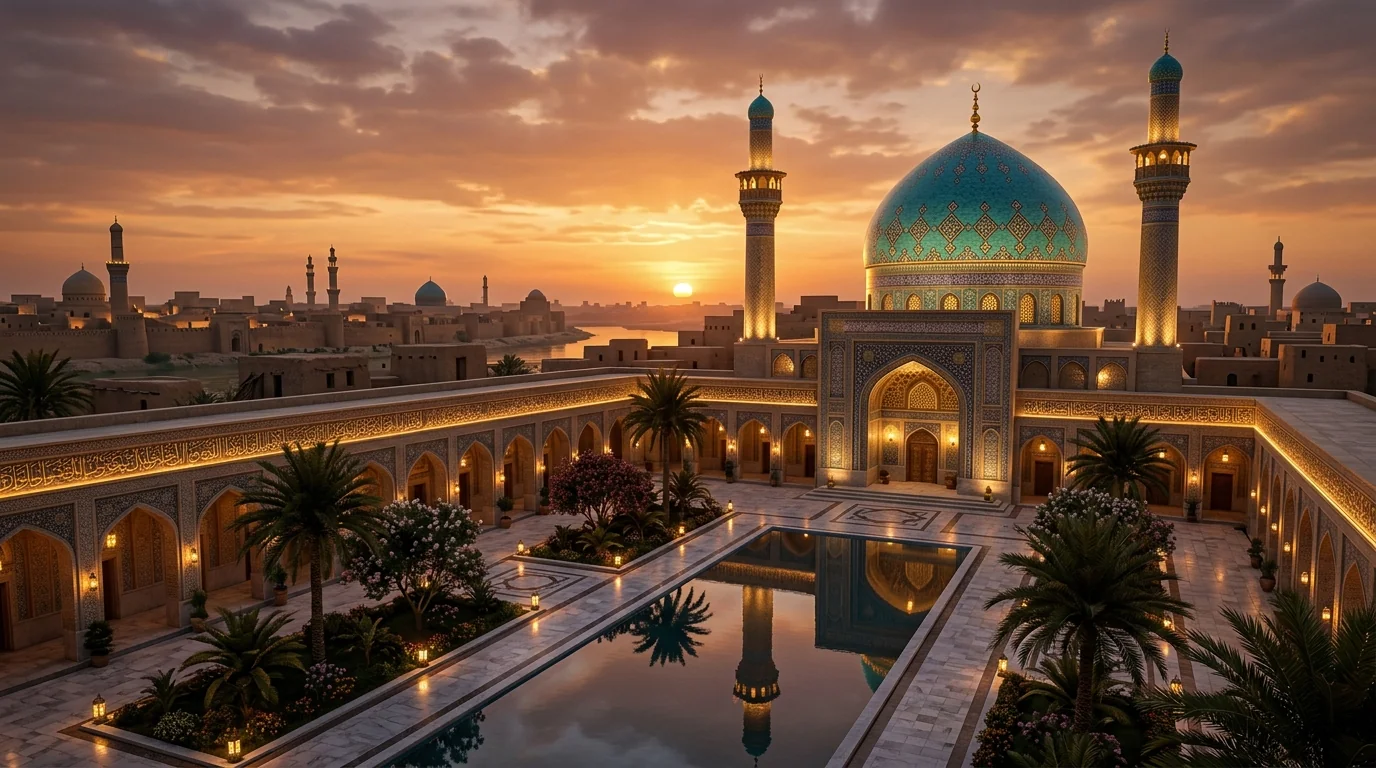
The Janissaries discovered that the Safavid Shia were secretly aiding the Crusaders from behind the lines, "as is their habit", so Suleiman ordered his troops east to discipline the Shia. The Muslims found the Shia had dug up the grave of Imam Abu Hanifa al-Nu'man in Baghdad and proclaimed in the markets that anyone wishing to relieve himself should do so at his grave. Under Suleiman the Muslims pounced like lions on "the Safavid dogs", cleansing Baghdad of "the filth of the Safavid Shia" for more than five centuries, before they returned in 2003.
Scene 7
The Lawgiver's Martyrdom After Forty-Six Years
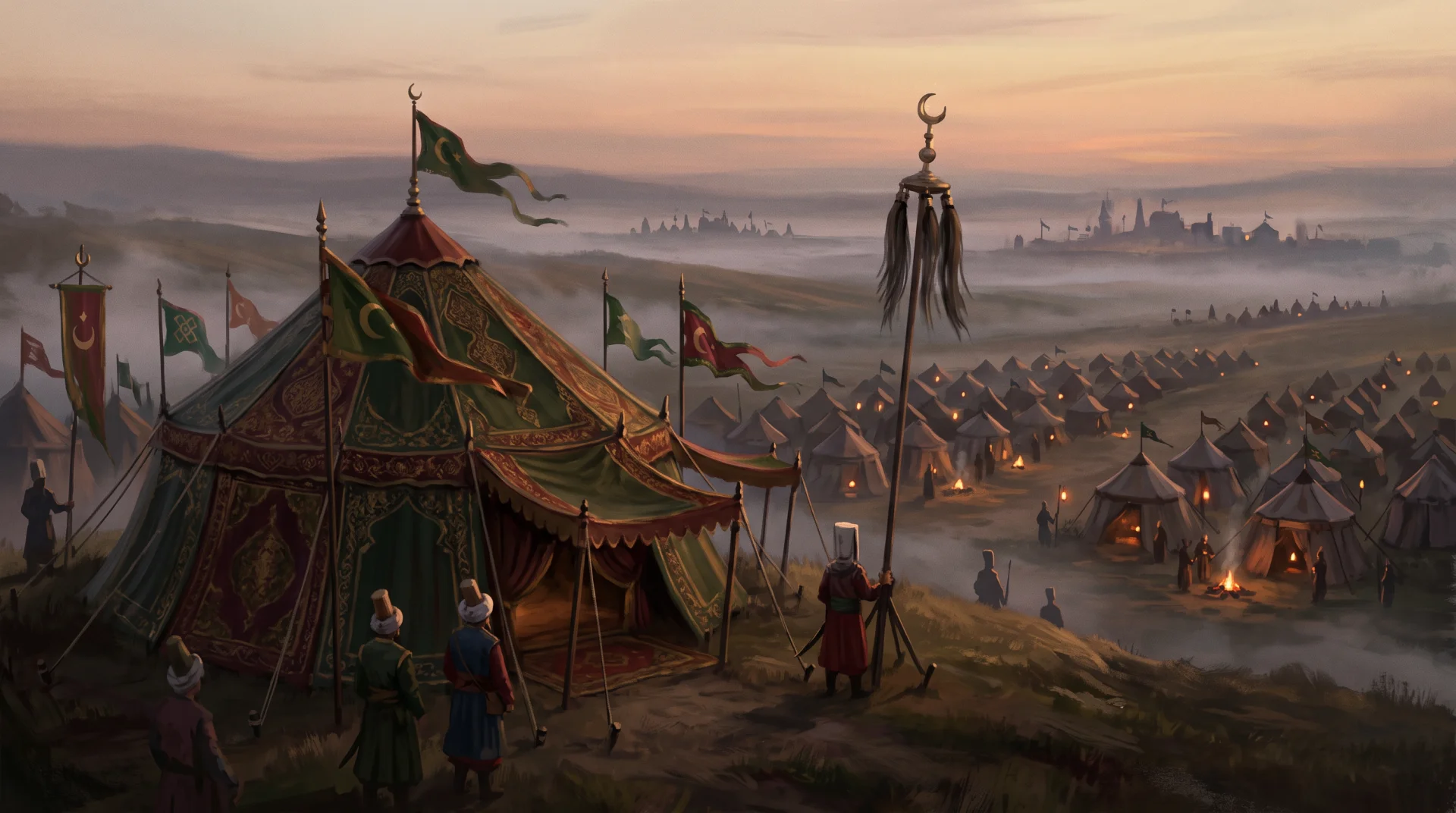
After these great victories Suleiman remained caliph for forty-six years, spending them in jihad to his very last breath. He died a martyr while still campaigning in God's cause despite his advanced age, and the author closes with a prayer that God reward him for all he gave to Islam and Muslims.
Scene 8
The Law, Building Jerusalem and a Prelude to Suleiman al-Halabi
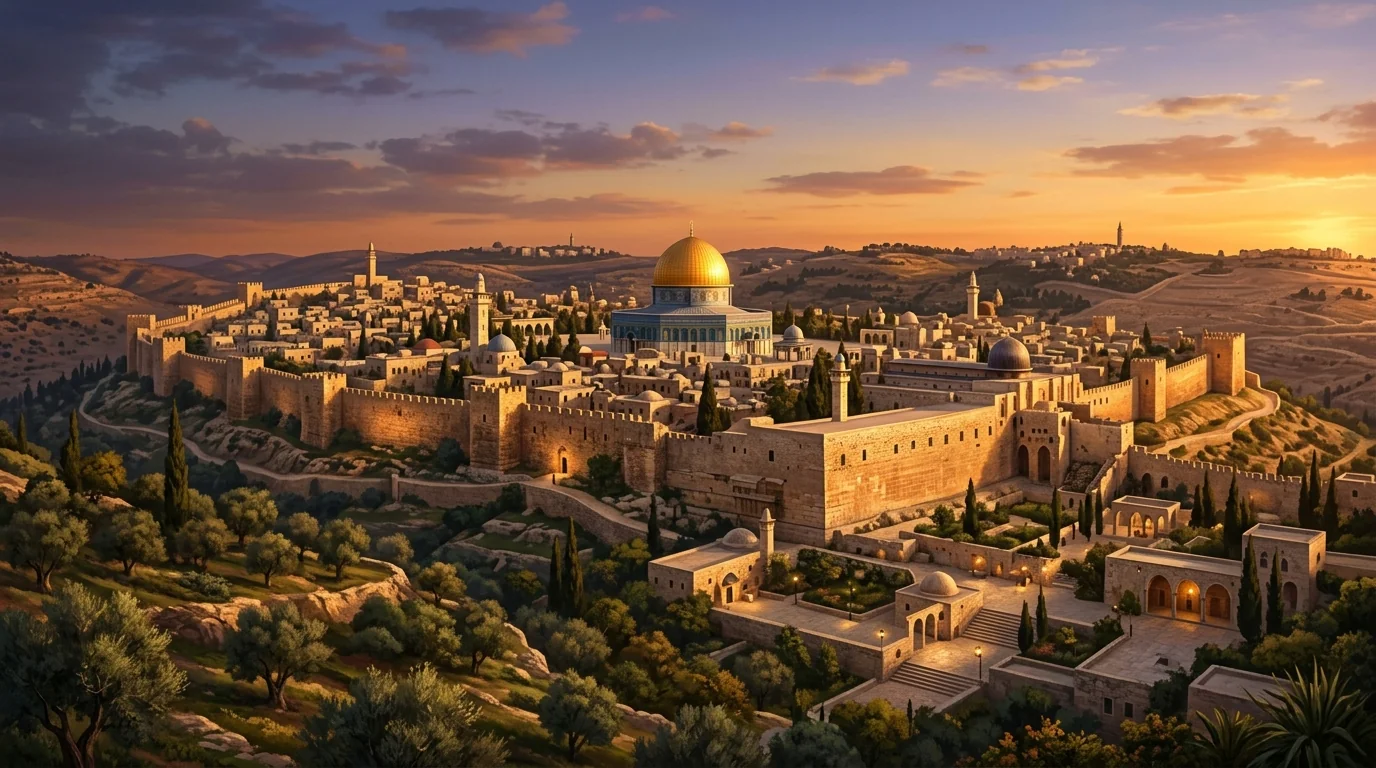
Suleiman opened his letters with the verse "It is from Solomon, and it is in the name of God", honouring the prophet Solomon who was sent in the Levant. That blessed land, the author says, produced another hero of the same name who taught Napoleon's soldiers a lesson, and whose skull a Paris museum still keeps.
These are English scene notes. The full chapter text, as the author wrote it, is in the app.