


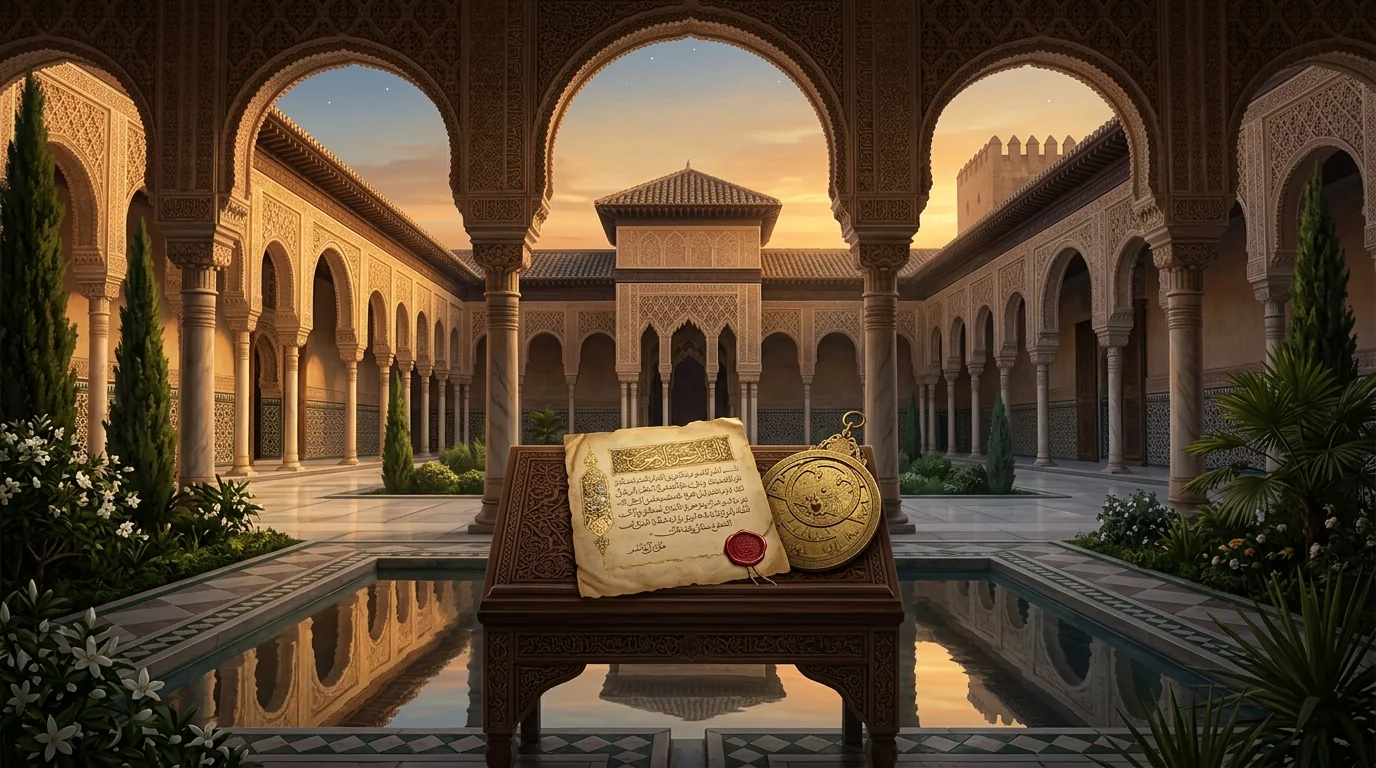
Scene 1
The Letter from Granada and Andalusia's Cry for Help
The chapter "Giants of the Islamic Navy" opens with the 1541 letter of Granada's people to Sultan Suleiman the Magnificent, praising Khayr al-Din for rescuing many Muslims from "the rebellious infidels". The author says our enemies know our forgotten history well while we fell into their trap. Hollywood's most famous pirate, with red beard, one eye, severed hand and wooden leg, is Barbarossa, in truth an Islamic hero rarely matched in human history: not a bloodthirsty pirate but a mujahid saving thousands of Muslims whose blood "their criminal ancestors" were shedding.
Scene 2
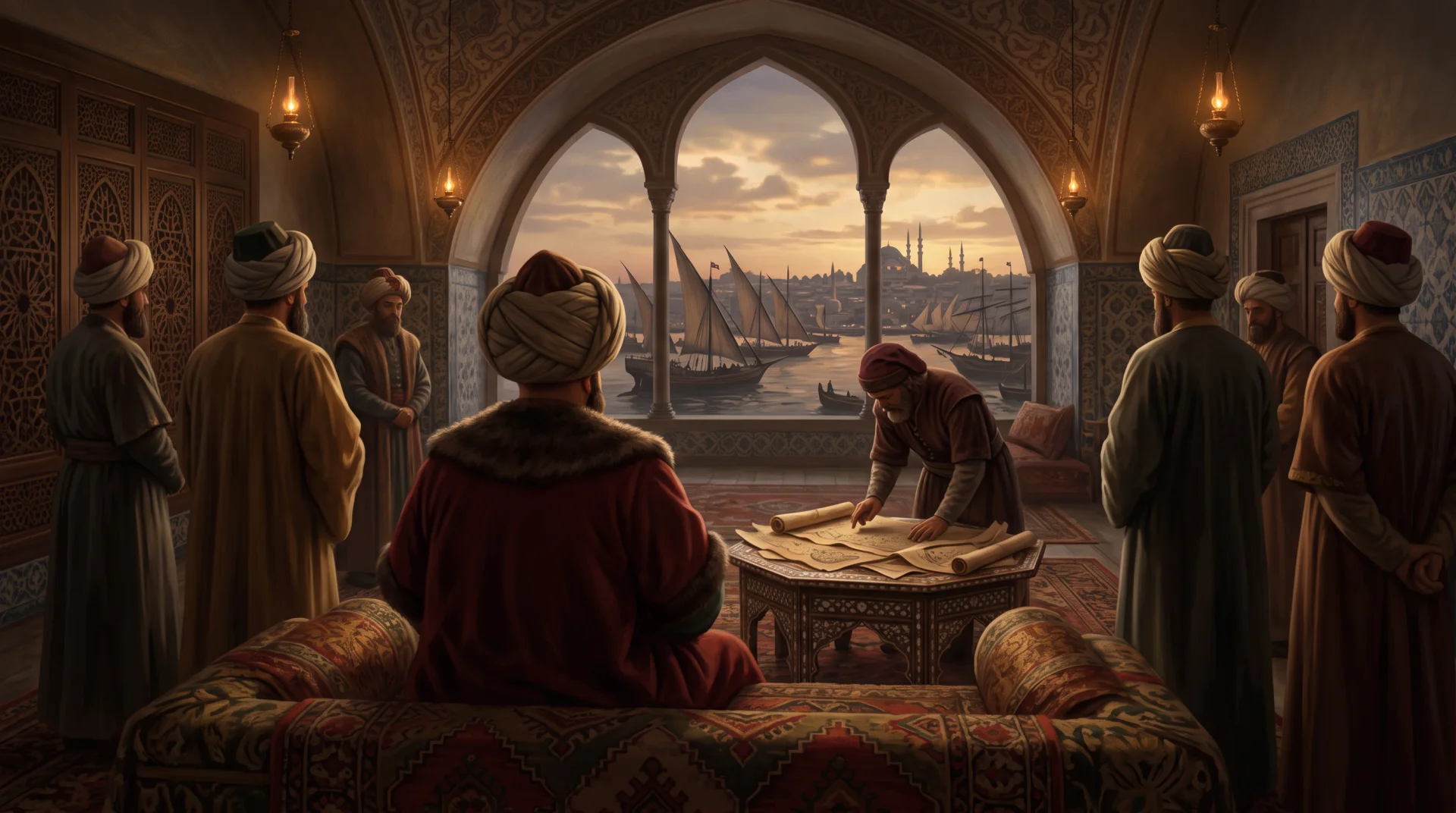
Sultan Selim's Meeting with Commander Aruj
The story begins when Sultan Selim I met the naval commander Aruj, son of an Albanian father and an Andalusian mother who had fled the Inquisition and raised her sons on tales of torture and resistance. Selim showed him the Andalusian Muslims' pleas for help and entrusted him with a mission the world would call impossible.
Scene 3
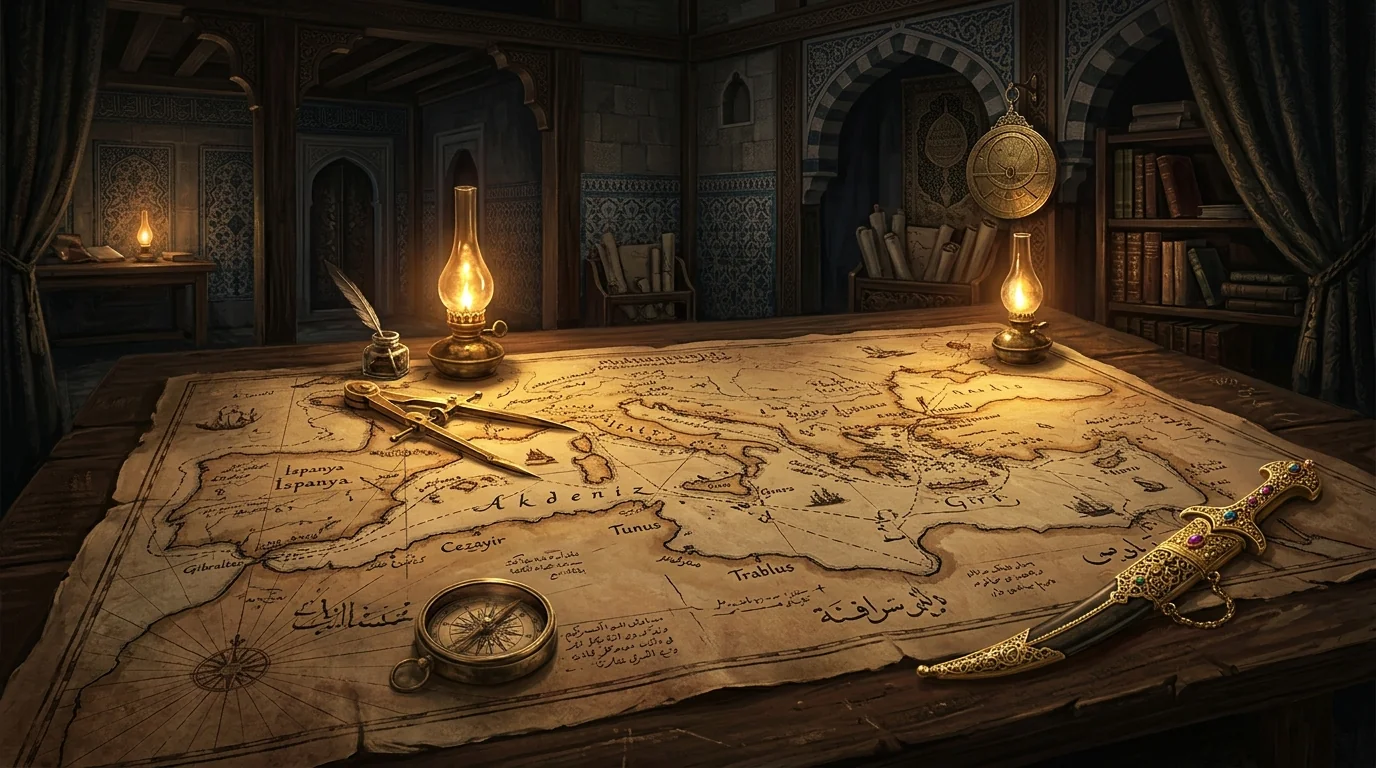
The Impossible Mission and Its Nine Points
Selim's nine-point order: sail from Turkey to Andalusia through the combined Crusader fleets, land in an occupied city, destroy its garrison, raise the Ottoman banner, search the church cellars for secret torture chambers, free the prisoners after sunset to spare their eyes, carry them to the ships, leave within six hours and sail by night to Algeria.
Scene 4
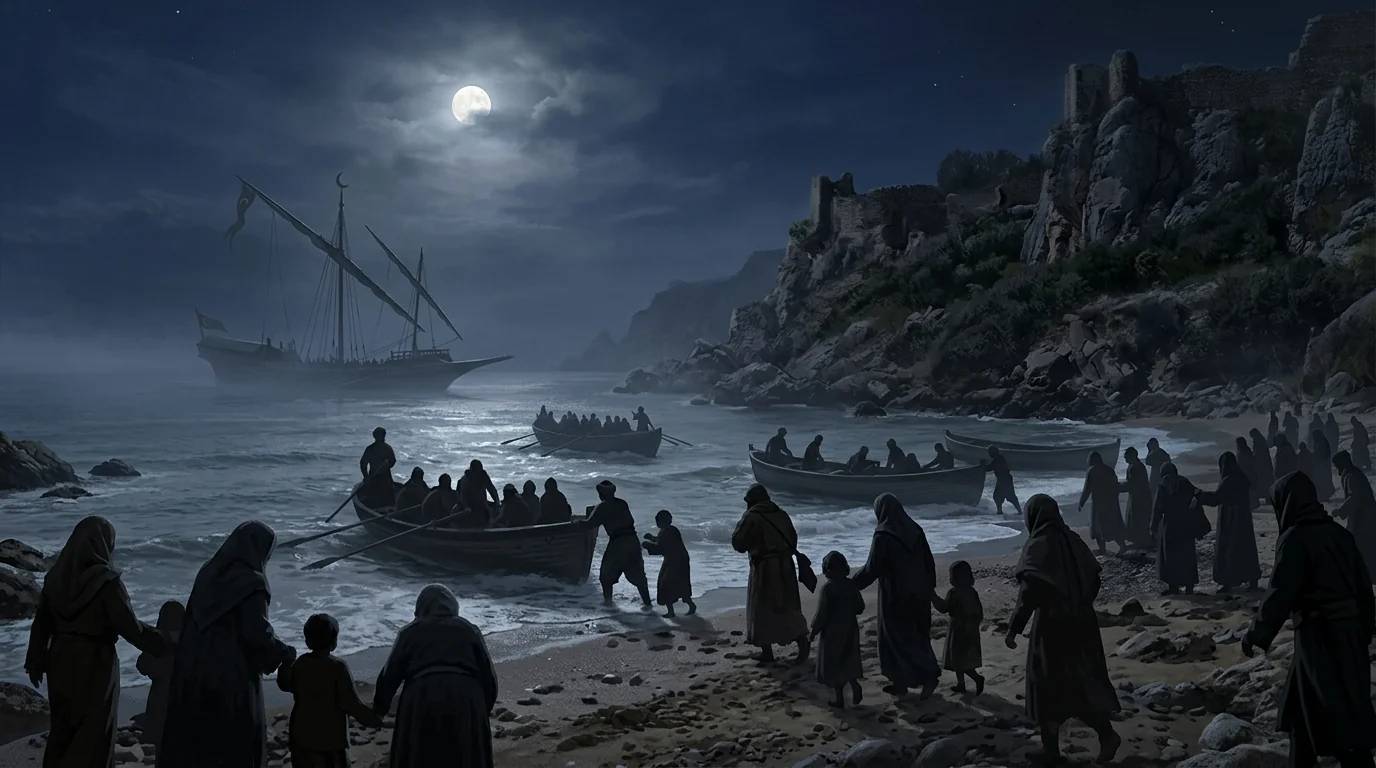
The Secret Rescue Under Cover of Darkness
Aruj carried out the mission with unmatched success, and he and his brothers repeated it many times, saving tens of thousands of Andalusian Muslims. Europe told of an Ottoman sailor who moved like a ghost; the Andalusians called him Baba Aruj, which the Italians turned into Barbarossa, meaning the red-bearded man.
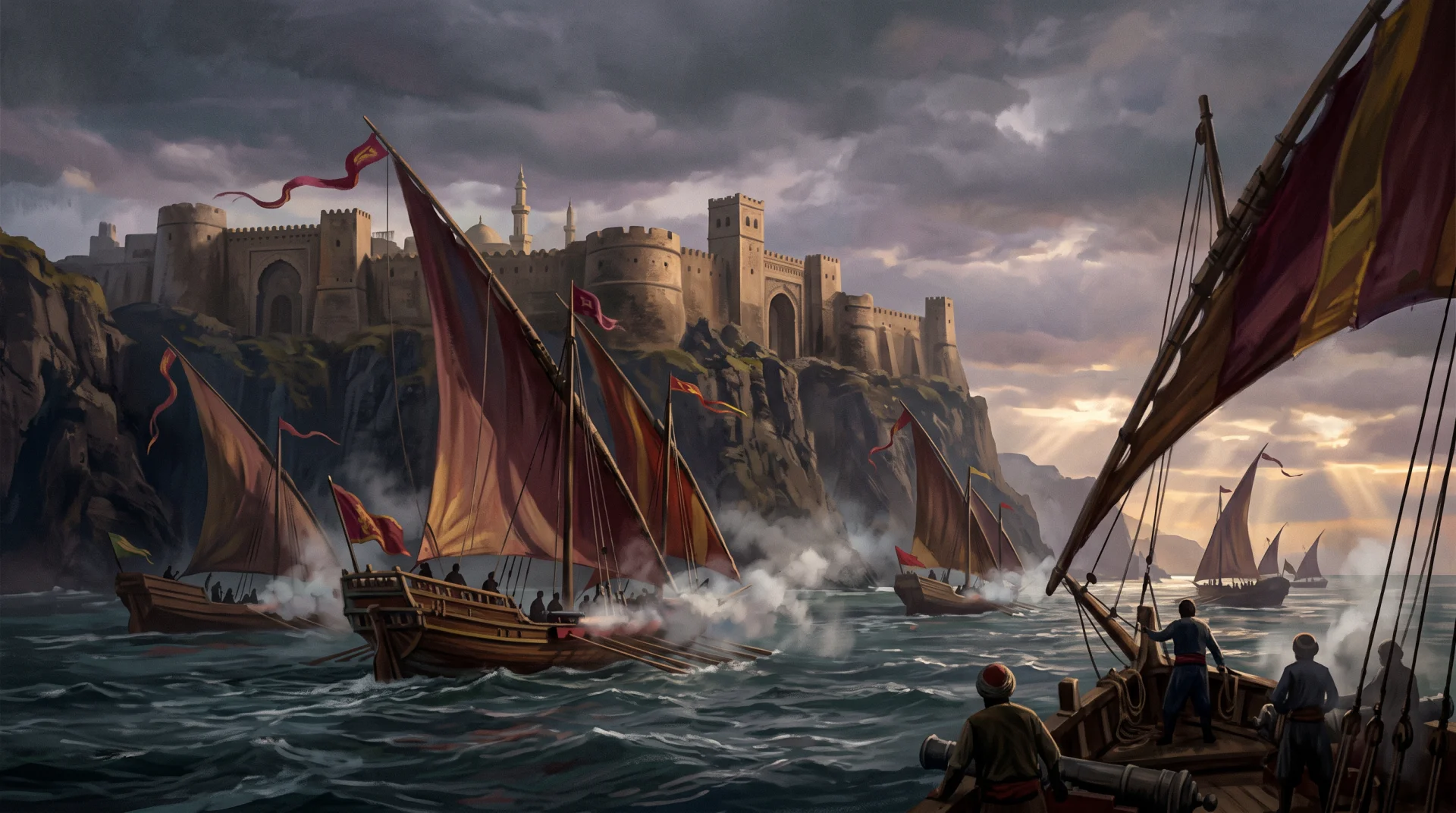
Scene 5
Aruj's Brothers: Ilyas and Khayr al-Din in the Struggle
Aruj took his brothers Ishaq, Ilyas and Khusrev (Khayr al-Din) into jihad. Ilyas was martyred; Khayr al-Din fought the rulers who were agents of the Spanish Crusaders in Algeria; Aruj, captured by the Knights of St John on Rhodes, freed himself, seized a Crusader ship in Italy after killing every soldier aboard, and sailed alone to Egypt, where the Mamluk Sultan al-Ghuri gave him a ship. When "one of the traitors", a ruler loyal to Spain, opened Tlemcen's gates, Aruj refused to flee or surrender and fought one-handed until the Crusaders' "treacherous swords" cut him to pieces.
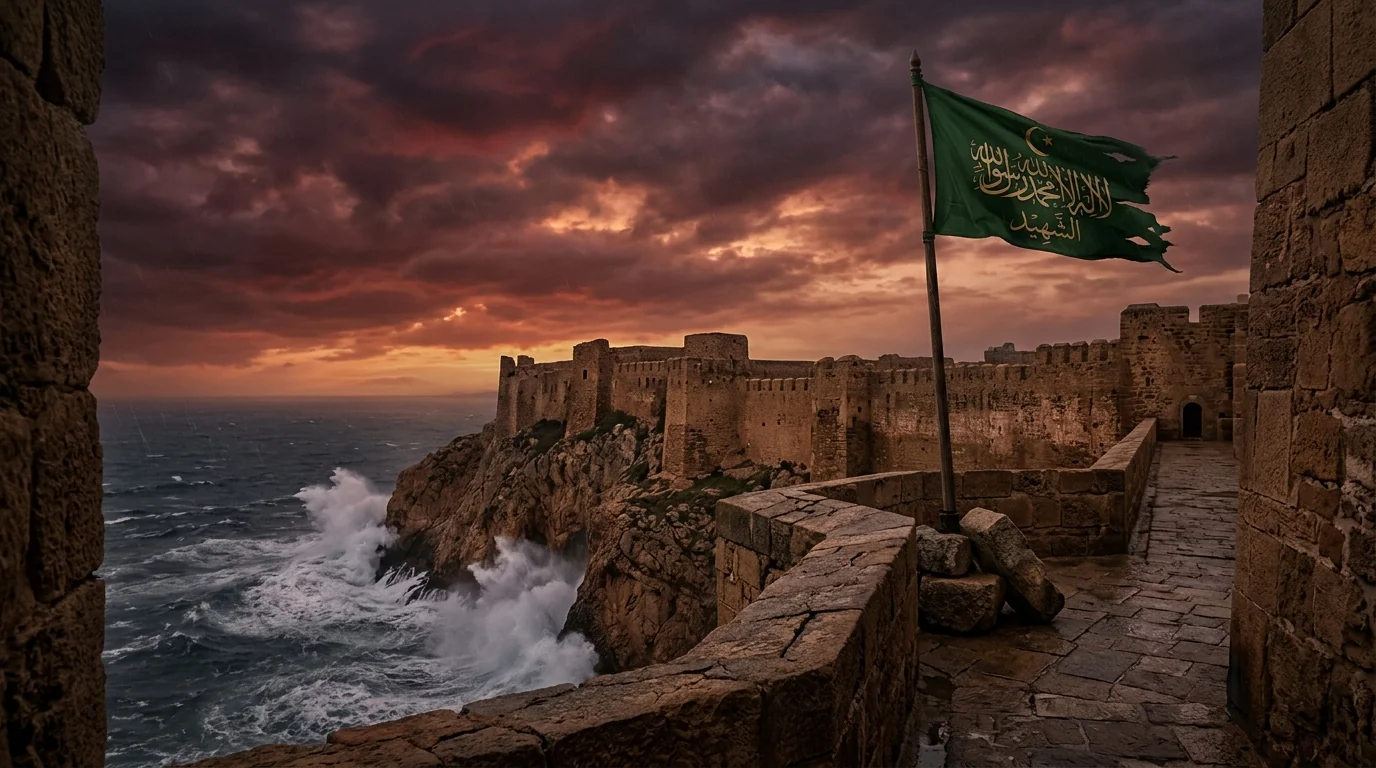
Scene 6
The Martyrdom of the Hero Commander Aruj Barbarossa
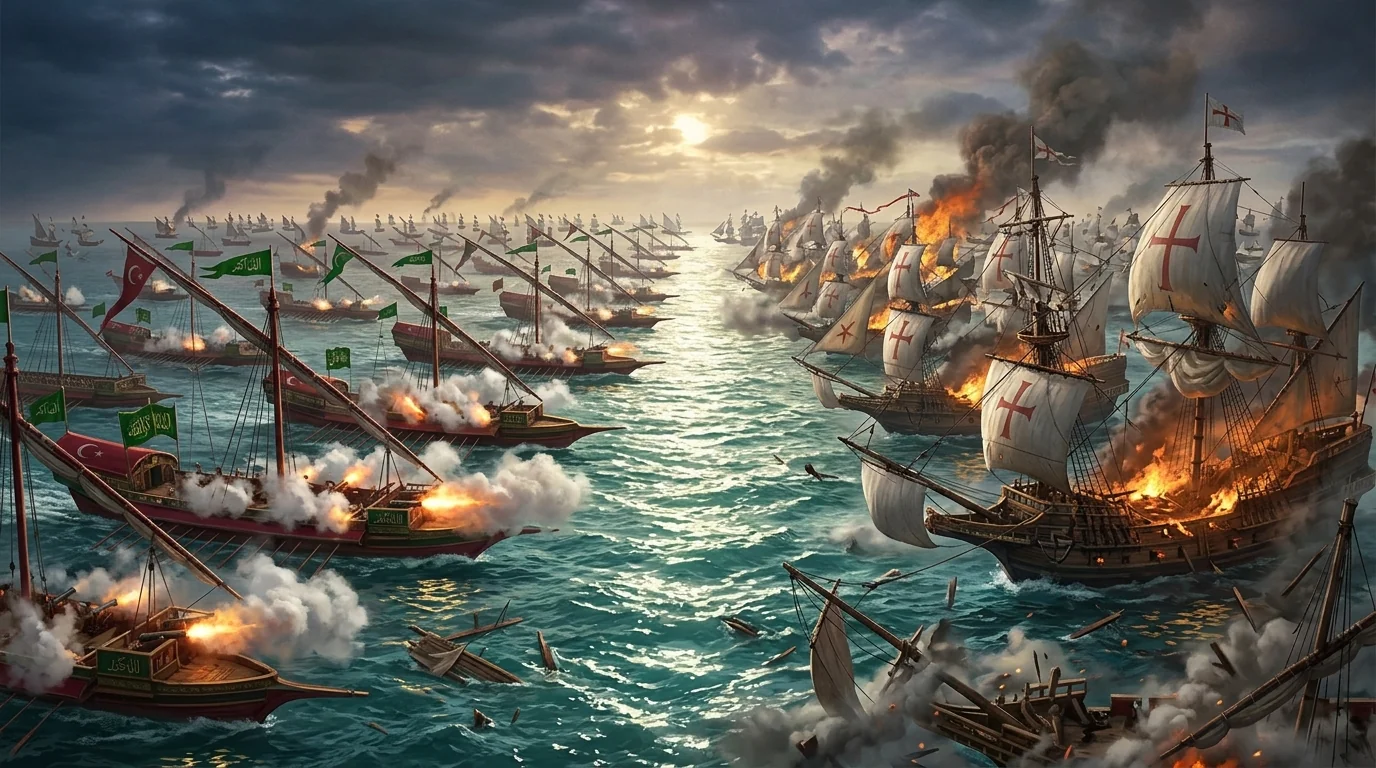
Aruj died pronouncing the testimony of faith, and his head was paraded through Catholic Europe to ringing church bells. His brother Khayr al-Din vowed revenge, freed Tunis and Algiers and took the Balearic Islands. Pope Paul III then raised a fleet of 600 ships and sixty thousand men under Andrea Doria against 122 Ottoman ships.
Scene 7
The Great Naval Battle of Preveza
On 4 Jumada al-Ula 945 AH, 28 September 1538, the two fleets met at Preveza. Despite the Crusaders' superior numbers and equipment, Khayr al-Din Barbarossa won a great victory and destroyed the allied European fleet completely. Andrea Doria fled a battle lasting no more than five hours; the scene lists the commanders on both sides.
Scene 8
Mastery of the Mediterranean and the Rescue of 70,000 Muslims
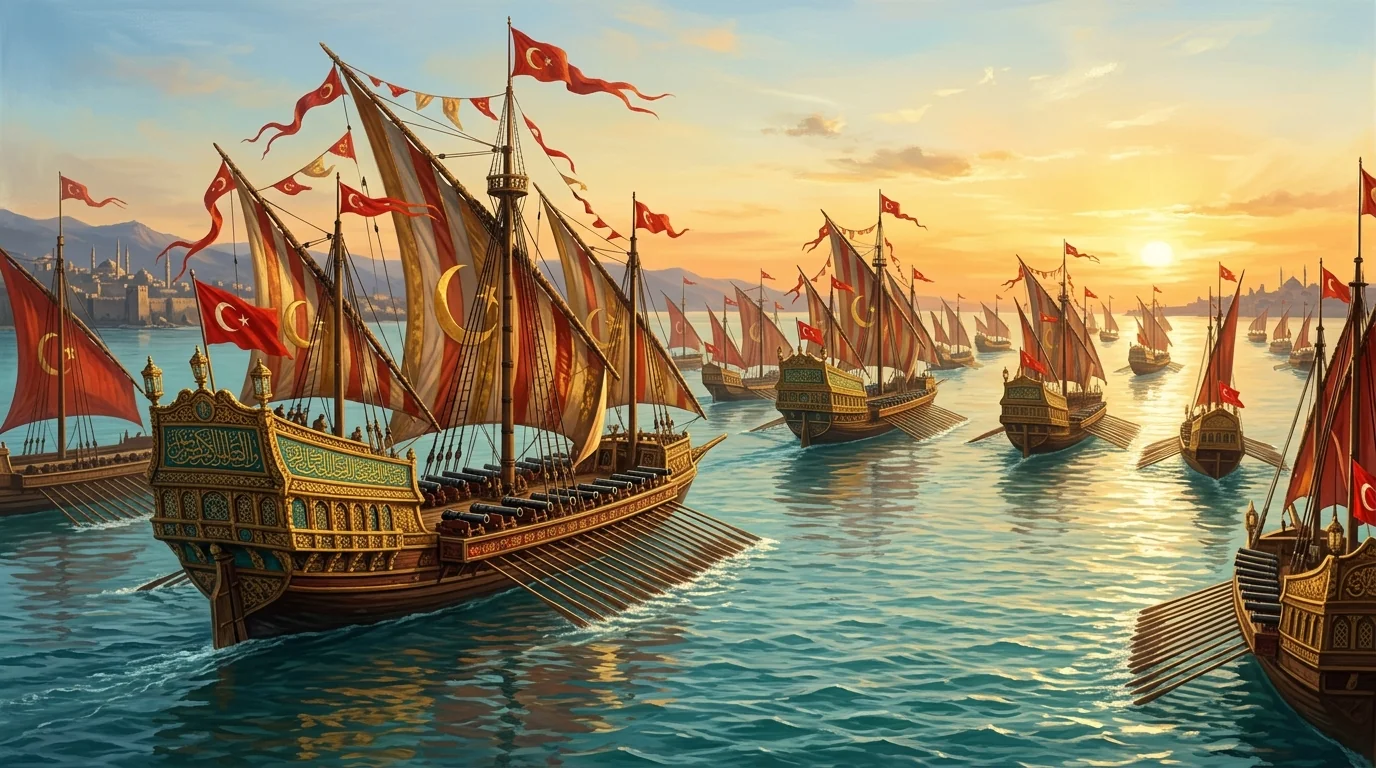
After the victory the Ottoman navy ruled the Mediterranean unchallenged for three centuries, and thanksgiving prayers rose from Mecca to Samarkand. Suleiman the Magnificent prostrated in gratitude and made Khayr al-Din admiral of all Ottoman fleets. Barbarossa then ferried more than seventy thousand Andalusian Muslims to safety, earning from them the name Khayr al-Din.
Scene 9
Brotherhood in Faith and Refuting the Pirate Myths
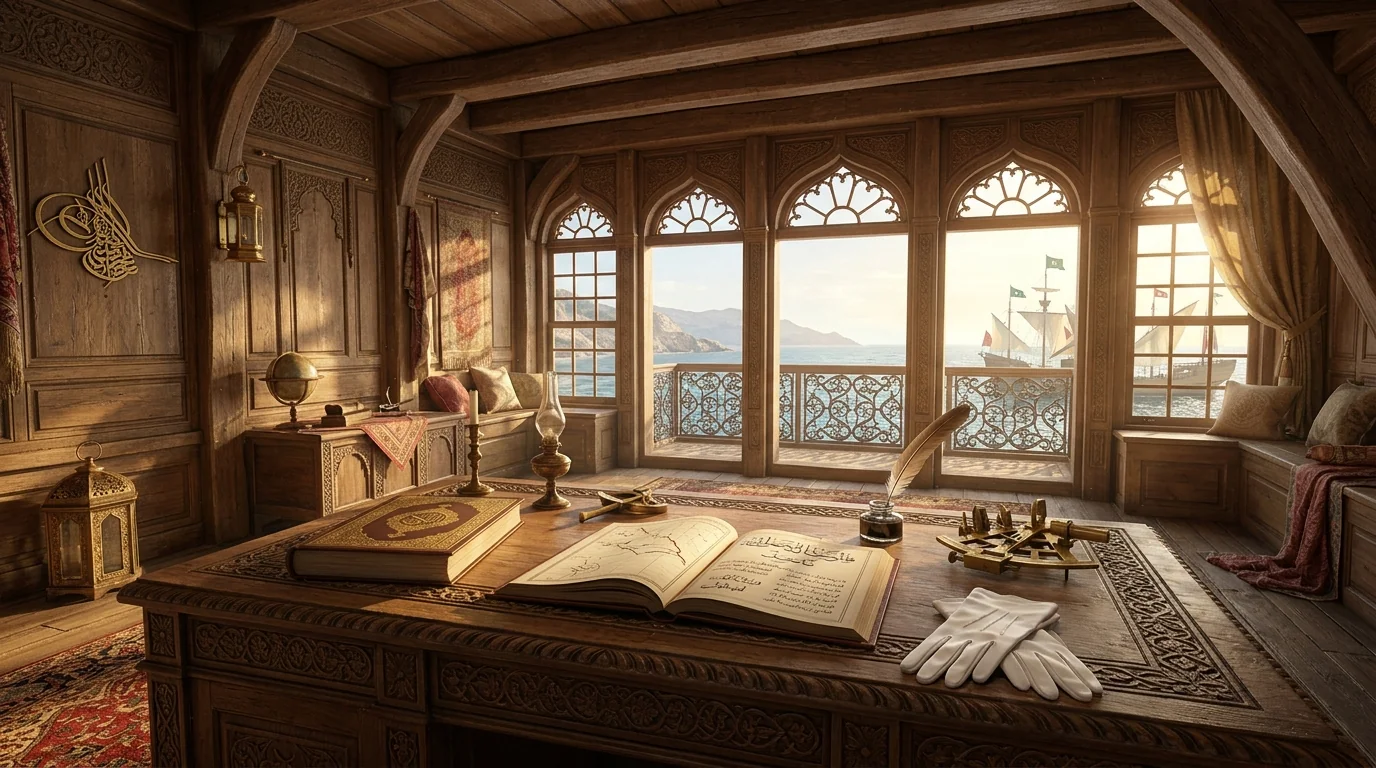
The author prays for the Barbarossa brothers, who competed not over an inheritance but over who would be first to aid Islam and rescue innocents, seeking Paradise rather than sunken treasure. He rejects branding them pirates, pointing instead to the pirate Morgan, and says the time has come for Muslims to write their own history.
Scene 10
Prelude to the Battle of Mohács and Sultan Suleiman
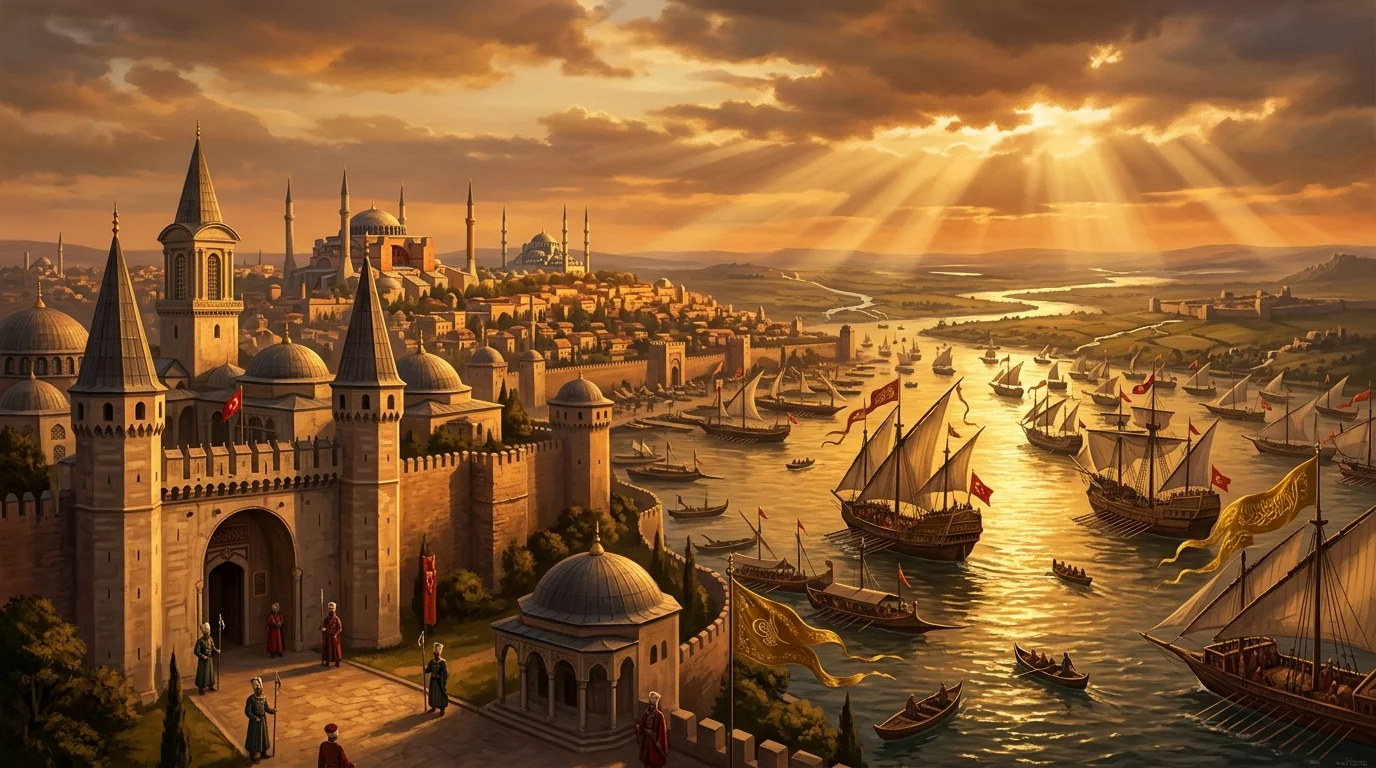
The chapter ends with questions: amid this Islamic-Crusader struggle in the west, what were the remaining Safavid Shia plotting in the east? Had they changed "their filthy habit of betrayal and treachery", or did they leave Muslims busy in the west to carry out their "dangerous terrorist scheme"? What is the story of the great battle of Mohacs, and who is the Ottoman caliph whose realm exceeded Alexander the Great's and was likened to that of the Prophet Solomon, whose name he bore: Suleiman? To be continued.
These are English scene notes. The full chapter text, as the author wrote it, is in the app.