


Scene 1
Chief Bishop of the Roman Empire
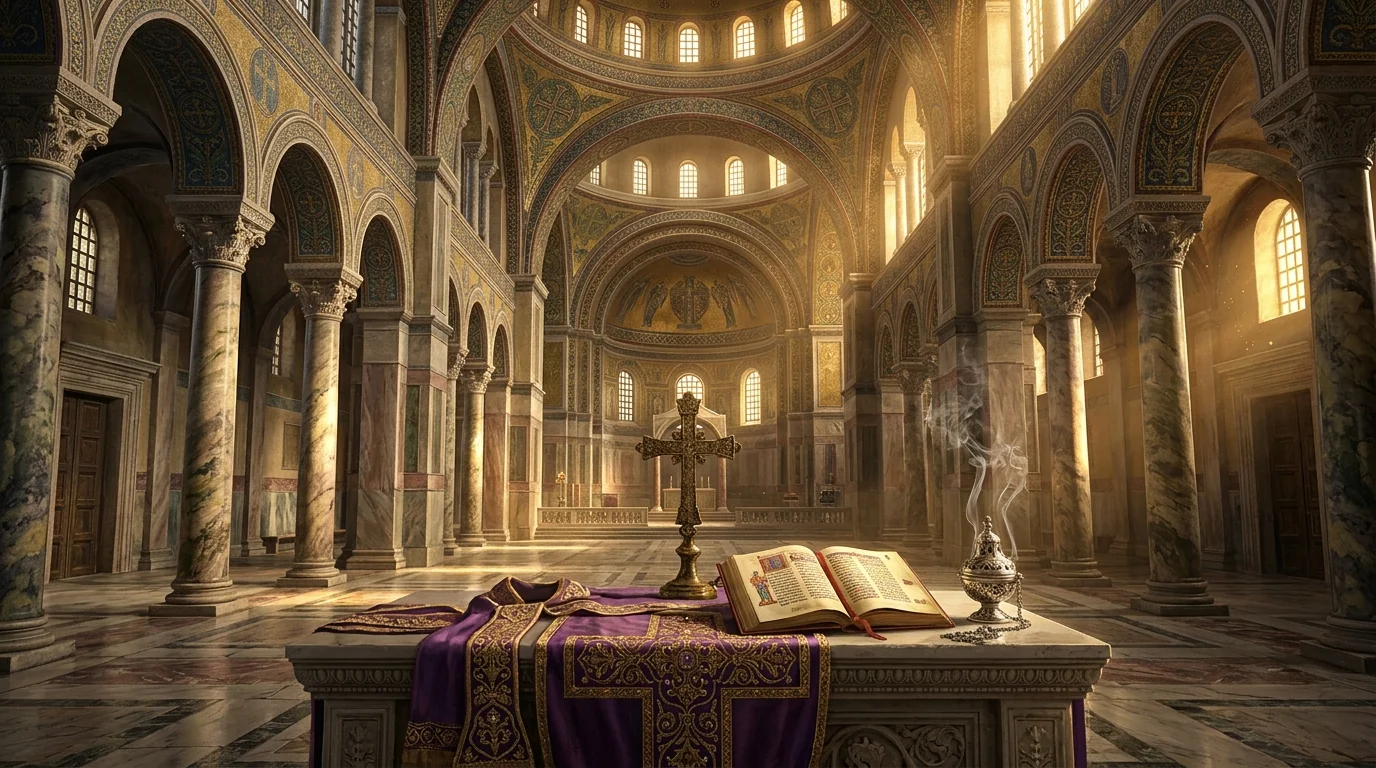
God may have delayed Abu Sufyan's conversion so he could pass on the story of an extraordinary hero. His high religious office made him more powerful than Emperor Heraclius himself, yet his life as a Muslim lasted only moments and he never prayed a single prayer. He is the bishop Saghatir.
Scene 2
The Fiercest Battle: The Struggle Against the Self
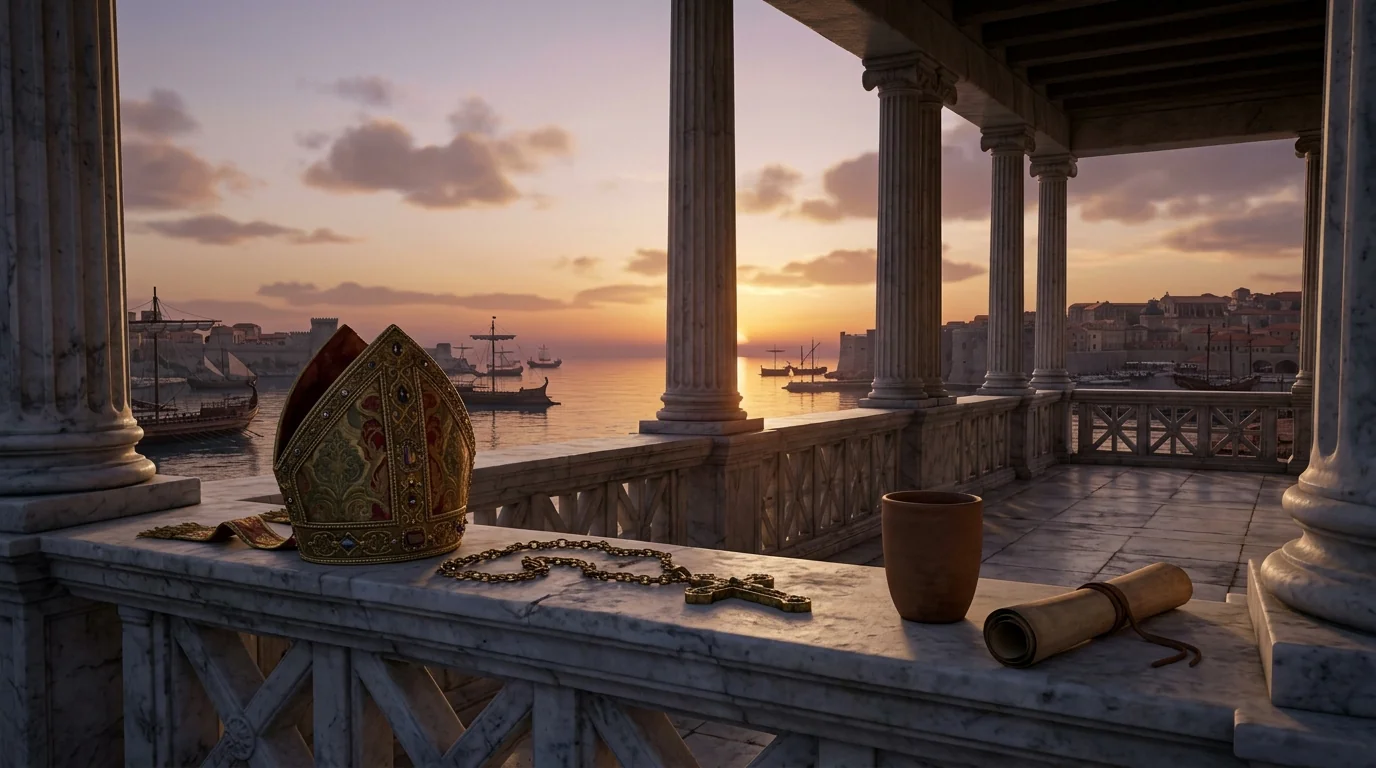
Saghatir was an old man who never fasted Ramadan or saw the Kaaba, yet he gave God his life for one word of truth. The author says he won the hardest battle of all, the one against the self, resigning the highest office in Rome without hesitation, and turns to the hadith Abu Sufyan narrated in al-Bukhari.
Scene 3
The Prophet's Envoys to the Kings After Hudaybiyya
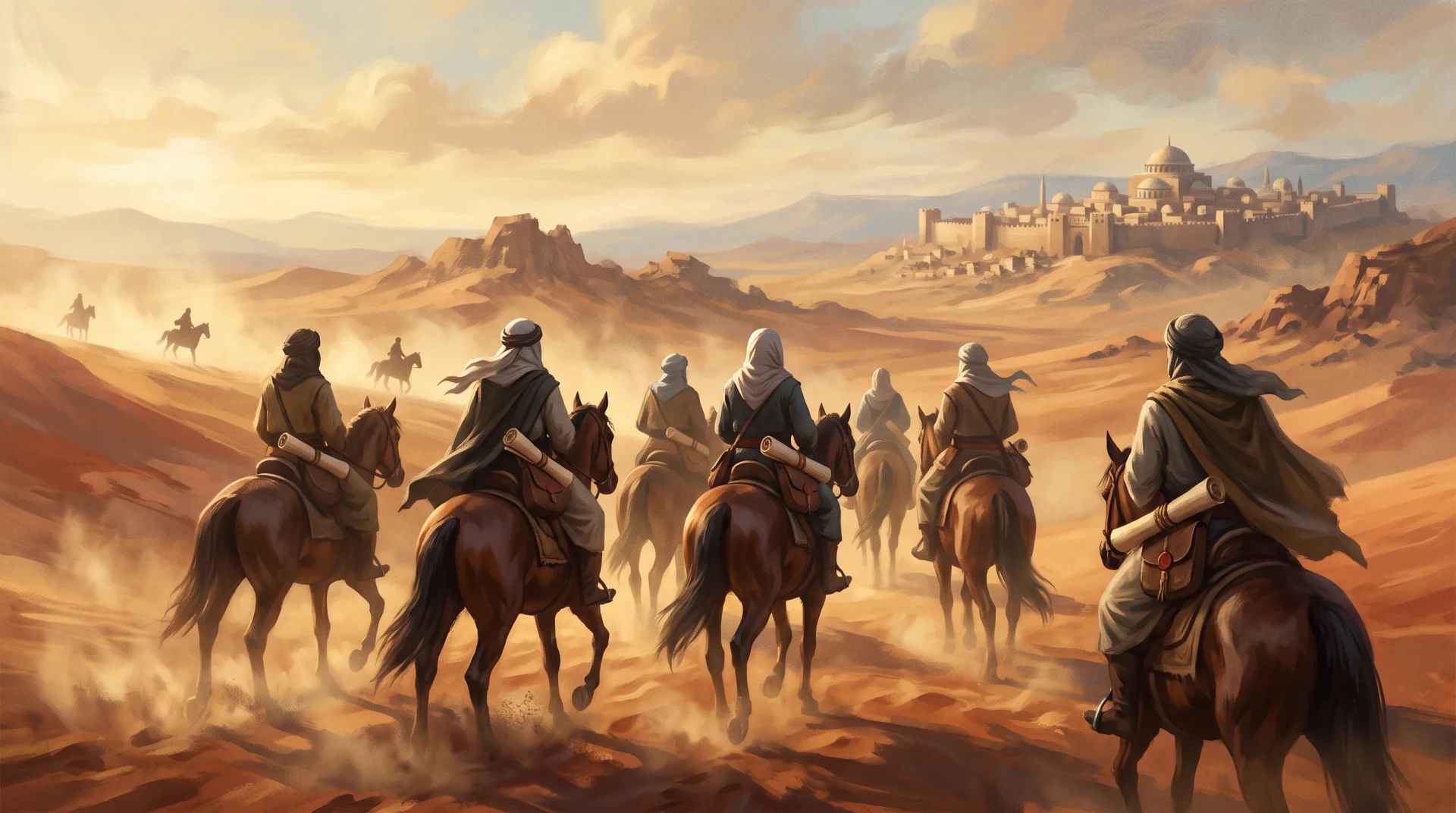
As background, the author explains that once the Prophet ﷺ had secured the Treaty of Hudaybiyya, the time came for the duty of conveying the message. He sent envoys across the earth, among them the handsome Companion Dihya ibn Khalifa al-Kalbi, carrying a letter to the greatest emperor on earth, Heraclius.
Scene 4
Heraclius of Byzantium and His Pilgrimage on Foot to Jerusalem
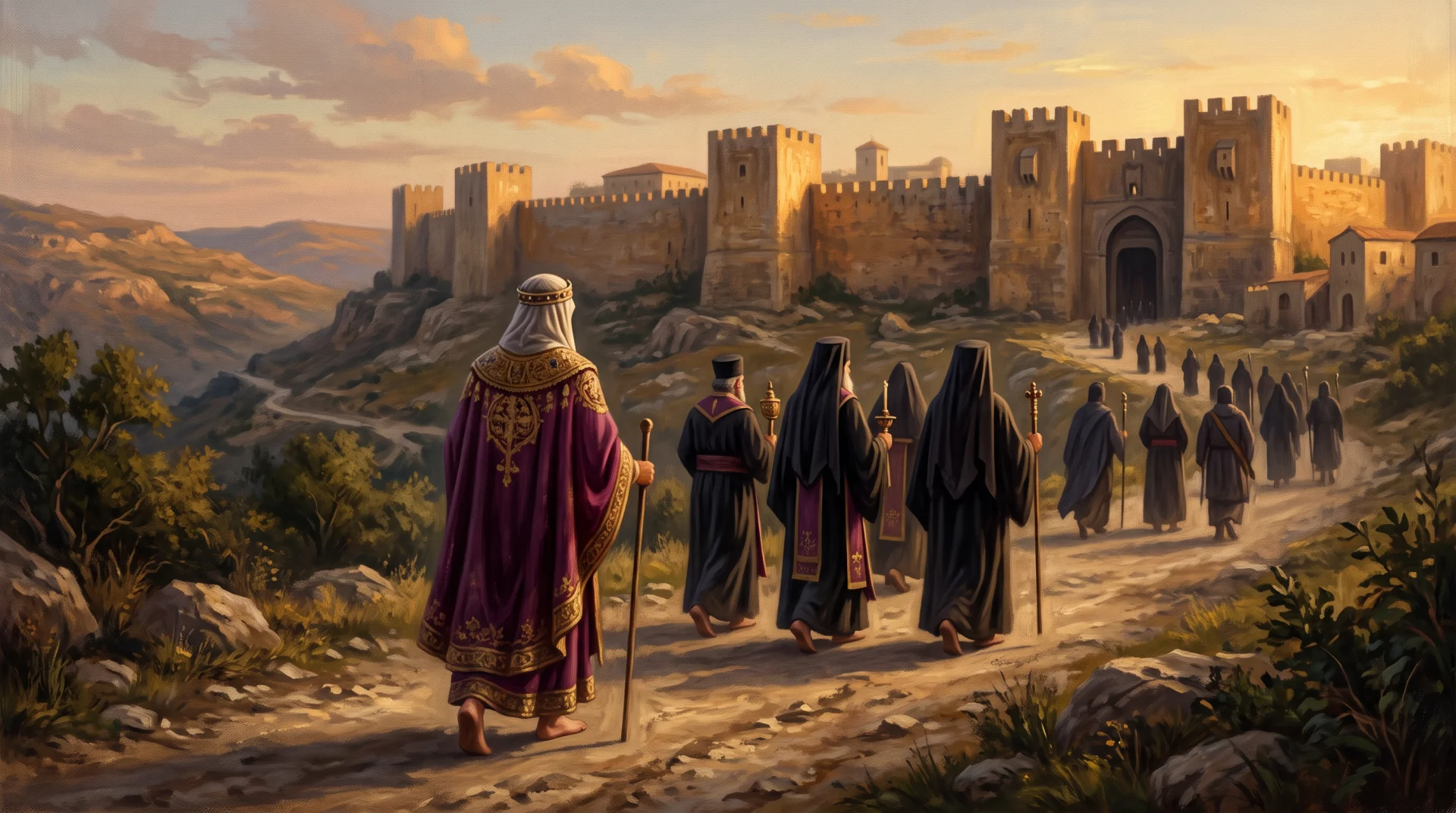
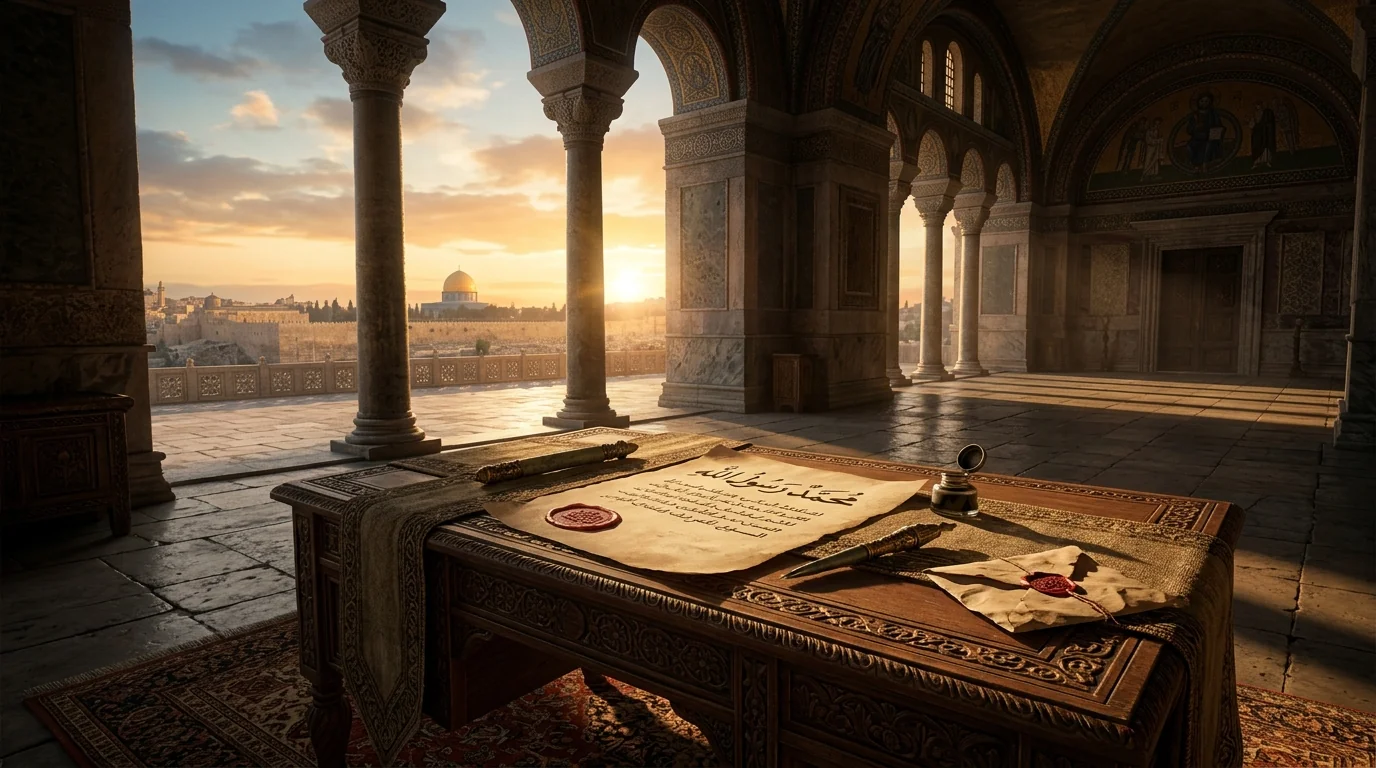
Heraclius ruled the Eastern Roman, Byzantine, empire from 610. Of Armenian origin, he sailed from Tunis where his father was governor, toppled Phocas in Constantinople and defeated the Persians at Nineveh in 627. He then walked to Jerusalem in thanksgiving, and there Dihya al-Kalbi handed him the letter of the Prophet ﷺ.
Scene 5
The Prophet's Letter to the Caesar of Rome
The letter invited Heraclius to Islam: "Submit and you will be safe," or bear the sin of the Arians. A devout man who expected a prophet in that age, Heraclius sent for Arabs to question. Abu Sufyan and Qurayshi traders, then in Gaza, were brought to court, and he asked who was closest in kin to this man.
Scene 6
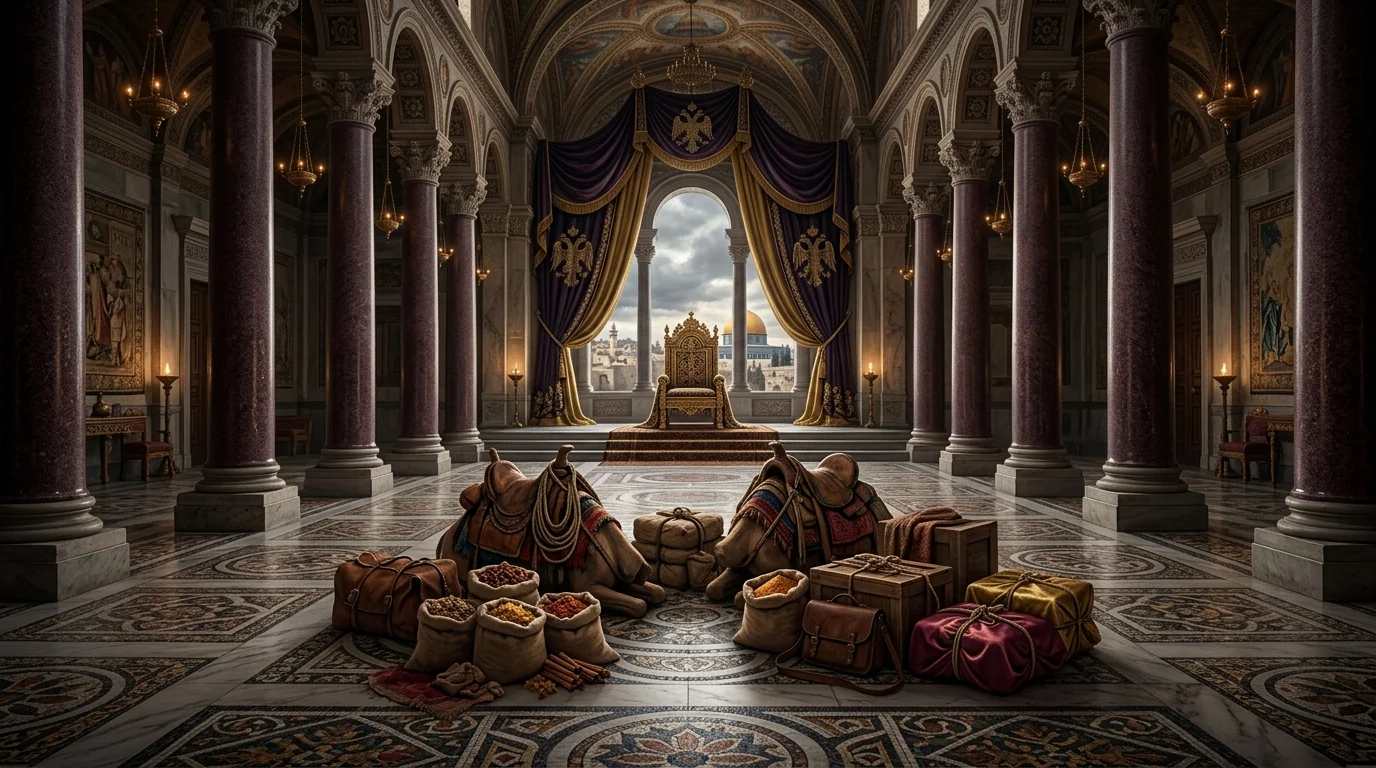
The Lords of Mecca at Caesar's Court
Abu Sufyan answered that he was nearest in lineage, so Heraclius placed him in front with his companions behind him to expose any lie. The author notes that Arabs even before Islam despised lying, and Abu Sufyan, though he hated the Prophet ﷺ, would not lie. The questioning began with his lineage.

Scene 7
Caesar's Questioning and Abu Sufyan's Testimony
Abu Sufyan testified that Muhammad was of noble lineage, that no Arab before him had claimed prophethood and none of his forefathers was a king. His followers were the weak, they kept increasing and none apostatised; he had never lied or betrayed. He commanded worship of God alone, prayer, truthfulness, chastity and ties of kinship.
Scene 8
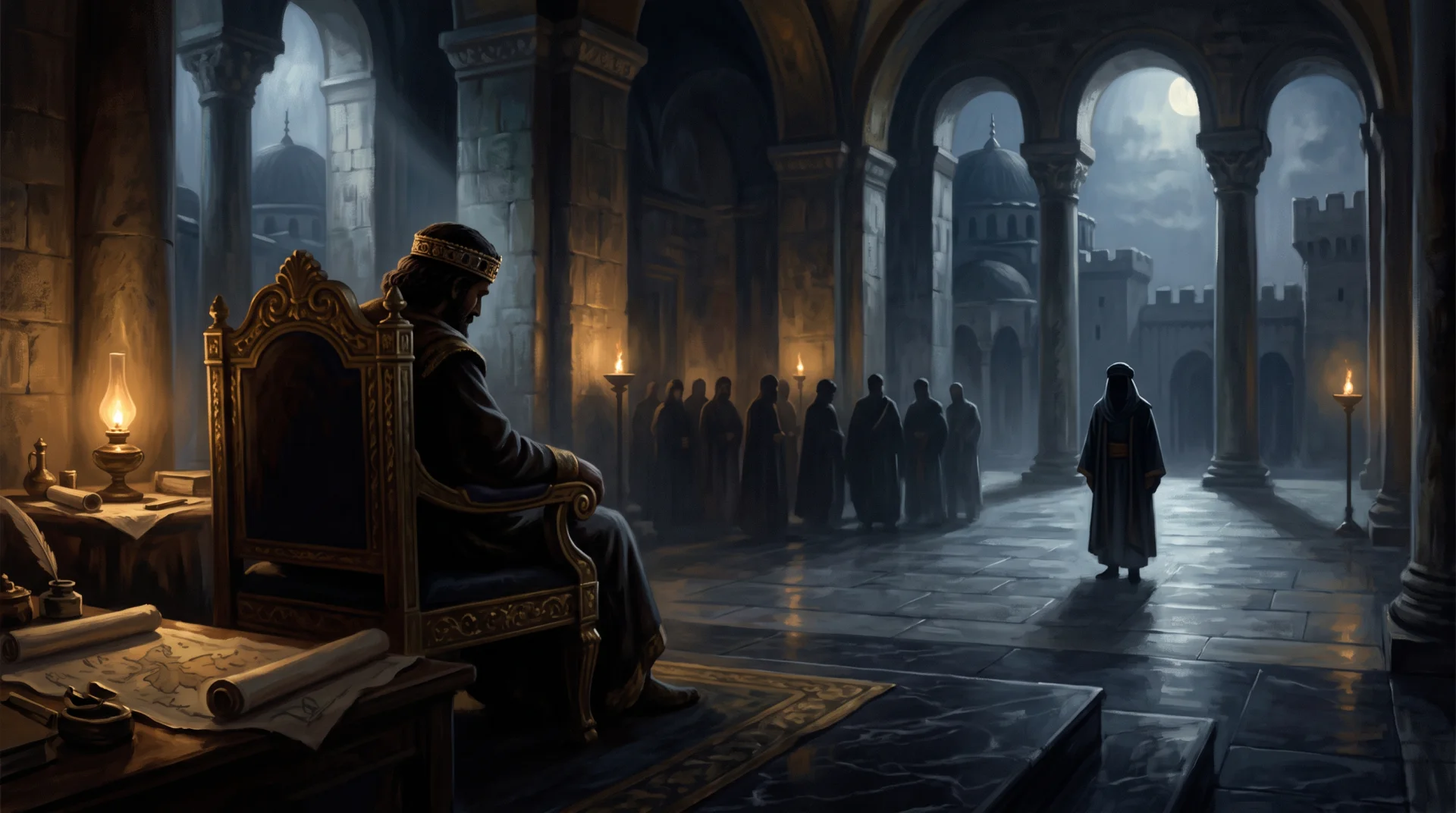
Heraclius Analyses Abu Sufyan's Answers
The questioning over, Heraclius weighed each answer and announced his conclusions through his interpreter. Messengers are sent from noble lineage; no earlier claim or royal ancestor explained this man; one who never lied to people would not lie about God; the weak follow the messengers, faith grows, and messengers do not betray.

Scene 9
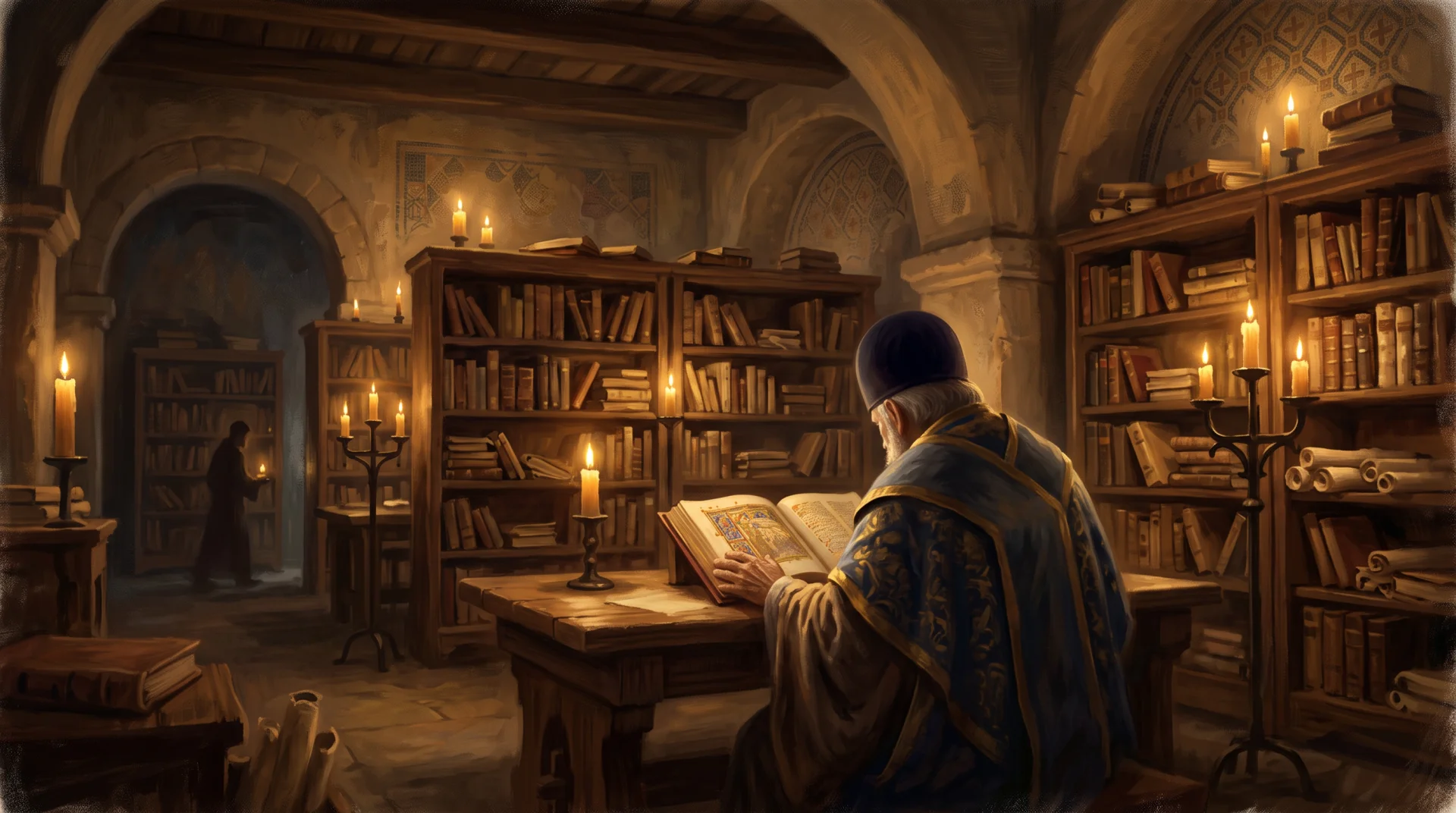
The Light of Faith and the Immortal Testimony
Heraclius admitted he knew this was the awaited prophet but feared the Romans, and sent Dihya to Bishop Saghatir, whose word carried more weight. Saghatir recognised the Prophet ﷺ from his scriptures, put on white garments and declared the testimony of faith in the church. The congregation beat him to death as he repeated it.
Scene 10
Why Did Saghatir Say Ahmad and Not Muhammad?
Why did Saghatir say "Ahmad" rather than "Muhammad", and how did he and Heraclius know a prophet of that name would be sent? To answer how the name appears in the Gospel, the author takes the reader to Spain, to a Spanish great of Islam who uncovered a momentous secret in the Bible.
These are English scene notes. The full chapter text, as the author wrote it, is in the app.