


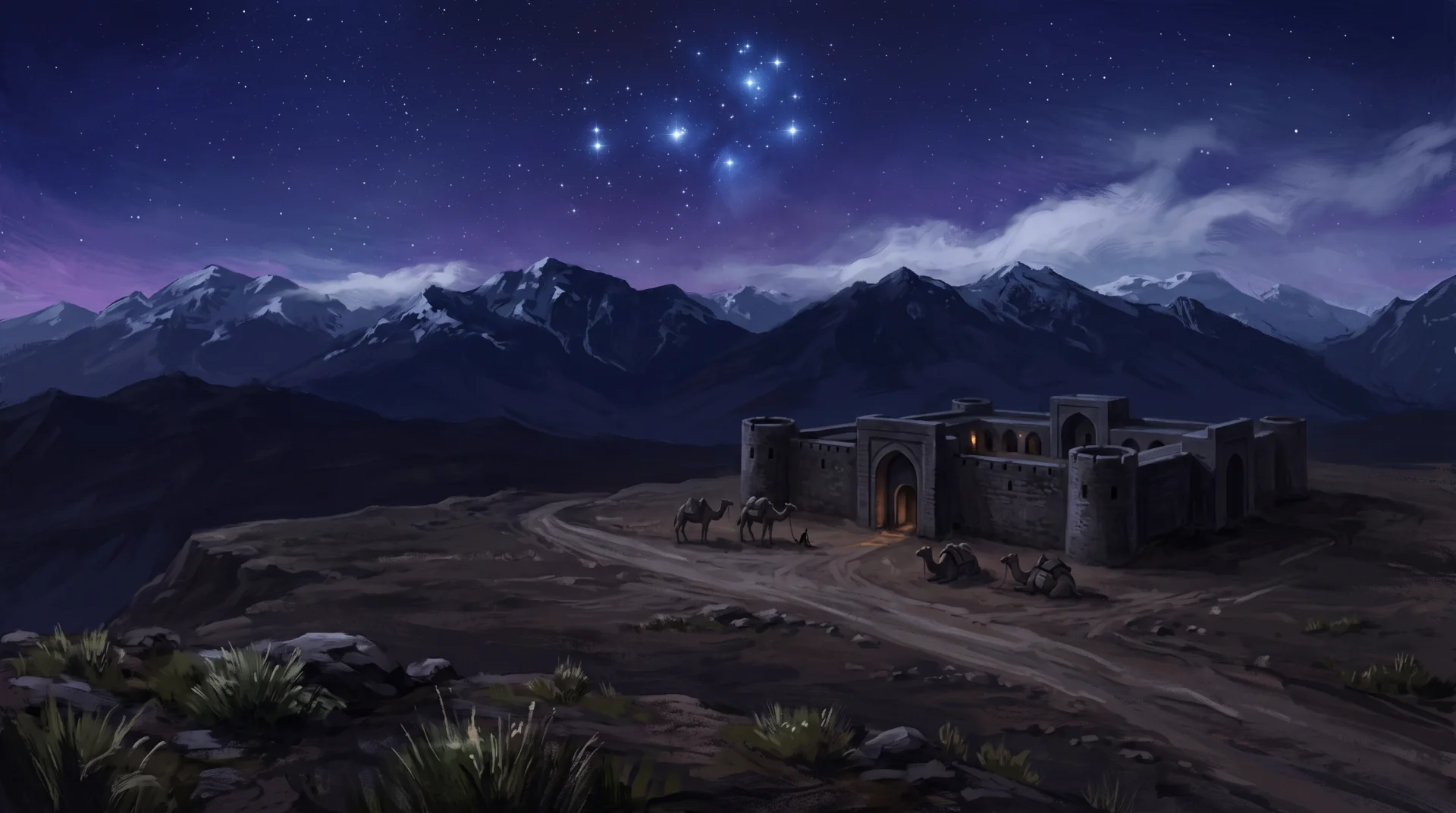
Scene 1
The Believers of Persia: "If Faith Were at the Pleiades"
The chapter opens with the Messenger's saying that if faith were at the Pleiades, men from these people would reach it.
Scene 2
Why the Author Attacked the Persian Traitors
Some readers may have noticed that the author often attacked the Persian traitors, which he does not deny, and says he would write even harsher words if he rewrote the book. He says this is not national hatred or racism but giving everyone his due.
Scene 3
Praise for All, for the Sake of History
The author says he praised the Berber Amazigh and the Turks, mentioned Salah al-Din and Sulayman al-Halabi as Kurds, and wrote of forgotten heroes such as Lapu-Lapu, Zumbi, Maurice Bucaille, Malcolm X, Abd al-Rahman ibn Sori, Ali al-Jirjawi and Salman al-Farisi. His first book was about the Persian giant Salman, and he says he praised these and attacked the Persian criminals for history's sake and God's pleasure.
Scene 4
The Safavid Break and the Oath About Arabs
The author says that since the appearance of the criminal Ismail al-Safawi the Persians as a nationality chose to shed their Islam and take refuge in their Magian Persian identity, siding against the nation of Islam, so he had to fight them with his pen. He swears that had the Arabs done the same he would have satirized them more fiercely than Jarir satirized al-Farazdaq.
Scene 5
On Tehran and Isfahan
The author says one needs only a plane ticket to Tehran to see how the Persians have shed Islam, and that he need not cite the figures the Iranian government itself gives on prostitution in Tehran's streets or the scandalous licence seen in the gardens of Isfahan. The matter, he says, is in essence one of creed.
Scene 6
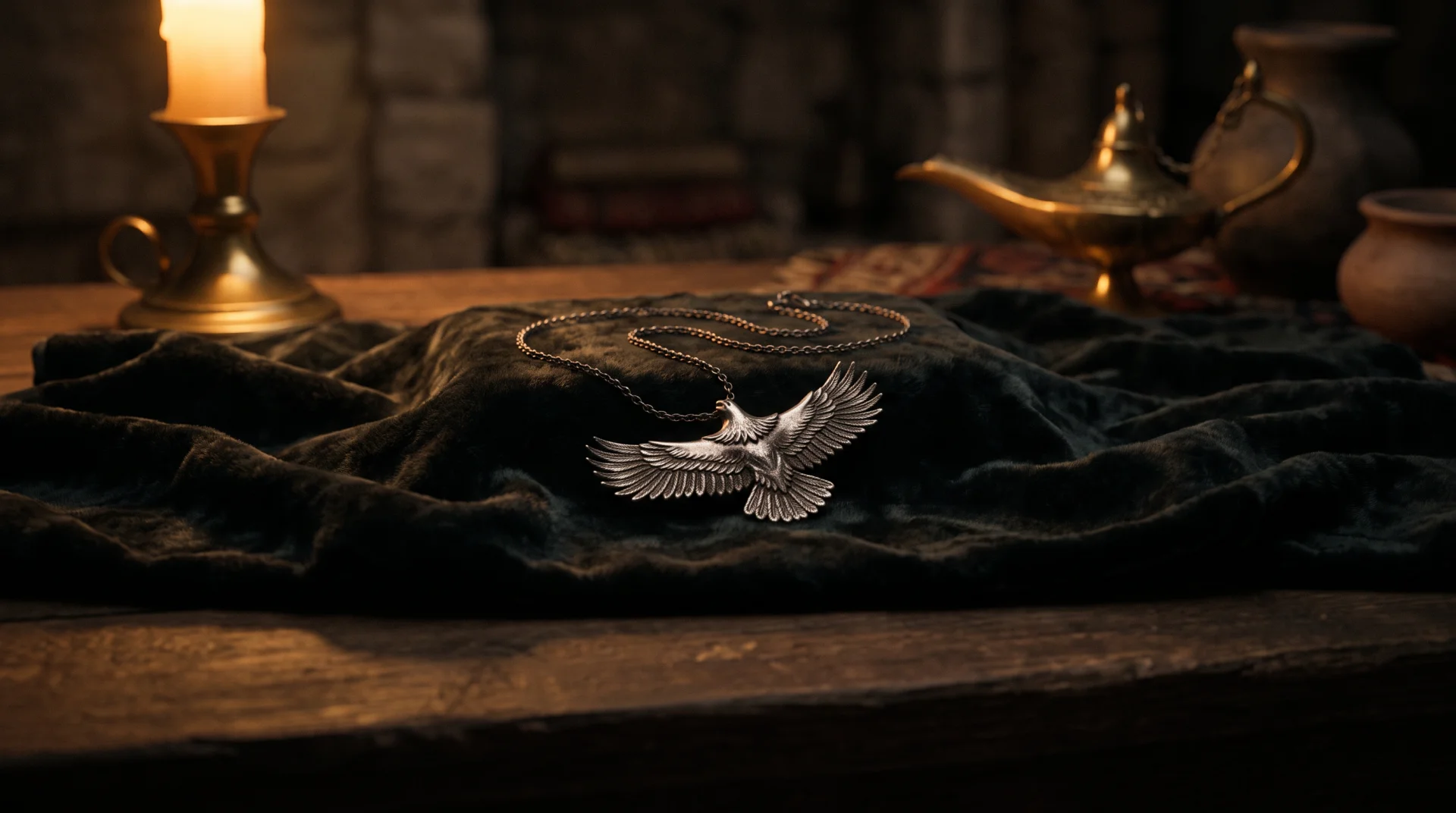
Zoroaster's Sacred Eagle
From contact with young Persians in Europe the author noticed that they wear chains with a distinctive eagle on their necks. At first he took it for decoration, but when it recurred he looked into it and found it is the sacred eagle of Zoroaster, founder of the Magian religion.
Scene 7
The Emblem of the Iranian State
The author claims that the emblem of today's Iranian state, which many deceived people think is a drawing of the name of God, is really the emblem of the Indian Sikhs from whose womb Khomeini came. He wonders why the Persians do not write the word God clearly, as Saudi Arabia wrote the two testimonies on its flag and Saddam Hussein wrote God is Greatest in his own hand on his.

Scene 8
The Gulf, the Day of the Fārūq's Killing, and the Islands
The author says it is strange that Iran insists on calling the Arabian Gulf the Persian Gulf, and rejected naming it the Islamic Gulf. He adds that the fourth national holiday in Iran is the day of the killing of al-Faruq Umar by the Persian terrorist Abu Lu'lu'a, and that Iran occupies Arab land, the Emirati islands and al-Ahwaz, with an official radio that opens with cursing the Companions and a role he calls filthy in Iraq.
Scene 9
The Muslim Persians Whom the Safavids Curse
For these reasons the author attacked the Persian traitors but says he will defend the Muslim Persians whom the Safavid Persians curse day and night: Abu Hanifa, whose grave the Safavid Shia dug up in Baghdad when they occupied it, was of Persian origin. The great Sunni scholars were all Persians, and 90 percent of Persians were Sunni until Ismail al-Safawi changed their religion after killing hundreds of thousands of them.

Scene 10
The Scholars of Persia and the Greatest Book After God's Book
The author lists scholars of Persia whom today's Persians disown, among them al-Bukhari, Abu Hanifa, al-Nasa'i, al-Tirmidhi, Ibn Majah, Abu Dawud, al-Bayhaqi, al-Hakim, al-Daraqutni, al-Tabari, al-Kisa'i, the two al-Razis, al-Khwarizmi and Sibawayh. When Persian scholars are mentioned, he says, the greatest comes to mind, a Muslim scholar whose book is the greatest on earth after the Book of God. To be continued.
These are English scene notes. The full chapter text, as the author wrote it, is in the app.