


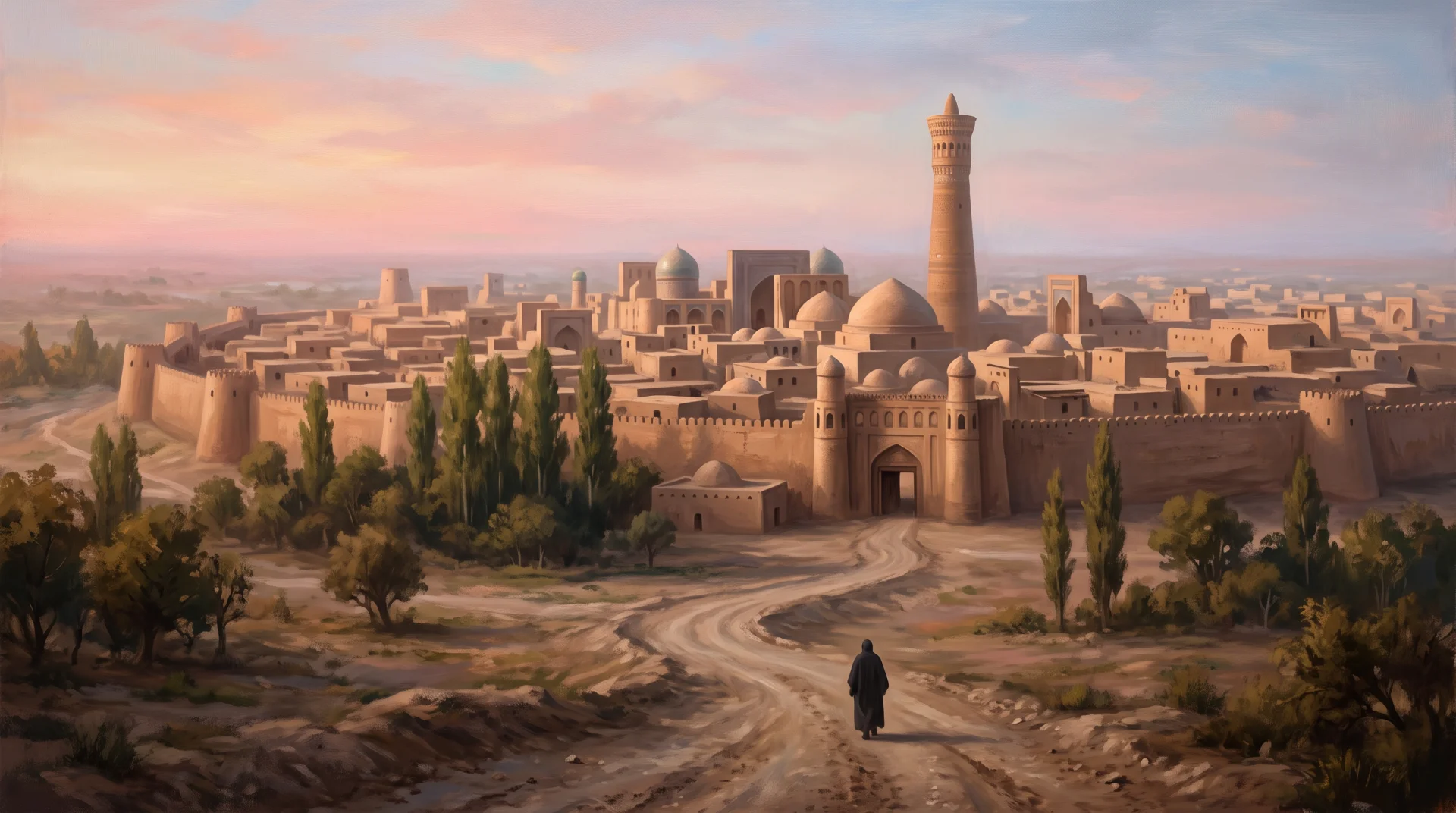
Scene 1
The Next Target of the Invaders of History: al-Bukhari
The chapter opens with the words of Ibn Khuzayma, the Imam of Imams: nothing under the sky's canopy is more knowledgeable in the hadith of the Messenger of God than this man.
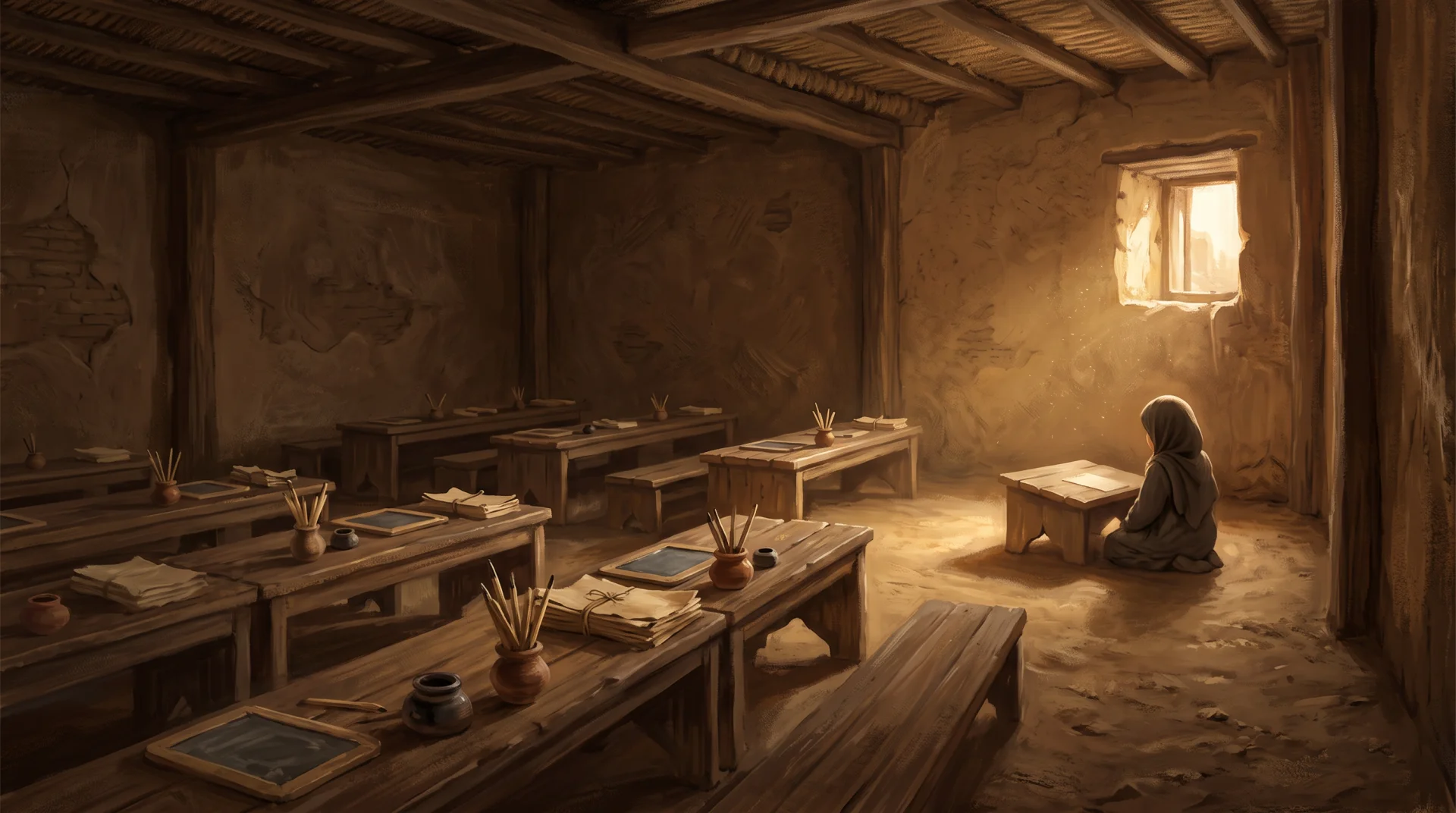
Scene 2
The Orphan Boy Who Wrote Nothing
Pupils at a small kuttab in a city of Khurasan wondered at an orphan boy under ten who came without paper or pen. The sheikh narrated the Messenger's hadiths and they hurried to write them down, while the boy wrote nothing. Days passed, and then the pupils mocked him and taunted him for not writing.
Scene 3
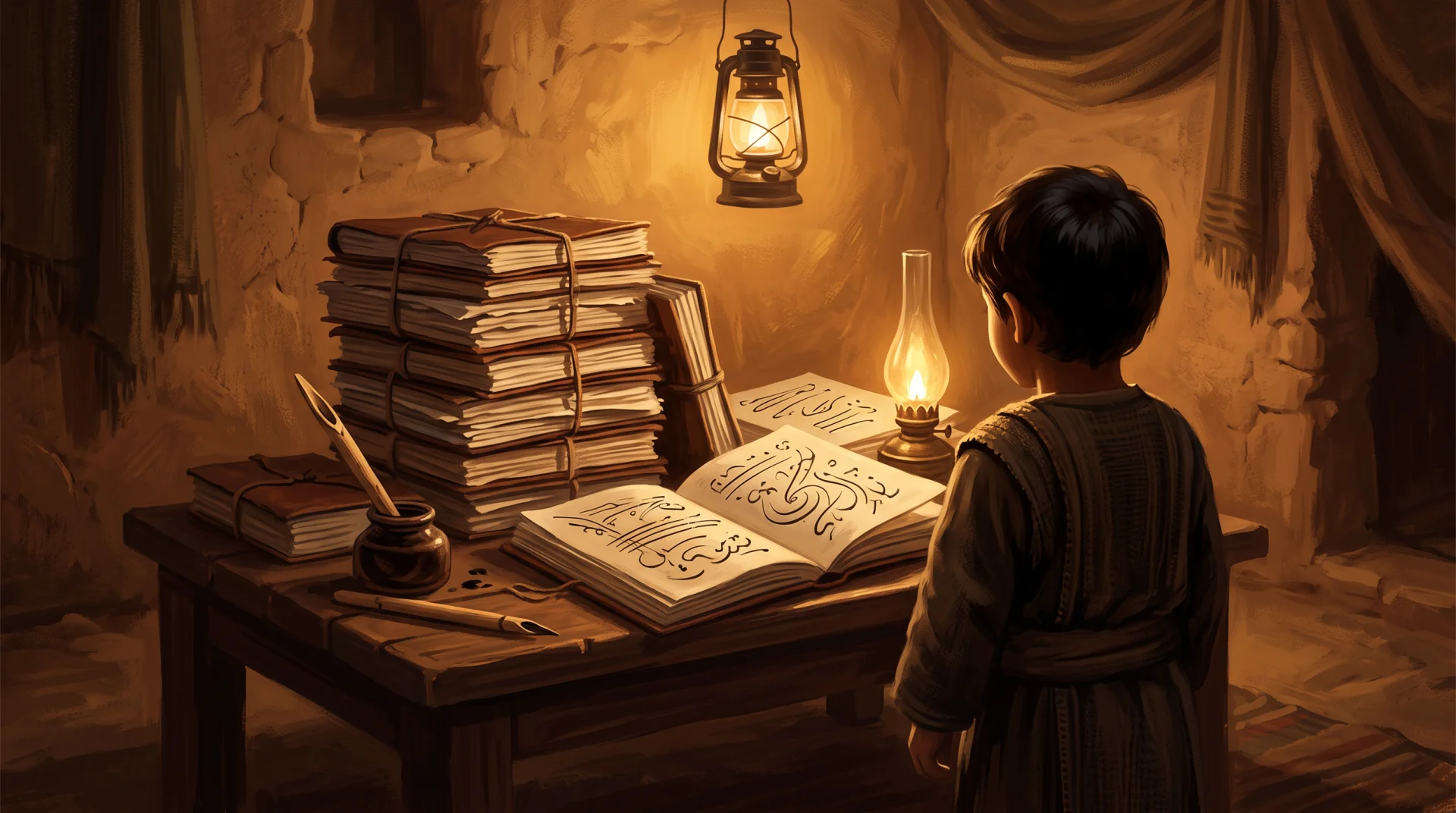
Fifteen Thousand Hadiths
The little boy looked at them with confidence and told them to bring out their notebooks so he could review them. He then recited the hadiths they had written over months, one by one, with texts and chains, fifteen thousand in all, before he was ten. He was Muhammad ibn Ismail ibn Ibrahim ibn al-Mughira ibn Bardizbah, later called Imam al-Bukhari.
Scene 4
Blindness in Childhood and a Mother's Prayer
The author found a report that al-Bukhari went blind as a child and lost his sight completely. His mother wept and prayed to God to restore it, and one night saw in a dream God's prophet Ibrahim, the Friend, peace be upon him, who told her that God had returned her son's sight. She woke and hurried to her child to find that his sight had come back.
Scene 5
Functional Compensation and the Secret of His Memory
The author draws two points from the report. First, the secret of al-Bukhari's strong memory lies in his childhood blindness: a known medical feature called functional compensation makes the other senses stronger when one is lost. His brain gained this exceptional trait during blindness, then God restored his sight, so he combined the memory of the blind with the vision of the sighted.
Scene 6
Chosen to Preserve the Revelation
Second, al-Bukhari was chosen by God for the grave task of preserving the revelation that came as the Messenger's hadiths. The author corrects the belief that God guaranteed only the Qur'an, quoting the verses on the Remembrance and on his not speaking from desire. He says it takes men to memorize the Qur'an, others the hadiths, historians such as al-Tabari and Ibn Kathir, and men like us to defend them, or we would be a flock without a shepherd.
Scene 7
Defending God's Religion in a Critical Time
The author says this is exactly what these lines try to do: the book is not merely entertaining stories, but a defense of God's religion in a critical period when the invaders of history attack its constants and symbols, after failing for centuries to get rid of the Muslims themselves through massacres and slaughter, only to see their numbers grow.

Scene 8
The Attack on al-Bukhari and His Sahih
A phenomenon has surfaced in recent years: people from among us who claim piety attack al-Bukhari and his Sahih, the most authentic book after the Book of God. The author says that had they known the Imam spent sixteen years of his prime writing it, they would not dare commit this crime.
Scene 9
The "Quranists" and Obedience to the Messenger
Worse, the author says, a group he calls hypocrites, the "Quranists", reject the Sunnah and claim the Qur'an is the only source of legislation. He answers them with the verse "Obey God and obey the Messenger", asks whether obeying the Messenger can be without his hadiths, and criticizes the satellite channels that give such attackers a wide platform. God, God in al-Bukhari, he says, and in defending the Sunnah the Imam preserved.

Scene 10
From the Balkans: the Muhaddith of the Ummah
If God brought out a Persian man to preserve the Messenger's authentic hadiths about 200 years after his death, then from the Balkan peaks of Europe He brought an Albanian man who carried the banner of criticism and verification of the hadiths about 1300 years after the Prophet's death, the Muhaddith of the Ummah. To be continued.
These are English scene notes. The full chapter text, as the author wrote it, is in the app.