


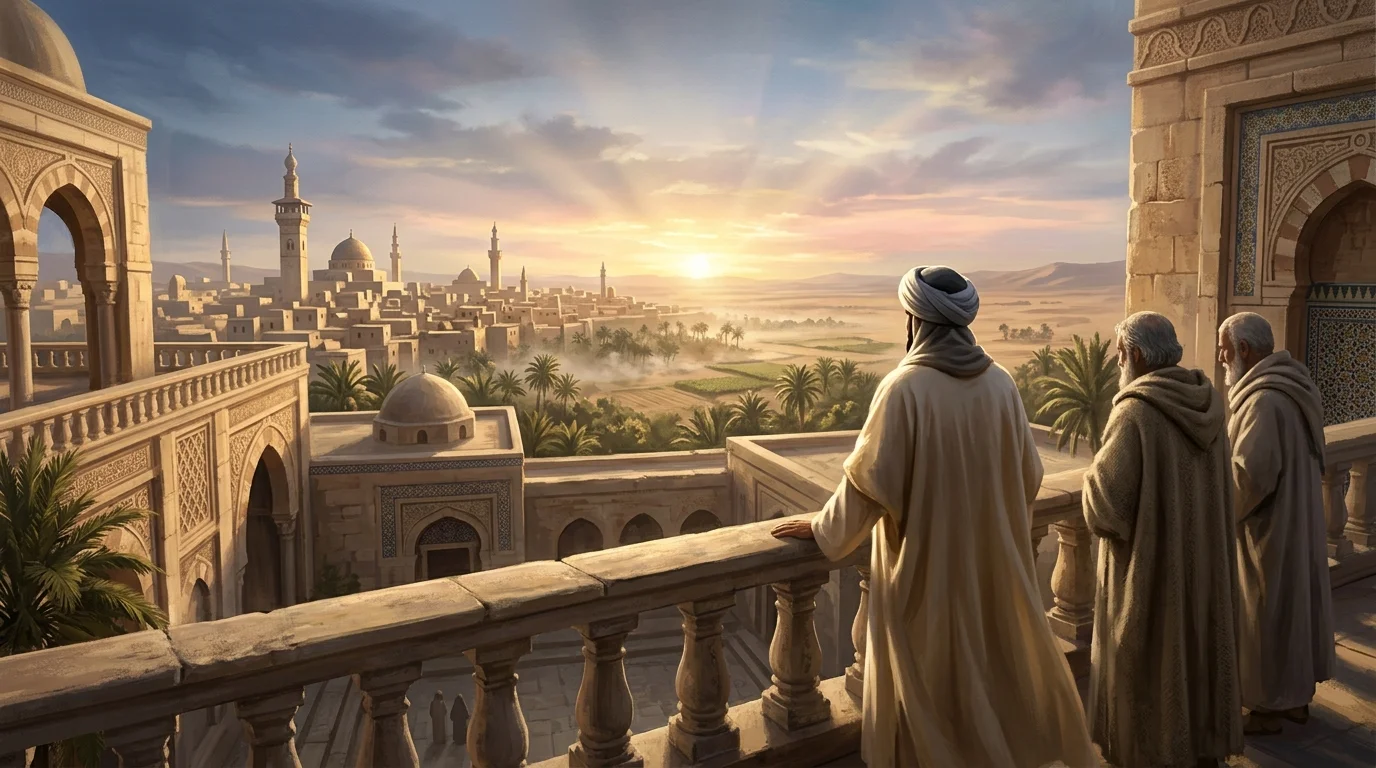
Scene 1
Opening: Testimonies of the Prophet and the Companions
The chapter on Muawiyah, "maternal uncle of the believers", opens with testimonies: Gabriel bidding the Prophet ﷺ employ him as a strong and trustworthy scribe, the Prophet's prayers for him, and Companions praising his leadership, judgement, prayer and forbearance. Ibn al-Mubarak calls him a test of one's stance on the Companions.
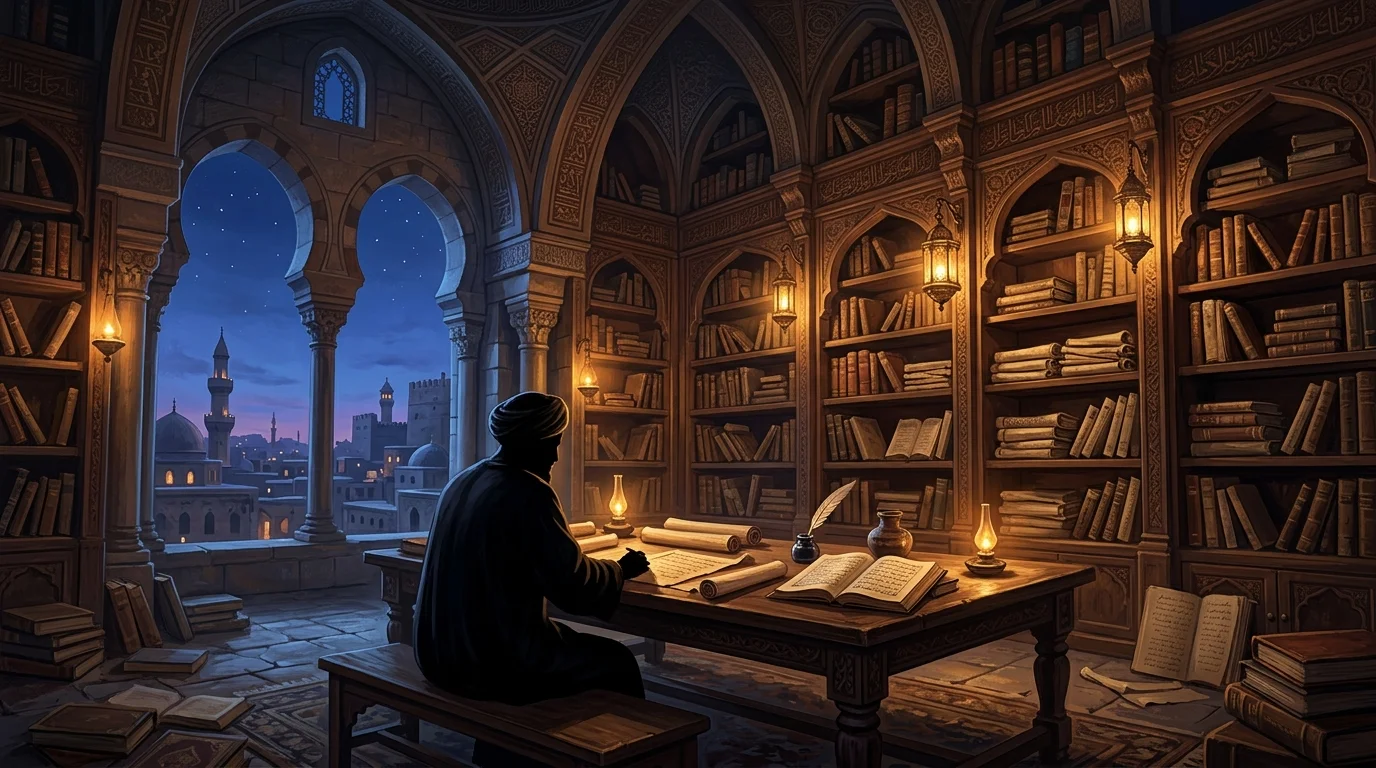
Scene 2
History's Greatest Forgery and the Myths on Trial
The author confesses that a few years earlier he would have reviled Muawiyah and doubted his faith, being then nearer to Shiism than to Sunni belief. He holds Sunni scholars partly responsible for not explaining the great strife, citing Omar ibn Abd al-Aziz's advice to hold one's tongue, which left his question of who was wronged unanswered.
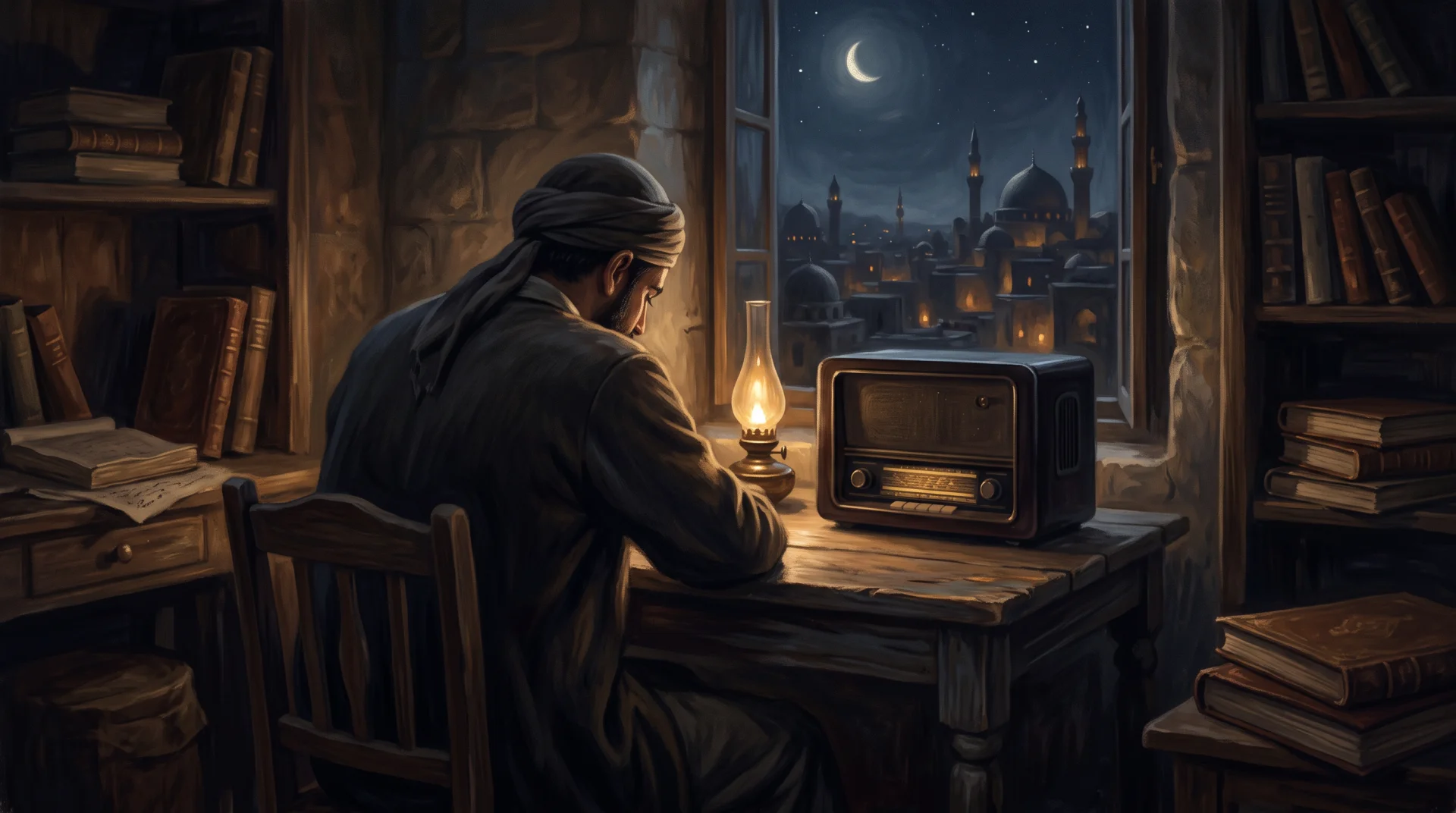
Scene 3
From the Pull of the Shia Narrative to the Shock of the Truth
The author recalls weeping at a Shia scholar's radio account of the strife and growing convinced it was right, resenting any criticism of the Shia. He says events after the invasion of Iraq and in Beirut in 2008 changed his mind and sent him to the original history books, where he found his answers.
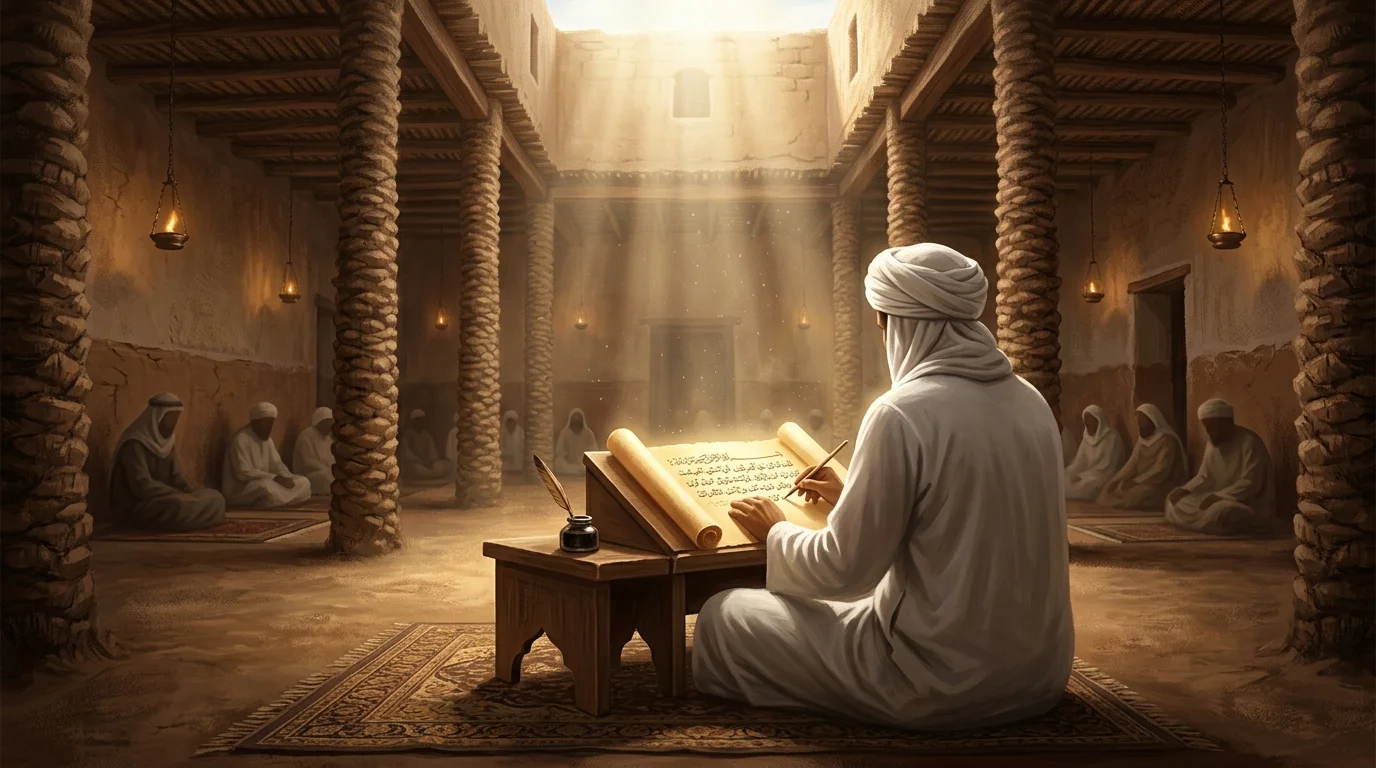
Scene 4
Veil of the Companions, Scribe of Revelation
The author argues the time for silence about the strife has ended and prefers Ibn al-Mubarak's words ranking Muawiyah far above Omar ibn Abd al-Aziz. Muawiyah, he says, is a veil for the Companions: the Prophet ﷺ entrusted him with writing down revelation, so impugning him undermines the Quran itself.
Scene 5
Mu'awiyah's Forbearance, Shrewdness and Rule of Syria
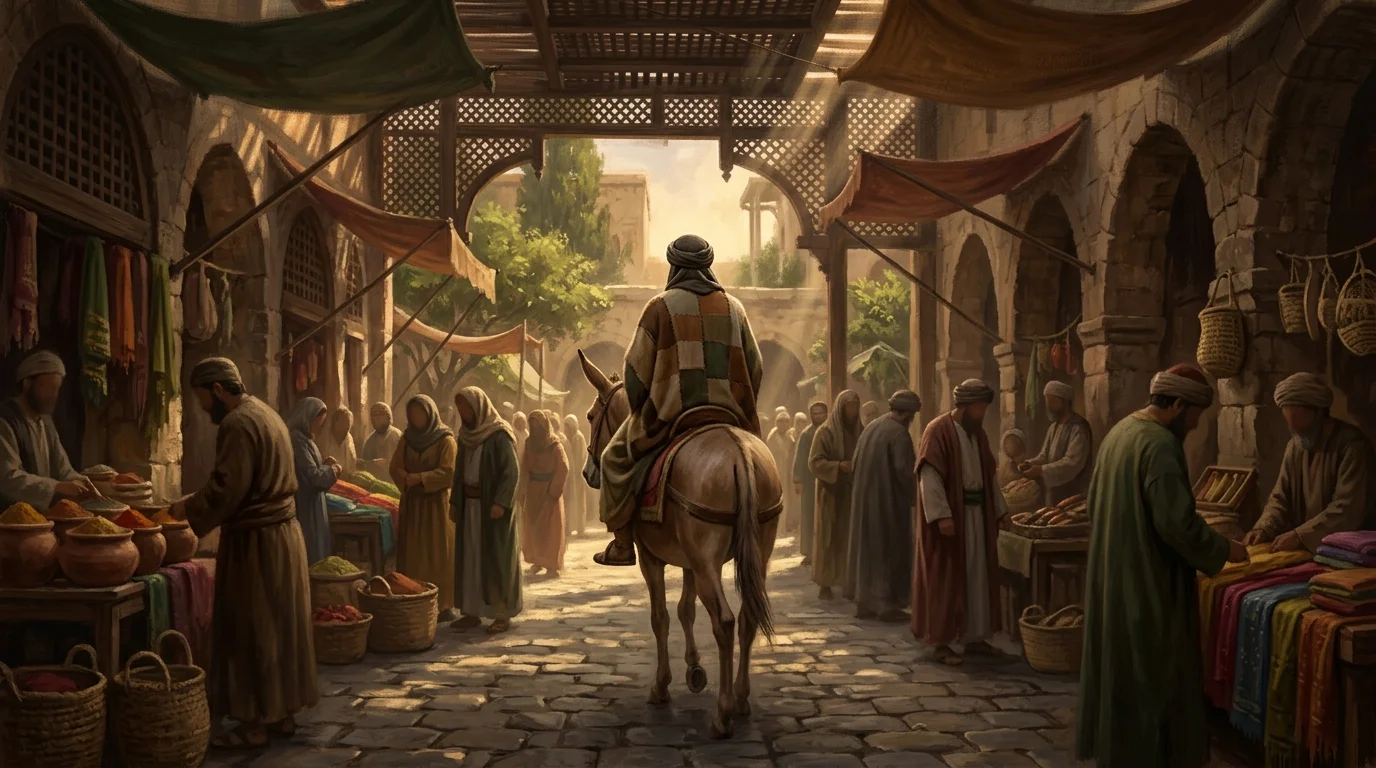
Muawiyah, the book says, combined all qualities of beauty: bright white of face, tall, handsome, and of such character that he won hearts at lightning speed. He is called the greatest king in all Islamic civilisation; Abdullah ibn Umar said Abu Bakr and Umar surpass him in merit but he surpassed them in ruling. The Umayyads were the best family to govern the Arabs, yet the Orientalists "and the hypocrites with them" distorted their history. Far from the arrogant, luxurious tyrant taught in schools, he preached in Damascus in a patched garment and rode his mule reminding people of prayer.
Scene 6
Ibn al-Zubayr's Letter and a Lesson in Clemency
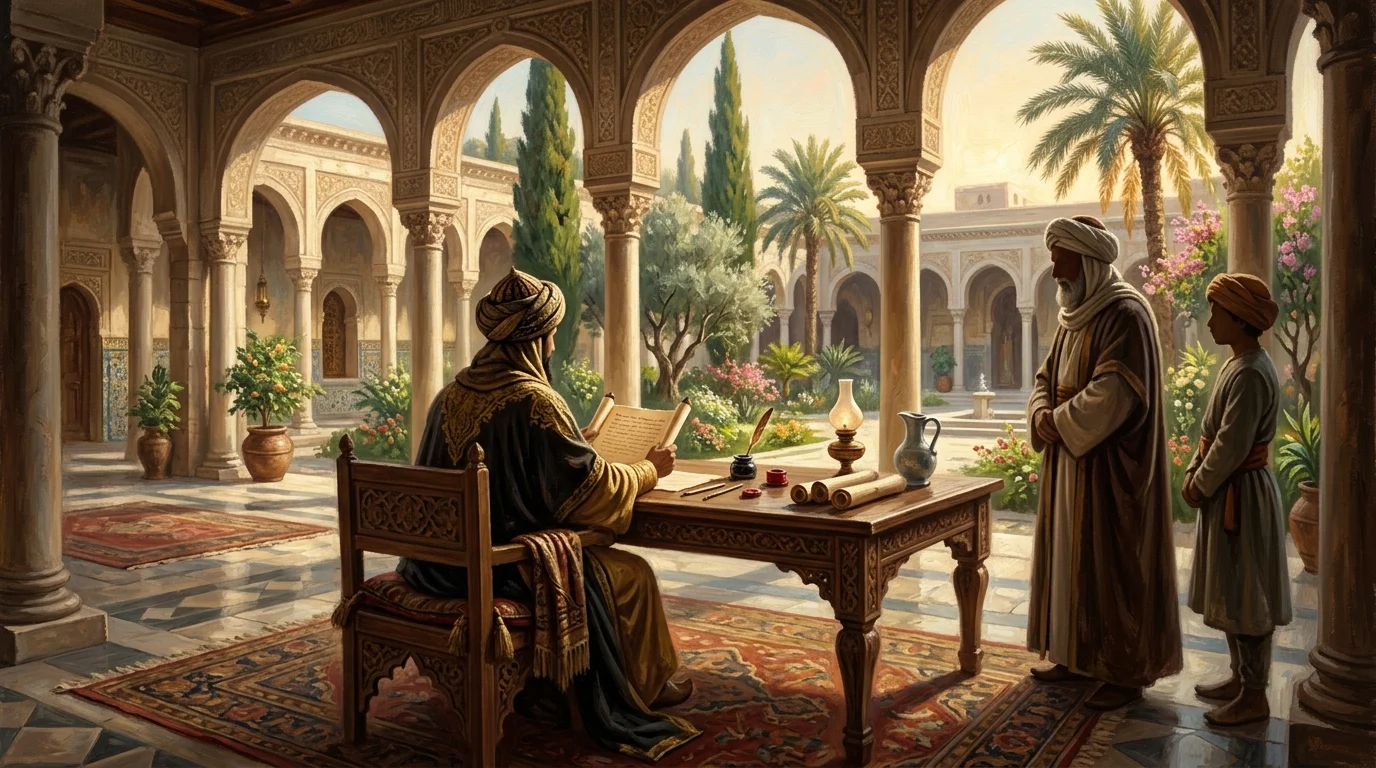
At the height of his power Muawiyah received a curt, threatening letter from Abdullah ibn al-Zubayr over a small plot of land. Yazid advised sending an army; Muawiyah instead replied by gifting him the whole estate. Ibn al-Zubayr answered respectfully, and Muawiyah taught his son that whoever pardons leads and whoever forbears grows great.
Scene 7
Uthman's Shirt, Na'ilah's Cry and the Seventy Thousand
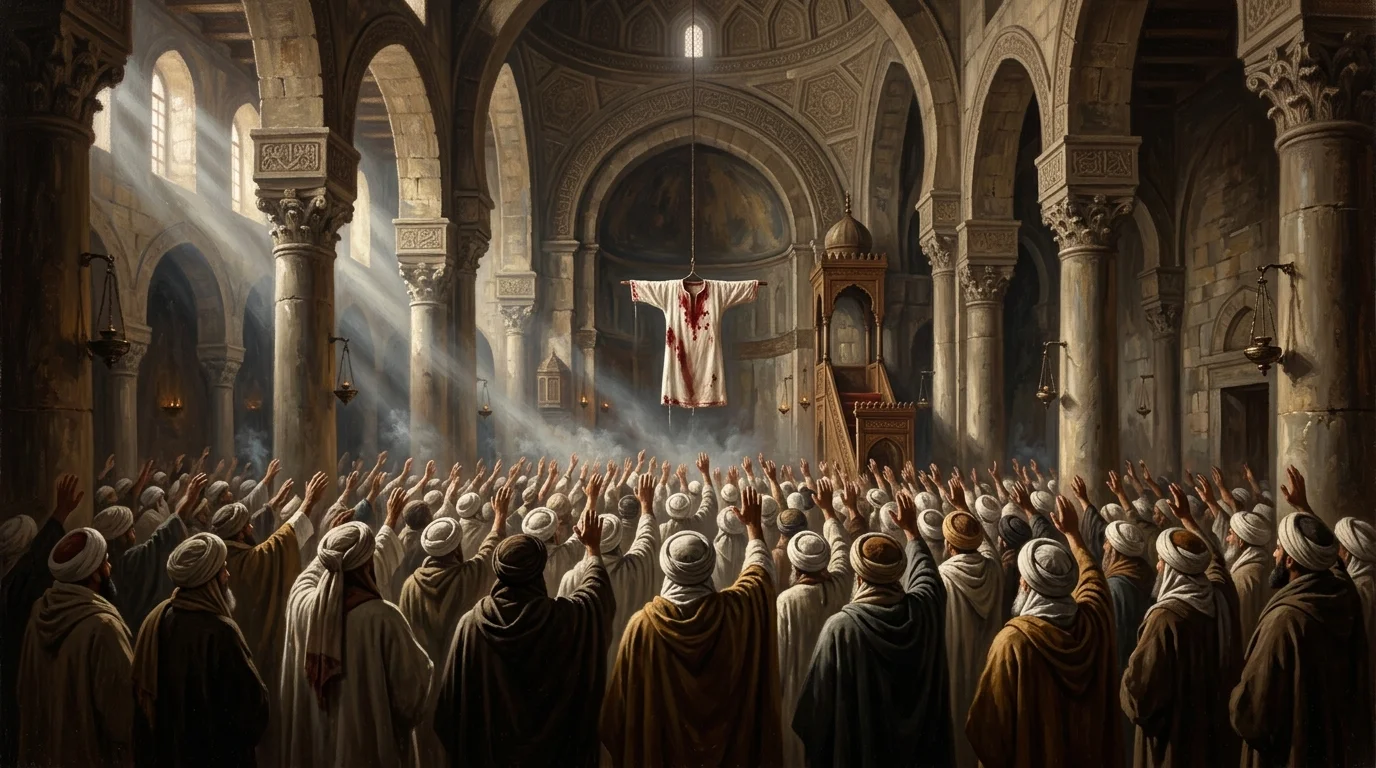
On the strife, the matter is simpler than one imagines. Na'ila bint al-Farafisa sent Muawiyah, as head of the Umayyads and guardian of Uthman's blood, a box with the bloodstained shirt and her severed fingers and palm, cut off defending her husband from "those terrorists", asking just retribution on "those criminals". He hung them on the pulpit, wept and swore vengeance; Abu al-Darda, judge of the Levant, ruled vengeance obligatory, and seventy thousand men wept beneath the shirt. The author contrasts "the heroic people of the Levant" with Muawiyah and "the traitorous people of Iraq" with Ali.
Scene 8
The Companions' Positions and Acknowledging Ali's Merit
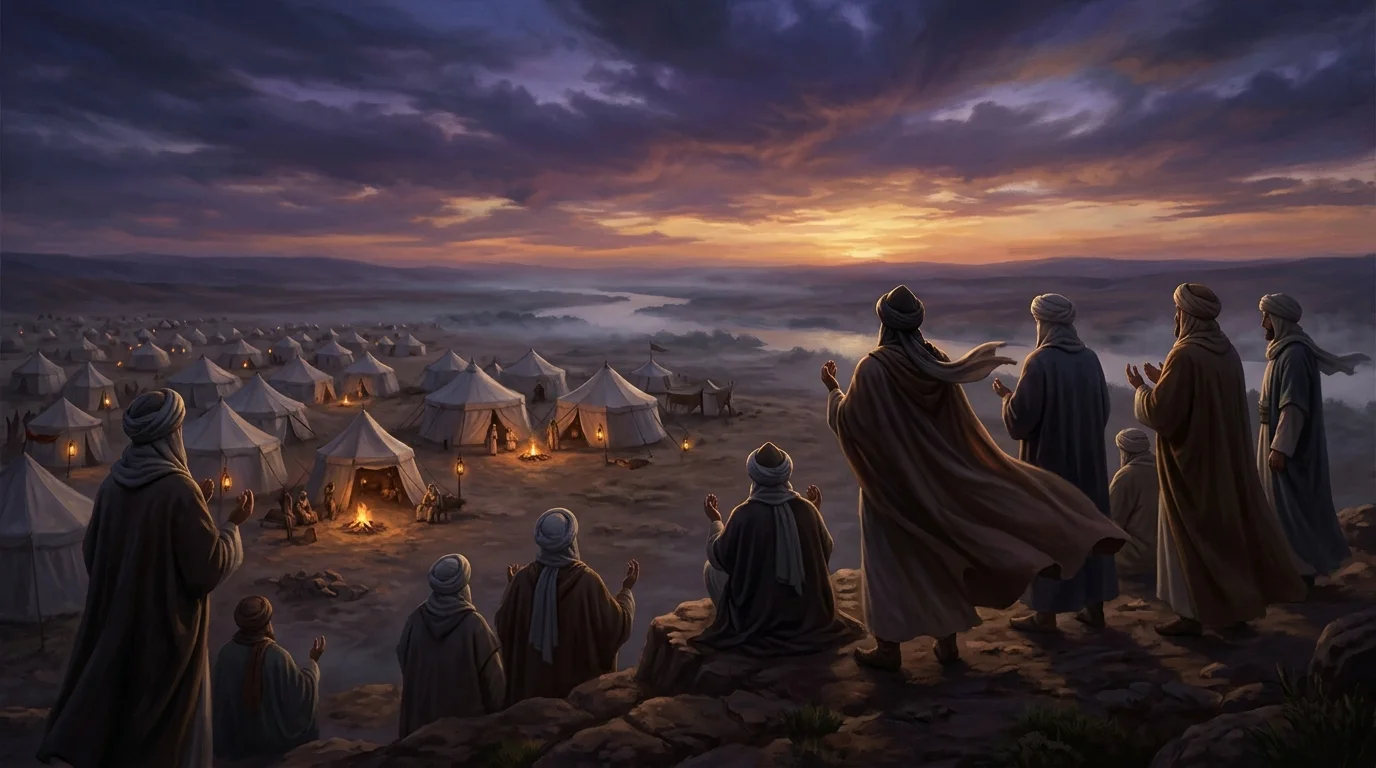
Aisha joined the view demanding vengeance on the criminals, as did Talha and al-Zubayr. Ali too held retribution obligatory but thought the tense moment unsuitable: wait, then fight the hypocrites, a view the author judges nearer the truth. The dispute was only over when to fight "the apostates, followers of Ibn Saba"; the caliphate was never in question. Muawiyah said: "By Allah, I know he is better than me and more entitled... let him hand me Uthman's killers and I will submit." Their failure to agree a timetable for fighting "the traitors of Iraq" caused the strife.
Scene 9
Questions of the Great Strife and the Caliphate's Legacy
The chapter ends with questions: how did the Great Strife unfold? Which third group was the only one wholly in the right? What is the story of the martyrdom of Talha and al-Zubayr, the Prophet's neighbours in Paradise? What is the story of the Shia, and how did they betray Ali ibn Abi Talib? Who is that dangerous sect of terrorists that sprang from the Shia army, and why did the Prophet ﷺ name them "the dogs of the people of Hell"? To be continued.
These are English scene notes. The full chapter text, as the author wrote it, is in the app.