


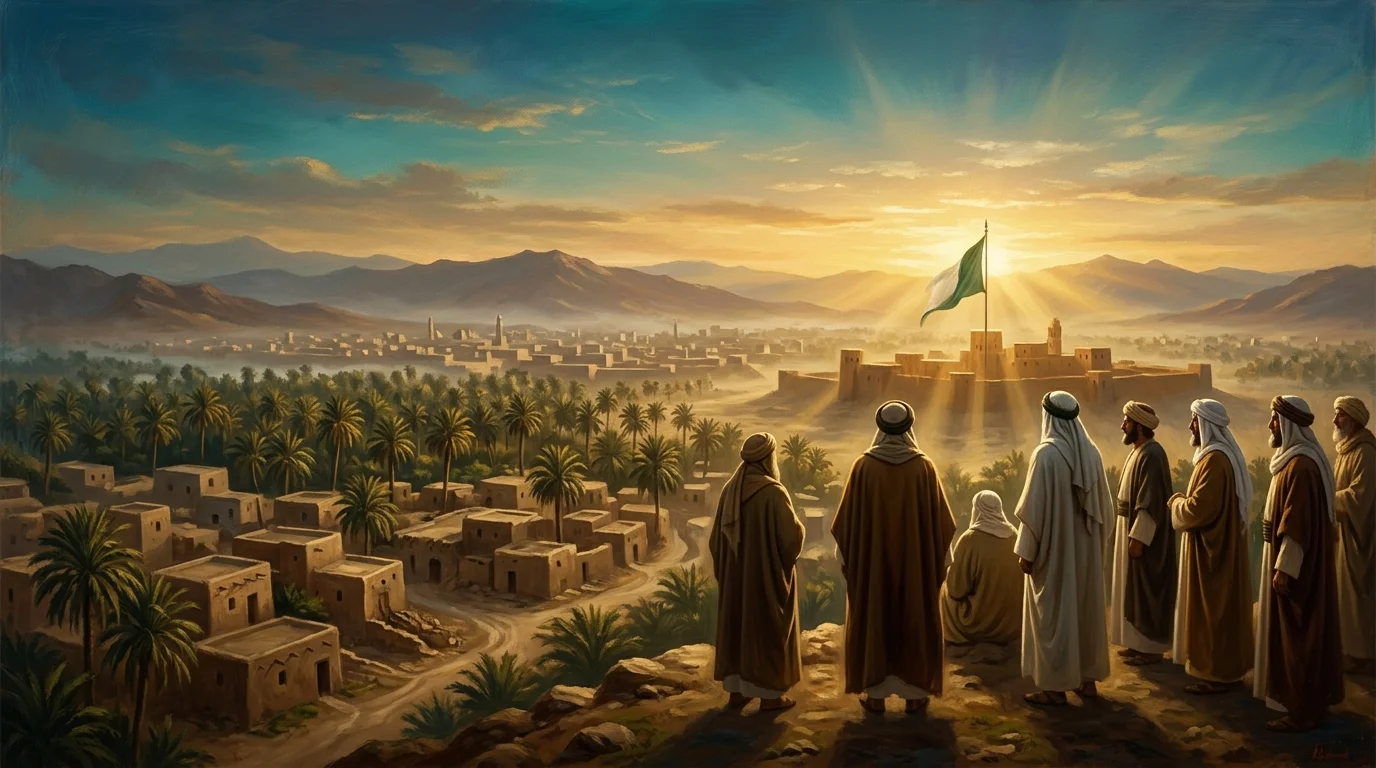
Scene 1
The Hero: Ali's Virtues and the Promise of Khaybar
The chapter opens with the Prophet's promise to give the banner to a man who loves God and His Messenger. The author lists Ali's distinctions: cousin and son-in-law of the Prophet ﷺ, father of al-Hasan and al-Husayn, fourth Rightly Guided Caliph, first boy to embrace Islam, hero of Khaybar and counsellor to the three caliphs before him.
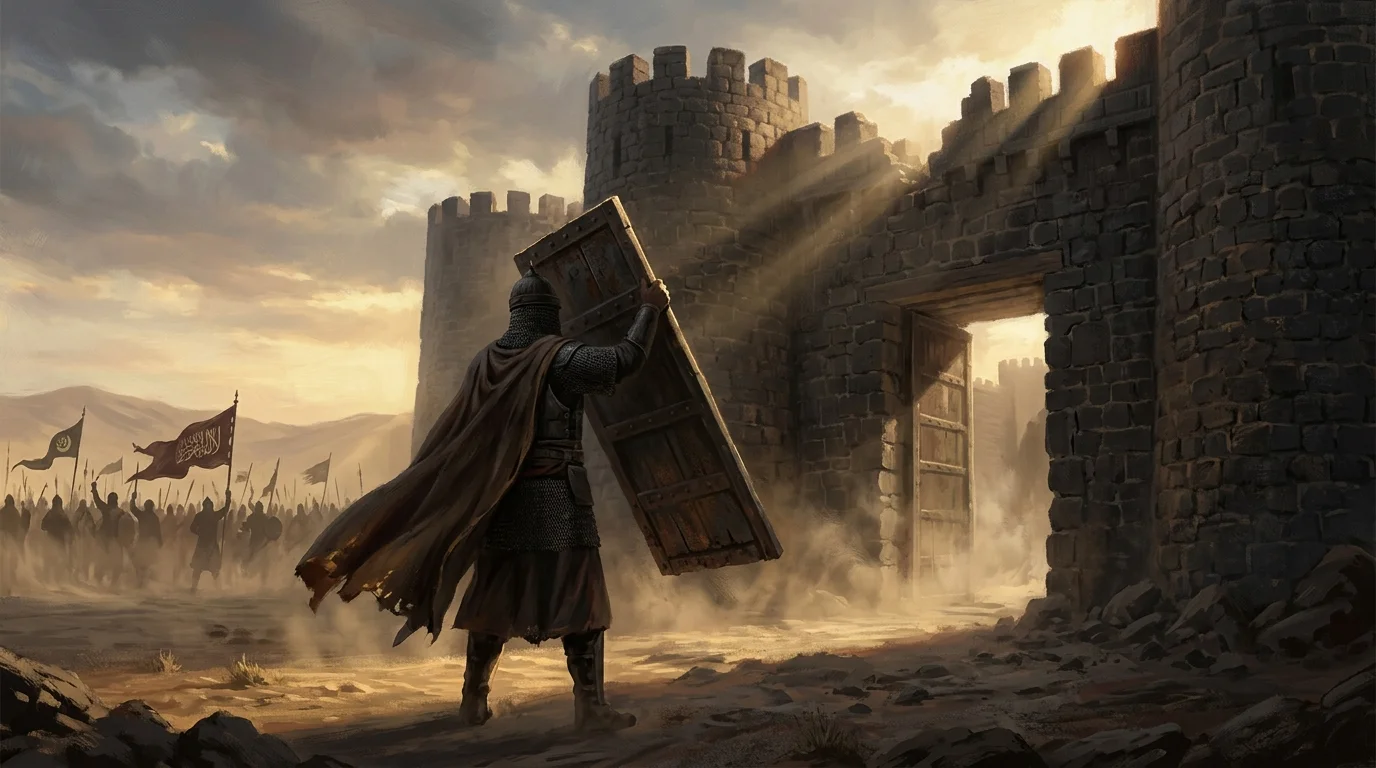
Scene 2
Volunteer of the Hijrah, Victor of Khaybar
Skipping the familiar story of the night of the Hijra, the author starts in the seventh year, when the Prophet ﷺ marched on Khaybar with the 1,400 of the Pledge of Ridwan. He promised the banner, cured Ali's ailing eyes and gave it to him. At Tabuk he likened Ali to Aaron beside Moses.
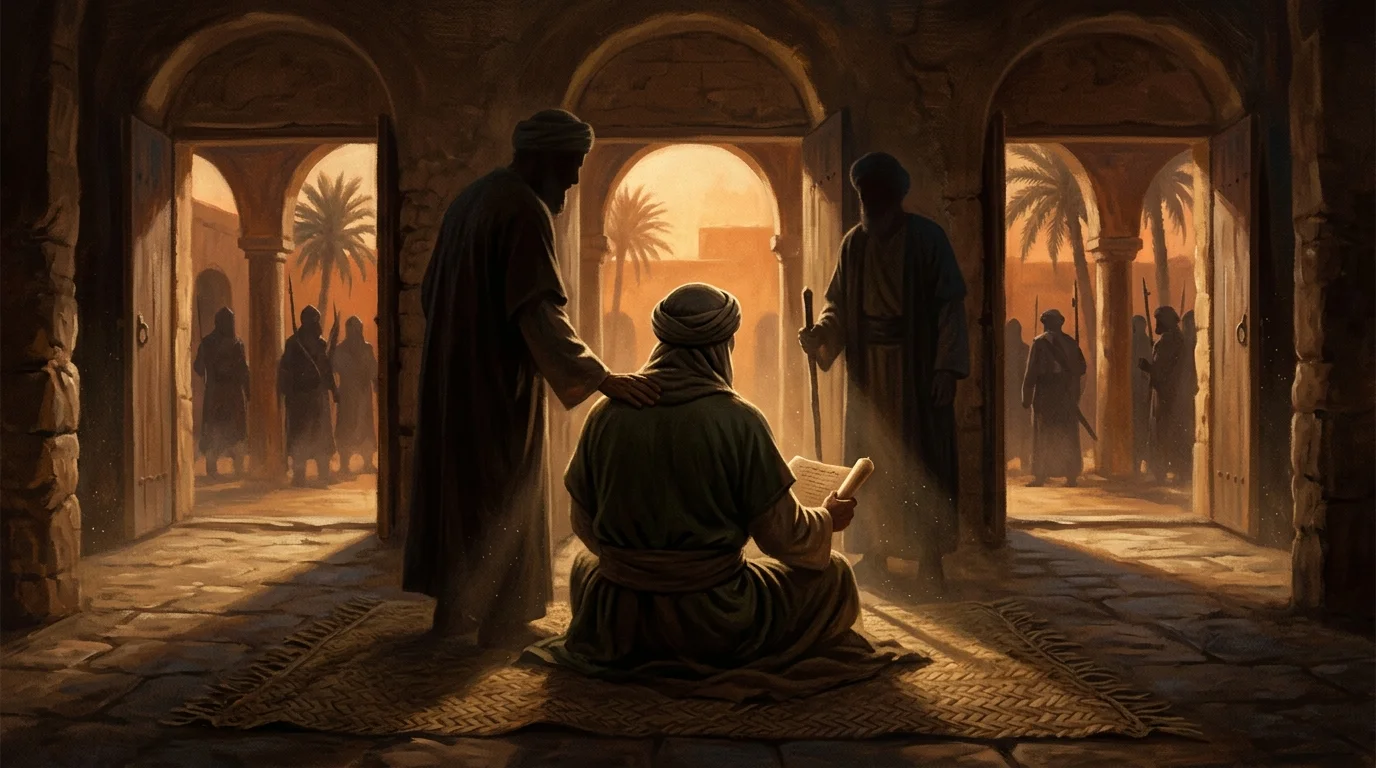
Scene 3
The Imam's Caliphate and the Storm in Medina
Ali was the best minister to Abu Bakr, then to Umar, whom he stopped from leading the army of al-Qadisiyyah himself lest "the Magian Persians" kill him treacherously, then to Uthman. When the terrorists came, Ali brought al-Hasan, al-Husayn and 700 Companions, but Uthman sent them home, and "those lowlifes" killed the caliph. The killers offered rule to Ali, who cursed and expelled them, then to al-Zubayr, Talha, Sa'd and Ibn Umar; they made the terrorist al-Ghafiqi ibn Harb emir of Medina for five days. Fearing "the murdering hypocrites" would take the caliphate, the Companions pressed Ali, who accepted reluctantly.
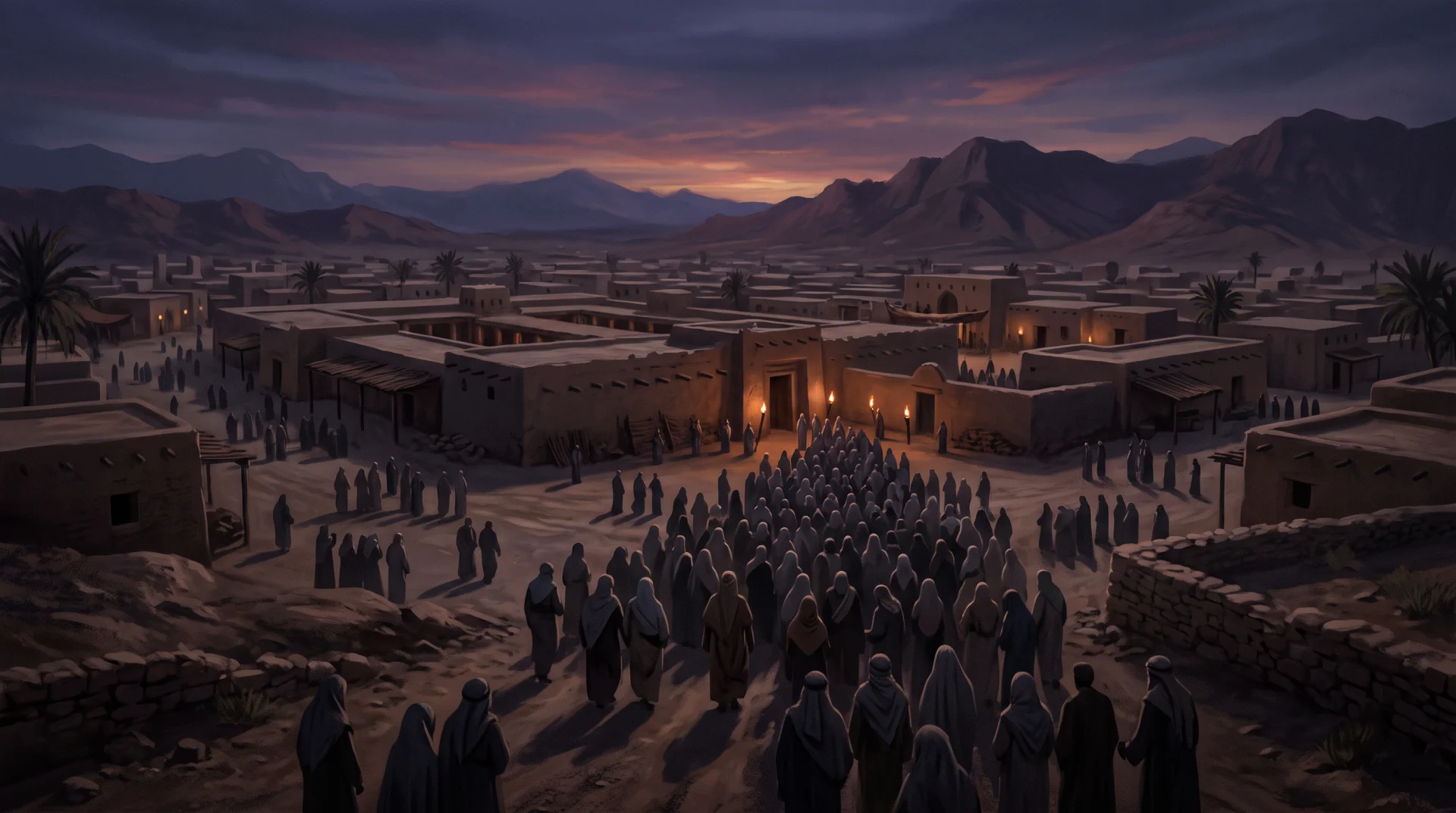
Scene 4
Ali Between Calls for Retribution and Fear of Chaos
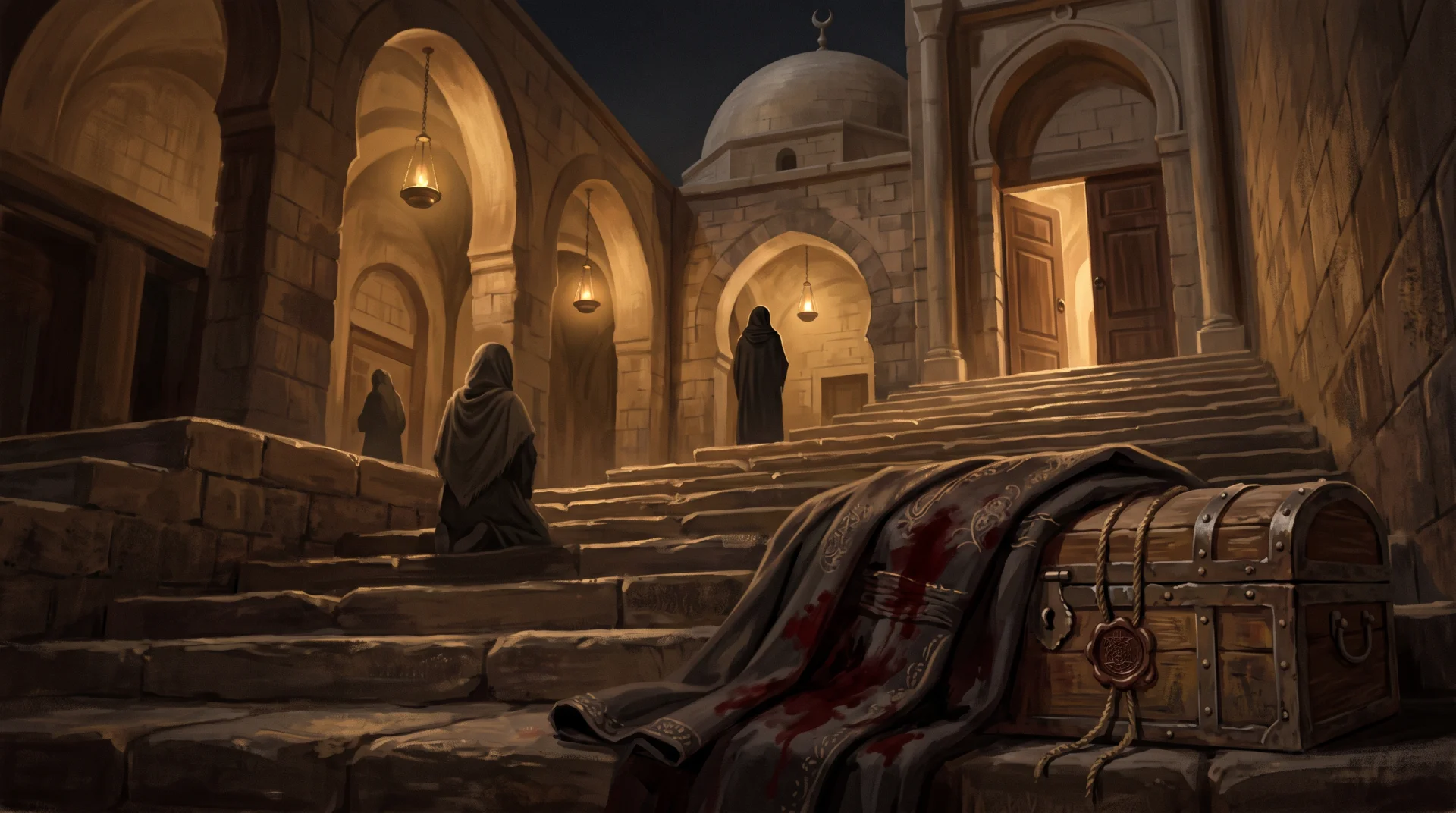
Though Ali was now caliph, armed rebels still held the upper hand in Medina. Talha and al-Zubayr asked him for Uthman's blood; he replied that the killers had backers and acting now could turn everything against them. He meant to wait, then try them justly. The two asked leave for Umrah and went to Mecca.
Scene 5
Muawiyah's Judgement and His Refusal to Pledge Before Retribution
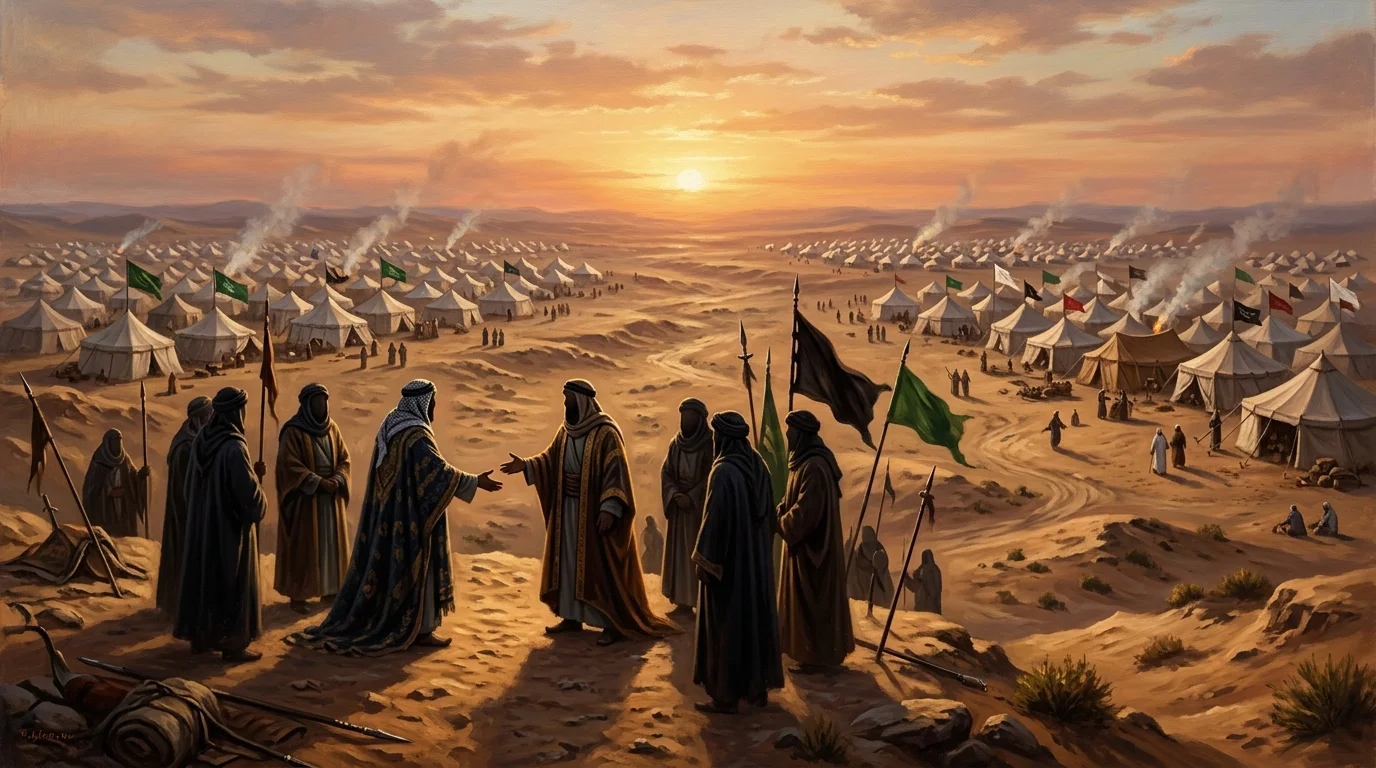
Muawiyah made his pledge to Ali conditional on retribution for Uthman, a judgement shared by leading Companions in Syria; the author says they erred and should have pledged first. He insists Muawiyah sought no caliphate. After unanswered letters and an empty reply, Ali resolved to march on Syria, against the advice of al-Hasan and Ibn Abbas.
Scene 6
The March to Basra, Peace Talks and a Plot by Night
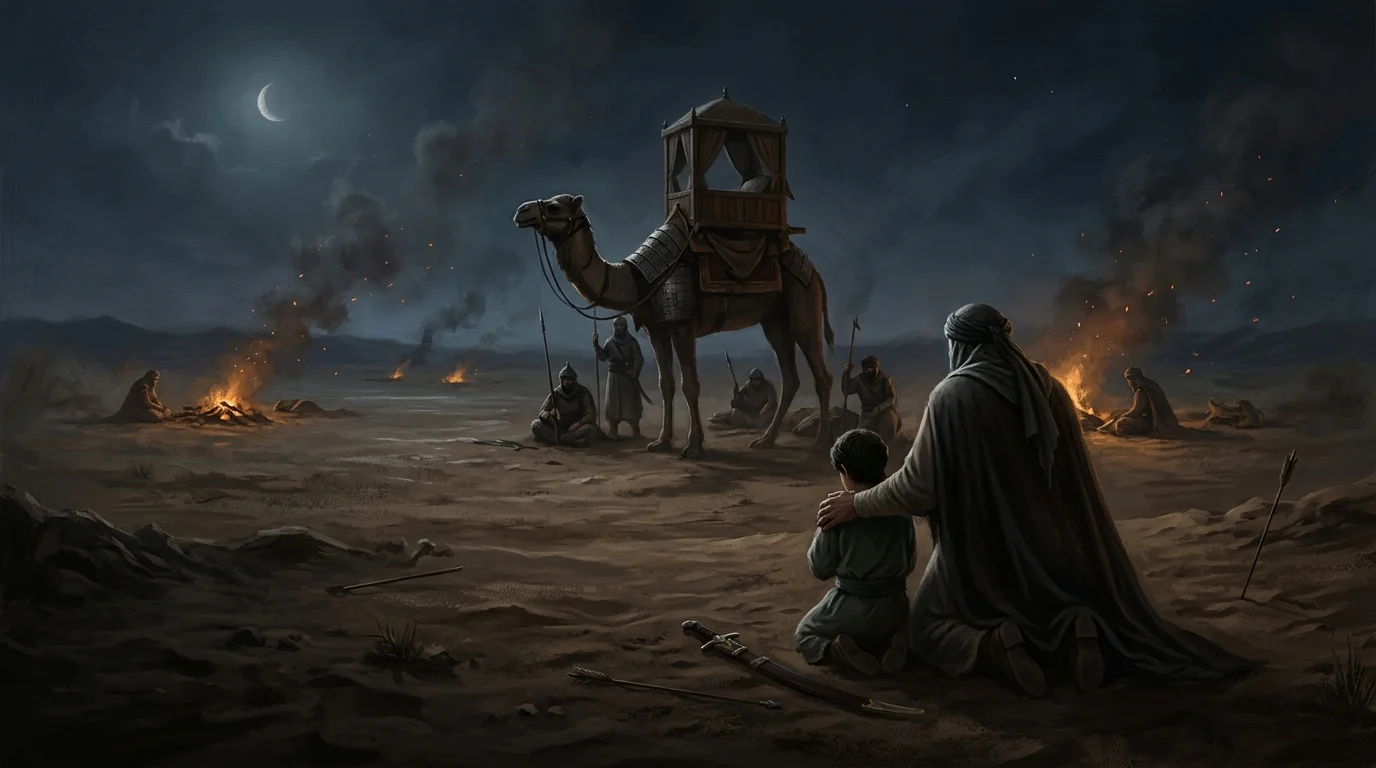
Aisha, in Mecca with Talha, al-Zubayr and al-Mughira ibn Shu'ba, held that avenging Uthman had priority, and they marched to Basra to kill "the traitors from the people of Iraq". Ali went to Iraq to confer; the two sides nearly reached a solution, Ali agreeing to remove every killer of Uthman from his army, with peace set for the next day. The criminals met secretly, and "that devil", "the Jew Abdullah ibn Saba", standing "like Iblis, father of the devils" and smiling maliciously, told them to attack both sleeping armies by night, each crying that the other had attacked.
Scene 7
The Battle of the Camel and the Imam's Tears
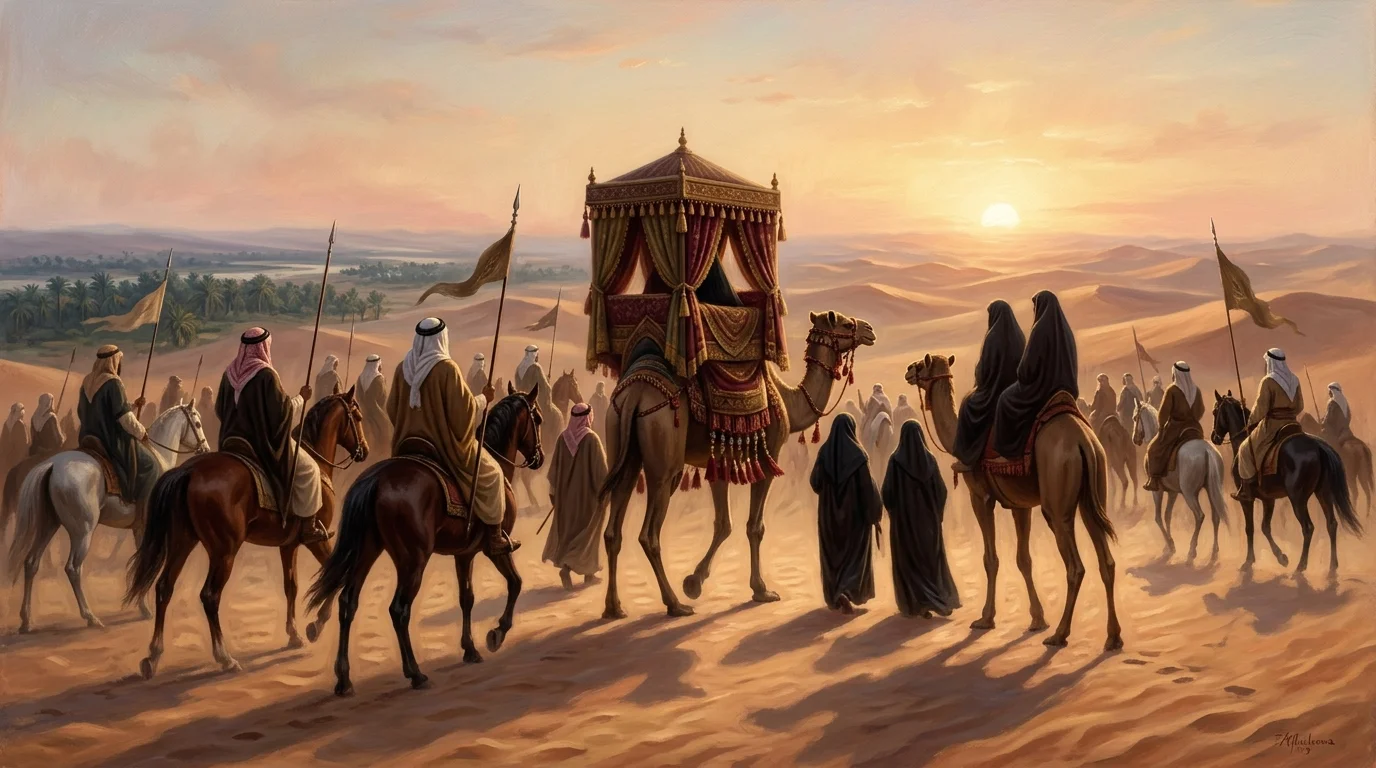
The plan succeeded in causing chaos. Al-Zubayr was killed, then Talha, fighting one-handed since Uhud. Ali cried to the people to stop but none heard in the tumult. Weeping, he wished he had died twenty years earlier and embraced al-Hasan, who reminded him of his warning; Ali said he never thought it would come to this.
Scene 8
Honouring the Mother of the Believers, and Siffin
After the Battle of the Camel Ali honoured his mother Aisha and returned her to Medina. Muawiyah then brought the Levantine army to kill "the traitors from the people of Iraq", and Ibn Saba's followers again lit the strife at Siffin, until Ali and Muawiyah, sensing outside fingers, accepted arbitration. In Iraq Ali saw every colour of "filthy betrayal" from his Shia; "those traitorous people, followers of Ibn Saba", the book says, later killed him and his son al-Husayn and stabbed al-Hasan. It cites the hadith blessing the Levant and turning from Iraq, where "the horn of Satan rises".
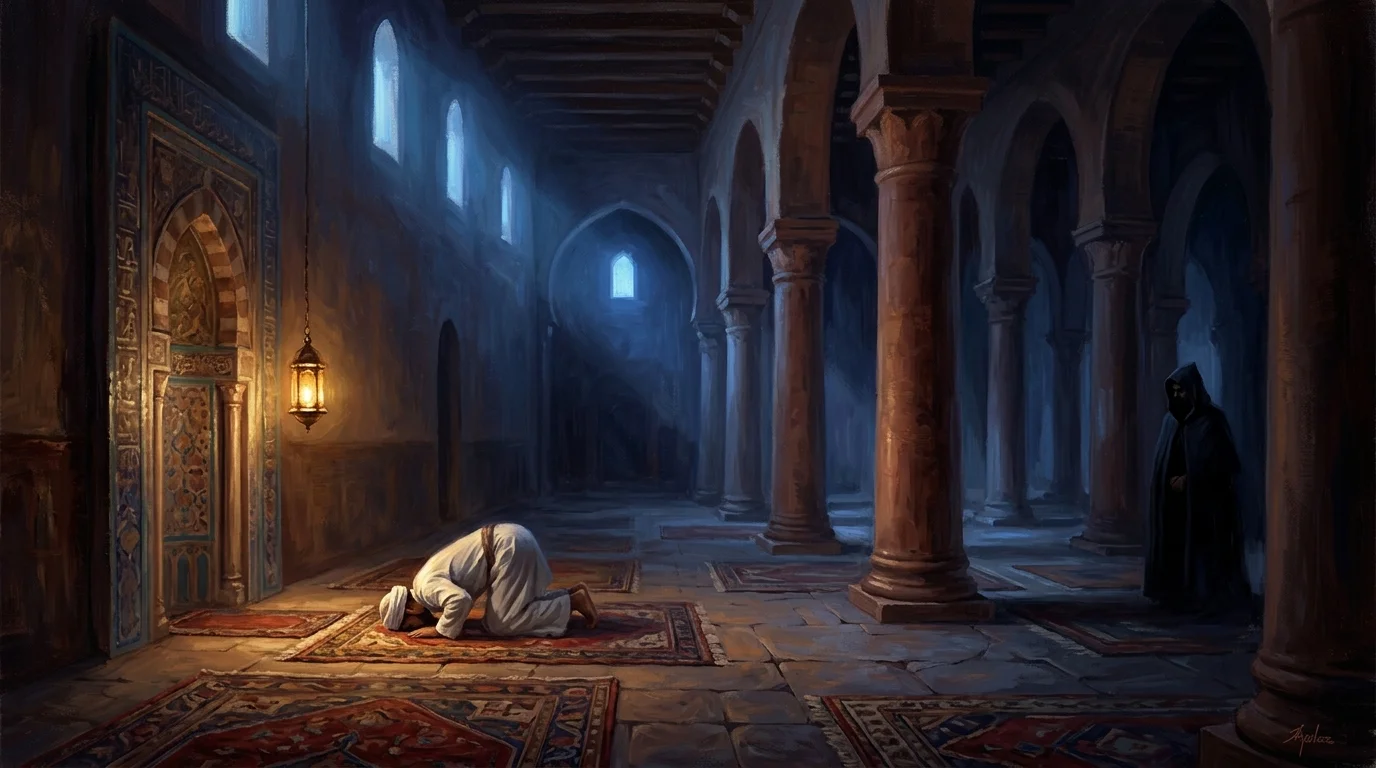
Scene 9
Kufa's Desertion, the Kharijites and Martyrdom
The book quotes Ali, from Nahj al-Balagha ("originally a Shia book"), addressing the Shia of Iraq: "O semblances of men who are not men! ... You have filled my heart with pus", wishing to exchange ten of them for one man of the Levant. From the Shia, it says, sprang a criminal group, the Kharijites, whom the Prophet ﷺ foretold and named "the dogs of the people of Hell". They sent three men to stab Ali, Muawiyah and Amr ibn al-As at prayer on the same day; Ali was killed, having drunk bitterness from the desertion of "his traitorous Shia".
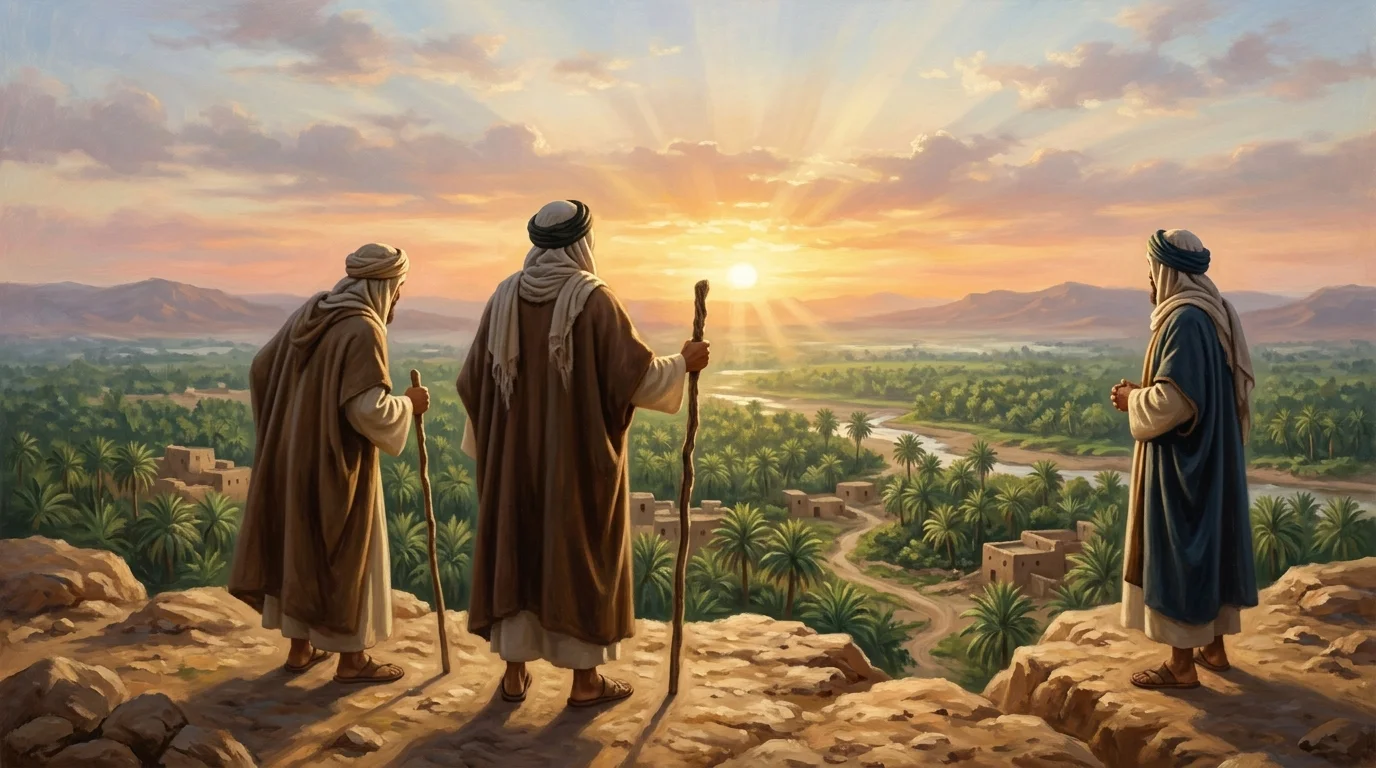
Scene 10
History's Scales, the Third Group and the Year of Unity
Who was right, Ali or Muawiyah? The book answers: neither wholly. Muawiyah erred in his ijtihad and should have accepted Ali's delay; yet Ali should not have let matters reach the killing of tens of thousands of Muslims, including three of the ten promised Paradise, for one hair of Ali, Talha or al-Zubayr equalled "a million heads of the hypocrites, followers of the devil Ibn Saba". A hadith shows Ali's party nearer to truth, but a third group of Companions was wholly right. Did the Shia reform after Ali's death or continue, "as usual", their betrayals? To be continued.
These are English scene notes. The full chapter text, as the author wrote it, is in the app.