


Scene 1
Opening of Light: Prophetic Testimonies and Virtues
The chapter opens with sayings of the Prophet ﷺ and the Companions in praise of Uthman. The author promised him the most pages of the hundred: third of the ten promised Paradise, husband of two of the Prophet's daughters, third Rightly Guided Caliph, the man the angels are shy before, and compiler of the Quran.
Scene 2
The Nation's Steadfastness and the Legacy of Conquests
The author confides he first meant to open the book with Uthman ibn Affan, not because he surpasses Abu Bakr but because he is, he claims, the most distorted figure in all human history, at a time when "dwarfs" reach insolently at humanity's giants and hypocrites rush to destroy the nation from within. These "evil ones" chose in the last two centuries a new way to destroy Islam, historical invasion, and, alas, succeeded. But a newborn emerged from the nation's paralysed ribs, guided by those he calls "the new historians", whose works supplied this book's material.
Scene 3
The Distortion of Uthman's Image in Muslim Eyes
Uthman's history, the book says, underwent "the filthiest operation of distortion and falsification in human history", until Muslims themselves saw him as an obscenely rich opportunist who built palaces, spread nepotism by making his cousins governors, let justice dwindle and Allah's law lapse, and so was killed by those the Orientalists called "the revolutionaries", as they allege. Even many who love him deemed him a righteous but weak man unfit for politics, who caused the first strife and ruined the great Islamic dream begun by the Prophet ﷺ and built by Abu Bakr and Umar: again, as they allege.
Scene 4
Target Number One and the Plot to Distort History
The author will not retell Uthman's well-known generosity but present "all the accusations" thrown at him, saying scholars' silence must end: if doubt in the Companions stands, the hadith and the Quran itself, which Uthman compiled, fall into doubt. Why Uthman? Because the main target of the "invaders of history" is Islam itself, for whose removal secret conferences are held; so Uthman and the Umayyads became their first enemy, and war on him is war on Allah's Book. He turns to the doubts raised by the Orientalists and "their agents among the Rafidi Shia and the hypocrites among the intellectuals".
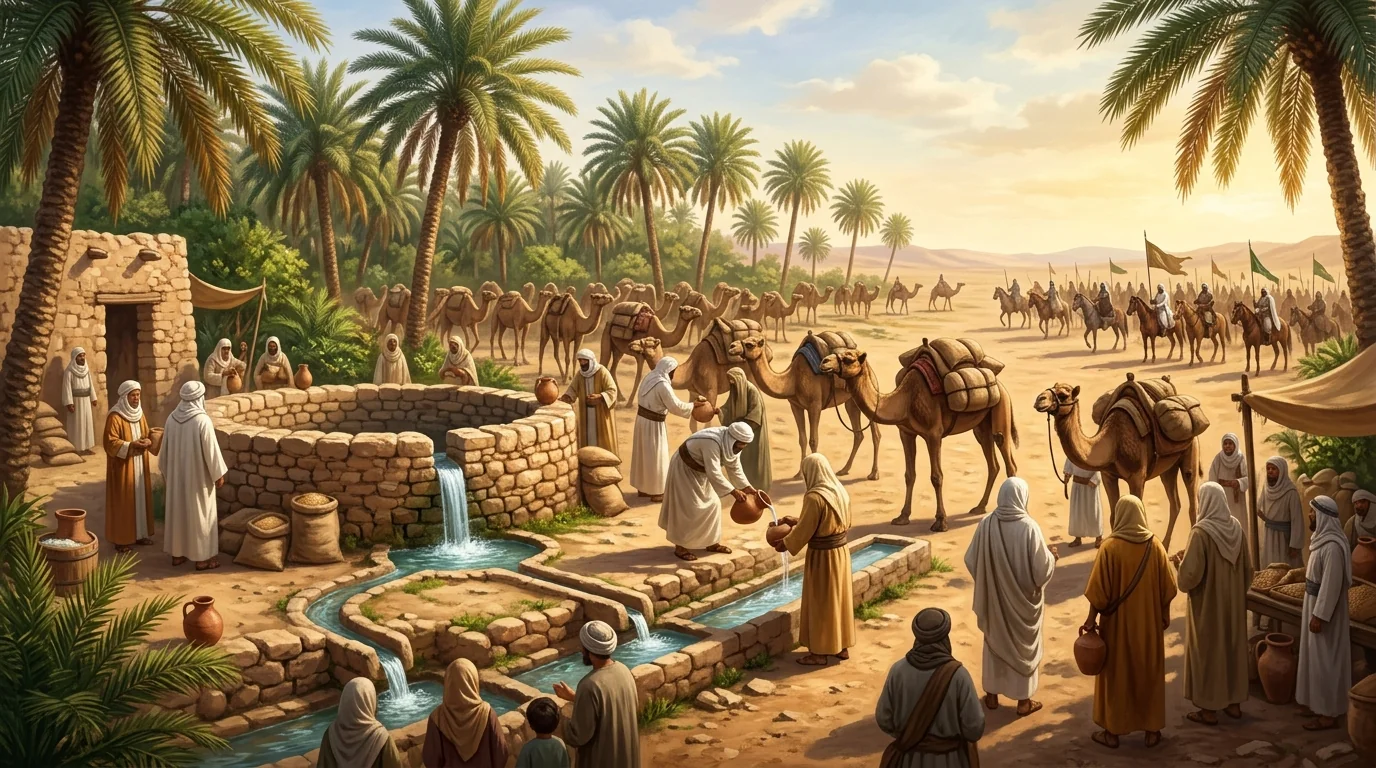
Scene 5
The Well of Rumah and the Generosity of Dhul-Nurayn
First, the financial charge: "these stupid slanderers" should have chosen another, since Uthman was the richest of the Arabs before the caliphate, and answered the hypocrites that he had spent all his camels and sheep in Allah's cause and owned only two camels for hajj. Second, favouring relatives: the author is amazed at how few Umayyad governors there were, only two, Muawiyah and Abdullah ibn al-Sa'ib ibn Qurayz, from Azerbaijan to Tunisia. He lists seven Umayyads whom the Prophet ﷺ himself appointed, concluding that impugning the Umayyads impugns the Prophet ﷺ and then Allah Himself.
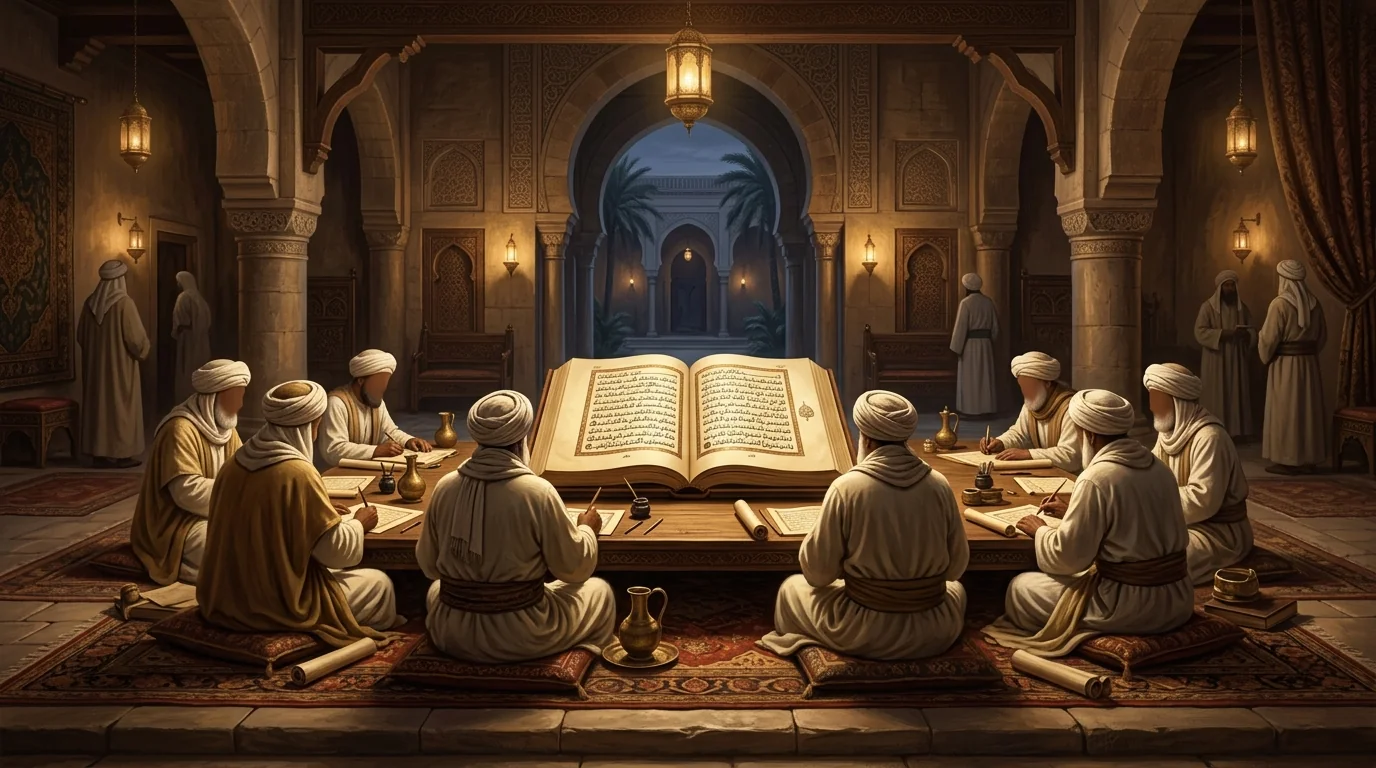
Scene 6
Compiling the Qur'an and Uniting the Master Codex
On the charge that Uthman burned copies of the Quran, the author answers that this is a truth used to argue a falsehood. Uthman gathered the whole Quran into one codex and burned the others so it would be preserved in the Uthmani mushaf still recited today, written in the hand of Zaid ibn Thabit.
Scene 7
Just Consultation and Answering Doubts About the Caliphate
Fourth, Uthman's right to the caliphate: he was elected after Abd al-Rahman ibn Awf polled Medina, and all the Companions pledged allegiance, Ali first. Fifth, he enlarged the Prophet's mosque; most such slanderers, the book says, are Shia who do not believe in the Sunnah at all. Sixth, poverty and injustice: "were I one of those hypocrites" I would seek another lie. Seventh, he never exiled Abu Dharr. Eighth, weakness: "what foolishness!", for stupidity is the hypocrites' habit; he annihilated the Persian Empire, wrote to China's emperor "Embrace Islam and be safe", and forbore with "those criminals" out of clemency.
Scene 8
Angelic Modesty, Patience in Trial and Martyrdom
Aisha narrates in Sahih Muslim that the Prophet ﷺ stayed reclining for Abu Bakr and Umar but sat up and arranged his garments for Uthman, saying: "Should I not be shy of a man of whom the angels are shy?" Abu Musa al-Ash'ari relates that at the well of Aris the Prophet ﷺ gave Uthman glad tidings of Paradise "with a trial that will befall him". He told him not to remove the shirt Allah clothed him in if the hypocrites demanded it, and said on trembling Uhud: "upon you are a prophet, a siddiq and two martyrs."
Scene 9
The Conspiracy Meeting and Abdullah ibn Saba
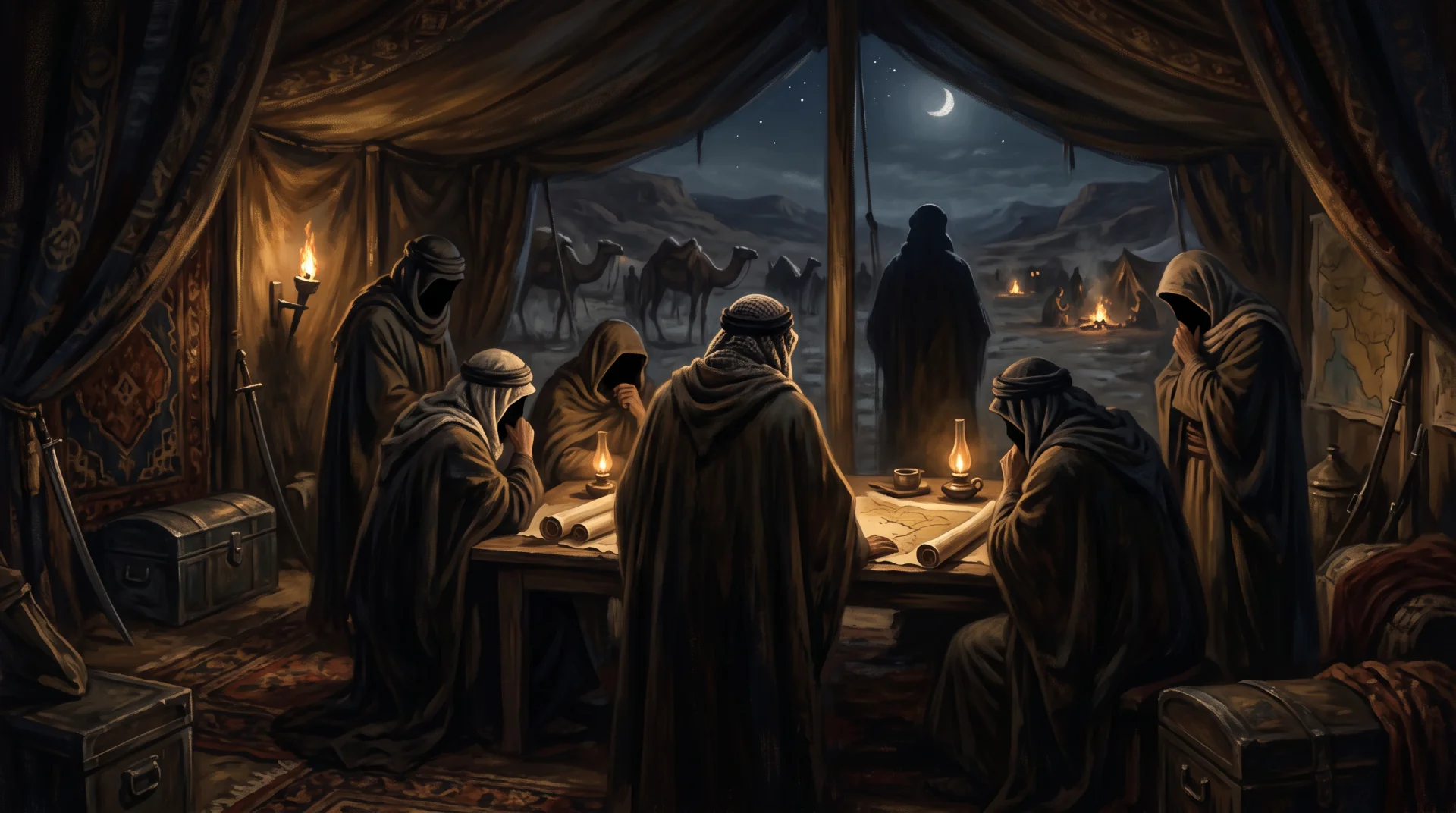
The book says Uthman's assassination was planned from "the first terrorist operation" against the nation: Abd al-Rahman ibn Abi Bakr saw Abu Lu'lu'a the Magian, the Persian king al-Hurmuzan and Jufayna the Christian, "the Magian Persian forces" and "the hateful Crusader forces", with a two-bladed dagger before Umar's murder. A third side then completed the triangle of enmity (Magian Persians, Crusaders, Jews): Abdullah ibn Saba, a Yemeni Jew feigning Islam by taqiyya, who found the Magian remnants in Iraq receptive and forged letters. The hypocrites besieged Uthman, who dismissed some seven hundred defenders led by Ali.
Scene 10
The Night of the House and Dhul-Nurayn's Last Recitation
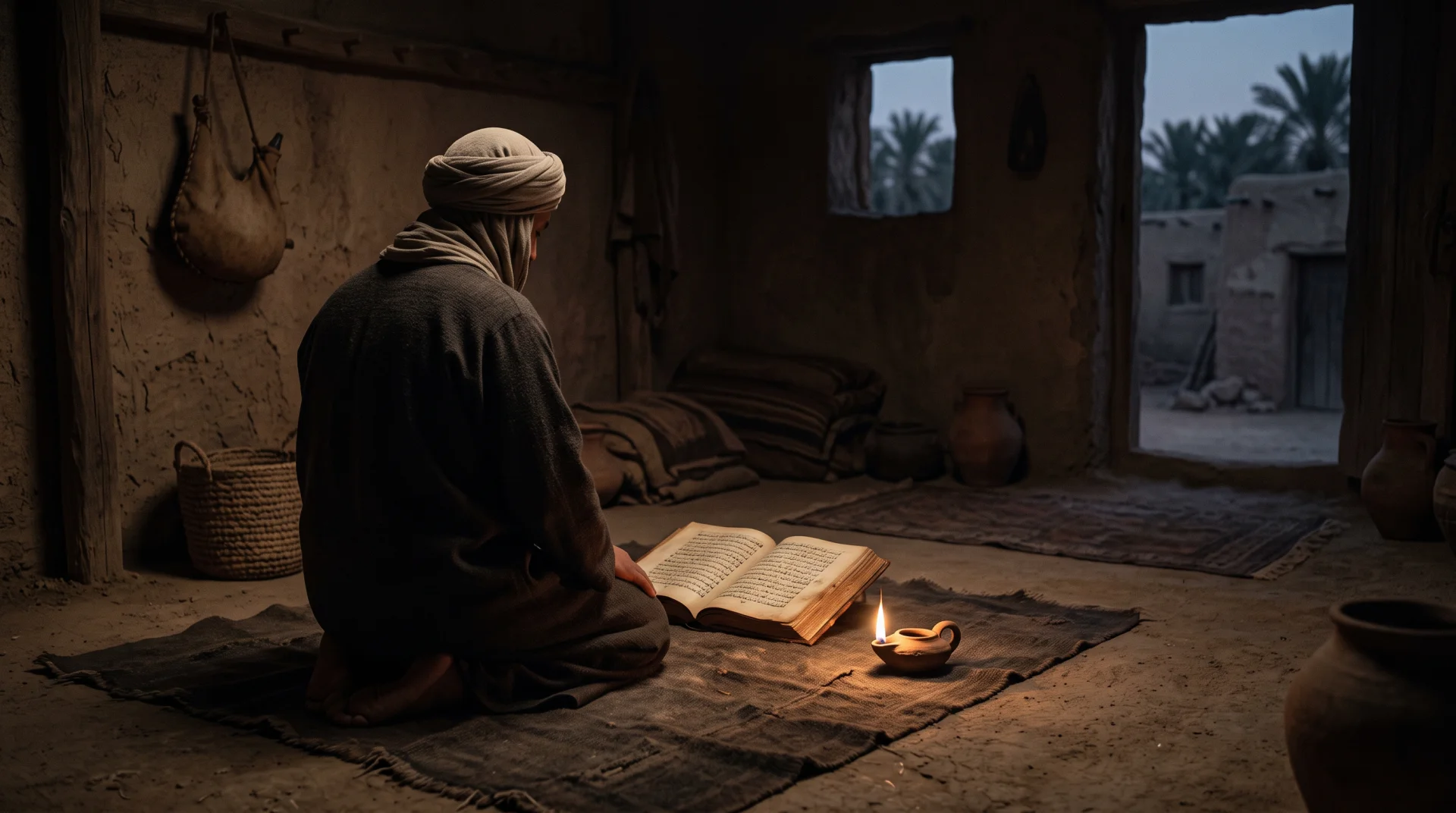
Uthman, fasting, opened his door and recited the Quran; "the criminal terrorist" al-Ghafiqi stabbed his head and kicked the mushaf, a drop of blood landing on "Allah will suffice you against them". His wife Na'ila bint al-Farafisa lost her fingers shielding him; they beheaded and mutilated him, and "that vile criminal" who slapped his face left with withered hands and blind. "Those degenerate lowlifes from the people of Iraq and others" stripped Na'ila's wrap, laughing, kicking Allah's Book, and "those thieving hypocrites" looted the house, a scene the book says was repeated in 2003. It calls them "human beasts".
These are English scene notes. The full chapter text, as the author wrote it, is in the app.