


Scene 1
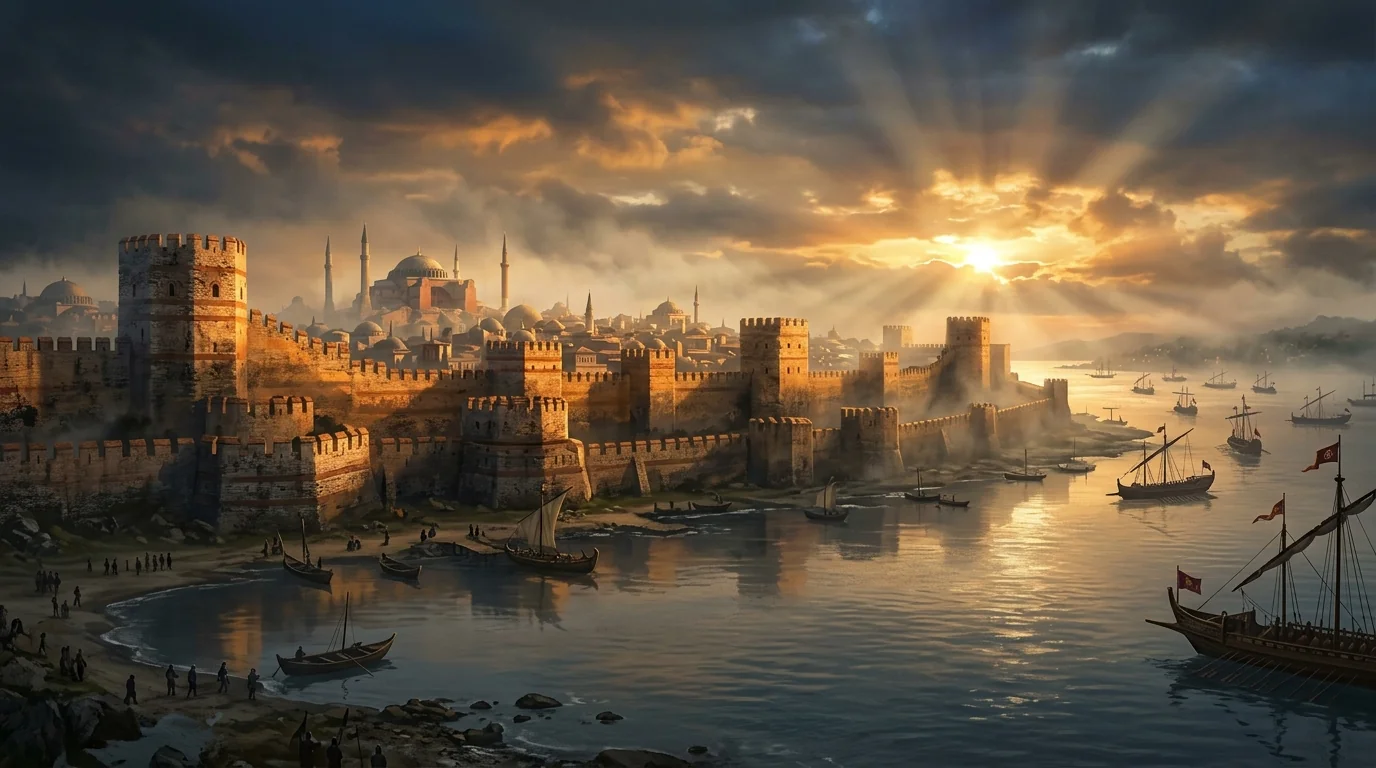
The Prophetic Tidings and Constantinople's Mighty Walls
The chapter on Mehmed the Conqueror, called the bearer of the Prophet's glad tidings, opens with the saying of the Prophet ﷺ that Constantinople will surely be conquered, and that its commander will be an excellent commander and its army an excellent army.
Scene 2
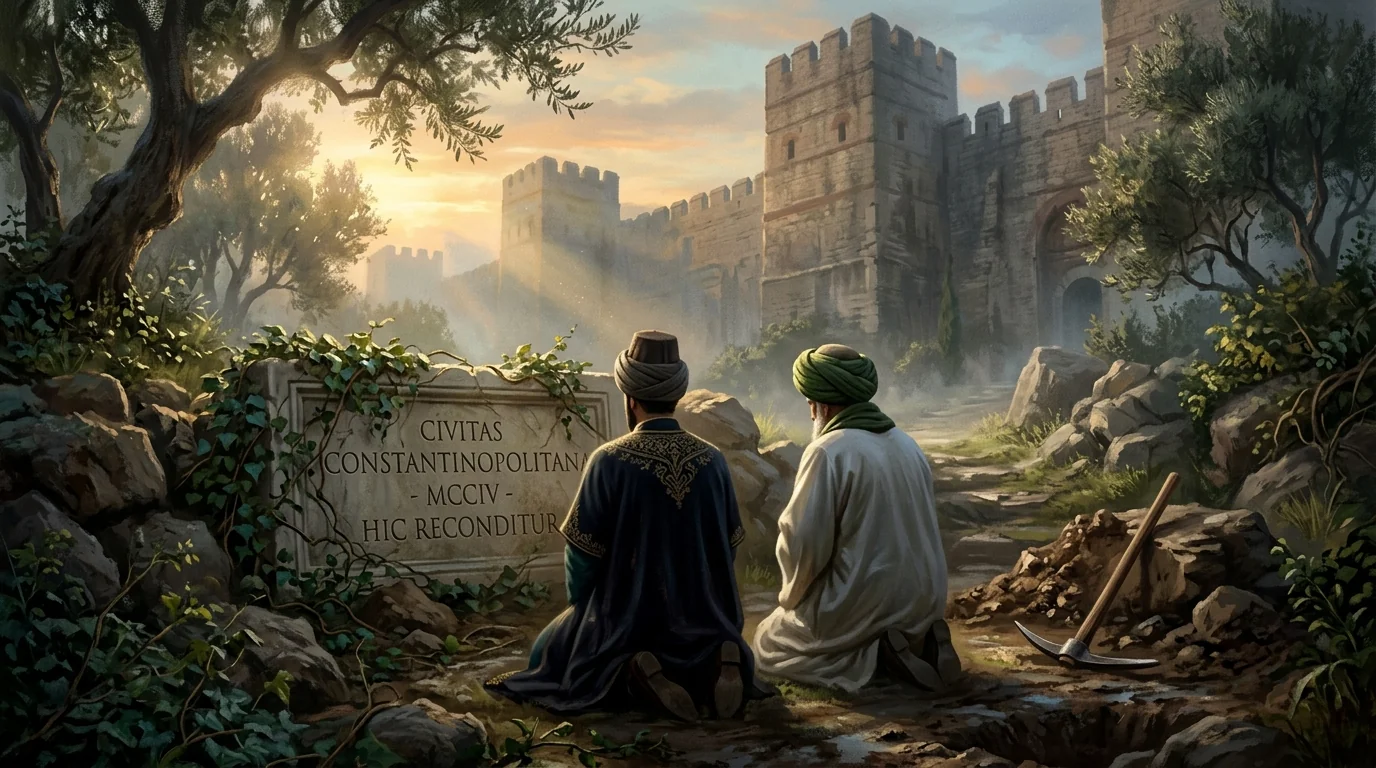
Digging at Dawn and the Discovery of the Marble Tablet
After the dawn prayer, Sultan Mehmed is led by his teacher Aq Shams al-Din to a spot behind Constantinople's walls that the sheikh had seen in a dream. Digging there, his pickaxe strikes a stone tablet in Latin. Reading it, he weeps and cries out that he has found the grave of Abu Ayyub al-Ansari.
Scene 3
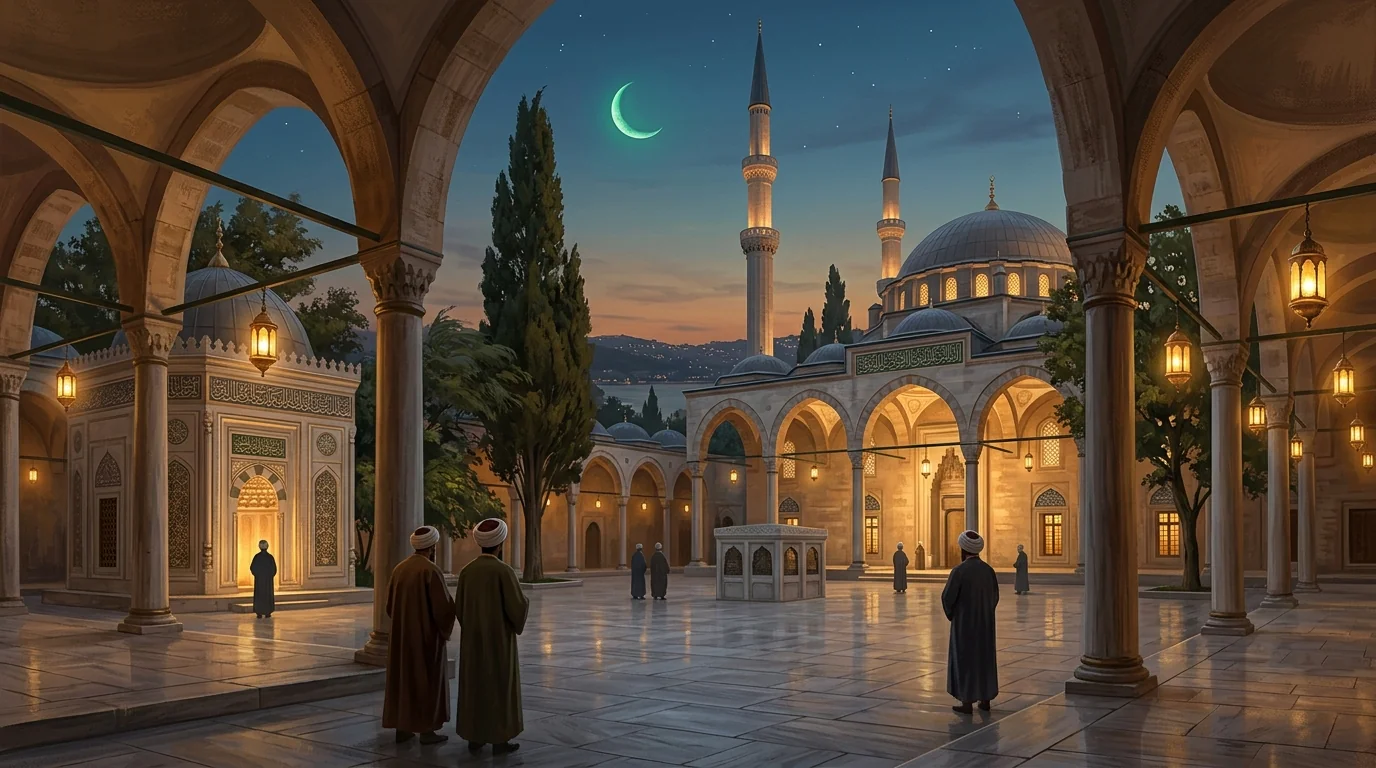
The Companion's Resting Place and the Abu Ayyub Mosque
The author relates that the Romans, warned by the Muslims not to disturb the grave, later sought blessings there, clad it in marble and inscribed its story in Latin, until it vanished over the centuries. After the Ottoman conquest it was rediscovered, and a mosque was built beside it where Ottoman sultans were invested with rule.
Scene 4
Defeating Despair and the Dawn of the Nation Reborn
Back to the heroic Ottoman sultan Mehmed the Conqueror, or "Mehmed II", as Arab school curricula prefer, as though their authors do not want us to hear a word smelling of victory or conquest. The author no longer blames the despairing, broken youth he meets: they are victims of the terrible "historical invasion" that set their curricula, a planted psychological defeat that drives them to throw themselves into the seas of darkness as a meal for predatory fish. This book, he says, is an attempt to replant hope by spotlighting the nation's bright moments.
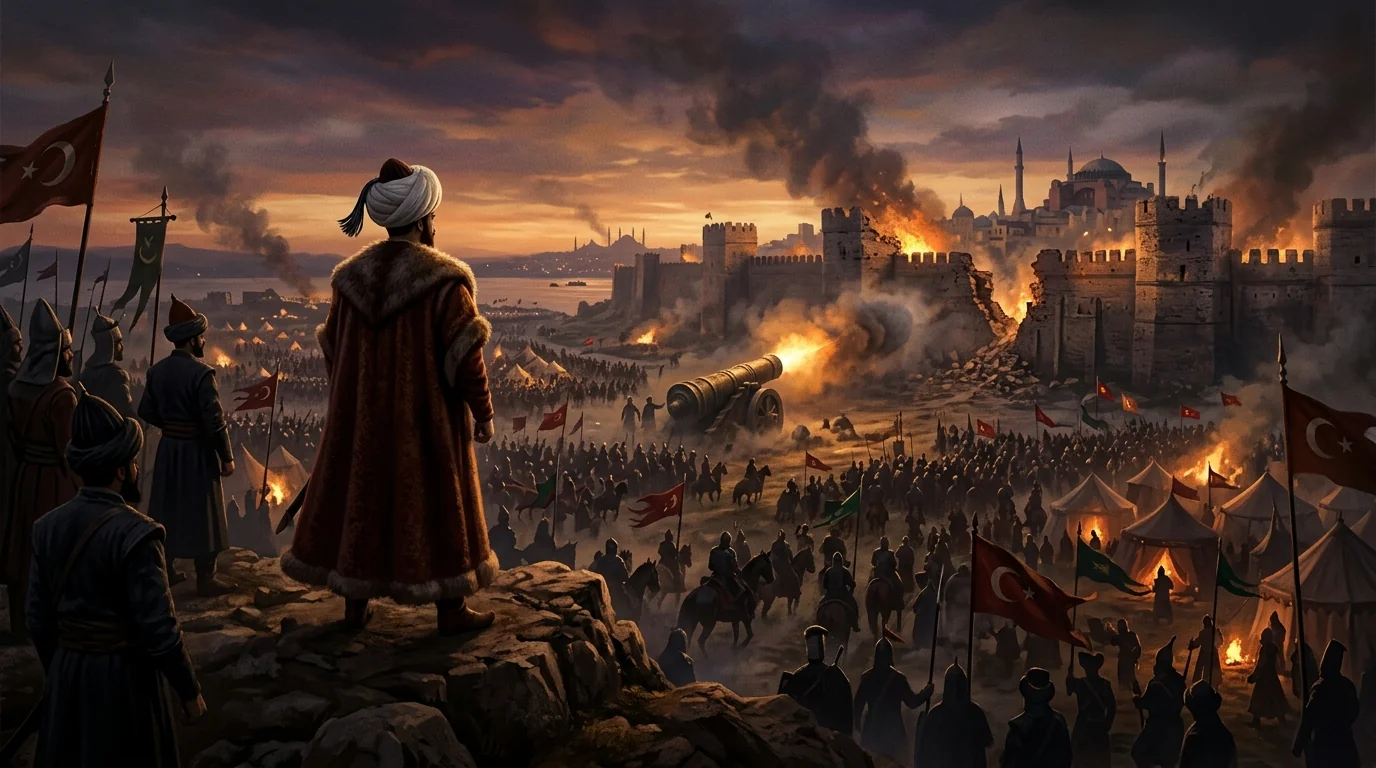
Scene 5
Capital of the World and the Epic of Eleven Sieges
Mehmed was not yet twenty-three when he took Constantinople, the city Napoleon called the natural capital of the world. The author says the Prophet ﷺ praised its future conqueror, so Muslims besieged it eleven times, beginning with Yazid ibn Muawiyah and Maslamah ibn Abd al-Malik. Yet Mehmed's greatness, he adds, lies also in what he did afterwards.
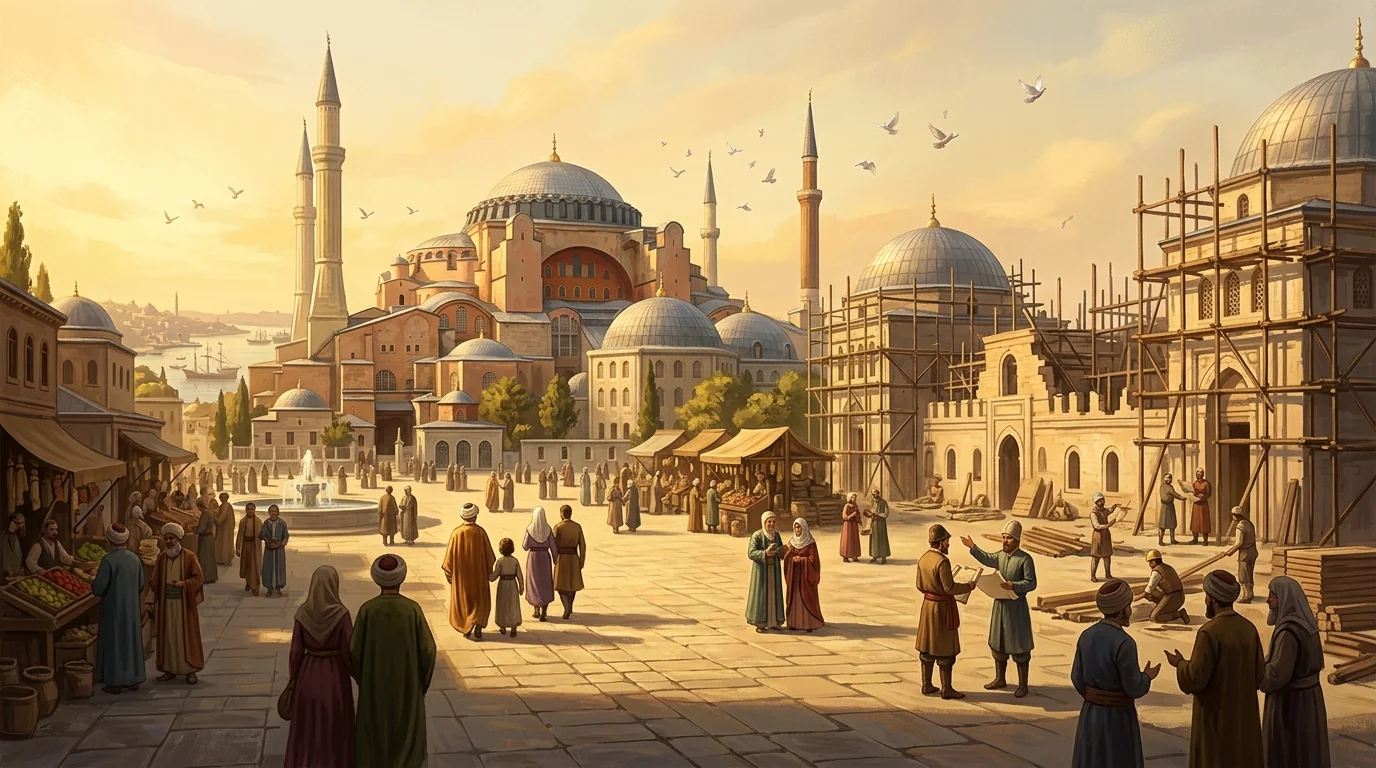
Scene 6
Islambol: An Age of Tolerance and Human Renewal
Mehmed renamed the city Islambol, "City of Islam", pardoned its Christians and guaranteed their lives and property, leaving them half the churches. The author contrasts this with Crusader and Spanish conduct. Mehmed invited Orthodox, Catholic and Jewish refugees home, freed prisoners, and brought four thousand families of all faiths to settle the capital.
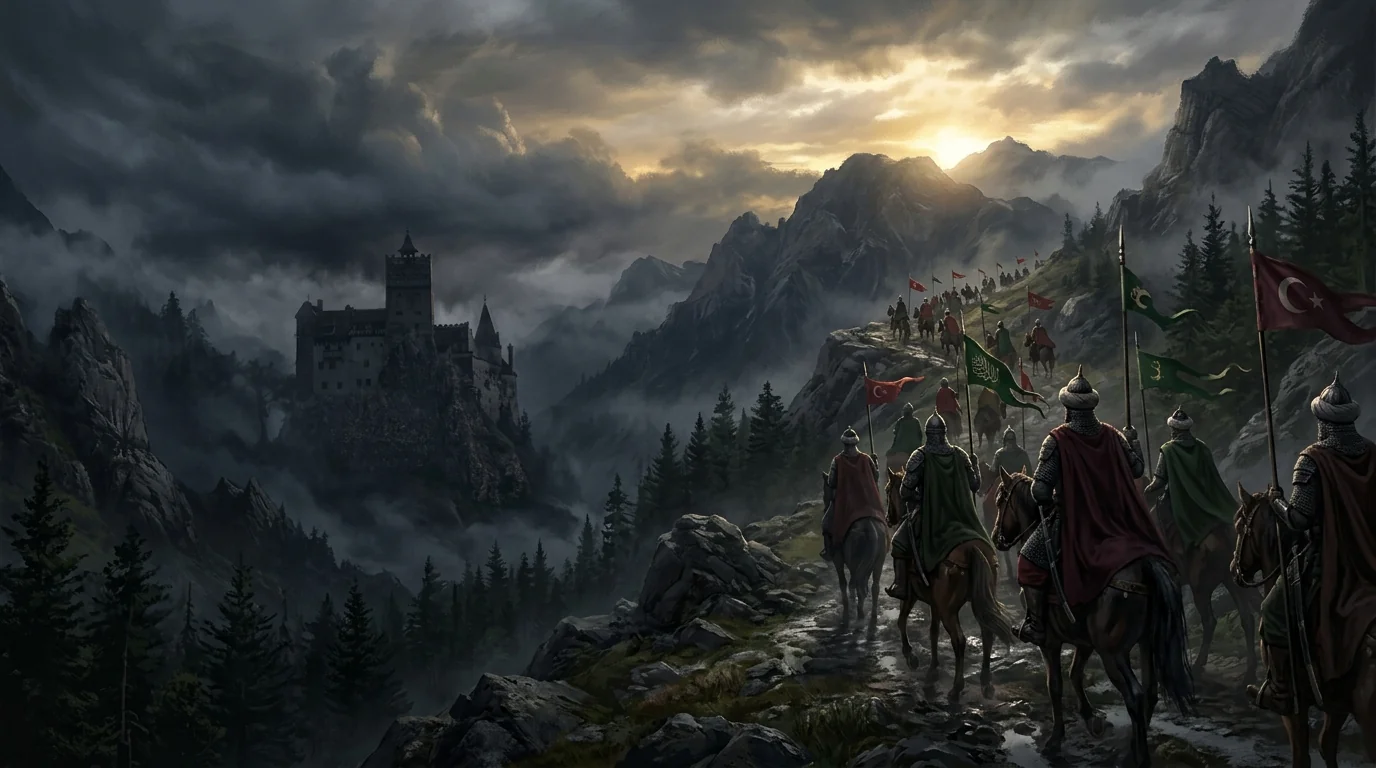
Scene 7
Conquests in Europe and the Defeat of the Tyrant Dracula
Mehmed built institutes, hospitals, markets and public gardens, then carried his conquests across Wallachia, Bosnia, Moldavia, the Crimea, Greece and much of the Balkans, defeating the ruler known as Dracula. He entered southern Italy and advanced on Rome, but died at fifty-three. The author says the Pope celebrated his death for three days.
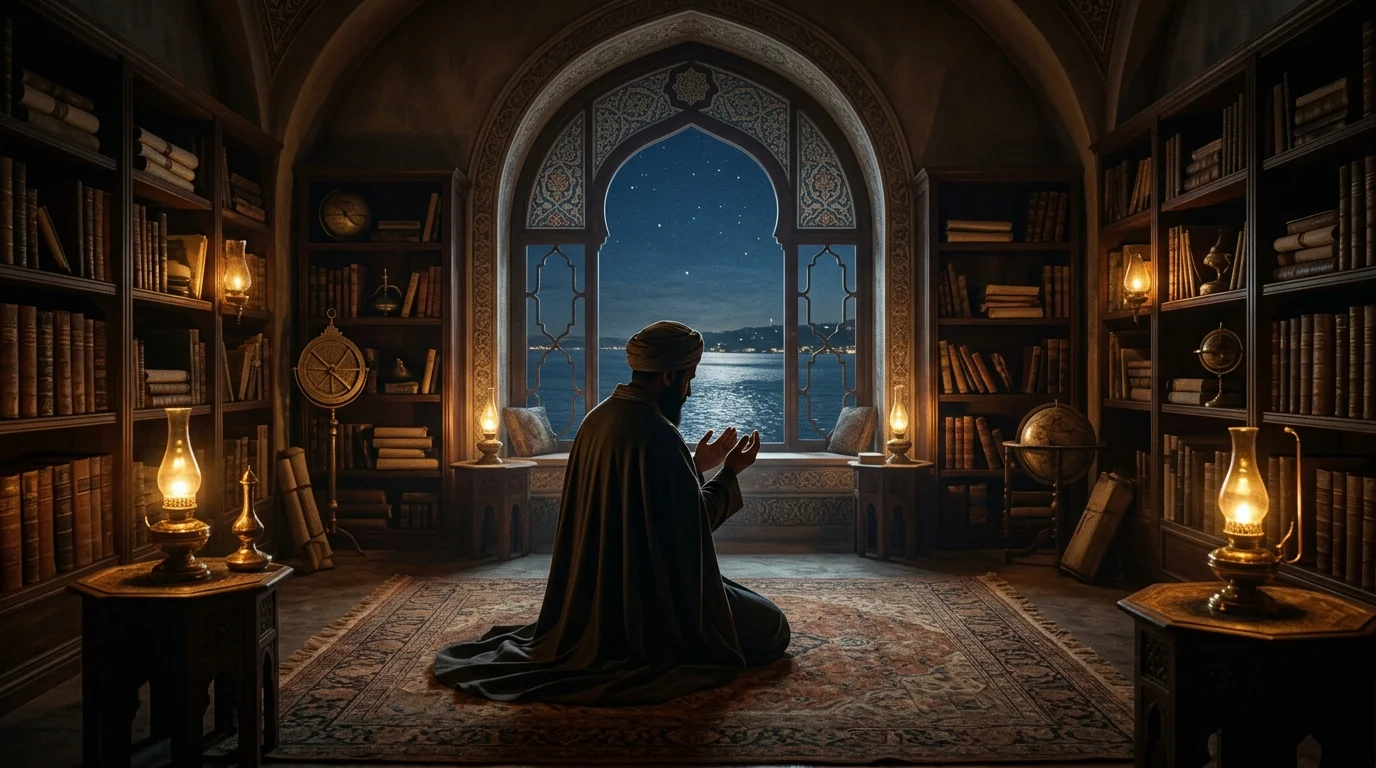
Scene 8
The Scholar-Poet's Solitude, Night Tears, and a Riddle
Mehmed was also a poet with a fine collection of verse, a memoriser of the Quran who honoured scholars, mastered several languages and wept in night prayer. Yet as a boy, the author notes, he was an idle youngster everyone expected to fail. Who, then, made him into this hero? To be continued.
These are English scene notes. The full chapter text, as the author wrote it, is in the app.