


Scene 1
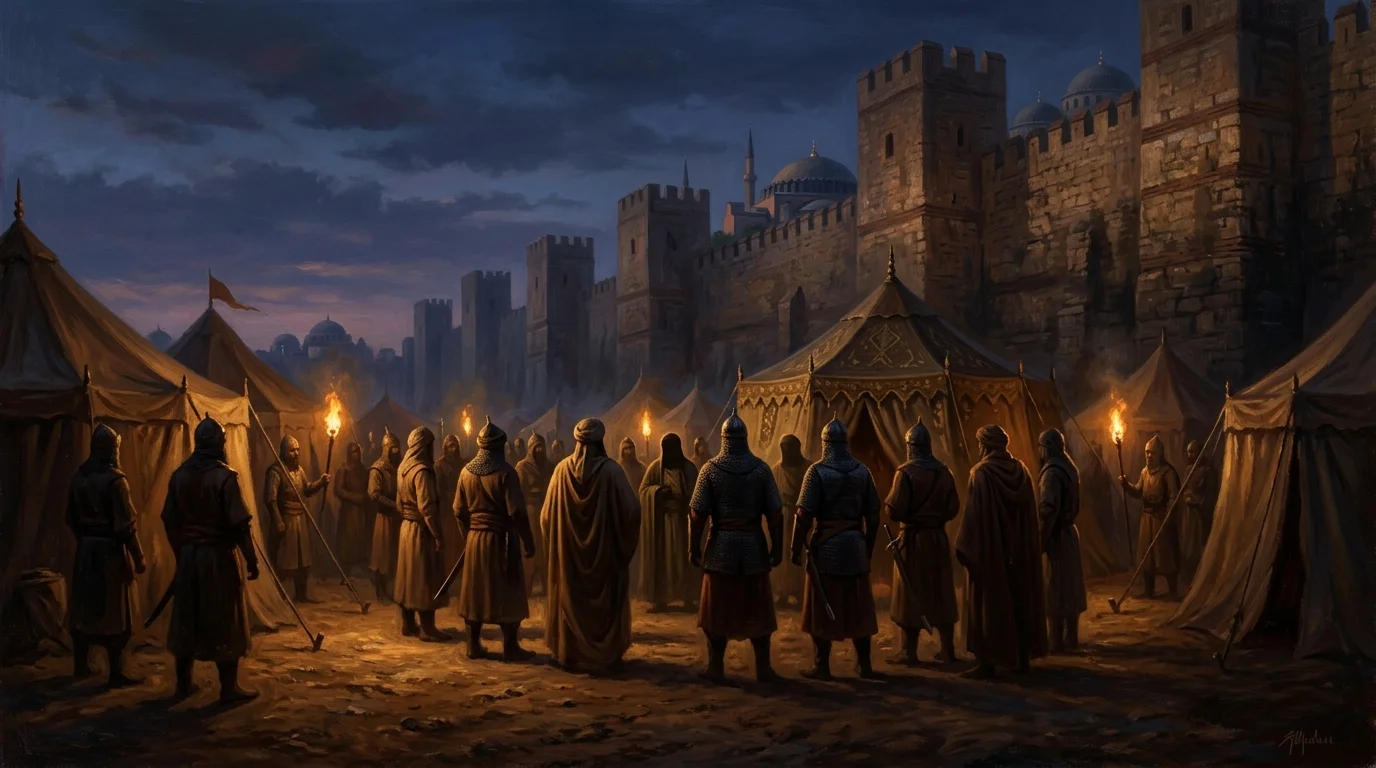
The Immortal Will Beneath Constantinople's Walls
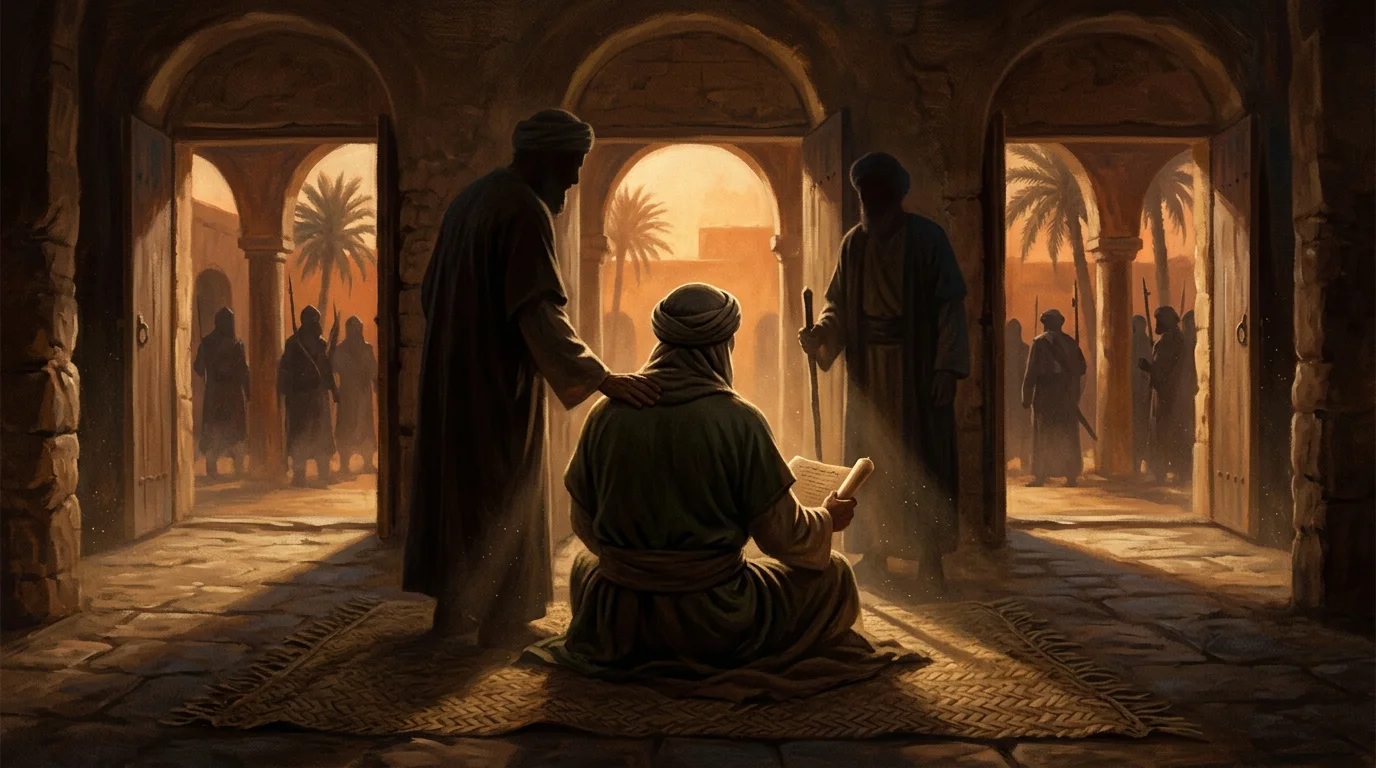
The chapter opens with the dying words of Abu Ayyub al-Ansari, the "Lion of Constantinople". He asks Yazid to carry his greetings to the Muslim soldiers, to urge them to push as deep as possible into enemy territory, and to bury him beneath their feet at the walls of Constantinople.
Scene 2
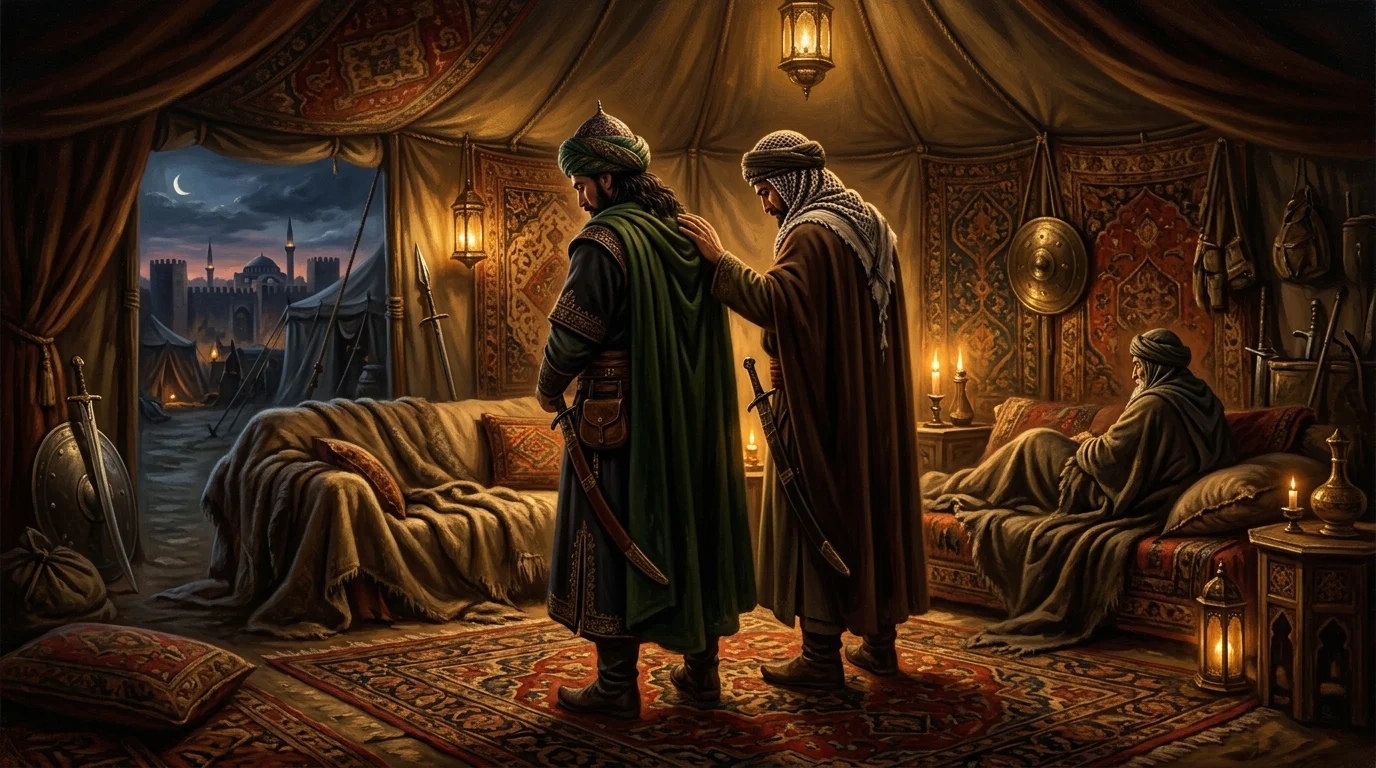
The Commanders' Tears and a Legendary Hero
Yazid ibn Muawiyah, commander of the army at Constantinople, and al-Husayn ibn Ali weep as the eighty-year-old breathes his last. They recall that he alone had the honour of hosting the Prophet ﷺ, and that he now threatens the best-fortified city on earth. He is Khalid ibn Zayd, known as Abu Ayyub al-Ansari.
Scene 3
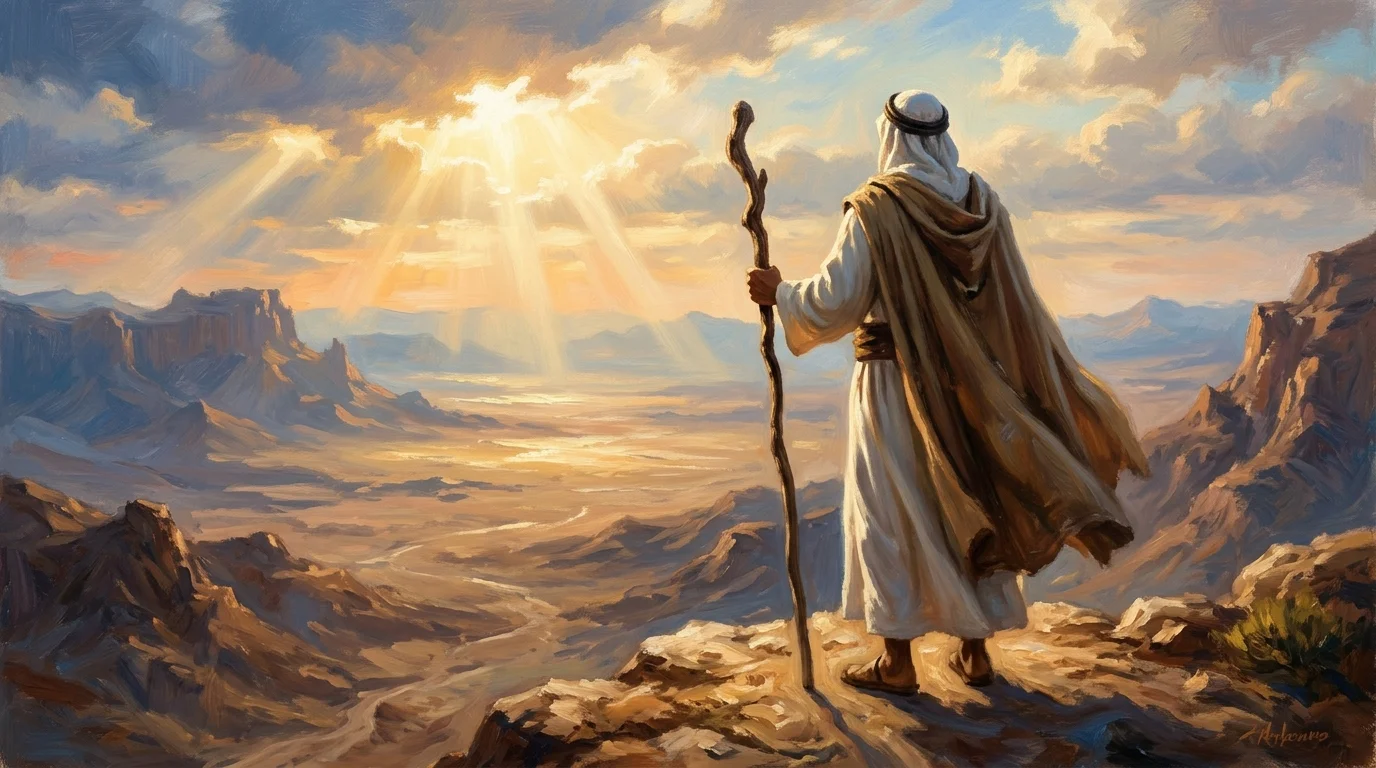
A Lesson in Heroism and High Resolve
The author says this Companion's story deserves to be taught in the cafes of the Muslim world, where many elderly men pass their days over backgammon. This is not a young man or even a man of sixty, but one past eighty who still rides out to storm the greatest city on earth.
Scene 4
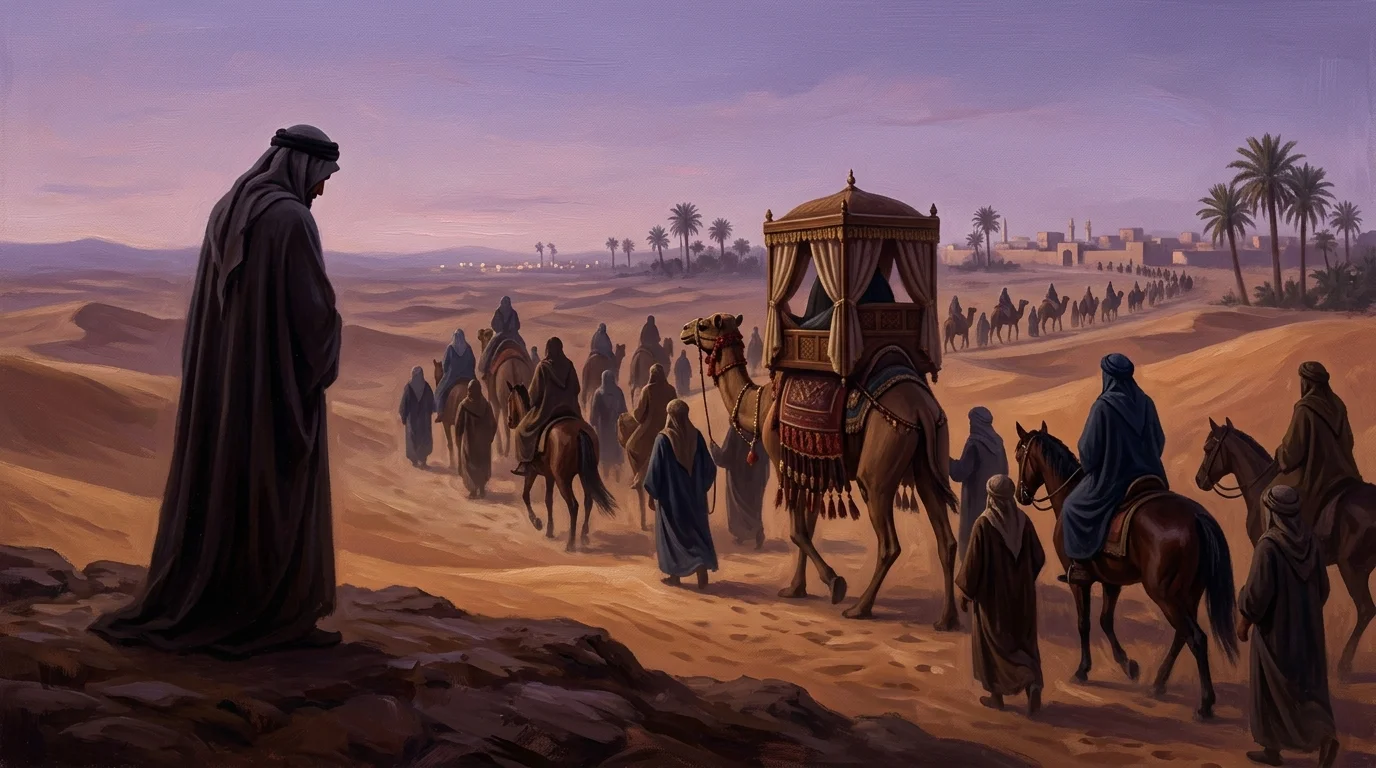
The Blessing of the Hijrah: The Prophet at the Ansari's Door
The story goes back fifty-three years to the day the Prophet ﷺ arrived in Medina. Everyone hoped to host him, but he asked them to let his camel go, for it was under command. It stopped at Abu Ayyub's house, and Abu Ayyub rushed to carry in the Prophet's belongings before anyone else could.
Scene 5
The Manners of a Host and the Night of the Broken Jar
Abu Ayyub offered the Prophet ﷺ the upper floor out of respect, but the Prophet preferred the ground floor because of his many guests. Abu Ayyub recounts the night a water jar broke upstairs: he and Umm Ayyub soaked up the water with their only blanket so that not a drop would fall on the Prophet.
Scene 6
Jihad Under Muawiyah and the Constantinople Campaign
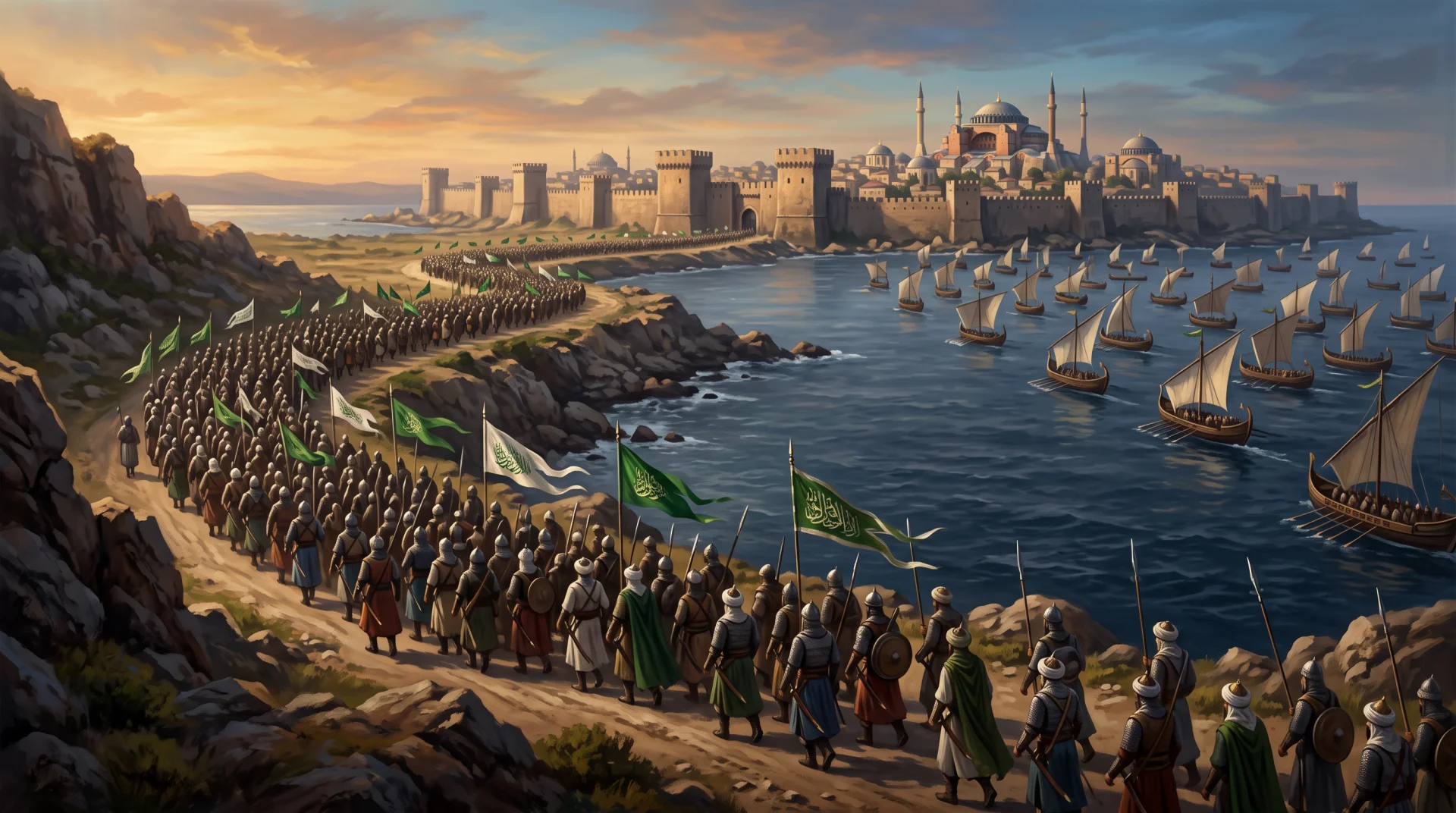
Under Muawiyah ibn Abi Sufyan, the author relates, campaigning flourished through a system of summer and winter expeditions. In 53 AH Yazid ibn Muawiyah led an army that included al-Husayn ibn Ali and the four Abdullahs against the Roman capital, and Abu Ayyub, now eighty, insisted on joining it.
Scene 7
The Veiled Horseman Who Shook the Roman Ranks
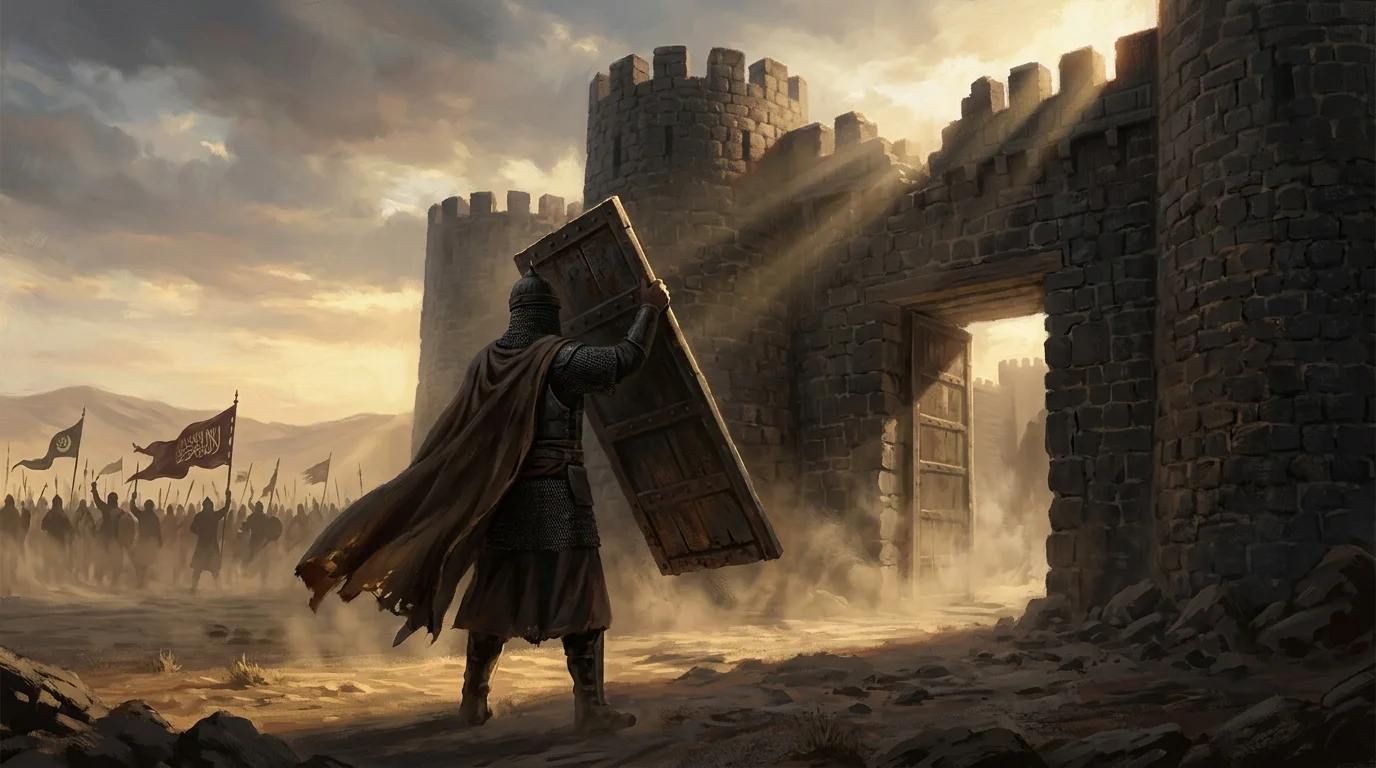
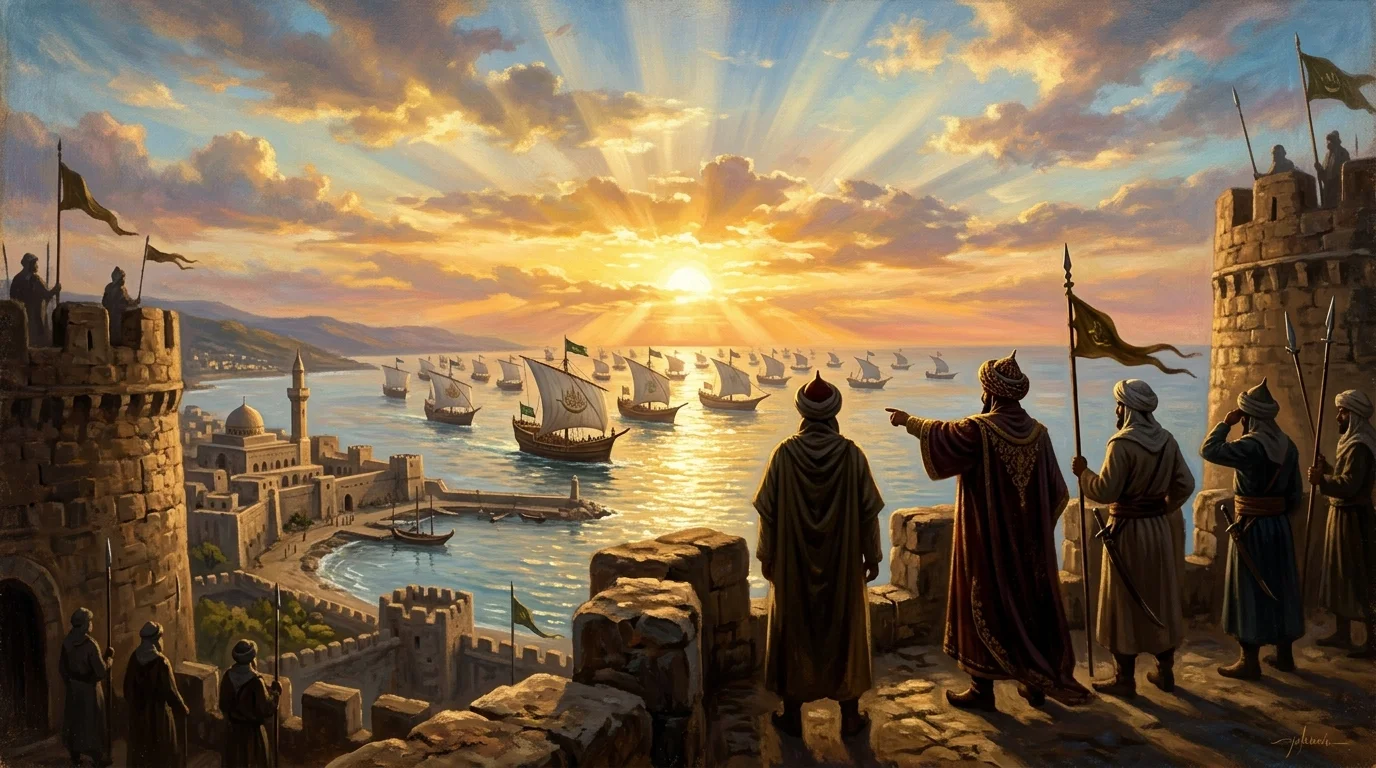
When the Muslim army reached the walls of Constantinople, soldiers on both sides saw a veiled rider on a white horse charge the Roman ranks and scatter them. Looking closely, the Muslims recognised the eighty-year-old Abu Ayyub al-Ansari, fighting as though the vigour of youth had returned to him.
Scene 8
A Farewell Deed and Burial at the Foot of the Walls
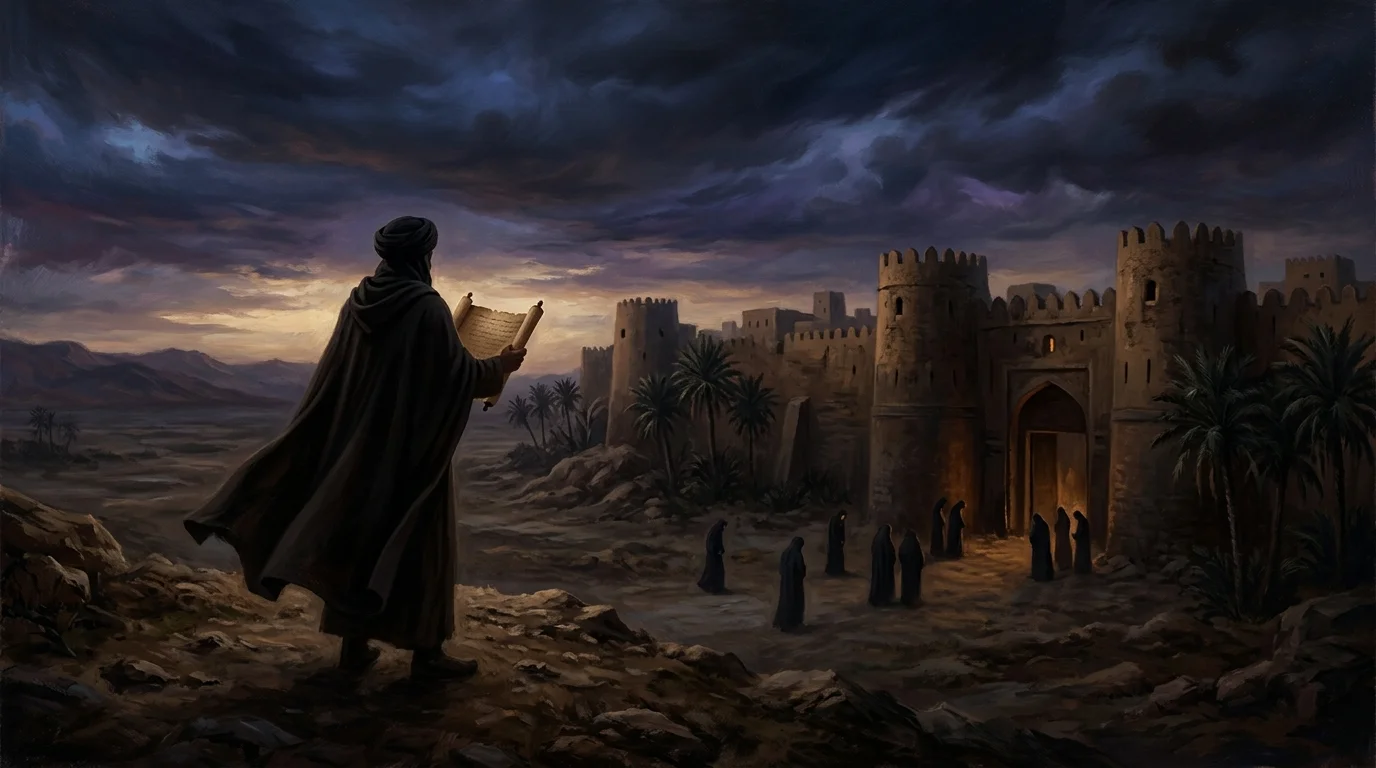
Abu Ayyub fought on until he sensed that his end was near. He asked Yazid ibn Muawiyah to convey his greetings to the Muslims and to bury him at the closest point to the walls of Constantinople. The author salutes him and prays that he be rewarded for his hospitality to the Prophet ﷺ.
Scene 9
The Secret of the Will and the Promise of a Conqueror
The scene closes with questions: why did Abu Ayyub ask to be buried beneath walls that were not yet Muslim land, what did the Romans do with his grave eight centuries later, and which glad tidings from the Prophet ﷺ drew him there? Who was the great prince the Prophet foretold? To be continued.
These are English scene notes. The full chapter text, as the author wrote it, is in the app.