


Scene 1
The Young Prince's Letter and Devotion to Parents
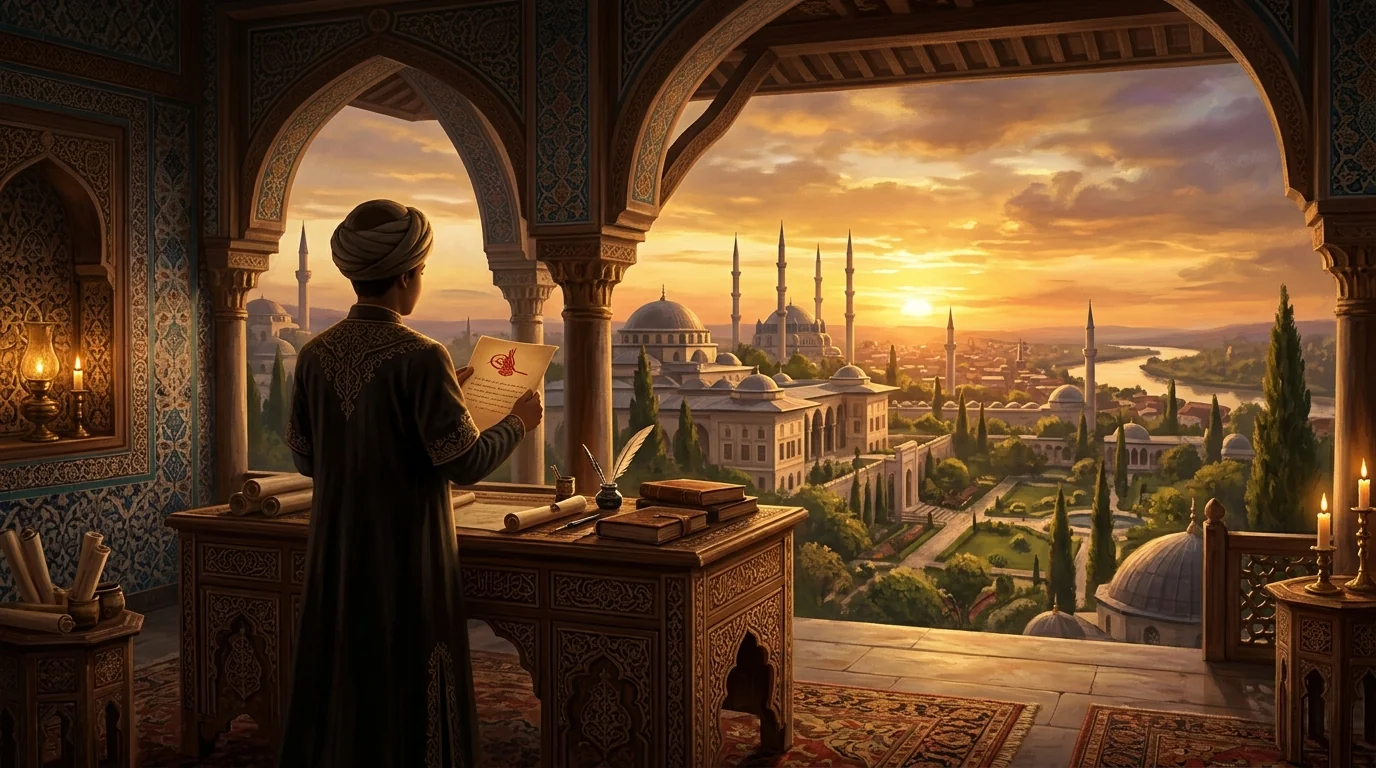
The chapter opens with the Quranic prayer for mercy on one's parents, followed by young Mehmed's letter begging his father to return to the throne: if you are the sultan, come and rule your state, and if I am the sultan, then I order you to come back and rule.
Scene 2
The Author's Pain at a Young Arab's Question About "Murad"
The author describes his pain when a young Arab stopped to ask him whether "Murad" was an Arabic name at all. He gives three reasons for that pain, the first a personal one: Murad is the name of his only younger brother among nine siblings.
Scene 3
The Origin of the Name Murad and Ottoman Glories
His second reason is the weakness of the nation's youth in Arabic: Murad means "the desired", and was the name of the forefather of an ancient Arab tribe. The third is their ignorance of history, for Murad is also the name of Sultan Murad II, son of Mehmed I, son of Bayezid the Thunderbolt.
Scene 4
A Father's Trust and a Warning Against Neglecting Children
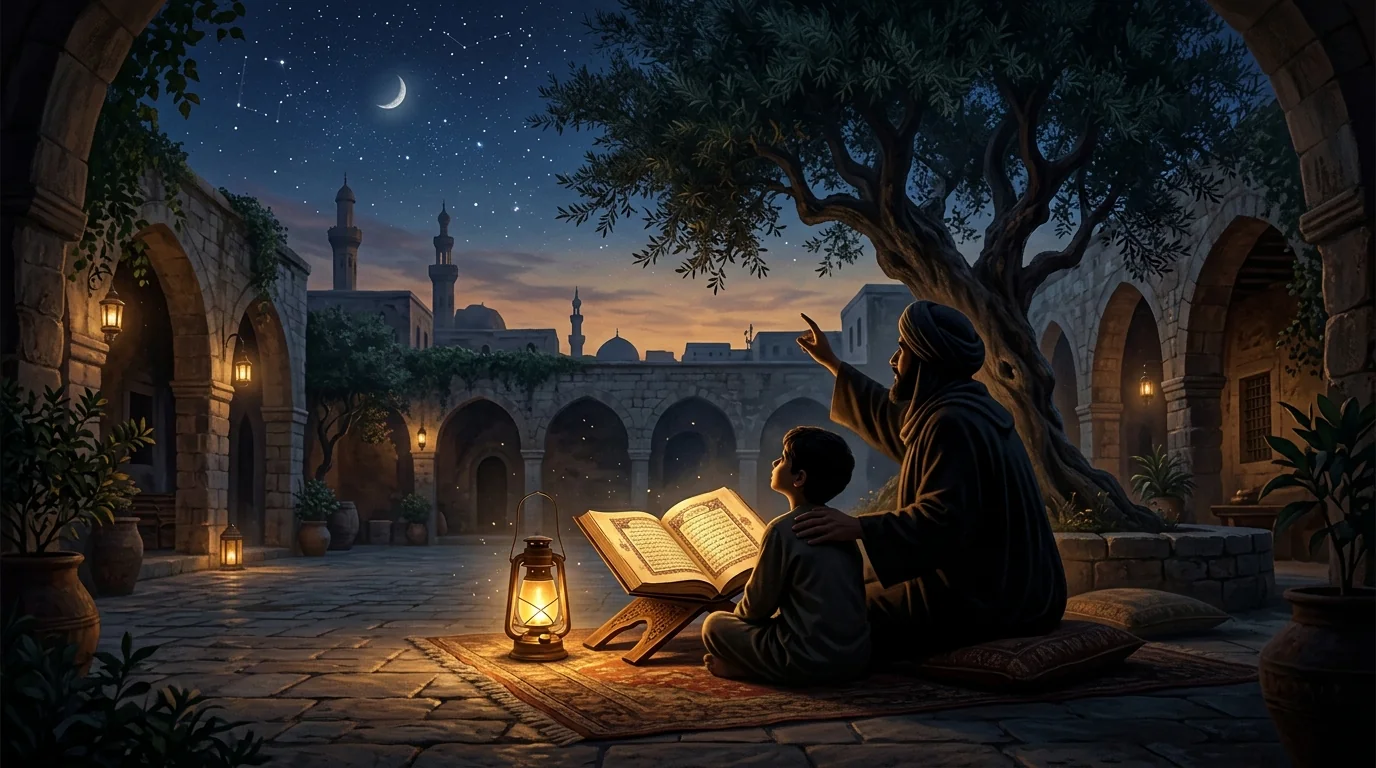
The author chose Murad II as a model for every father. During his years in Europe he saw many young people ruined by fathers too busy earning money, and he recalls a tearful young Arab who wished his parents had taught him some Quran, some Arabic, or even how to pronounce the testimony of faith.
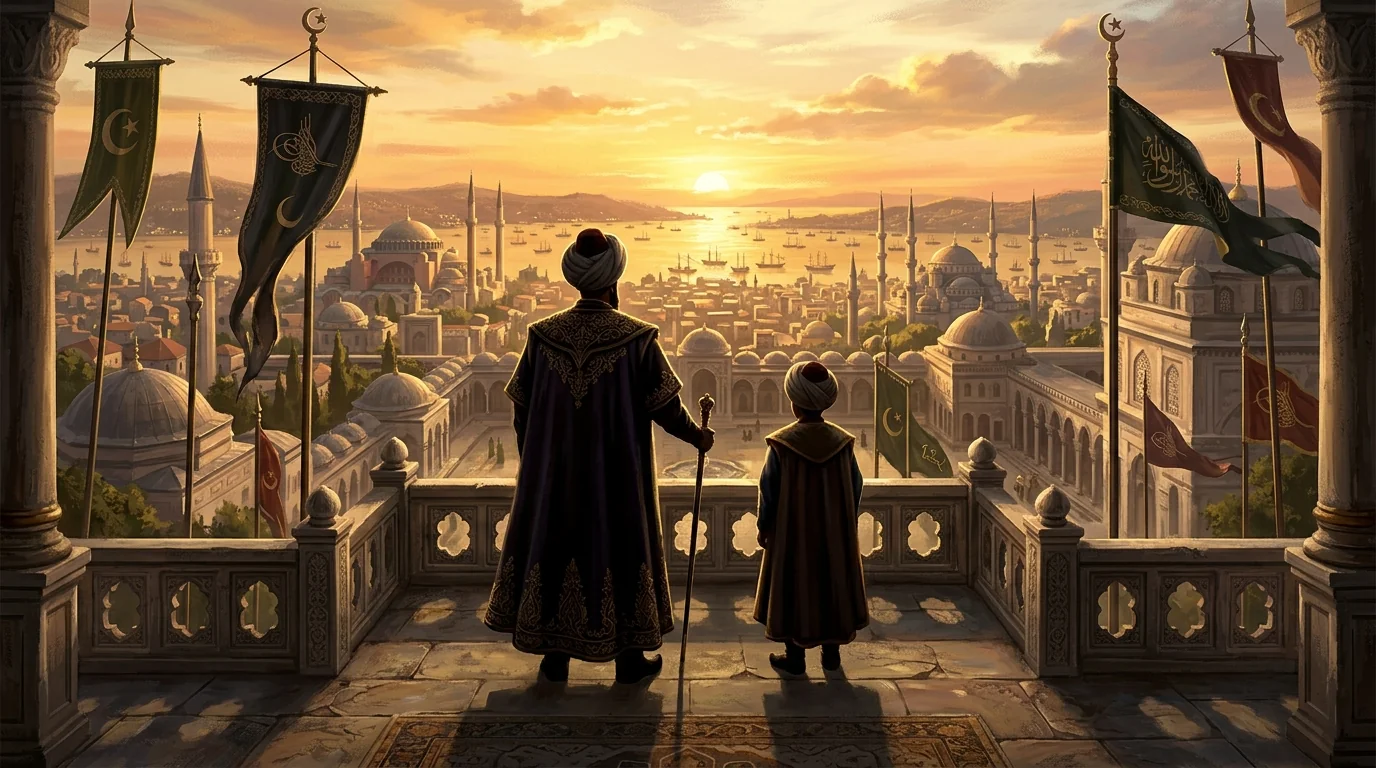
Scene 5
The Making of Men and the Secret of Lasting Greatness
Murad II did not raise his son to be a doctor, a merchant or the heir to a family restaurant; he set out to make a man. The author argues that few people know the names of their distant grandfathers, and that what preserves a person's memory is his deeds, or those of the children he formed.
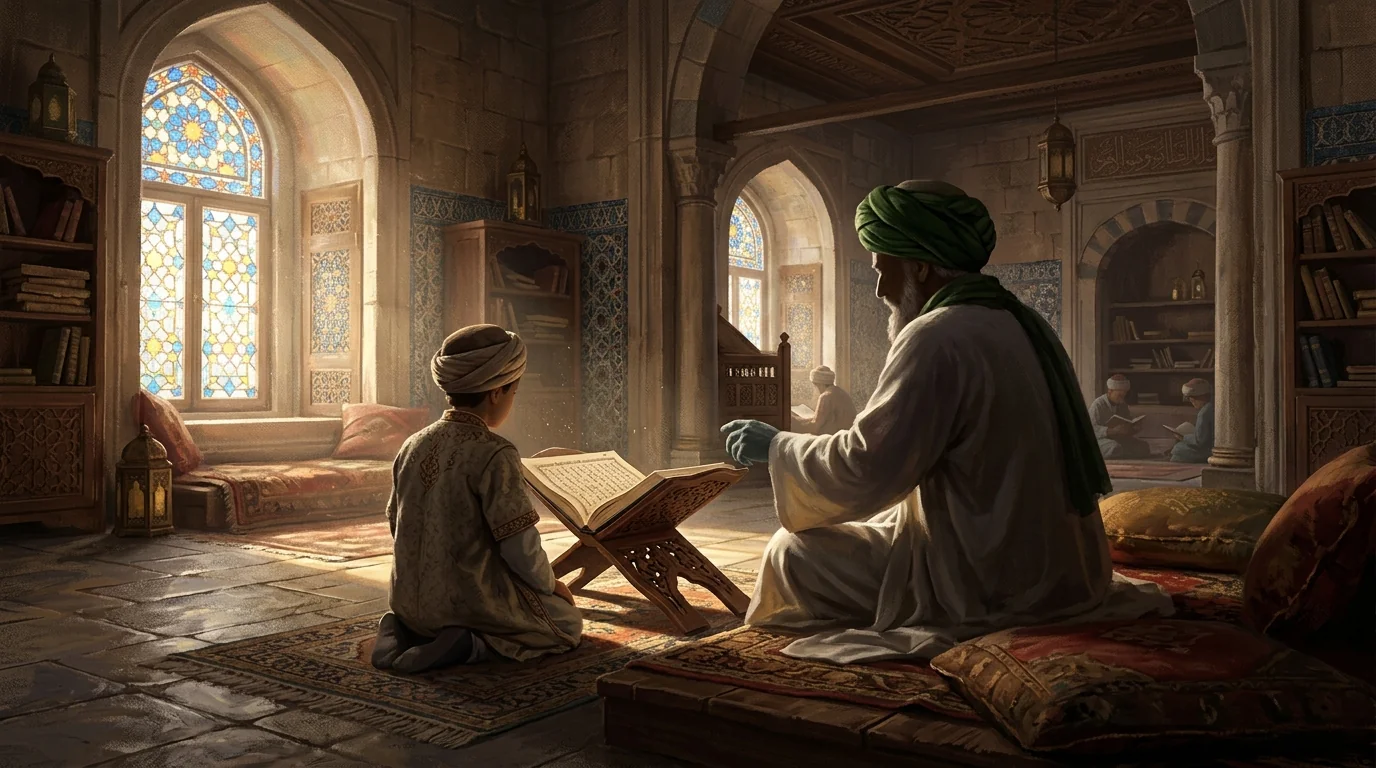
Scene 6
Mulla al-Kurani's Tutelage and a Firm Teacher
The author insists that the great are not born great: greatness comes from upbringing, society, personal effort and above all God's help. Mehmed the Conqueror, he says, was a neglected, unruly child who today might be sent to a reform school. Did his father leave him that way, or blame his wife?

Scene 7
Abdicating the Throne for a Life of Worship in Bursa
Murad brought teachers from across the realm, and when the prince kept running from lessons he entrusted him to Mulla al-Kurani with a rod for discipline. Mehmed memorised the Quran, learned languages and command, and Murad even abdicated to train him in rule. The author therefore credits Mehmed's conquests to his father.
Scene 8
Honouring Mothers: Gateway to the Great Women of Islam
Having shown the role of fathers in reviving nations, the author asks about mothers and righteous wives, whose part in making men he considers far greater. He announces that it is time to sail among the great women of Islam whose lives history has recorded in golden pages. To be continued.
These are English scene notes. The full chapter text, as the author wrote it, is in the app.