


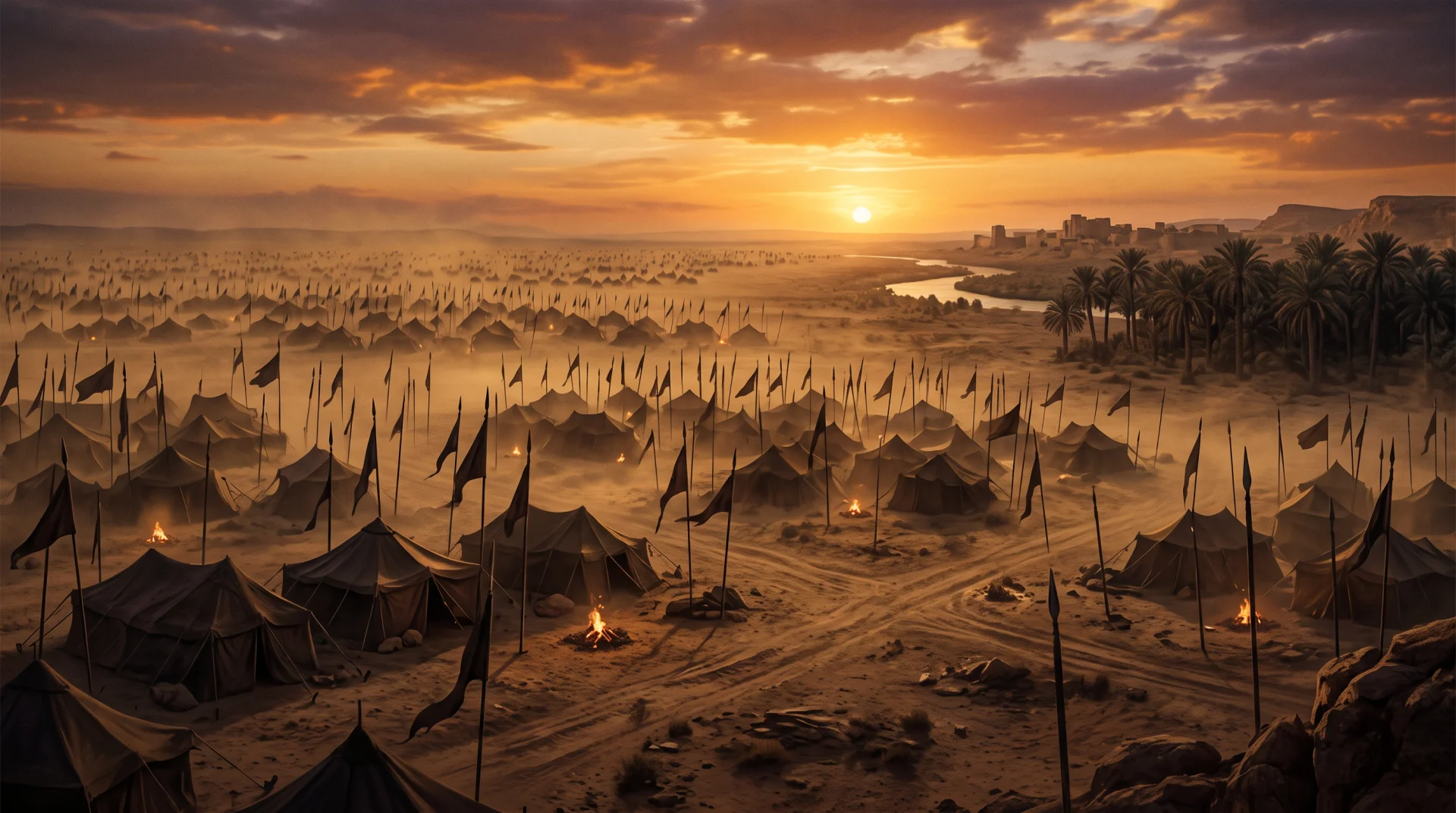
Scene 1
The Lions of al-Qadisiyya
The chapter opens with the saying that God sent the Muslims to bring people out of the worship of people to the worship of the Lord of people, and with Sa'd ibn Abi Waqqas's words about his men. The author says he faces a hard task: doing justice to the great men of the umma, few of whom know the heroes of al-Qadisiyya who destroyed the Persian empire. He chose to include the whole army of 32,000, whom Sa'd described as lions by day and bees by night with the Qur'an.
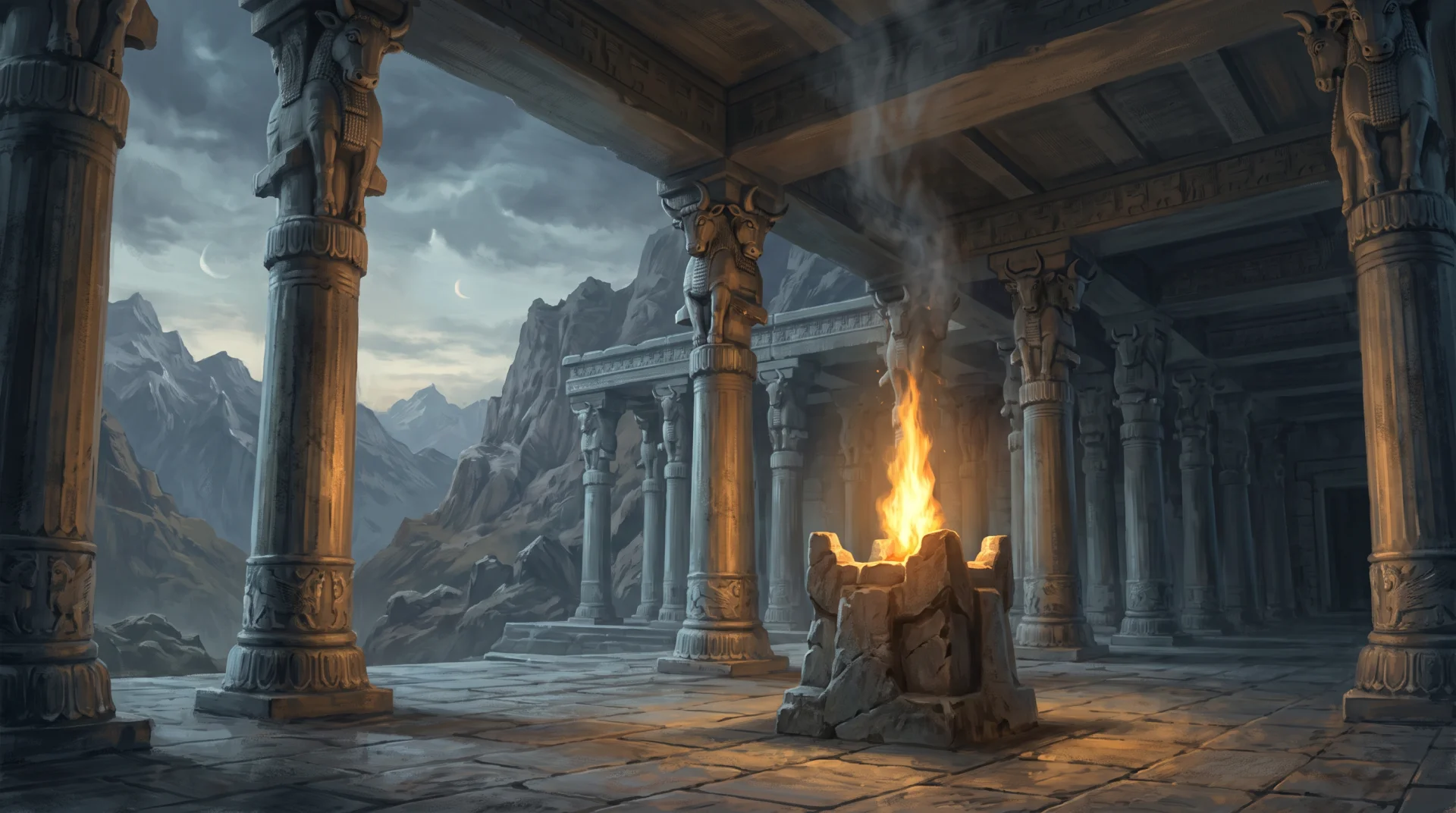
Scene 2
The Persians: Their History and Their Religion
In 1500 BC two tribes of the descendants of Japheth son of Noah, the Persians and the Medes, settled in Iran. The Achaemenids founded a great empire, whose king Cyrus freed the Jews held by Nebuchadnezzar, and in 226 AD the Sasanian empire arose, to be destroyed by the Prophet's Companions in 651 AD. The author describes the Zoroastrian fire worship, the sanctity of the Khosrows, a caste system in which commoners were chained, and the sexual decadence for which the Greeks reproached the Persians.
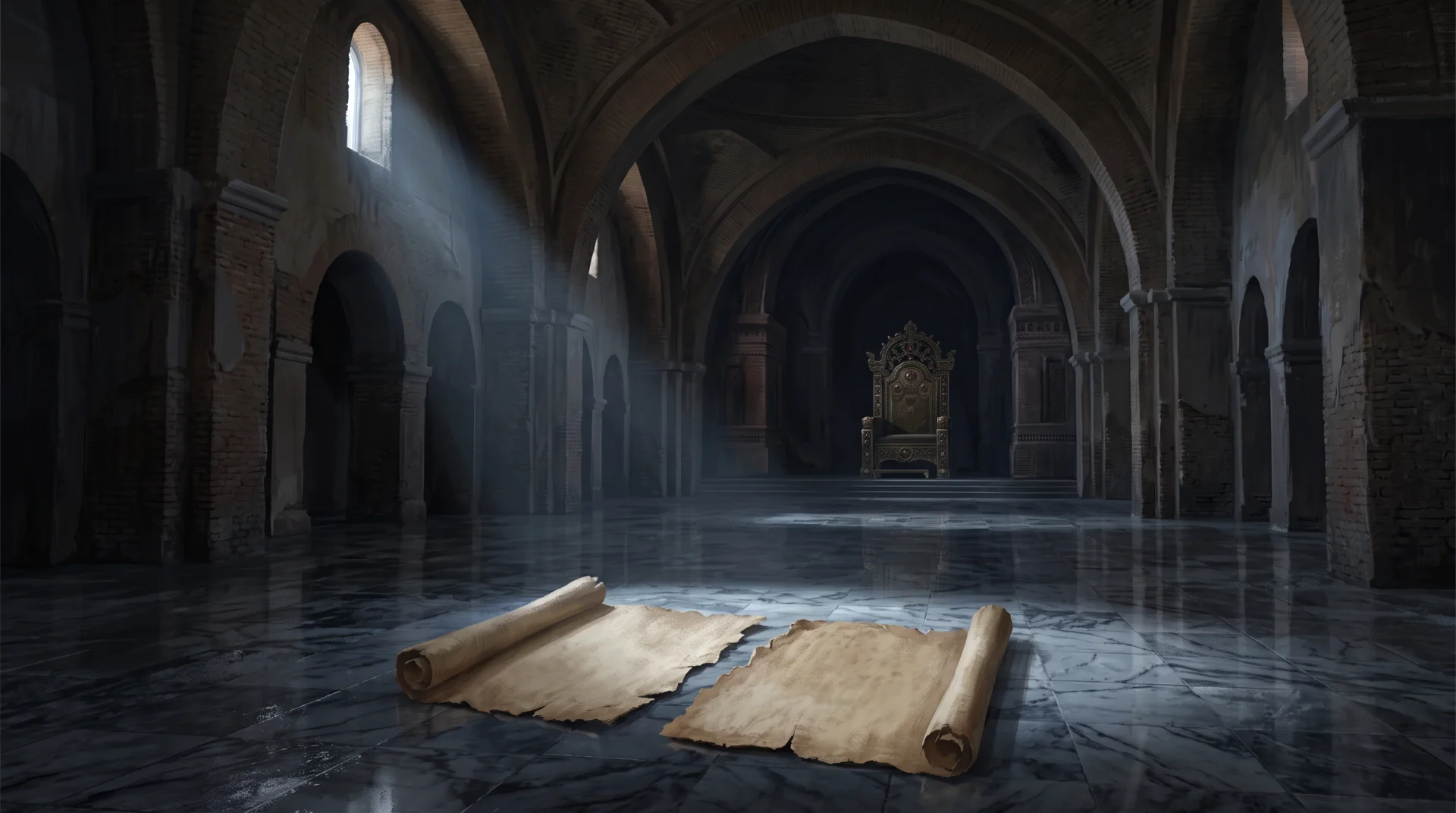
Scene 3
The Beginning of the Conflict: Khosrow's Letter
After the Treaty of Hudaybiyya the Prophet sent a gentle letter to Khosrow II calling him to Islam. Khosrow tore it up and tried to kill the bearer, Abdullah ibn Hudhafa, who escaped; the Prophet prayed that God tear his kingdom as he tore the letter, and soon his son killed him. The author says the Persians were always the ones who provoked the Muslims, and always lost, and he warns the people of Persia, mentioning Khomeini's return to Iran in 1979.
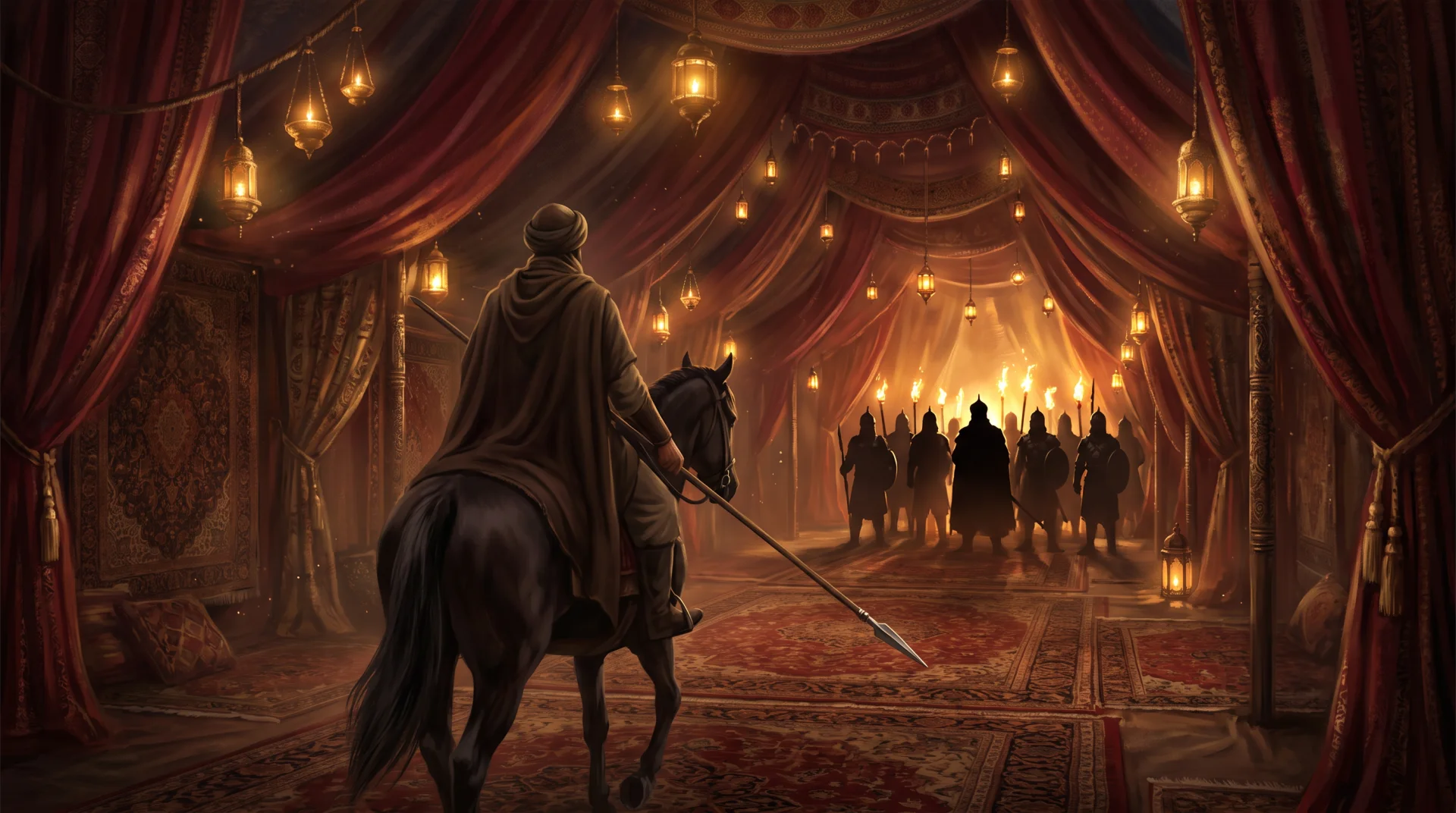
Scene 4
Zuhra and Rib'i Before Rustam
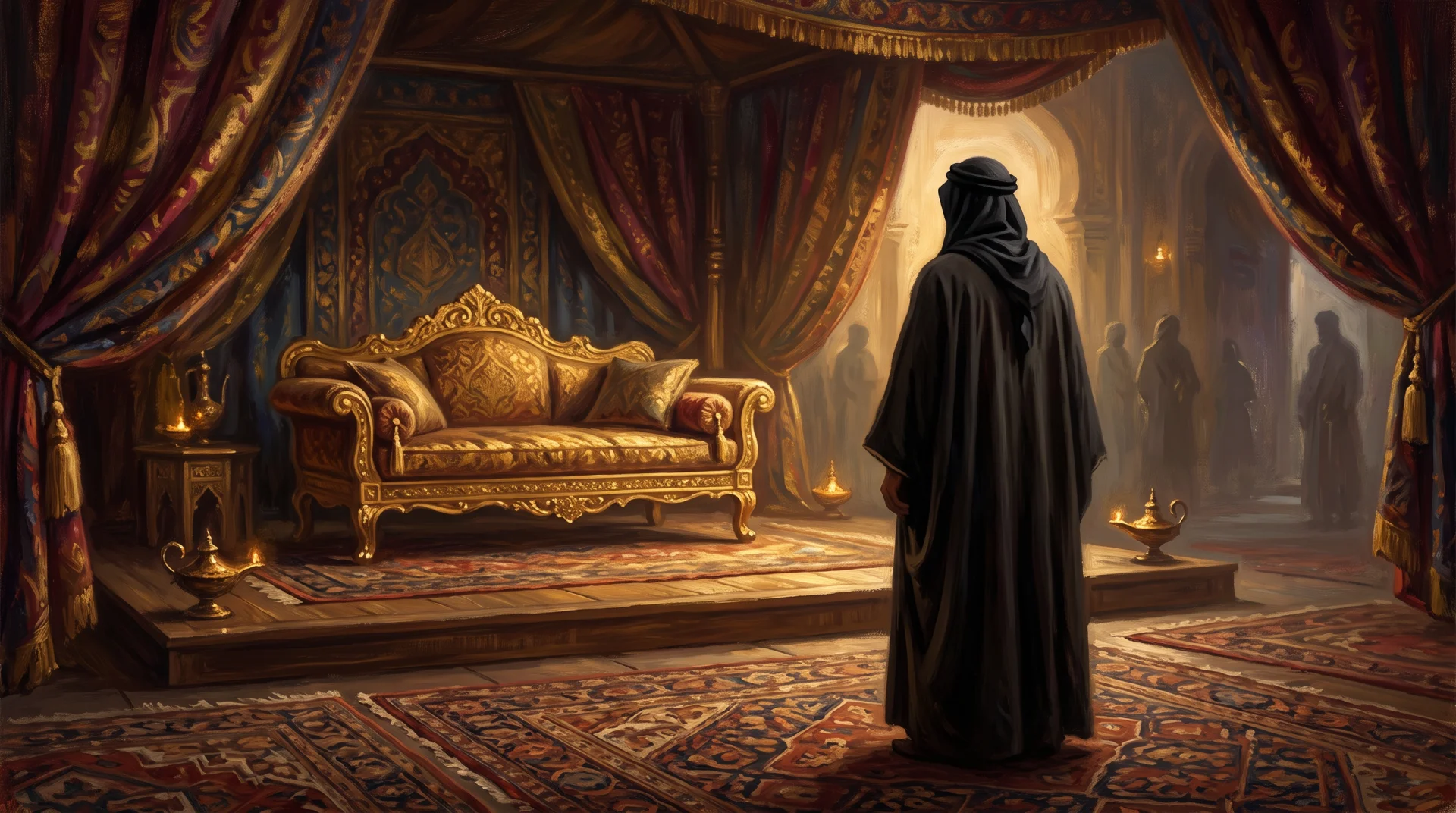
Rustam, the Persian commander, asked to negotiate. Zuhra ibn al-Huwiyya answered his reminders of past kindness: those before them sought this world, but they seek the next. The next day Rib'i ibn Amir rode his small horse into Rustam's tent, with his sword tied with a rag taken from the Persians, cut the cushions and carpets with his spear, and said that God had sent them to bring people out of the worship of people to the worship of the Lord of people. Offered more time, he said the Prophet taught them to give the enemy no more than three days.
Scene 5
Hudhayfa and al-Mughira Humble the Persians
Hudhayfa ibn Mihsan rode his horse over the carpets right up to Rustam, refused to dismount, and answered 'three days' with 'not from today but from yesterday'. Then al-Mughira ibn Shu'ba, who knew Persian but spoke only Arabic, sat beside Rustam on his golden couch, told them he had heard the Persians were wise but saw them as fools, and offered Islam, jizya or the sword. Rustam swore by the sun to bury them at al-Qadisiyya; told by the astrologer that al-Mughira would lose an eye, al-Mughira said he would wish the other to be lost in God's way.
Scene 6
The Weapon of 'Allahu Akbar'
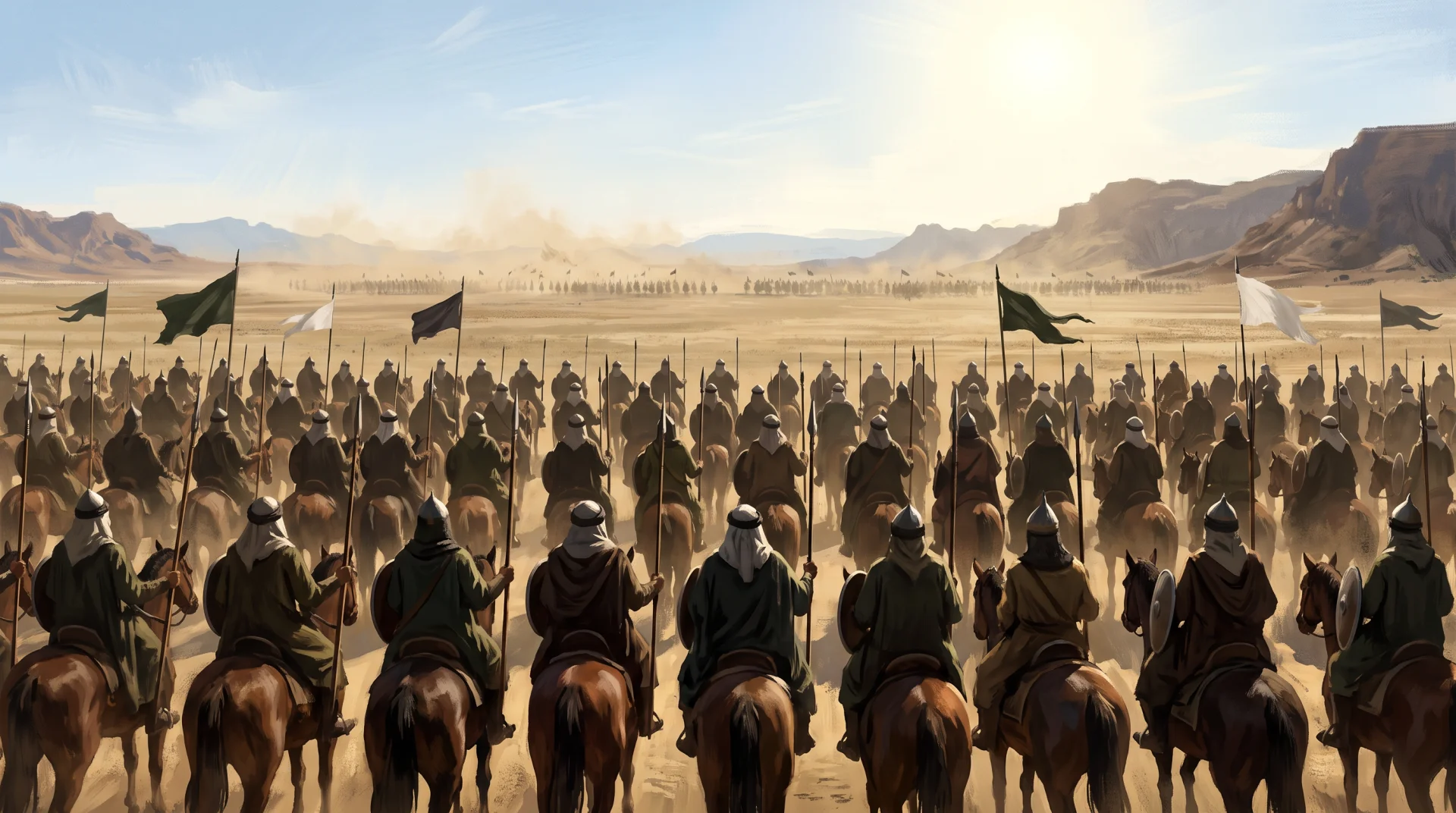
The author says the decisive battle began with a weapon of Islamic mass destruction, the same weapon used by the Egyptian army on the tenth of Ramadan 1973, and by Sa'd ibn Abi Waqqas: Allahu Akbar. Sa'd gathered his commanders and told them God had granted them the takbir; after the noon prayer he would say it four times, and the fourth would be the signal for the great Muslim advance.
Scene 7
The Tribes and al-Khansa
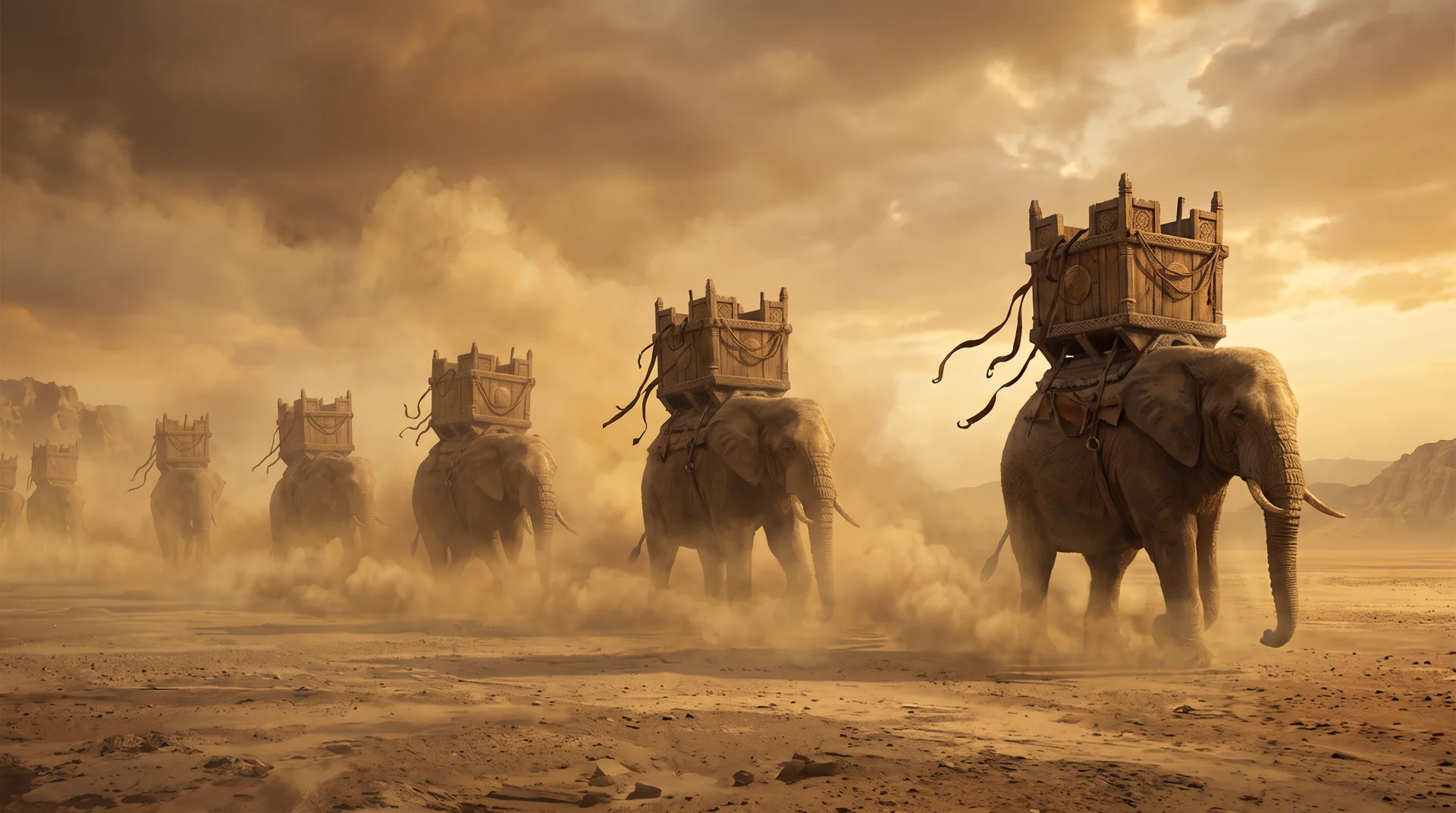
On the first day, Yawm Armath, Arab tribes such as Dujayla, Tamim, al-Asad and Kinda repelled a Persian attack with thirteen elephants by cutting the straps of the towers on their backs. On the second day, Yawm Aghwath, al-Khansa urged her four sons on to jihad; all four were martyred, and she said she thanked God who honoured her with their martyrdom and hoped to be joined with them in Paradise.
Scene 8
al-Qa'qa', Asim and Durayd
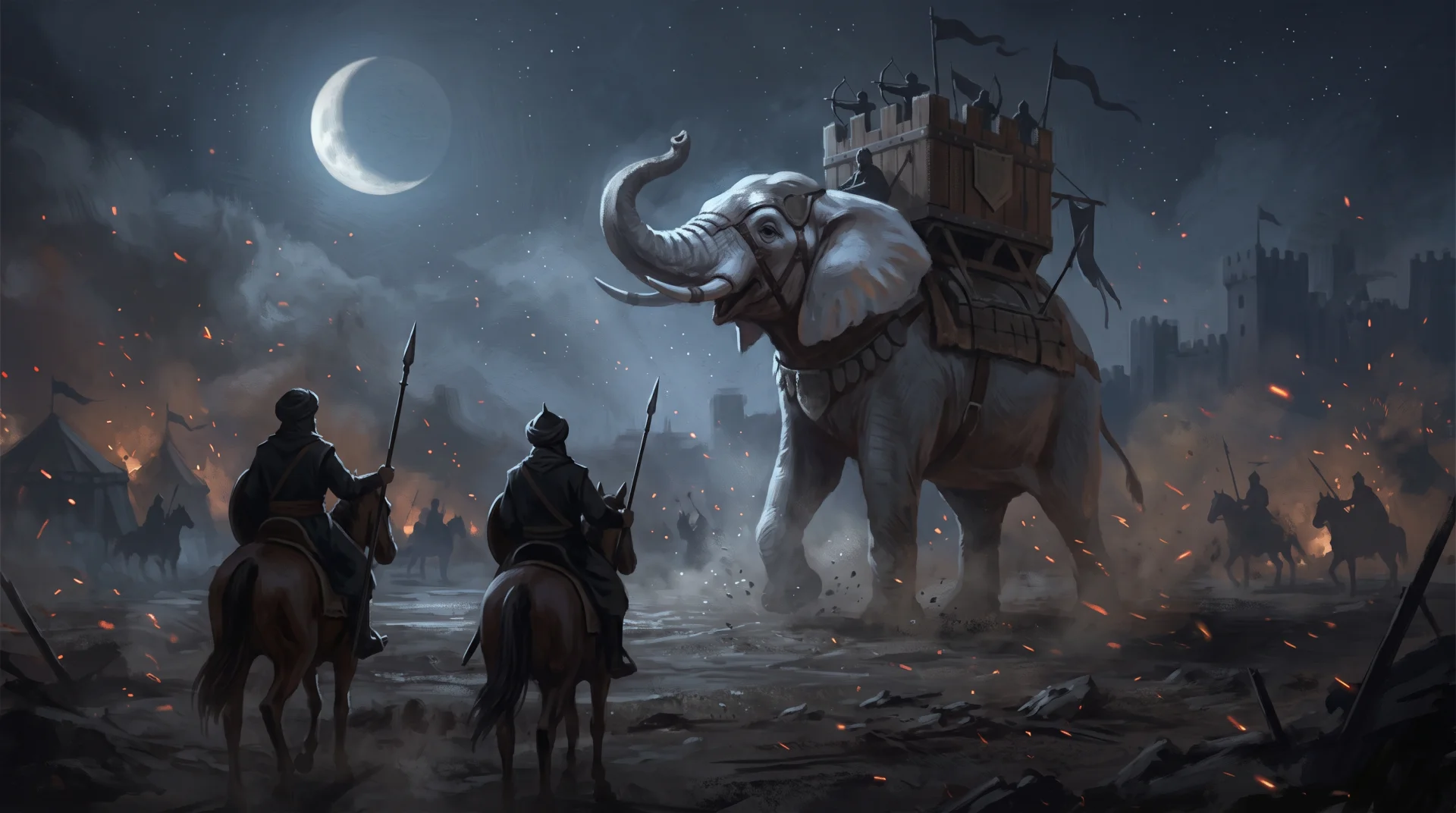
On the third day, Yawm Amas, the Persians put guards around their elephants and led them with a mad white elephant. The brothers al-Qa'qa' and Asim, sons of Amr, struck its eyes, and al-Qa'qa' cut off its trunk with his sword; the other elephants fled. That night Durayd ibn Ka'b al-Nakha'i urged his tribe's youth to race the Muslims to Paradise, starting a battle at midnight, the Night of al-Harir; the other tribes joined, and at dawn the fighters returned laughing.
Scene 9
Hilal ibn Ullafa Kills Rustam
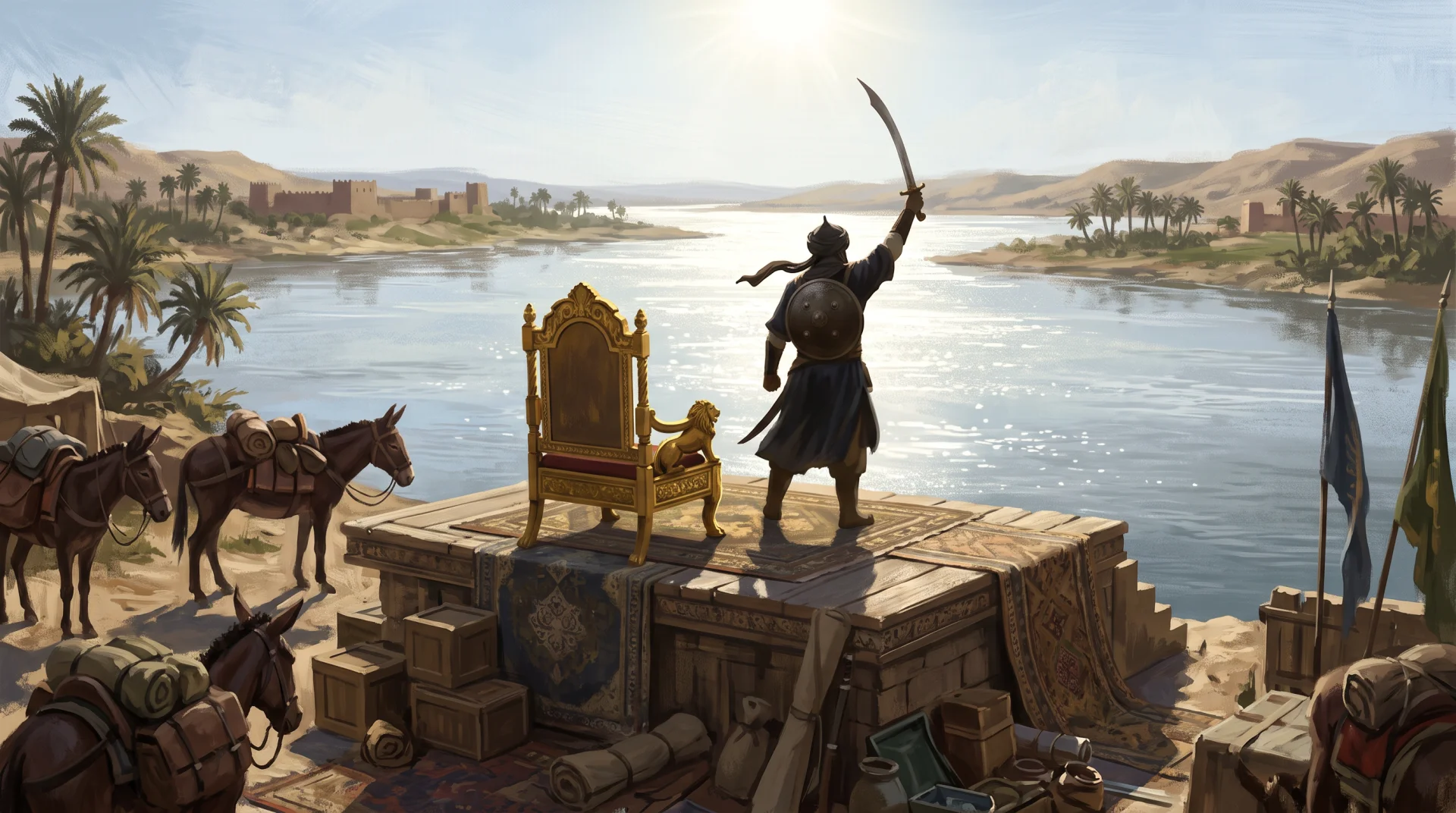
On the fourth day, Yawm al-Qadisiyya, Hilal ibn Ullafa's sword cut a load off a mule and he heard a scream: the man hiding behind the mules was Rustam, in his golden crown and red silk robe. Rustam fled and speared Hilal's foot, then jumped into the river and swam; Hilal followed, dragged him out by the foot and struck him on the head, splitting his body in two. Standing on Rustam's golden seat he shouted that he had killed Rustam.
Scene 10
The End of the Sasanian Empire
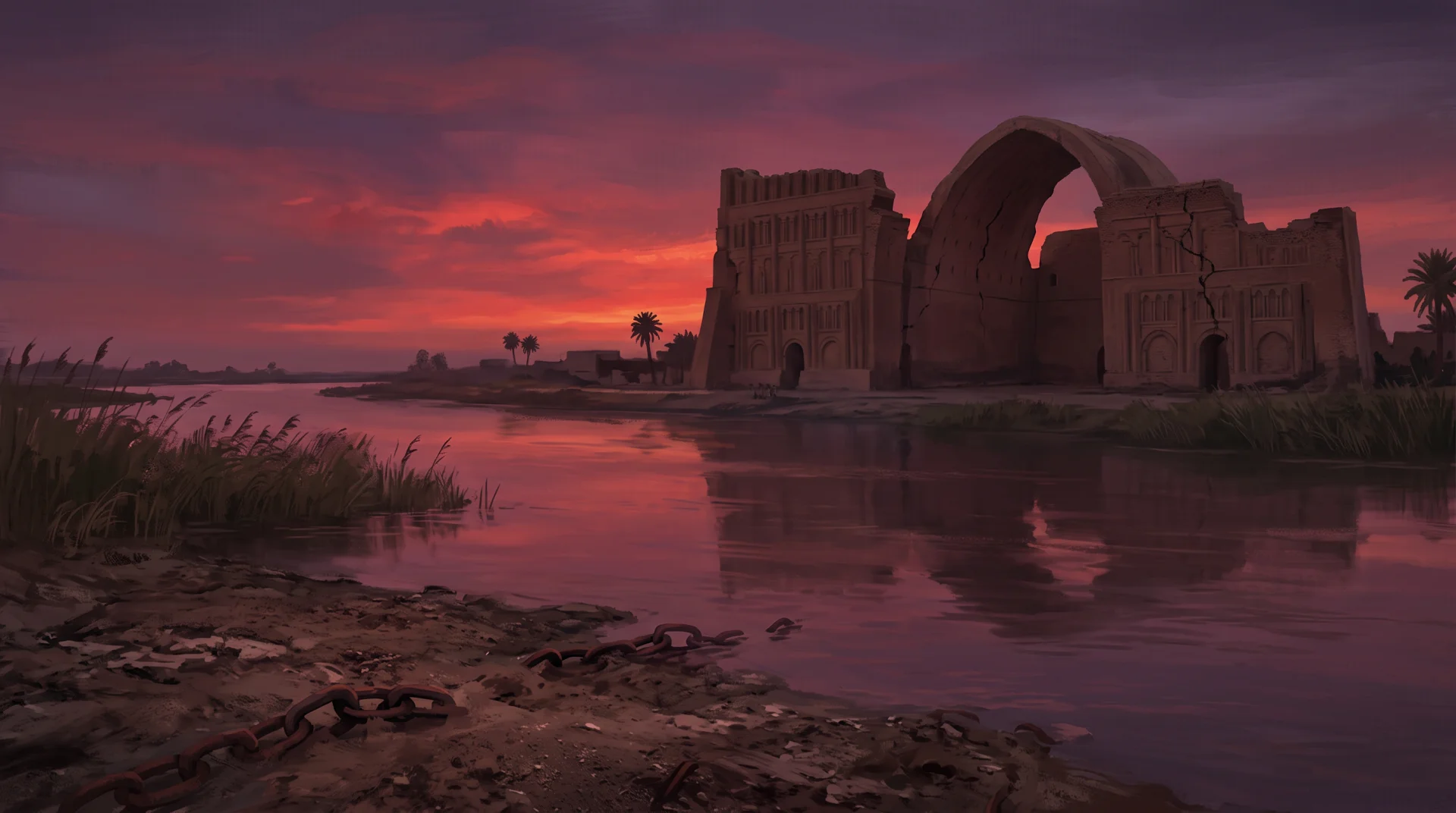
Persian morale collapsed and they tried to flee across the Tigris, but 30,000, chained by their own commanders, plunged into the river and drowned in their iron chains. The Arab Muslims destroyed the Sasanian empire forever, but the victory bred a deep historical hatred in the Persians. The chapter ends with questions: why do the Shia Persians believe the Mahdi will kill the Arab tribes, why do the Jews hold in the Talmud that God regretted creating the Arabs, and what is the story of the Arabs?
These are English scene notes. The full chapter text, as the author wrote it, is in the app.