


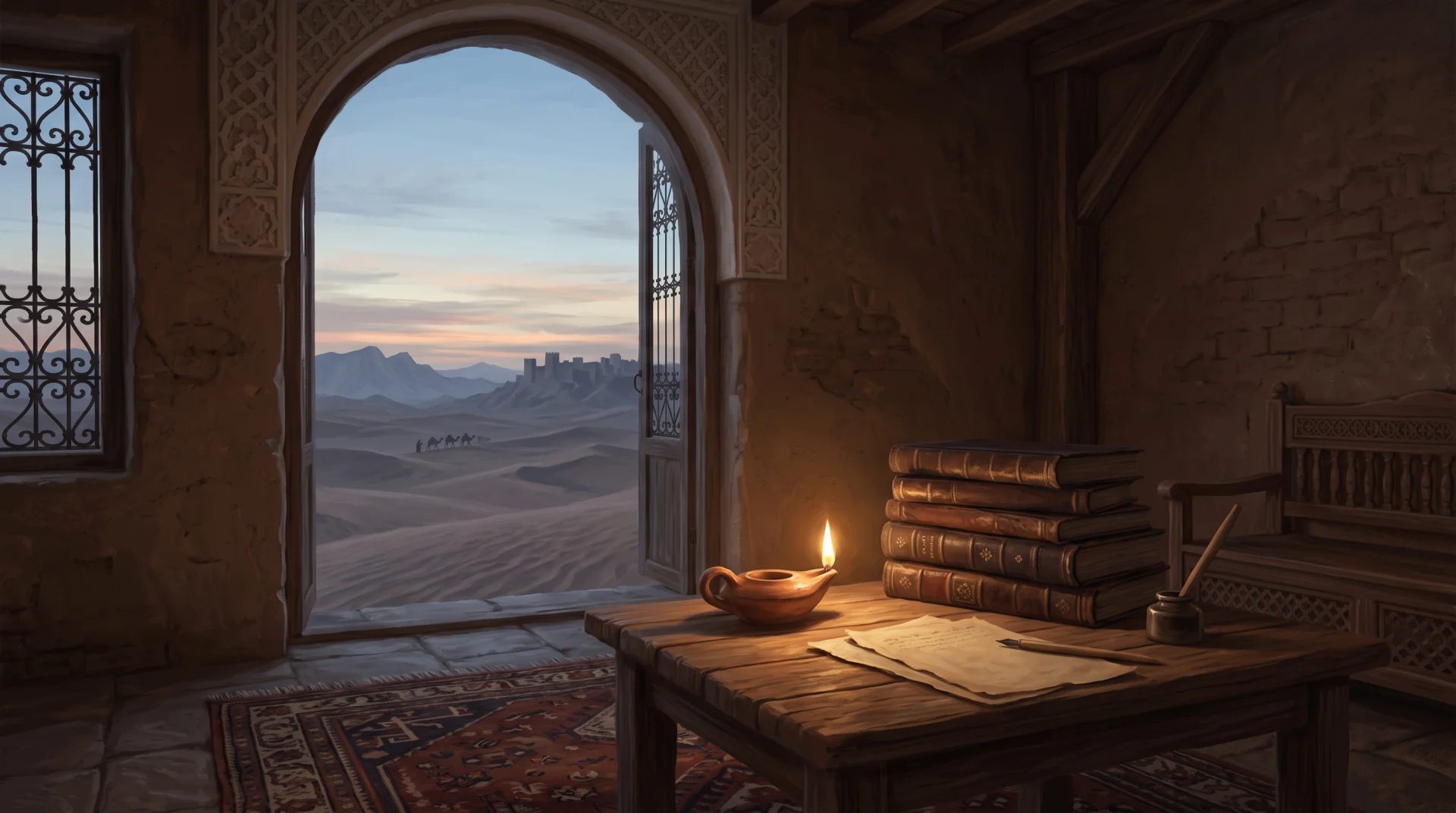
Scene 1
Hesitating to Write About the Arabs
The chapter opens with the verse about an Arabic Qur'an that people may understand, and Umar's words: 'The Arabs are the raw material of Islam'. The author says he hesitated over this subject more than anything else in the book, even cancelling the idea, but after weeks of negotiation with himself concluded he must write about the Arabs now, when they are attacked from every direction.
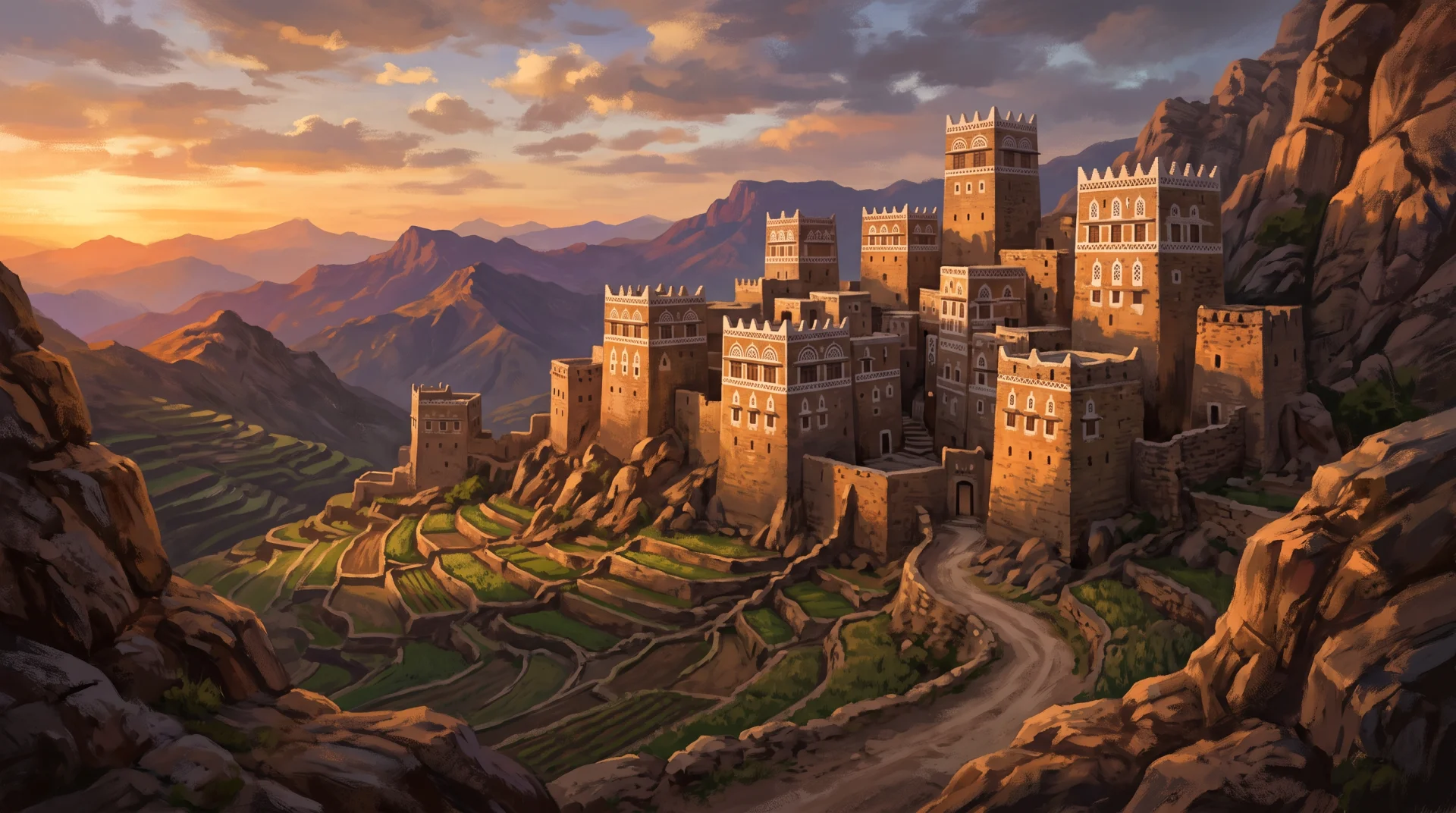
Scene 2
The Two Reasons for His Hesitation
The first reason was the author's own tribal roots in the Arab Qahtani tribe of al-Azd, which made him fear racial bias and loss of sincerity. The second was the complex political sensitivity between nationalists and Islamic groups. He says the first mattered far more. He belongs to no political Islamic group, and he criticises those groups that allied with Iran, which attacks the honour of the Prophet's wife and curses his Companions, urging them to defend the Prophet's honour.
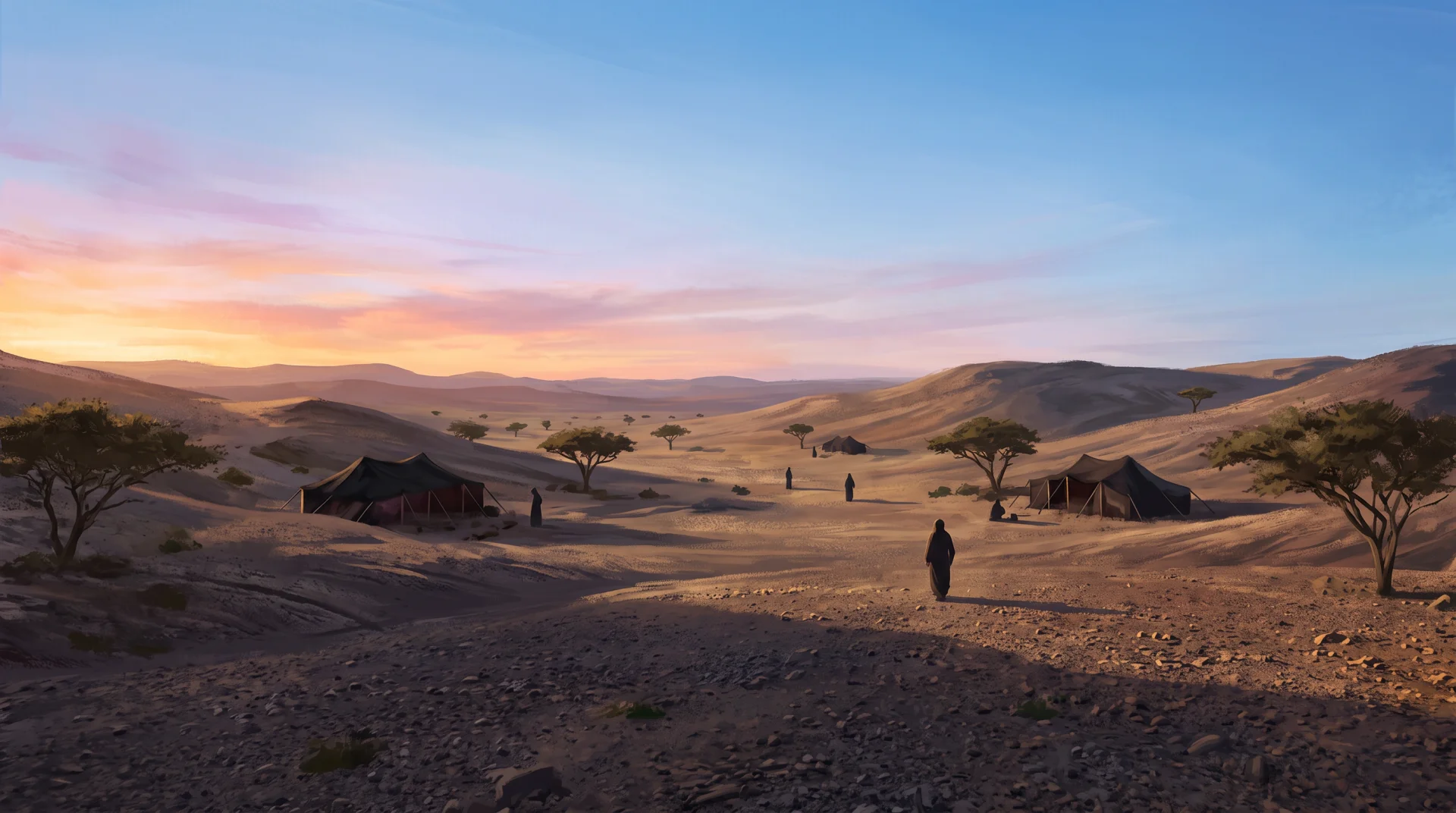
Scene 3
I Take Pride in the Arabs
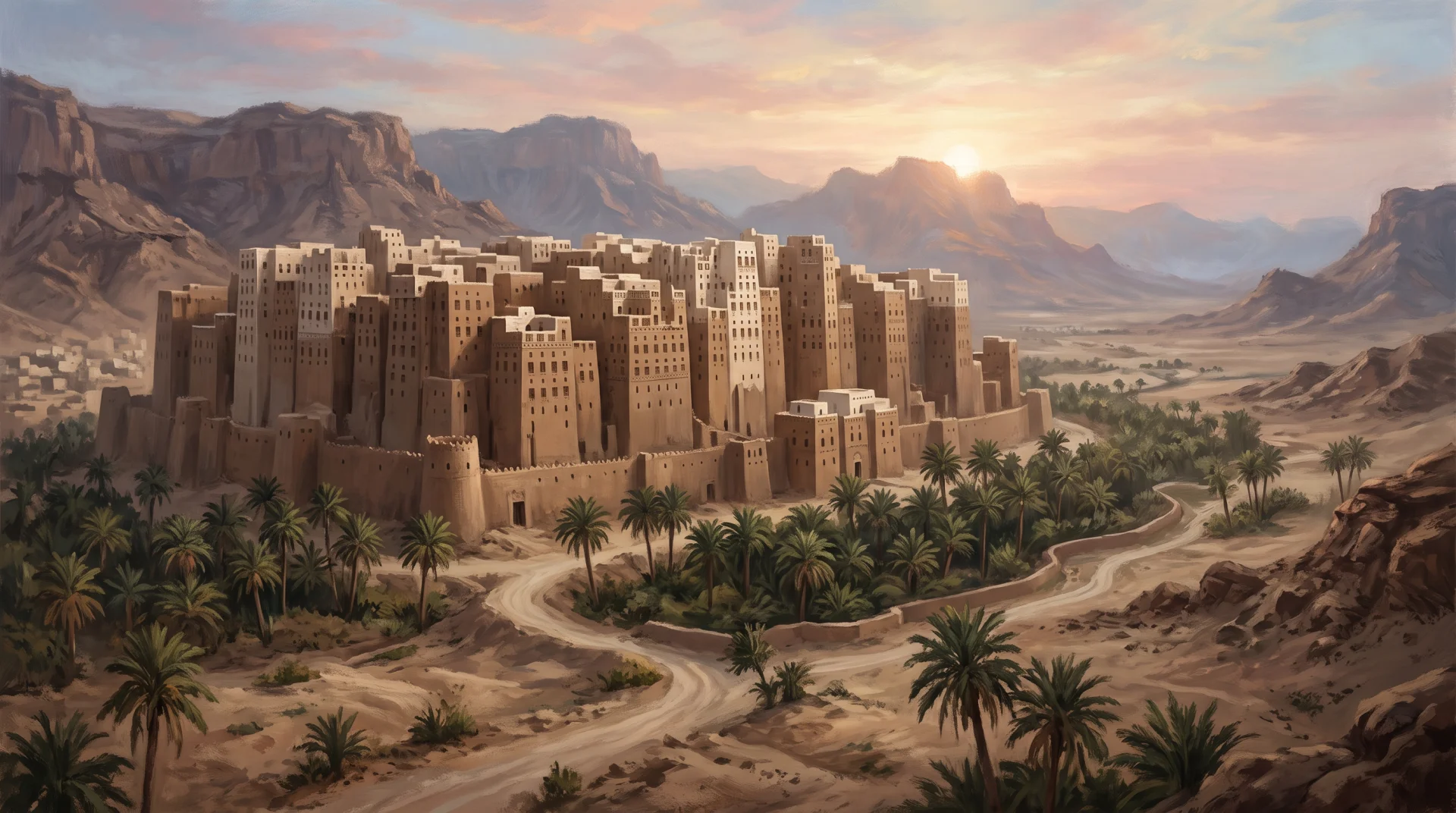
After months of struggle with himself the author concludes that he writes as an Arab proud of belonging to them, not out of a narrow tribal racism that sees no difference between Abu Lahab and Abu Bakr. He takes pride in the people from whom God sent the greatest of creation and among whom were the Companions, in those who spread Islam, who put out the Magian fire of Persia, and in the tribes of Najd, Hijaz and Yemen.
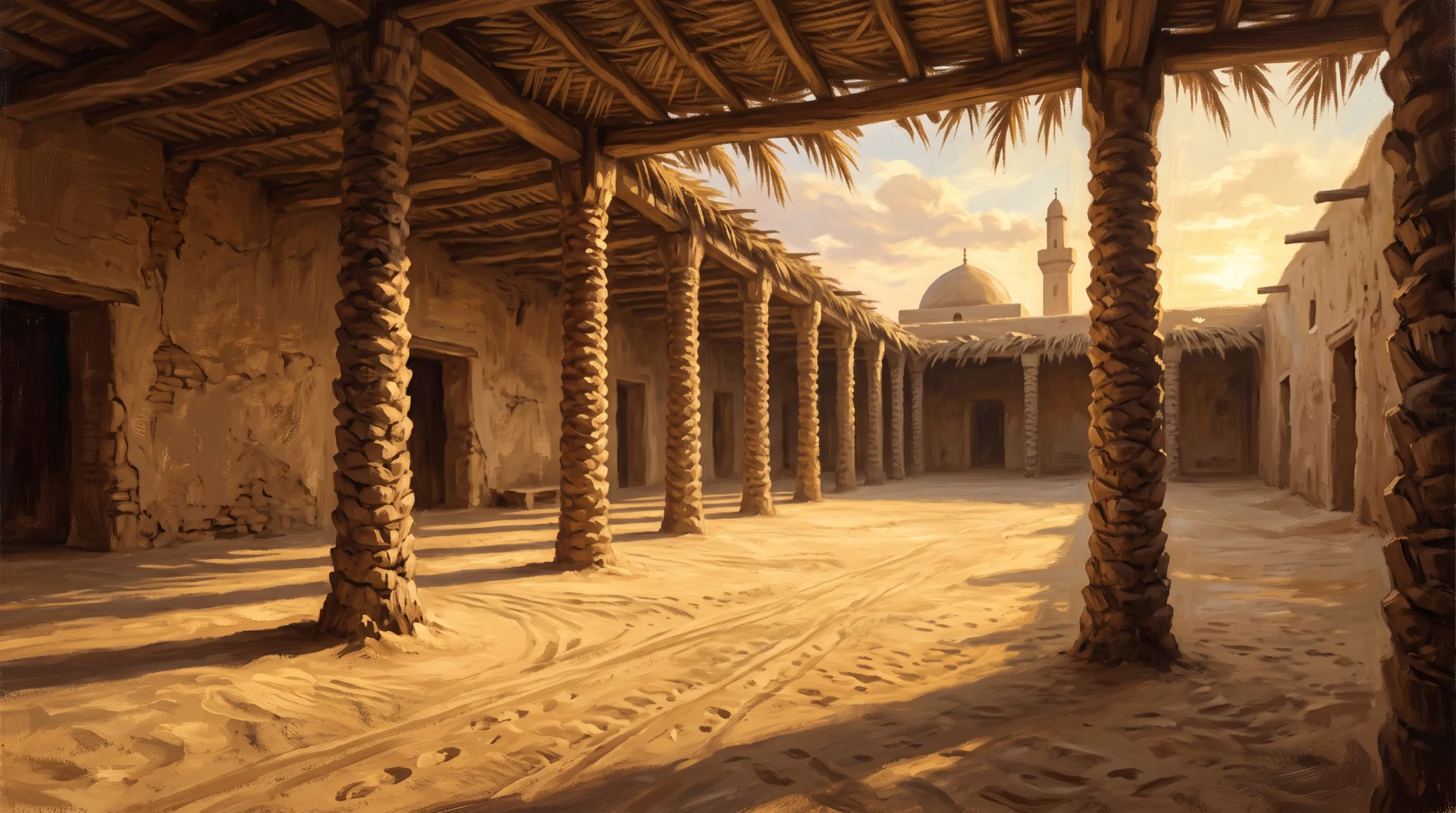
Scene 4
The Arab Heroes He Is Proud Of
He names heroes he is proud of: al-Qa'qa' al-Tamimi, Khalid al-Makhzumi, Uthman, the house of Adi from which came Umar and Zayd, al-Mughira ibn Shu'ba, Tayim from which came Abu Bakr and Talha, Abu Ubayda ibn al-Jarrah, Abd al-Rahman ibn Awf, Uways al-Qarani, al-Zubayr and his aunt Khadija, the house of Hashim that produced Ali, the Umayyads, and al-Abbas, from whose descendants came Harun.
Scene 5
The Tribe of al-Azd and the Lineage of the Prophet
He proclaims his pride in his Arabism and his tribe al-Azd, about whom the Prophet said, in a hadith narrated by Ahmad and graded sound by al-Albani, that trustworthiness is in al-Azd. He is proud of the Aws and Khazraj, of Abu Hurayra al-Azdi, of the Hadramis who carried the banner of Tawhid to Indonesia and the Philippines, of Sa'd ibn Mu'adh, Ja'far, Abu Dharr, Abu Ayyub, Shurahbil and Ahmad ibn Hanbal, and above all of the Arab Prophet, whose lineage he traces back to Adnan.
Scene 6
Pride Without Racism
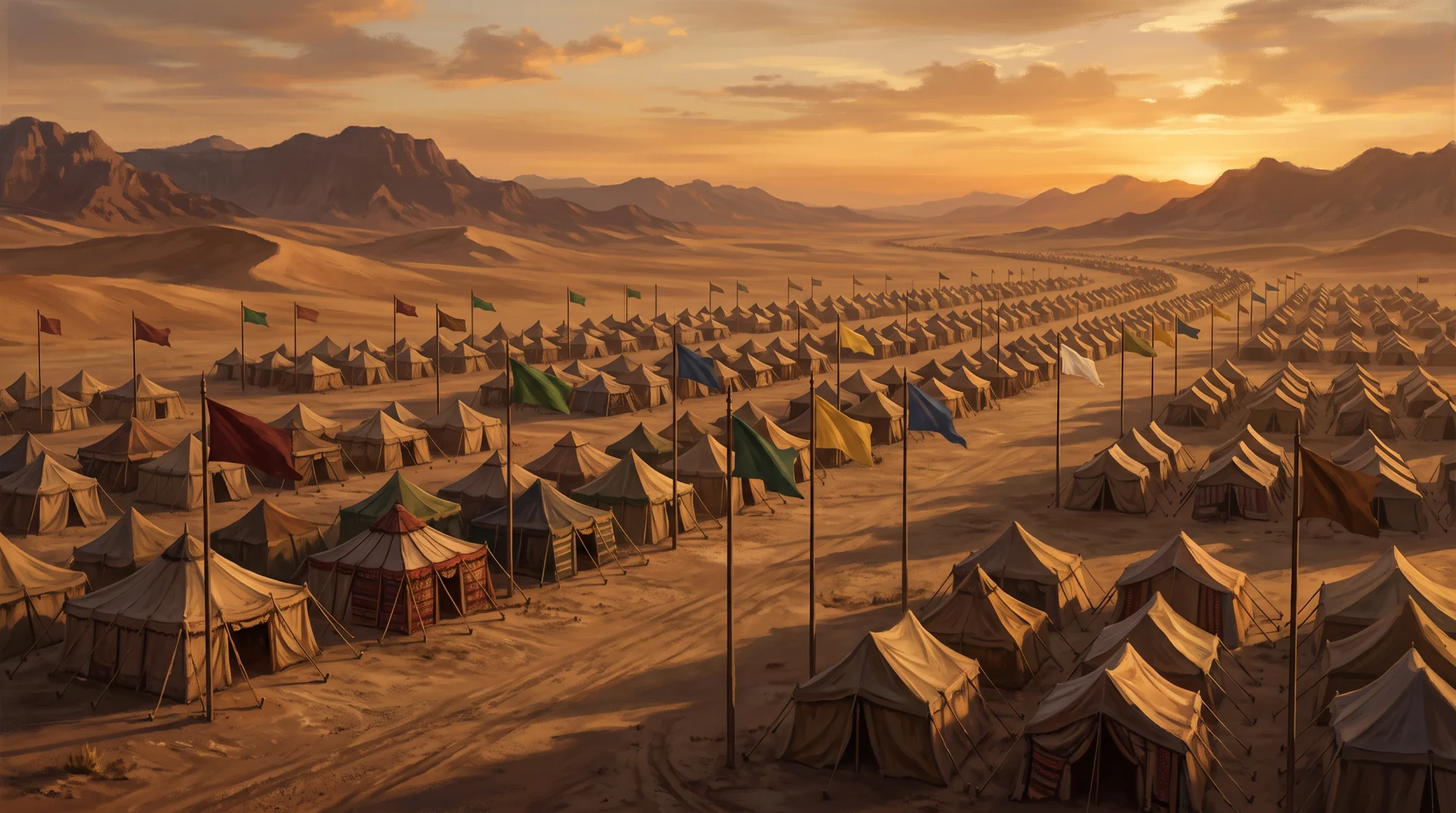
Pride in one's nationality is not shameful: a Berber could take pride in Tariq ibn Ziyad, a Turk in Muhammad al-Fatih and Alp Arslan. The Prophet divided his soldiers by tribe, as seen at al-Qadisiyya; Islam redirected nationalism rather than abolishing it. But for stirring up tribal strife the Prophet said, 'Leave it, it is rotten'. God has no kinship with anyone: Bilal the Abyssinian is better before God than Abu Lahab the Hashimite, and Salman the Persian better than Abu Jahl.
Scene 7
Why the Arabs Were Ready for the Message
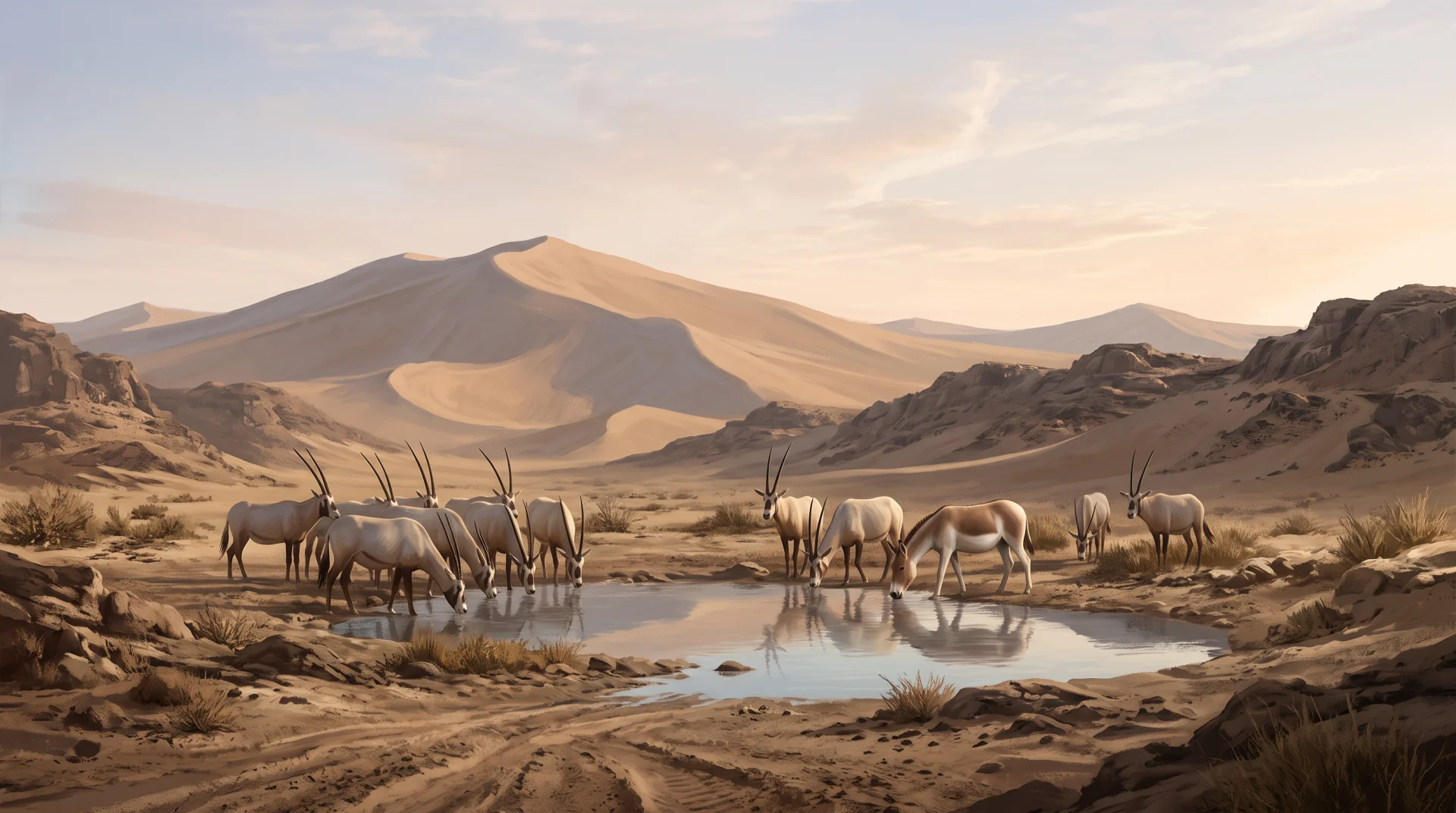
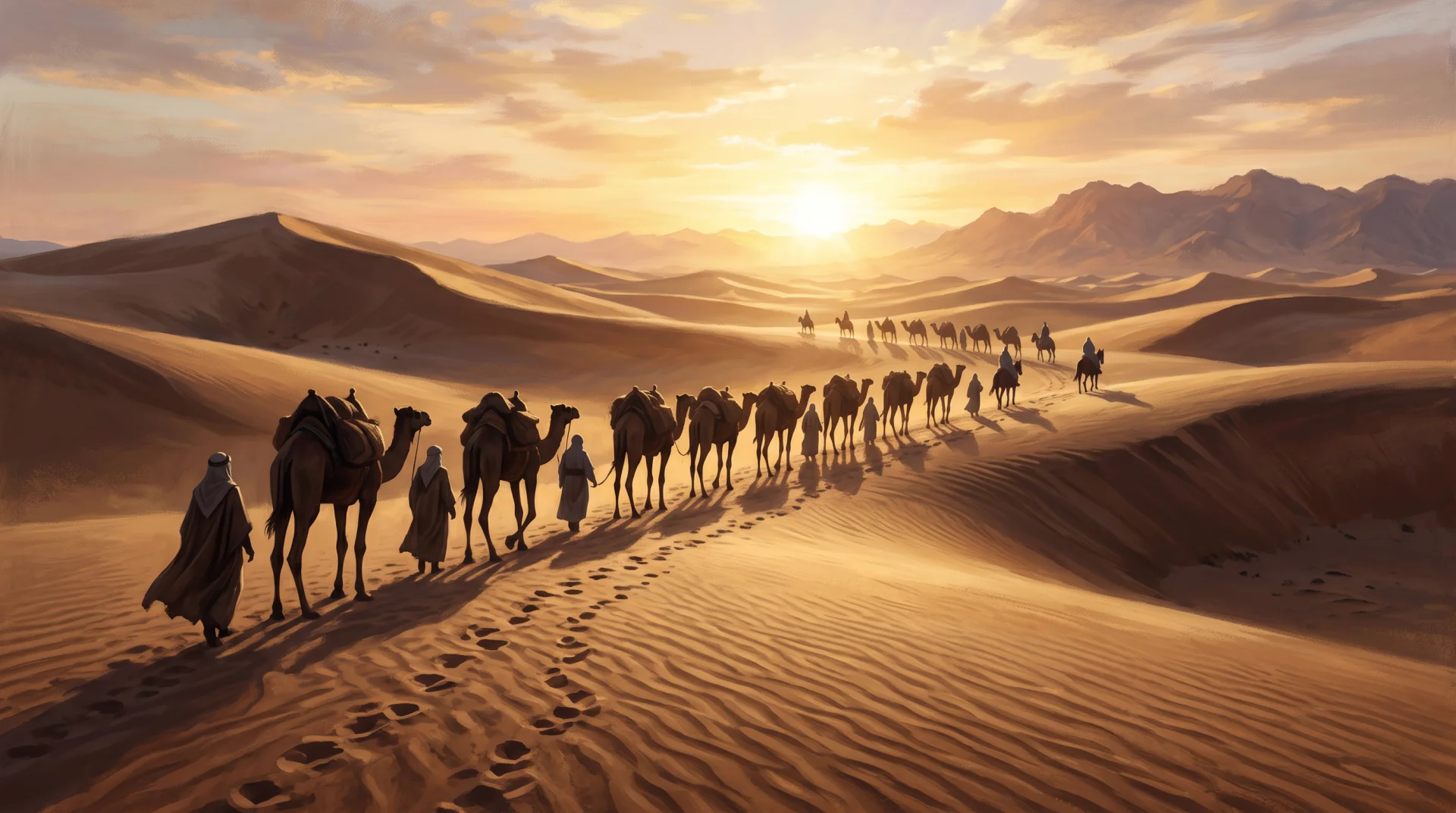
Although Islam met much resistance at first because Arab leaders refused to give up the heritage of their fathers, it found people with great social readiness, and many Islamic virtues already existed among them. The author gives two explanations: the influence of the call of Abraham, whose social remains survived, and the Bedouin desert environment. Ibn Khaldun, in his Muqaddima, says desert Bedouins are better in body, character and mind than soft city-dwellers, and compares desert animals such as the oryx and wild ass with their city cousins.
Scene 8
The Arabs' Character Before Islam
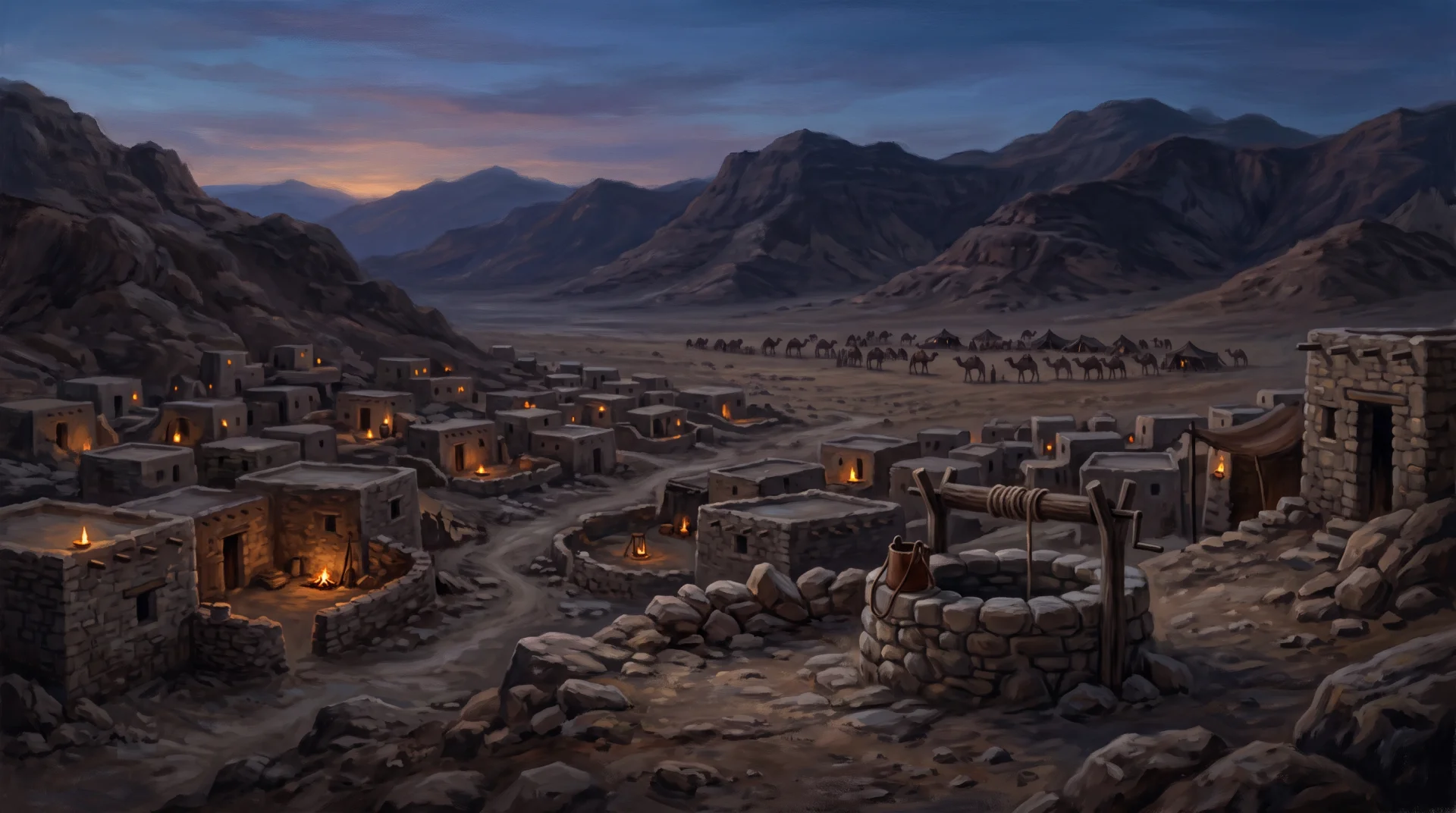
The free Arab woman before Islam did not commit adultery like the women of Persia, the Arabs did not lie (as shown by Abu Sufyan with Heraclius), and no Arab was bound in chains for fear he would flee. Quraysh made the Alliance of al-Fudul, which the Prophet praised. The Prophet said he was sent only to perfect noble character, so those virtues already existed and needed direction: death for the tribe became death for God, Hatim's generosity became zakat. The author imagines the Prophet among the Persians, who believe fire is God, and cites a verse from Genesis, as printed in the book, promising Abraham a great nation from Hagar's son.
Scene 9
Why God Chose the Arabs for the Message
Many Arab Companions could read and write, but none was a philosopher. The author recalls a Shia scholar who blamed the Arabs for lacking philosophical interpretation and says he hit the truth: the Qur'an came down on Bedouin Arabs free of Greek philosophy and Persian superstition, who heard God's words to apply them at once: 'We hear and we obey'. He imagines the Prophet among the Greeks or the Jews, and says that within a hundred years the Arabs carried the religion from the Hijaz to the Yellow Sea, the Rhine near Paris, the Caucasus and the jungles of Africa.
Scene 10
Defend the Arabs and Their Language
The Arabs are now attacked from every direction: Shia Persians believe their Mahdi will wipe out the Arabs; the Jews wrote in the Talmud that God regretted creating the Ishmaelites; American cinema shows the Arab as a terrorist, a sex addict or a drinker; Shia directors portray al-Zir Salim as a coward; and the Rafida call them 'Urban' and 'Bedouin'. The author tells Muslim youth to defend the Arabs, since everyone fighting them is a sign of their strength. He then turns to the Arabic language, and to the poet he considers the greatest in human history.
These are English scene notes. The full chapter text, as the author wrote it, is in the app.