



Scene 1
The Devout Commander's Ambition for Rome
The chapter opens with Musa ibn Nusayr's oath that, had his men followed him, he would have led them to Rome. The author recalls school textbooks hinting that Musa, governor of North Africa, envied his freedman Tariq and rushed to Andalusia to claim the glory, and asks whose interest such smears serve.

Scene 2
The Truth About the Reports and a Clean History
The author is certain that those who spread such false reports are targeting the reader more than the heroes, making Muslims loathe a history made to look dark. Once the dust is cleared, he says, that history proves radiant, giving young people one role model after another and showing the means of victory after weakness.
Scene 3
Building the Fleet and Teaching the Sharia
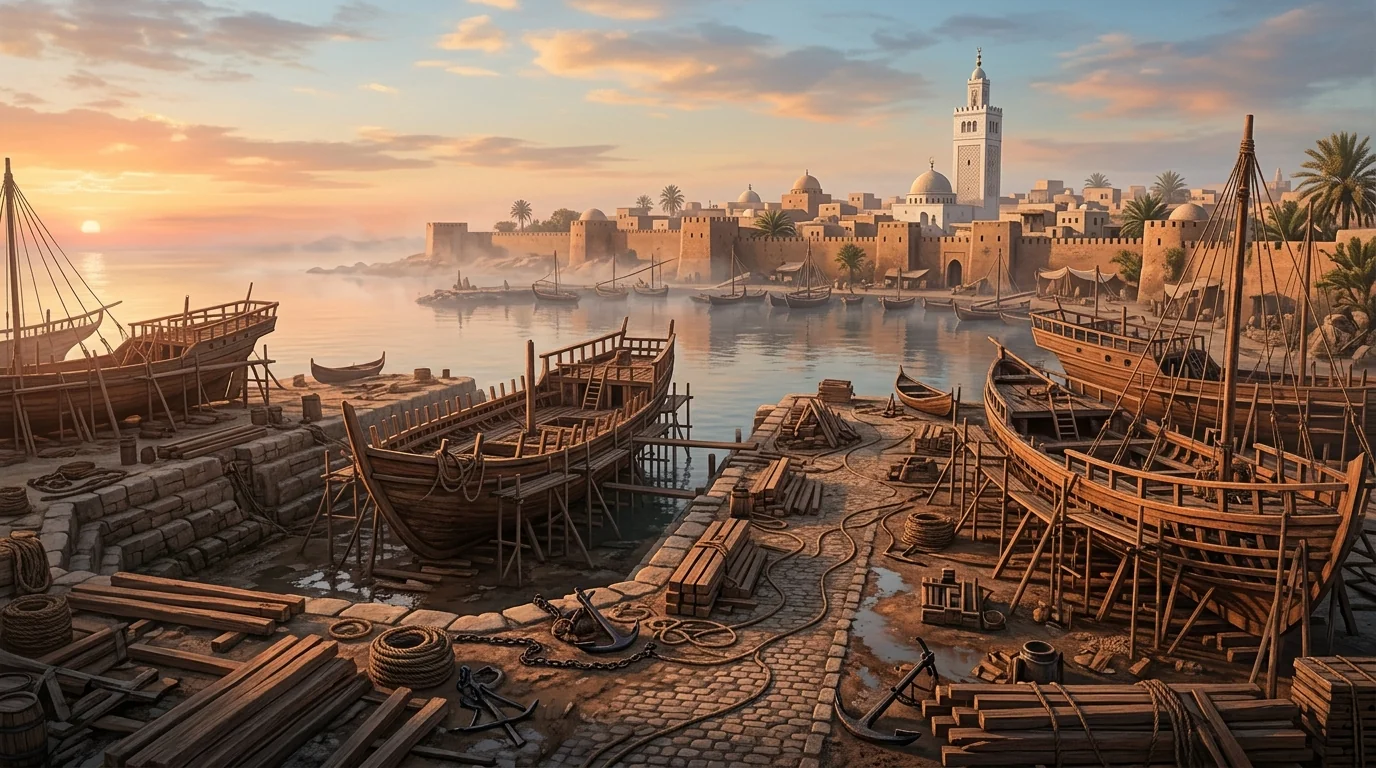
Original sources such as Ibn Kathir show a remarkable hero. Musa took over a North Africa in turmoil and saw that the Berbers kept apostatising because they did not understand Arabic teaching, so he brought Successors from the Levant and Yemen to instruct them. He then built a shipyard at Kairouan to prepare for Europe.
Scene 4
The Letter from Ceuta and Refuting the Burning Myth
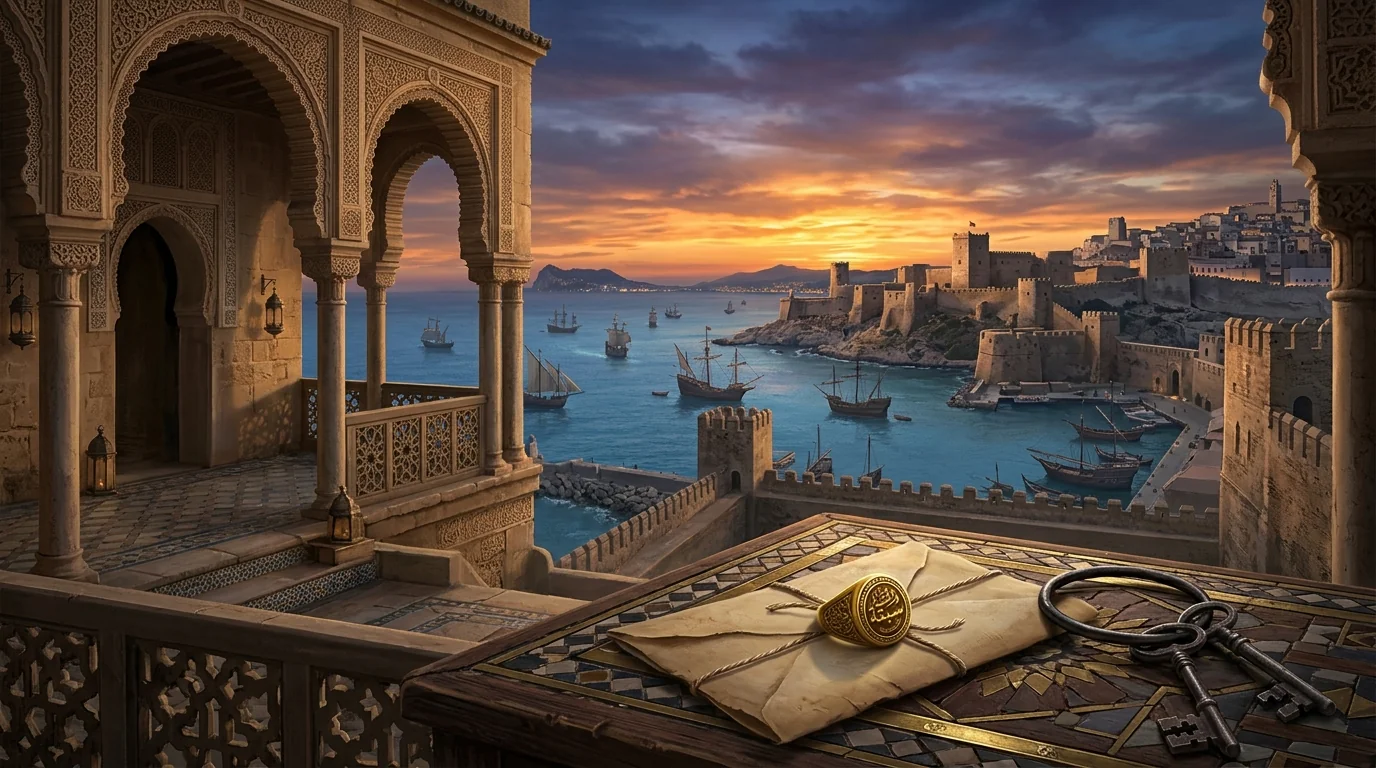
A secret letter reached Tariq from Ceuta, whose Christian ruler Julian sought revenge after Roderic assaulted his daughter Florinda. Julian offered to hand over Ceuta, lend ships and guide the Muslims through Andalusia in return for Roderic's destruction. The ships were therefore Julian's and had to be returned, which the author says refutes the burning story.

Scene 5
The Conquest of Zaragoza and the March Toward Constantinople
After Tariq's victory, Musa hurried to Andalusia to fight, though he was nearly eighty. Having taken Spain and Portugal, he asked the Umayyad caliph al-Walid ibn Abd al-Malik for leave to conquer France, Italy, the Balkans and Greece and so reach Constantinople from the west, a plan Uthman ibn Affan had once considered.

Scene 6
Damascus's Decision and the Glory of an Undefeated Banner
The Umayyad caliph judged that the mission might endanger Muslim lives and refused the plan; Constantinople was conquered later, as the book will show. As for Musa, he swore that no banner of his was ever defeated, no force of his scattered and no Muslims struck by disaster under him from the age of forty to eighty.

Scene 7
Ayn al-Tamr and the Scale of Umar's Good Deeds
The author notes a curious point: just as Tariq ibn Ziyad's deeds weigh in Musa ibn Nusayr's scale of good deeds, the deeds of both weigh in the scale of a noble Companion who conquered Persia and the Levant, and whom God made a sharer in conquering North Africa and Andalusia even after his death.

Scene 8
Musa's Origins and the Noble Companion
The author closes with questions leading to the next chapter: what was Musa ibn Nusayr's origin? Who was the noble Companion who once wanted to kill the Prophet ﷺ and after embracing Islam became supreme commander of the Muslim fighting forces, and why are his plans still taught in Western military academies today?
These are English scene notes. The full chapter text, as the author wrote it, is in the app.