


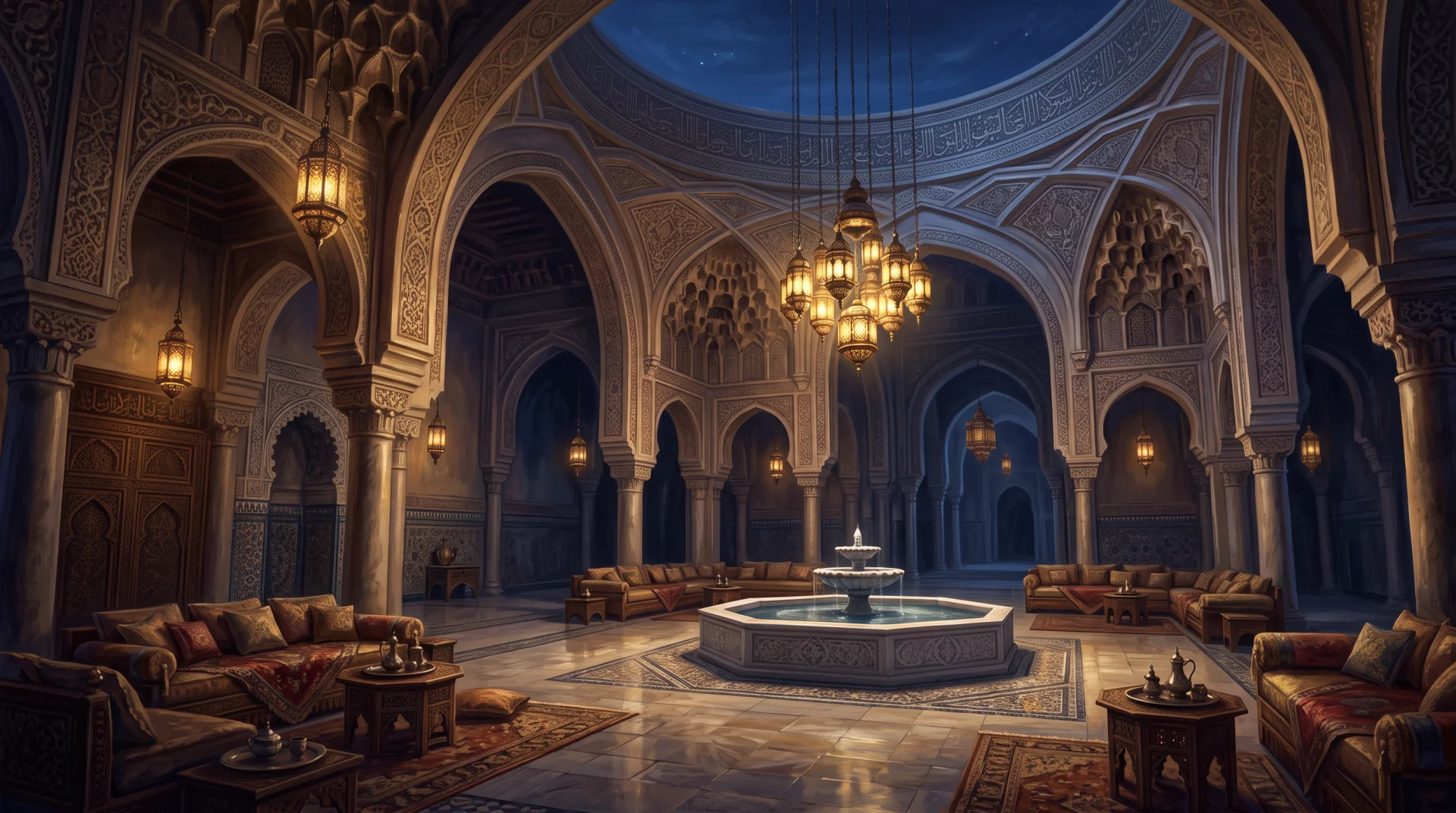
Scene 1
The Distorted Picture of Harun al-Rashid
The chapter opens with the Caliph's letter to Nicephorus. The author admits he once saw al-Rashid as a drunken libertine, as the invaders of history painted him. He says we were defeated in this historical war, but men are now correcting it, and that jihad today means supporting the umma by correcting false historical ideas.
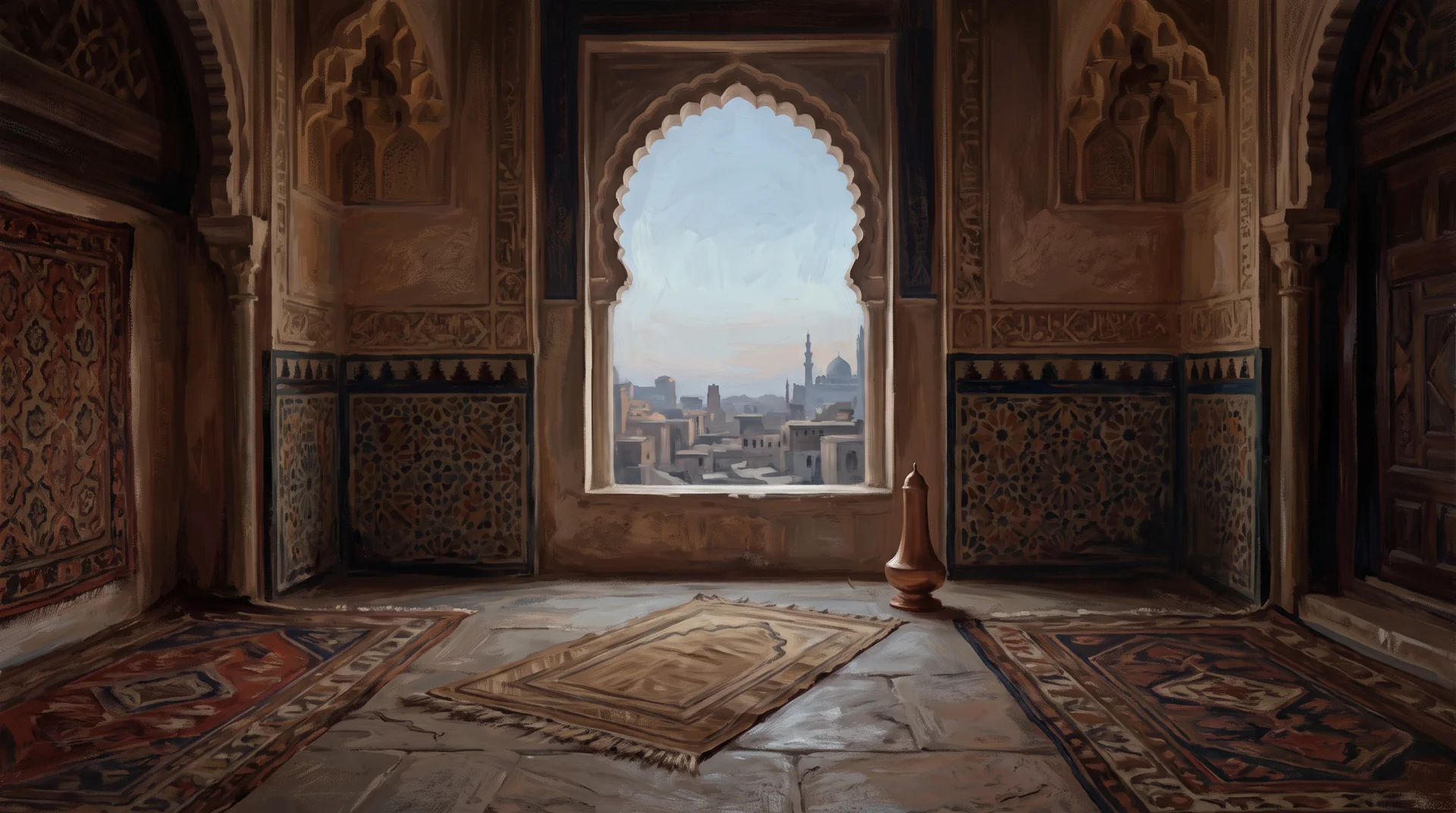
Scene 2
The Devout Caliph
In truth, the Abbasid caliph was among the caliphs most devoted to jihad and to scholars. He was known as the caliph who performed Hajj one year and fought the next. Historians say he prayed a hundred rakahs every day, gave charity from his own wealth, and never missed Hajj except for jihad. Abu Muawiya al-Darir said that whenever he mentioned the Prophet before him, al-Rashid wept.
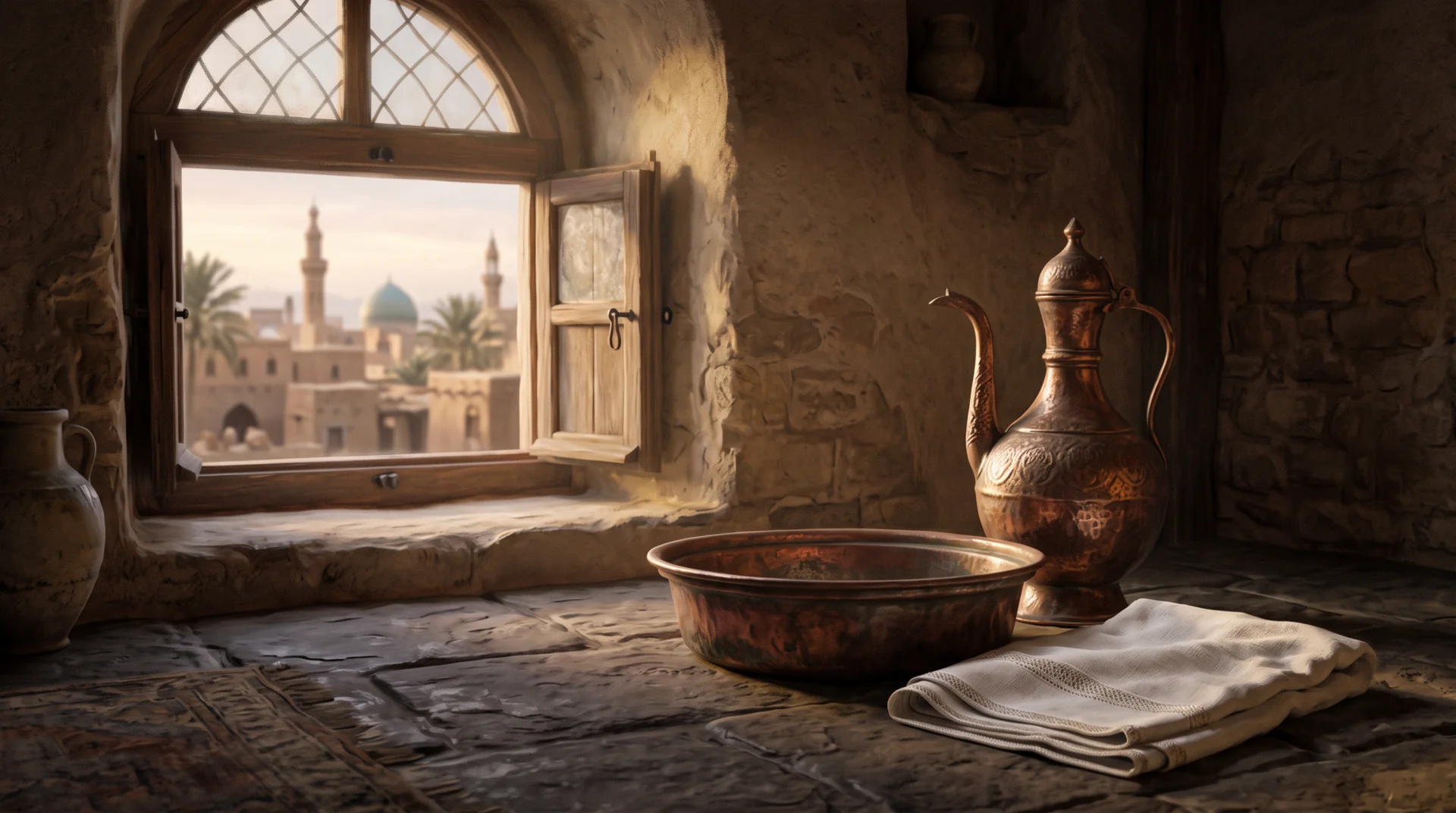
Scene 3
The Tears of al-Rashid
Scholars testified to his tears. Abu Muawiya al-Darir, who was blind, said al-Rashid poured water over his hands out of respect for knowledge. Al-Fudayl ibn Iyad and Mansur ibn Ammar spoke of his tears, and when Ibn al-Sammak told him his kingdom was worth no more than a cup of water, he wept bitterly.
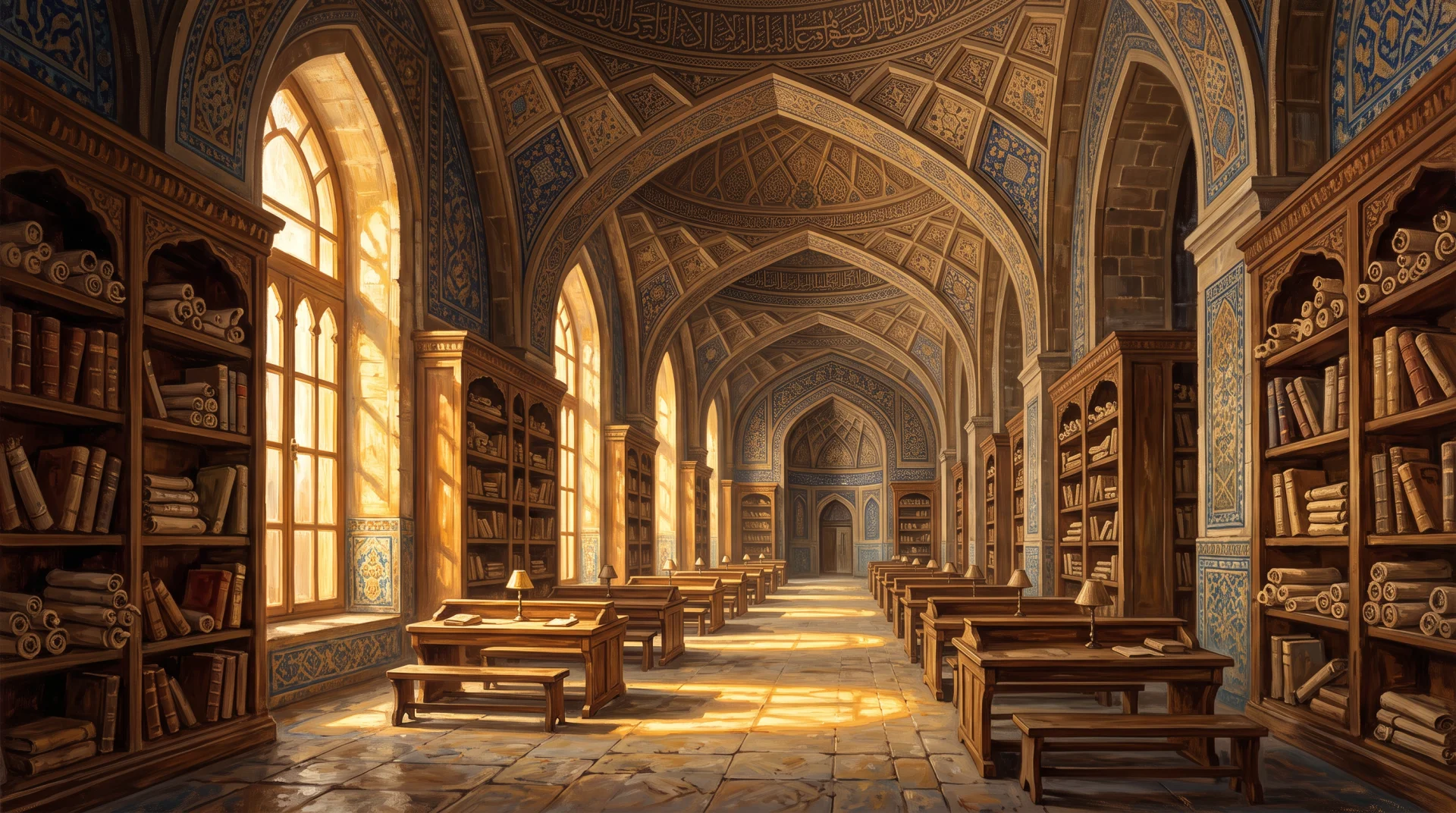
Scene 4
Civilization in al-Rashid's Reign
Despite his worship, he did not neglect the state. On the advice of his wife Zubayda he built roads to Mecca and Medina with free inns for pilgrims, founded the House of Wisdom, and made Baghdad a center of scholars. He also planned a canal between the Mediterranean and the Red Sea but feared the Romans would use it to reach Mecca and Medina.
Scene 5
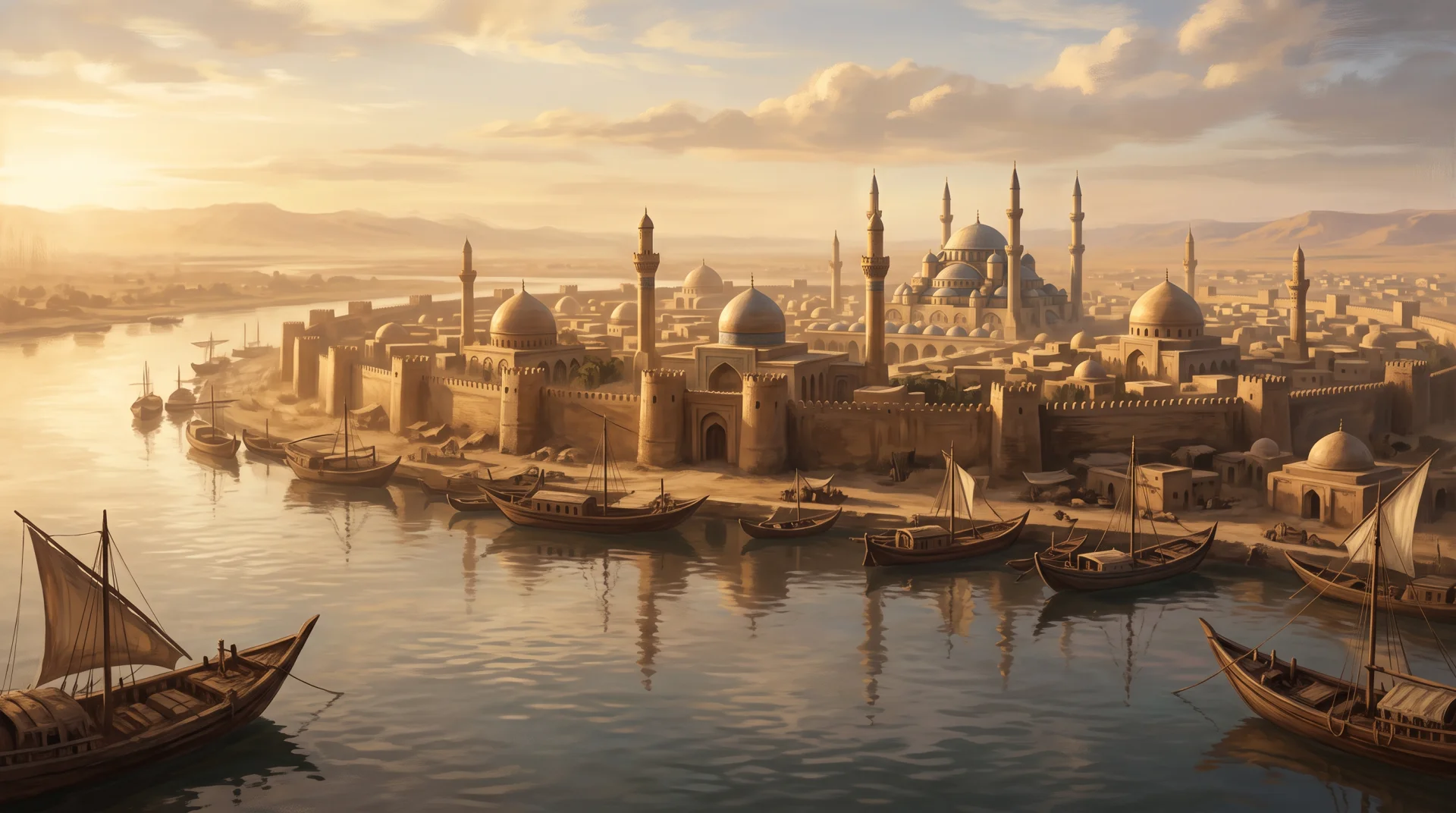
Baghdad, City of Peace
Baghdad became the qibla of the world, known in his age as the City of Peace, with about a million people. It filled with mosques, schools, palaces and the world's greatest free trade. The author says Christians and Jews migrated there and were welcomed, and compares it with Paris, London and Berlin of that time.
Scene 6
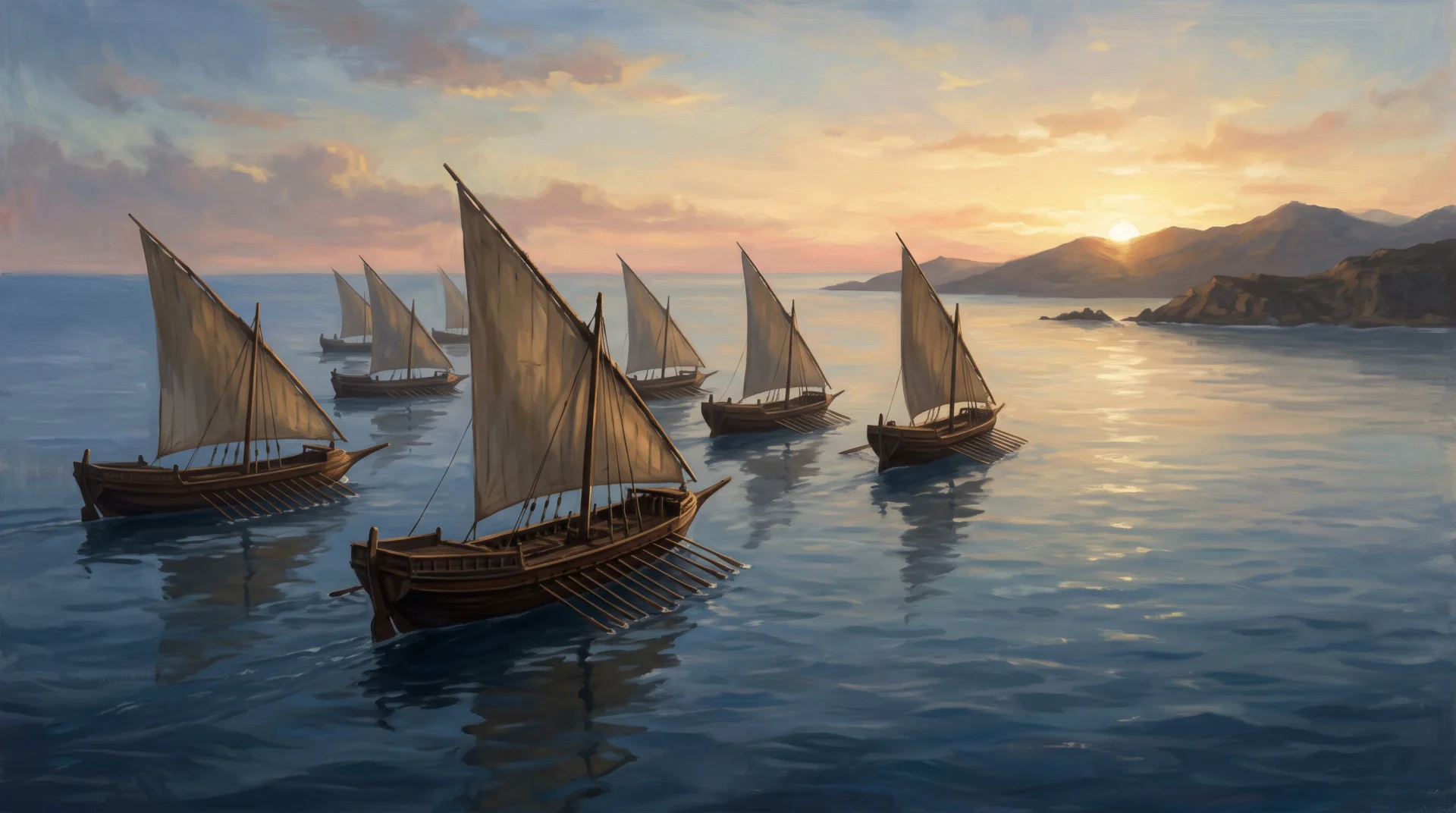
Al-Rashid and Jihad
The author says the Caliph was among the greatest conquerors of humanity, ruling from China to the Maghrib at the age of twenty-five, as he writes. He organized the frontier fortresses, rebuilt the fleet, retook Rhodes and raided Crete and Cyprus. Empress Irene made peace and paid tribute, until the rebel Nicephorus killed her and took power.
Scene 7
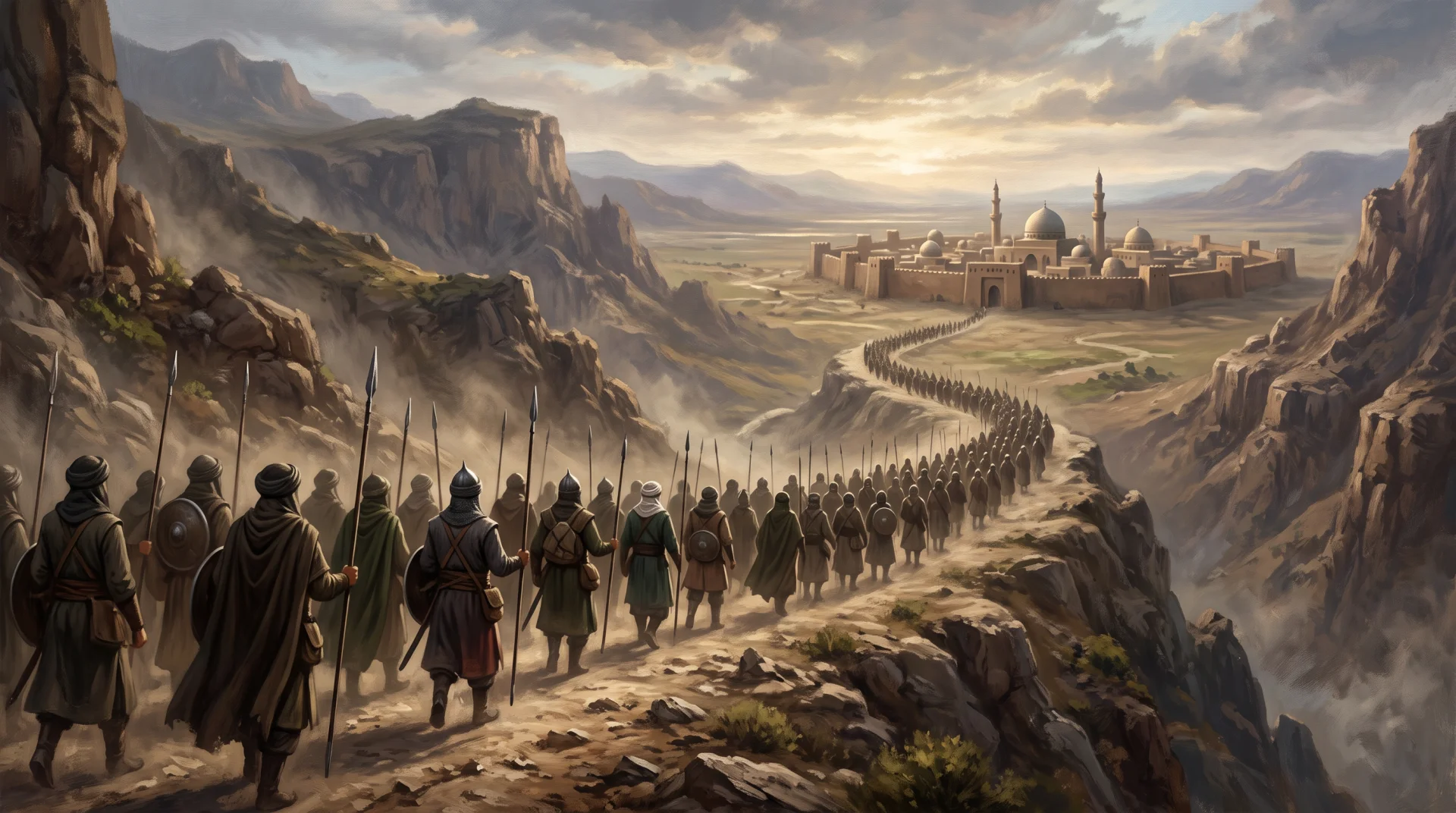
Nicephorus's Letter and al-Rashid's Reply
Nicephorus wrote demanding back the tribute and threatening war. The Caliph wrote on its back that the answer is what he will see, not what he will hear, then marched and destroyed Heraclea. Nicephorus paid tribute and freed all Muslim prisoners. The author says the Caliph died on his way to jihad in the east at forty-six.
Scene 8
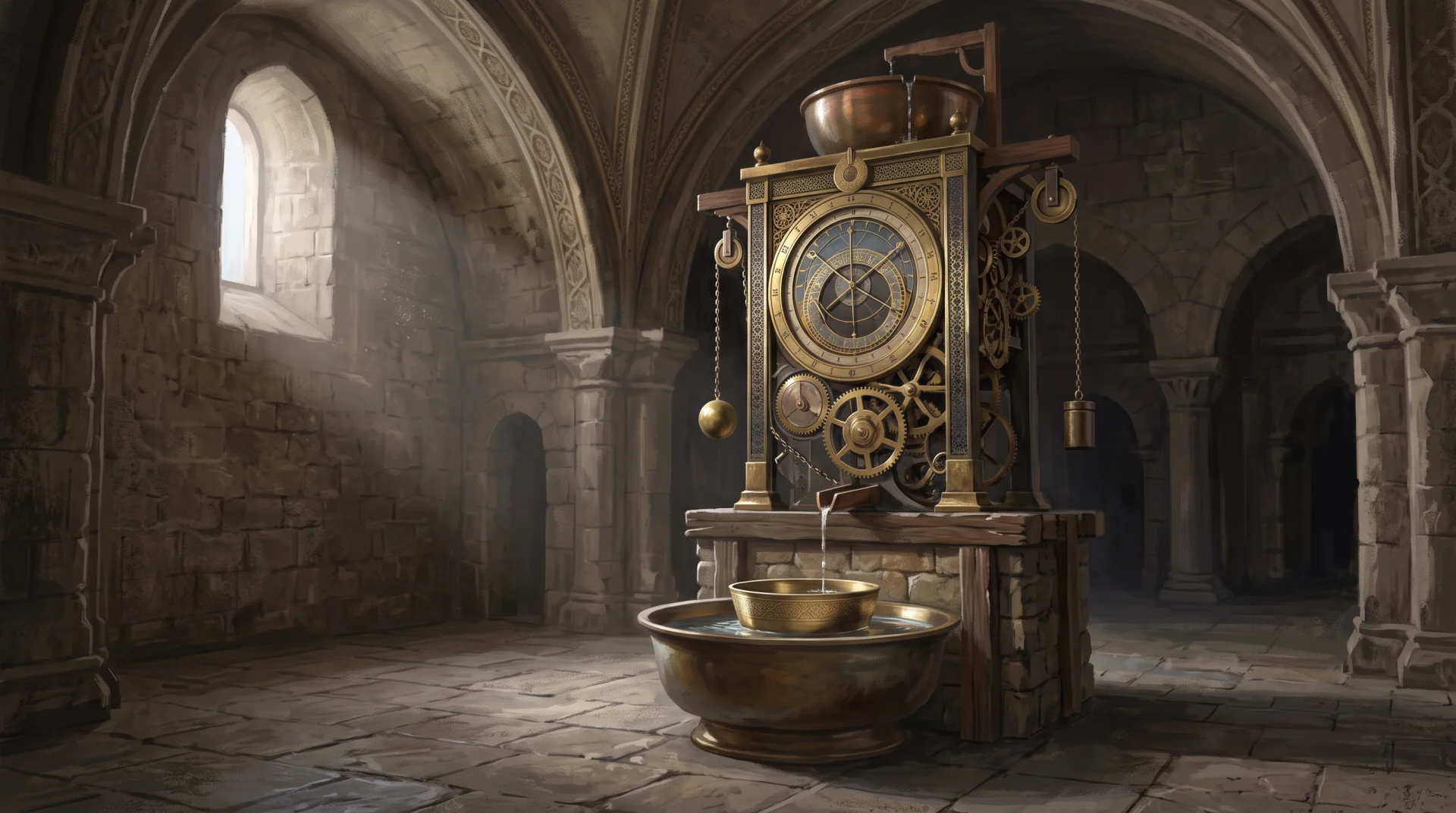
The Charlemagne Gift Story
Before moving on, the author makes two points. First, the famous story of the large clock sent to Charlemagne. He rejects the claim that the gift supported Charlemagne against the Umayyads in Andalusia, and says its only source is a German orientalist, Sigrid Hunke.
Scene 9
The Second Point: Ibn Yaqtin
The second point concerns a group he says appears repeatedly in this book. He says al-Rashid's one mistake was giving a Shia a ministry. He quotes Shia sources about the minister Ali ibn Yaqtin, who had prisoners killed by collapsing the prison roof and was told to atone with a goat for each man, and the author says this shows Sunni blood is permitted in their eyes.

Scene 10
On to the Adventurer in the North
After al-Rashid the author stays with the Abbasids, but this time the transport is ice sleds, to explore the strange adventures of the next hero in the far north, among piled snow and frozen lakes. Who is the Abbasid adventurer whose thrilling tales inspired American cinema?
These are English scene notes. The full chapter text, as the author wrote it, is in the app.