


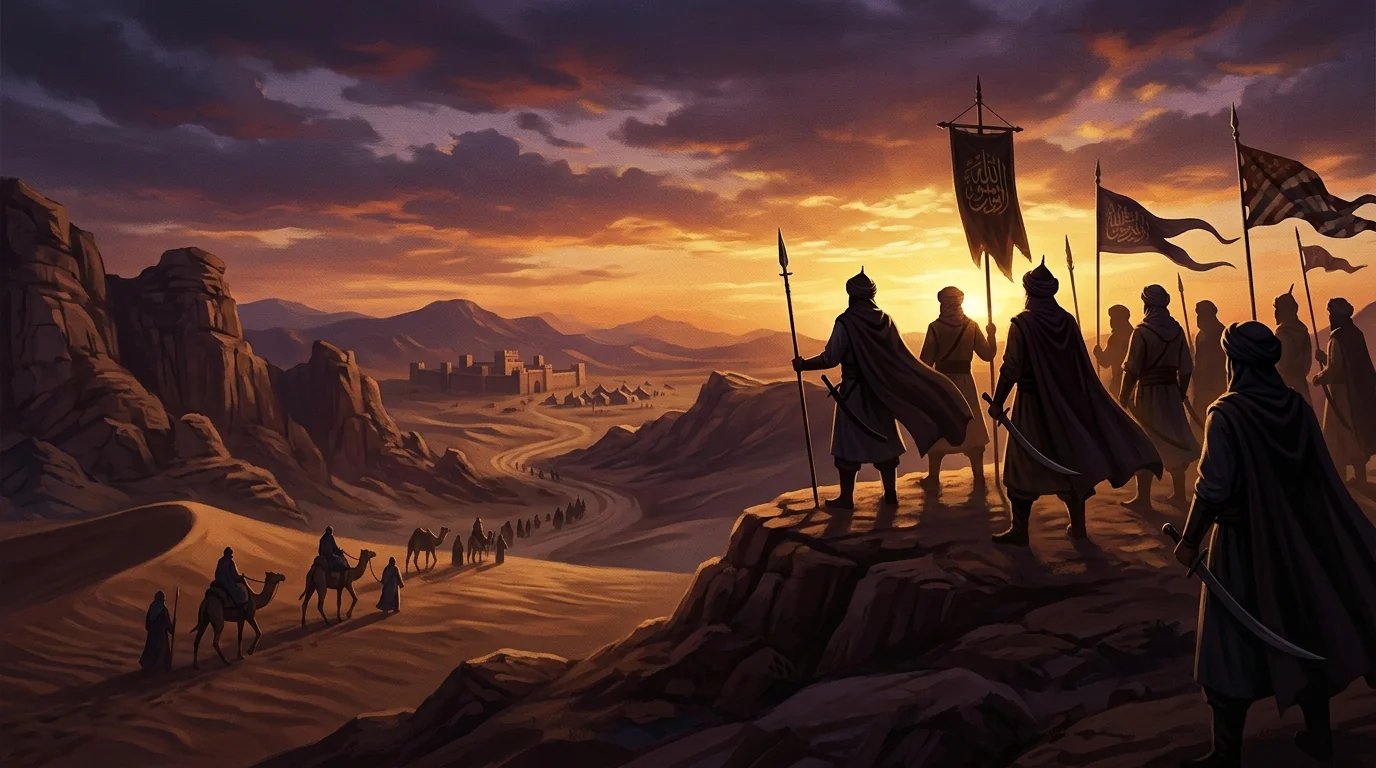
Scene 1
An Epic of Sacrifice: From Thermopylae to Badr
The chapter opens with a Quranic verse and the Prophet's ﷺ words that God may have forgiven the people of Badr. The author then recalls 480 BC, when three hundred Spartans under Leonidas held off a huge Persian army at Thermopylae and all died, and says the Greeks are right to honour them.
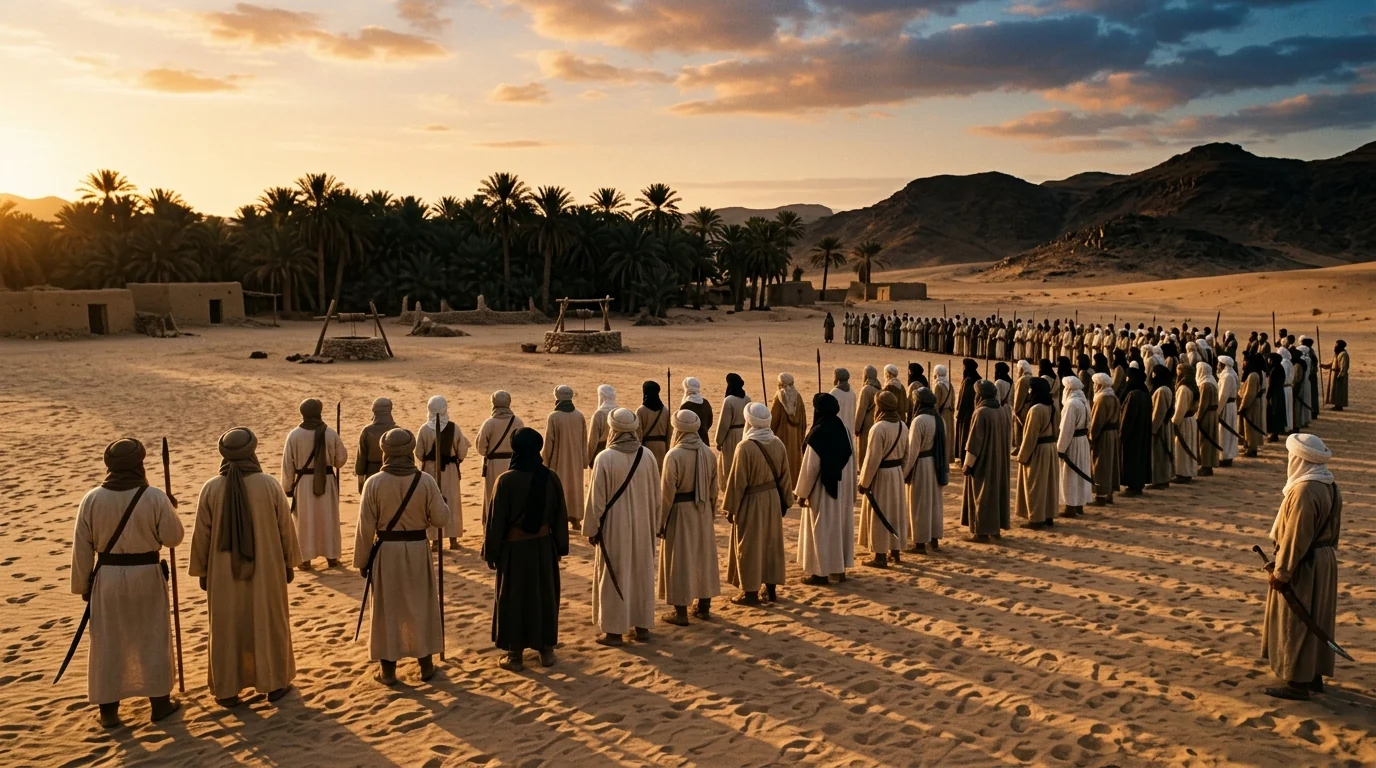
Scene 2
314 Men Who Changed the Course of History
A thousand years later, the author says, 314 men won a decisive battle that changed the map of the world, destroying the Persian Empire and leading to the retreat of the Roman one. God named it the Day of Criterion. This was the great battle of Badr, and its heroes are called the Badriyyun.
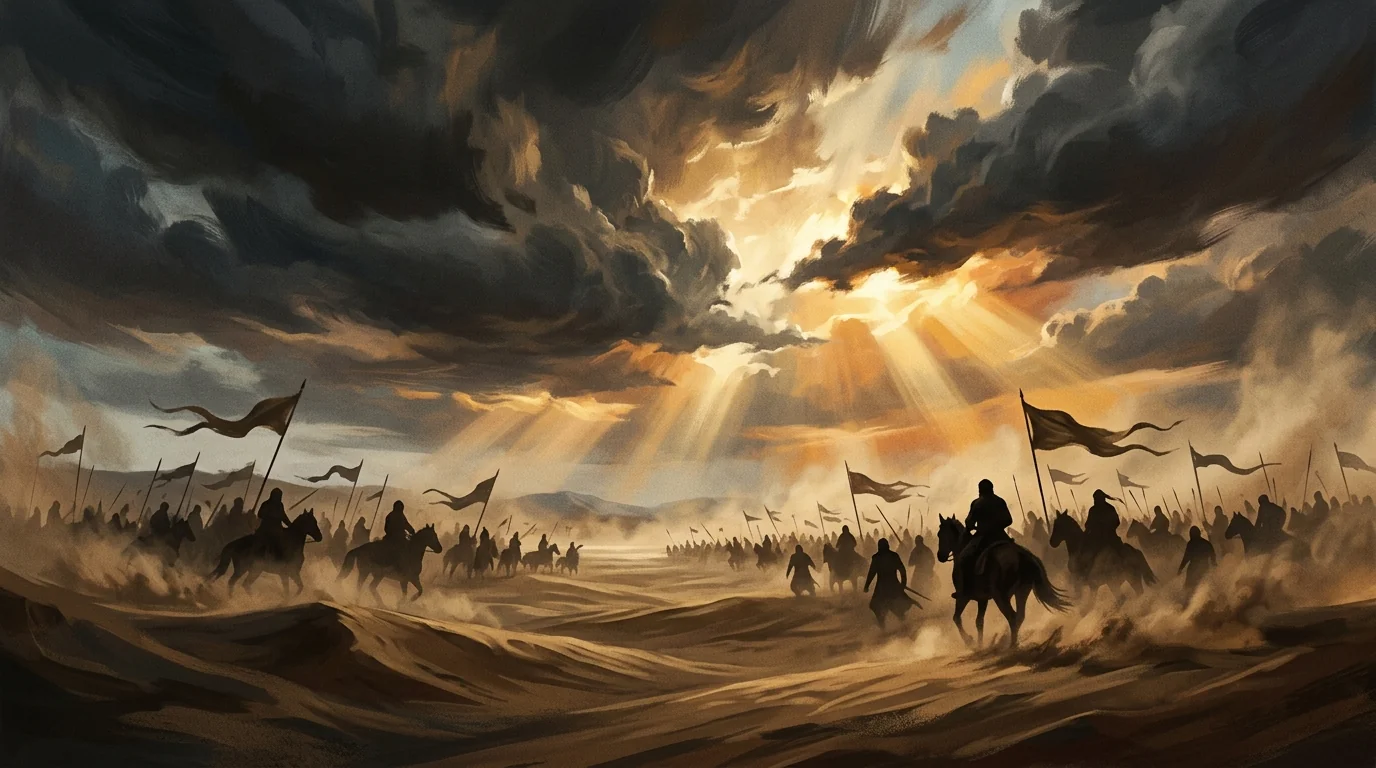
Scene 3
The Day of Criterion, the Greatest Battle of All
Some may object that Badr was a small clash in an obscure desert spot, and that Persia fell twenty years later and Byzantium after eight centuries. The author asks whether those empires would have spared the 314 had they known, and whether the Prophet's ﷺ message would have reached us had these men faltered.
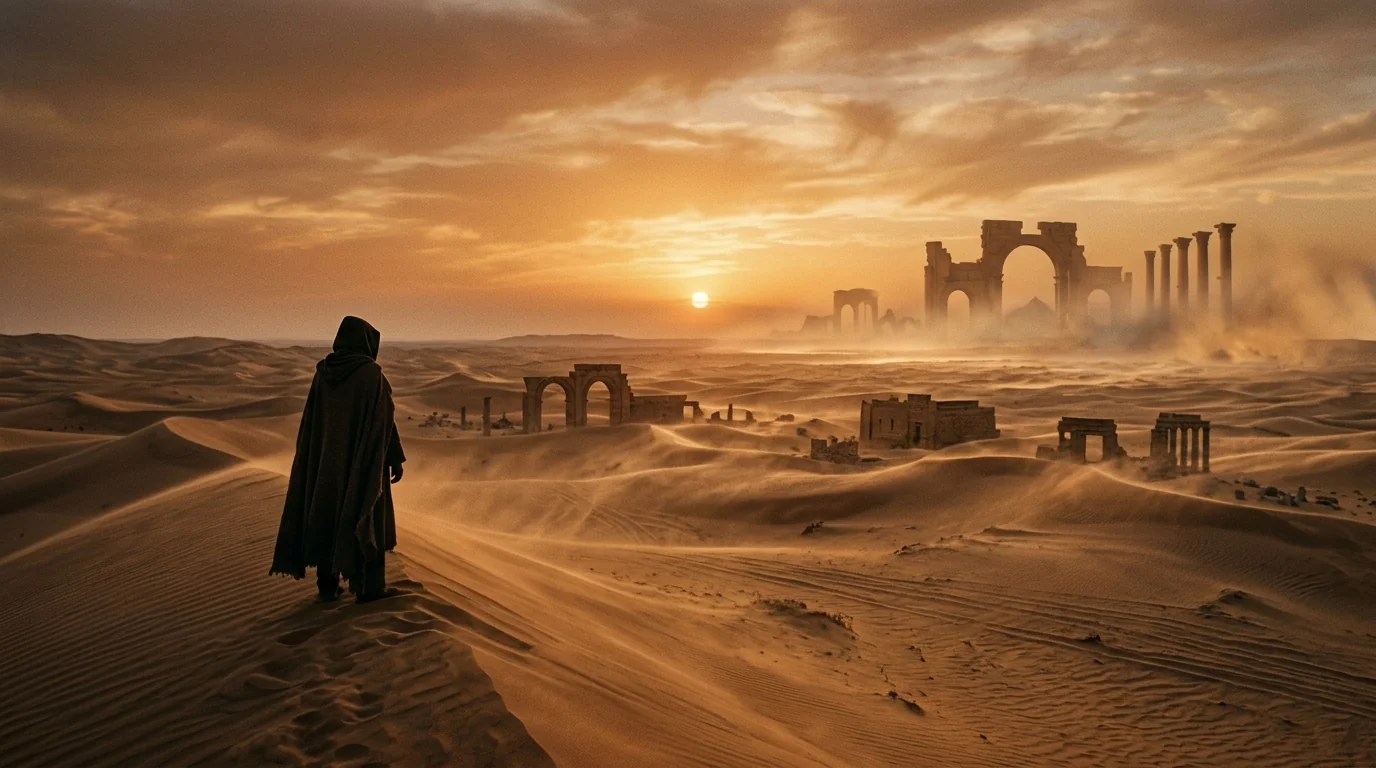
Scene 4
An Obscure Spot That Shook the Thrones of Khosrow and Caesar
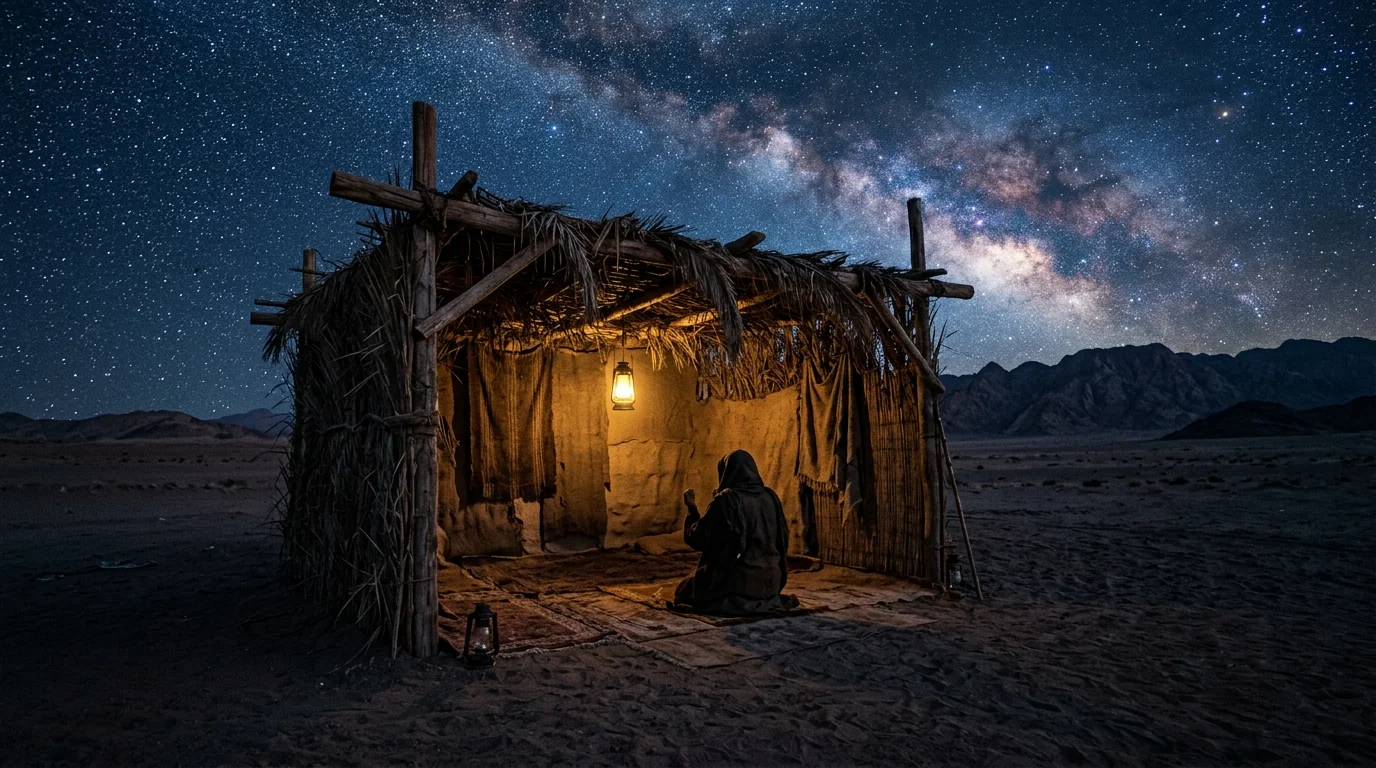
The author tells anyone who thinks Badr was merely a clash between 314 Muslims and a thousand disbelievers to listen to the Prophet ﷺ himself, the truthful one who does not speak from desire. Concerning that battalion, he raised his hands high to the sky and began calling upon his Lord in prayer.
Scene 5
The Prophet's Humble Plea in the Shelter
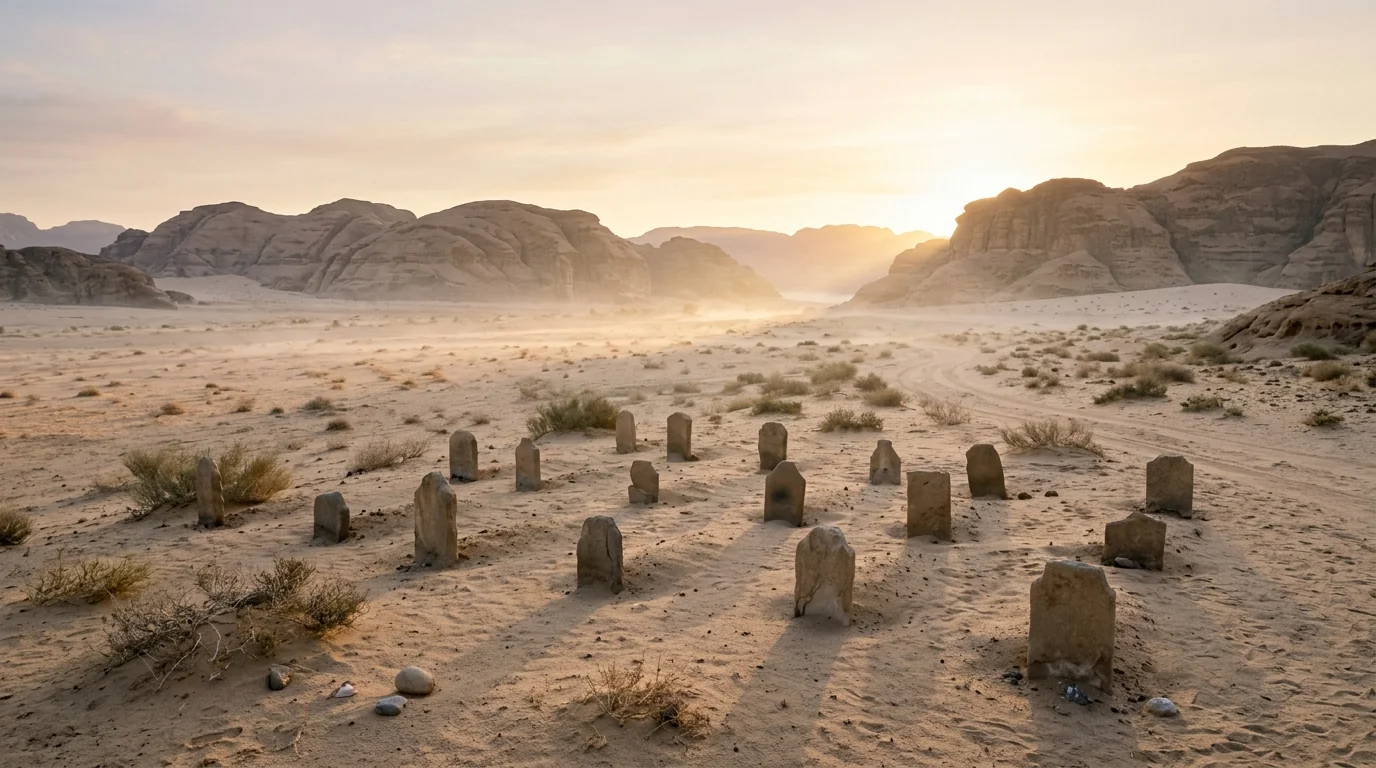
The Prophet ﷺ prayed that if this small band of Muslims perished, God would no longer be worshipped on earth. The author asks whether readers now grasp the worth of the 314, whether they know the names of even twenty of them or of the fourteen martyrs, compared with the singers and footballers they know.
Scene 6
The Heroes of Badr and Its Righteous Martyrs
These, the author says, were only a few lines about the greatest army humanity has known since its beginning, the army of the Badriyyun. While the West simply divides history with its two calendar abbreviations, the Lord of West and East divided history by the great battle of Badr, the Day of Criterion.
Scene 7
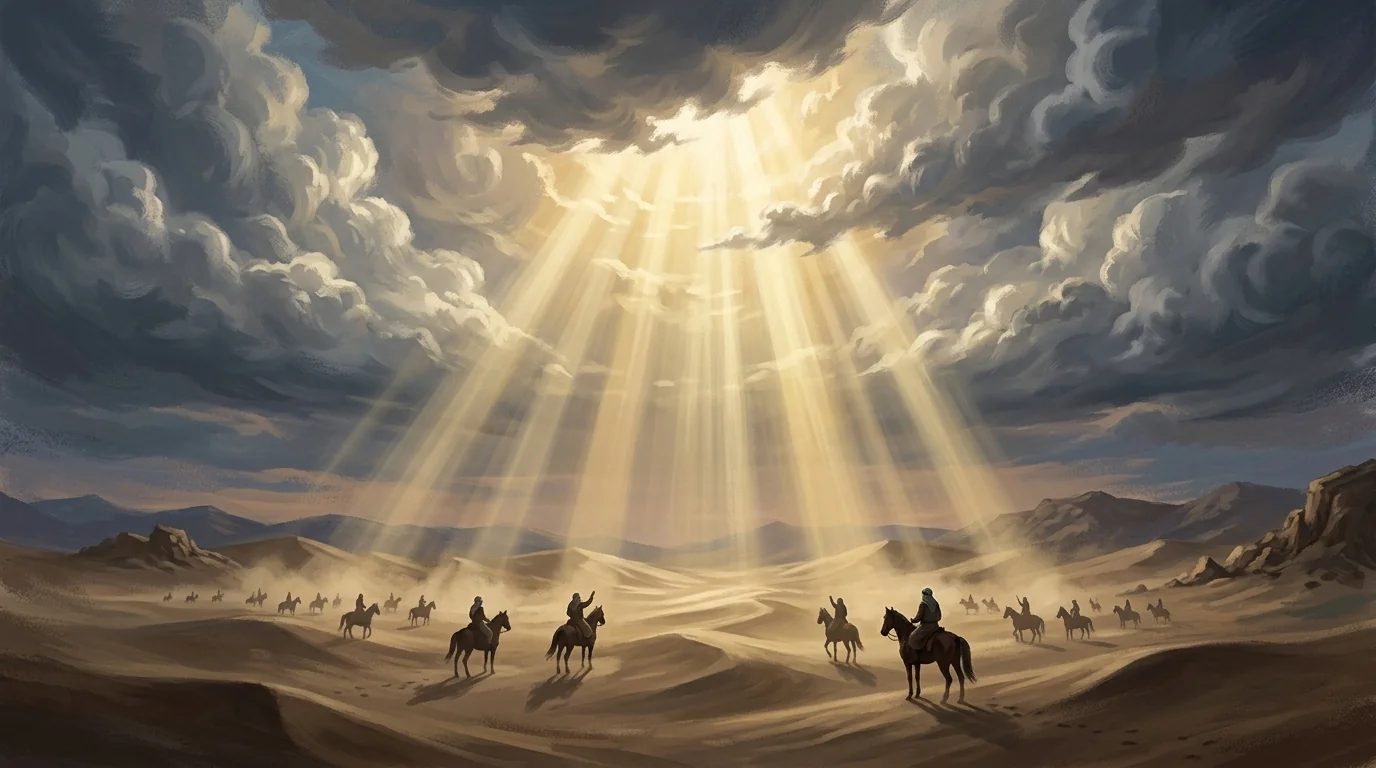
Heaven's Reinforcement and Five Thousand Angels
God knew the sincerity in the hearts of the Badriyyun, so He reinforced them with an army of fifty thousand marked angels who fought beside them in the battle. The author calls these the greatest angels in history, for no reason other than having shared that immortal day, and adds that something strange remains in the story.
Scene 8
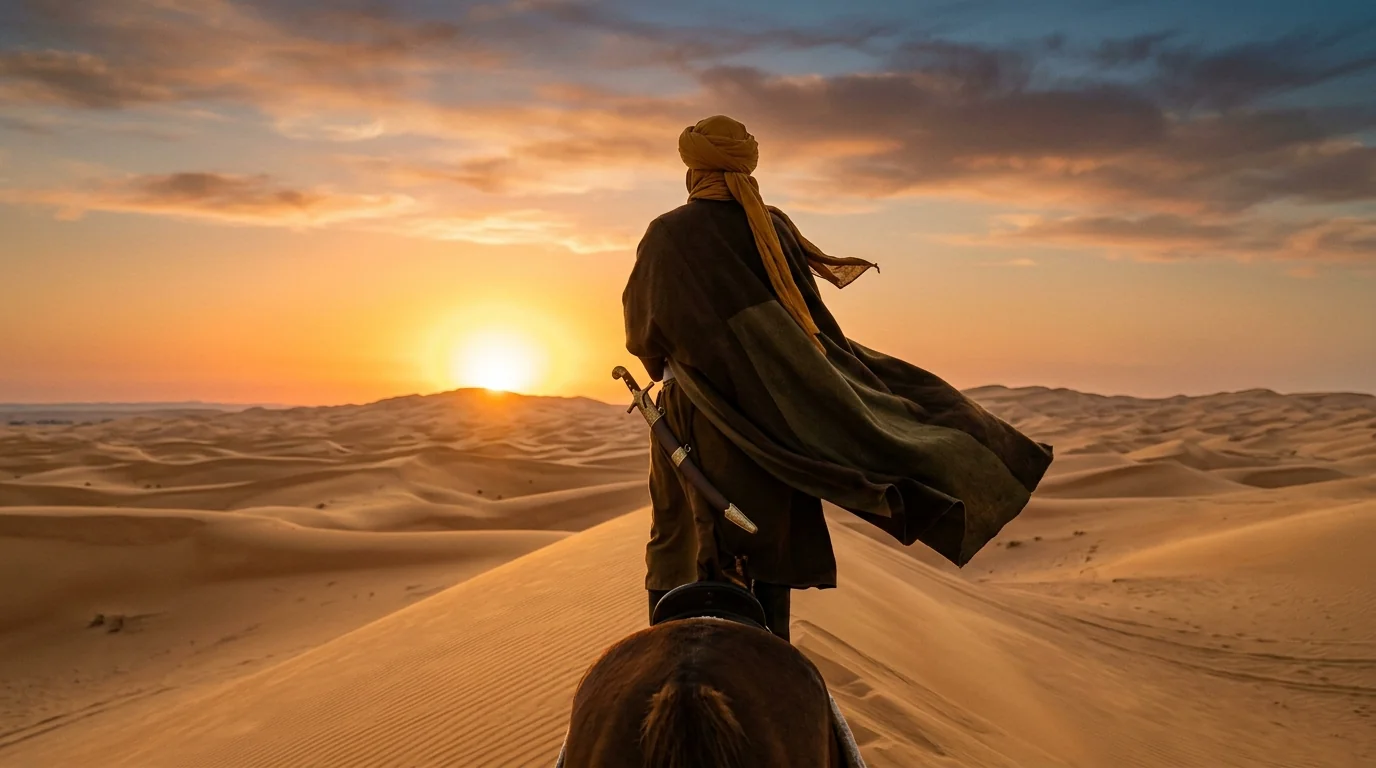
Al-Hawari: The Hero Whose Form the Angels Took
Every angel who descended at the wells of Badr took the form of one hero among the 314. The author asks who this man was whose shape Gabriel assumed, and what his stories were at Badr, Uhud, Yarmouk, Egypt and as a child in Mecca, introducing the Prophet's ﷺ cousin and one of the ten promised Paradise.
These are English scene notes. The full chapter text, as the author wrote it, is in the app.