



Scene 1
The People of Yemen Like Clouds
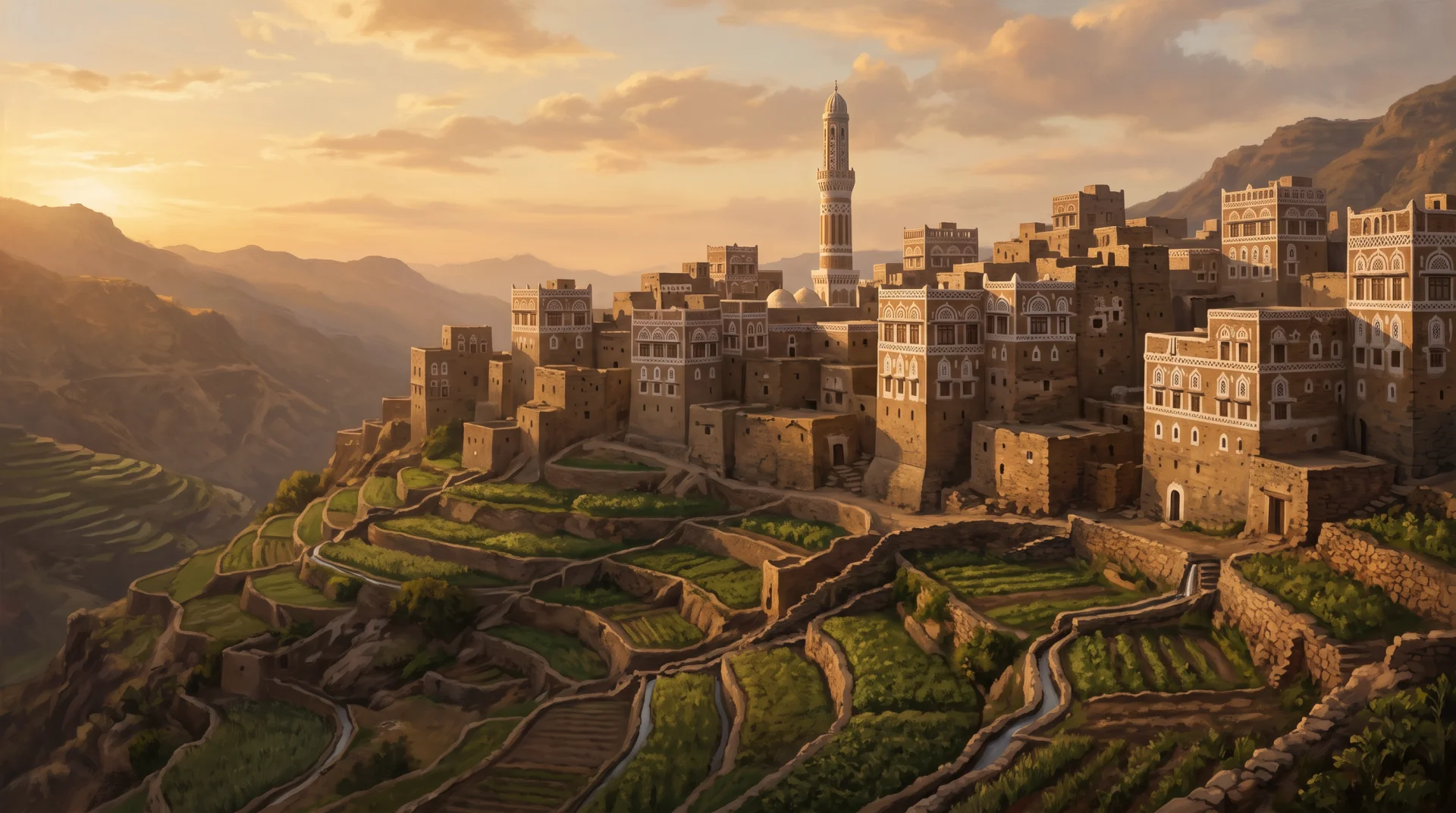
The chapter opens with al-Shawkani's call, "People of Yemen, accept the glad tidings!", and the words of the Messenger that the people of Yemen will appear before you like clouds, the best of those on earth. The Messenger of God singled out no land's people for praise as he did the people of Sham and Yemen, and he prayed often for blessing upon them. In the authentic hadith in al-Bukhari, Ibn Umar reports: "O God, bless us in our Sham and bless us in our Yemen." Al-Bukhari also reports from Abu Hurayra that the people of Yemen are softer in hearts and gentler in spirit, faith is Yemeni and wisdom is Yemeni.

Scene 2
Yemeni Character and a Land of Great Men
The author says he personally felt the meaning of this hadith through living among Yemeni youth in Europe, whose special quality of manners and gentleness is rarely found in others. This land produced for the Muslims men such as al-Tufayl ibn Amr al-Dawsi, Abu Hurayra, Abu Musa al-Ash'ari and Uways al-Qarani, the mujahideen who conquered Sham, Egypt and Iraq, and the Hadrami merchants who spread Islam in East Africa, Indonesia, Malaysia and all of Southeast Asia. It is the same land that produced the hero of the current story.
Scene 3
The Birth of al-Shawkani
In 1173 AH, corresponding to 1759 CE, a boy was born in the town of Hijrat Shawkan in the land of Khawlan in Yemen to a large Zaydi family, and his father named him Muhammad. He would be attributed to his town and known in history as Imam al-Shawkani, one of the most important scholars of Islam, after leaving humanity a book classed among the finest books of Islamic creed. He is the Imam, mujtahid, exegete and jurist Muhammad ibn Ali ibn Muhammad al-Shawkani al-San'ani al-Yamani, author of the marvelous book "Nayl al-Awtar, Sharh Muntaqa al-Akhbar".
Scene 4
A Pause at the Zaydi School
The author asks the reader's pardon again to stop before diving into the seas of al-Shawkani's life, to take a simple background on our brothers of the Zaydi school to which Imam al-Shawkani belonged, or rather the school he was born into before he left it and all schools to return to the religion of the early generations of the Companions and the Successors, before sects and schools were founded.
Scene 5
The Zaydis: Closer to the Sunnah
The Zaydis are a school among the Shia schools, but the author says they do not leave their daughters for temporary marriage, do not curse Abu Bakr and Umar, do not accuse the Prophet's wives of adultery, and, more important, do not betray. So they are closer to the Sunnah than to the Shia, though they hold that Ali ibn Abi Talib is better than Abu Bakr and Umar. This, he says, never takes them out of the circle of Islam or from being our brothers, though it does not mean they are right in believing Ali is better.

Scene 6
Zayd ibn Ali and the Rafidah
They are called Zaydis after Imam Zayd ibn Ali ibn al-Husayn ibn Ali ibn Abi Talib, imam of all the Shia in his time. A group of his followers asked his opinion of Abu Bakr and Umar and he invoked mercy upon them; they refused that and asked him to curse them, but the grandson of the Messenger refused to curse his grandfather's companions, so they rejected him and split off. That cursing group is what history named the Rafidah, because they rejected the opinion of Zayd. From them would later come the "Twelver" school, the majority of Shia today, while the Shia who did not betray Imam Zayd are the Zaydis centered in Yemen.
Scene 7
Al-Houthi and the Persian Plan
The author warns that in recent years Khomeini and his followers moved to revive their Persian Magian empire, of which Yemen was part under the Sassanids. Iran bribed a Zaydi leader, Husayn Badr al-Din al-Houthi, and took him to Qom to teach him cursing the noble Companions and accusing the Mother of the Believers Aisha of adultery. He returned to Yemen with Persian money to build armed militias in Saada and ignite sedition with Iranian weapons and audio tapes, paving the way for the Persians to return to Arab Yemen, while most of the victims would be Zaydi brothers who know nothing of the Persian plan to enslave the Arabs again.
Scene 8
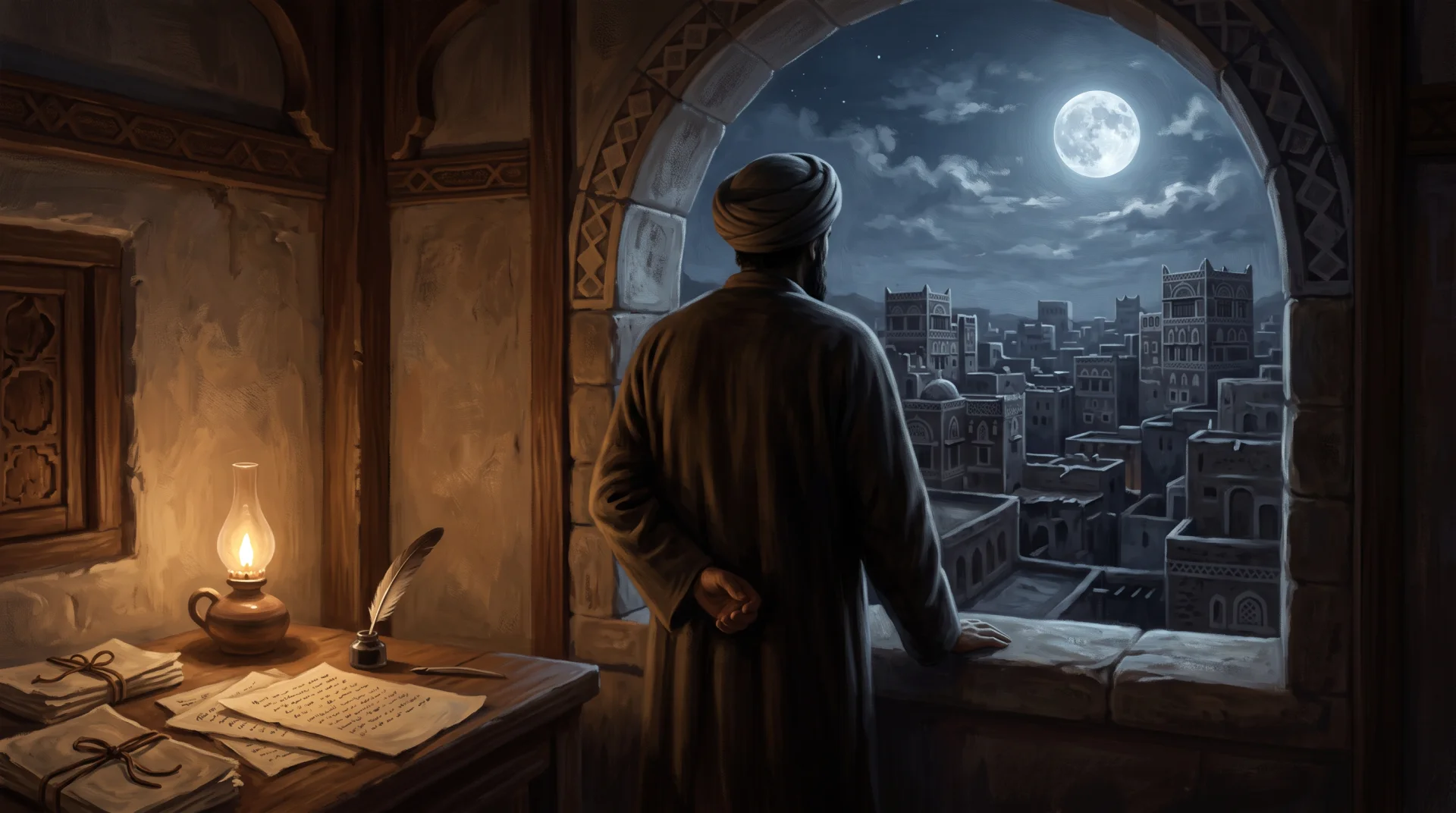
Al-Shawkani's Questions
Imam al-Shawkani, a master of the Zaydis, was the opposite of al-Houthi: he did not answer the Persian calls to return Arab Yemen to their control but answered the call of reason. He freed himself from the chains of imitation, fought the innovations spread around the graves of the righteous, and resisted anyone who tried to insult the Companions of Muhammad. He asked himself logical questions: which school did the Messenger of God follow? Was he Shia, Zaydi or Twelver? Was Umar a Maliki? Was Bilal a Hanafi? Were the Ansar Shafi'i, or on the school of Abu Hanifa al-Nu'man?

Scene 9
Returning to the Original Sources
Through these logical questions, al-Shawkani realized he should return to the original sources of Islam that existed before sects and schools appeared. He wrote "Nayl al-Awtar", in which he explains to Muslims the basis of the sound creed built on the Book and the Sunnah as the noble early generations understood them. God decreed acceptance for the book on earth and its news flew across India, Morocco, Egypt and Sham, and history immortalized Imam al-Shawkani in letters of gold after he freed himself from the slavery of blind imitation.
Scene 10
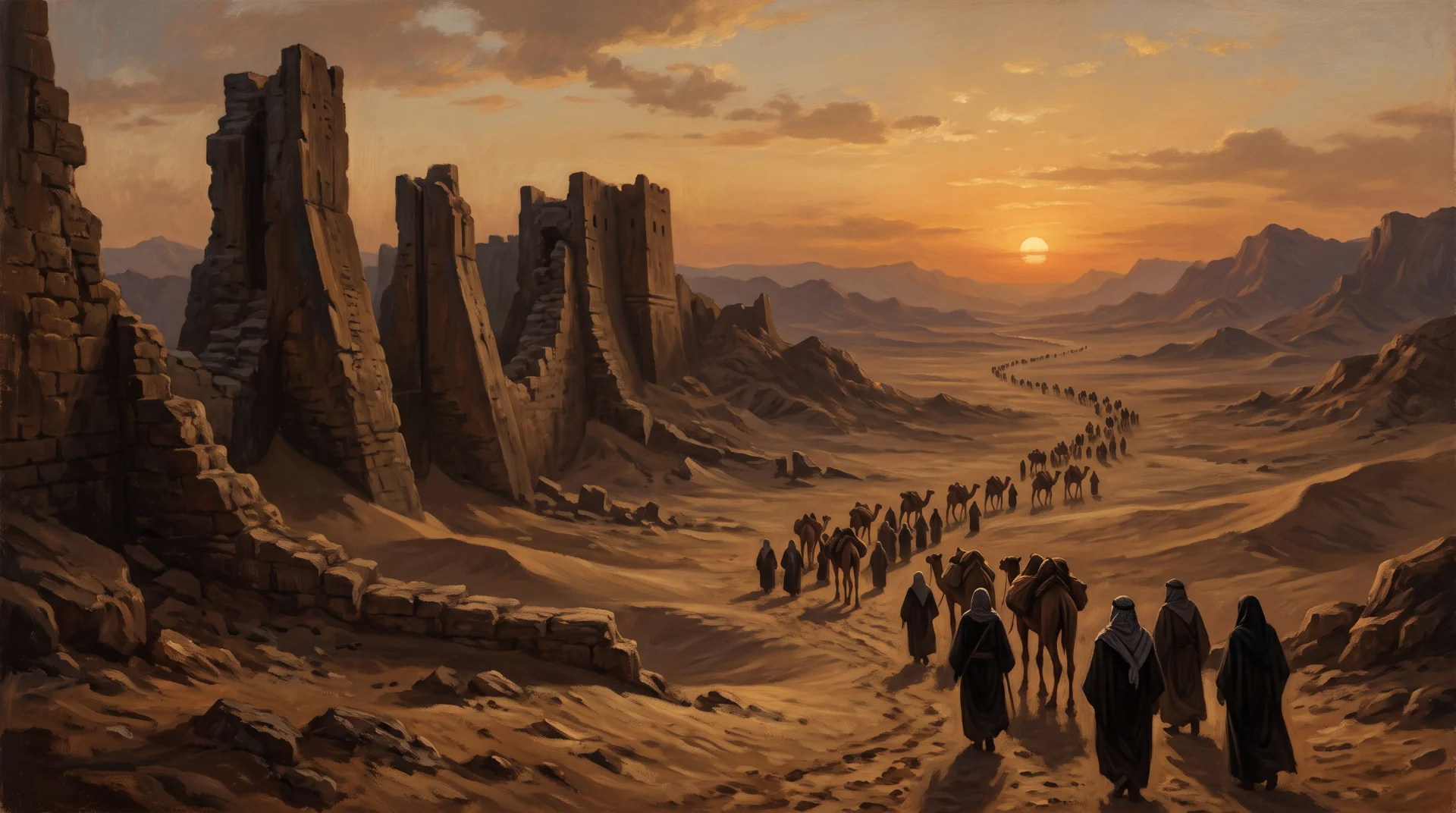
The Azd Migrate After the Marib Dam
From Yemen itself, the author says, we ride a pure Arabian horse to accompany the Yemeni tribe of Azd as it migrates north after the collapse of the famous Marib Dam. Some men of this Qahtani tribe settled a town in the north of the Hijaz called Yathrib, and those pure Arabs would, years later, change the history of humanity forever.
These are English scene notes. The full chapter text, as the author wrote it, is in the app.