


Scene 1
The Ansar and Self-Sacrifice
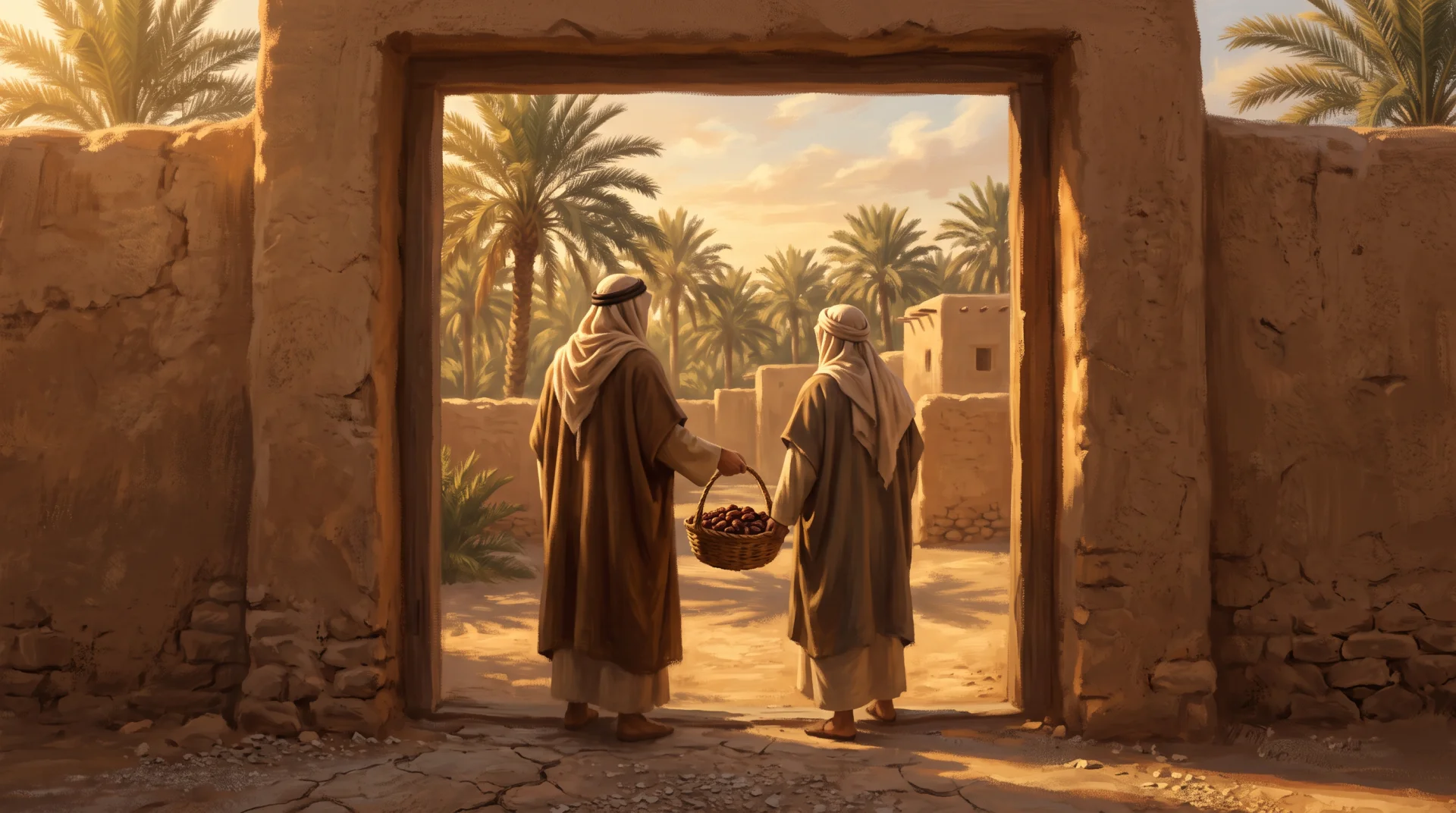
The chapter opens with the words that none loves the Ansar but a believer and none hates them but a hypocrite, and Sa'd ibn Mu'adh's words to the Messenger: by the One who sent you with the truth, if you took us into this sea and plunged in, we would plunge in with you, and not one of us would stay behind. The author says that despite mentioning the Companions at the start of the book, he saw it wrong to write about the great of the Muslim ummah without this rare group, an exceptional case among humans, distinguished from all the children of Adam by ithar: giving others everything you have while you are in the direst need of it.
Scene 2
The Verse of Ithar
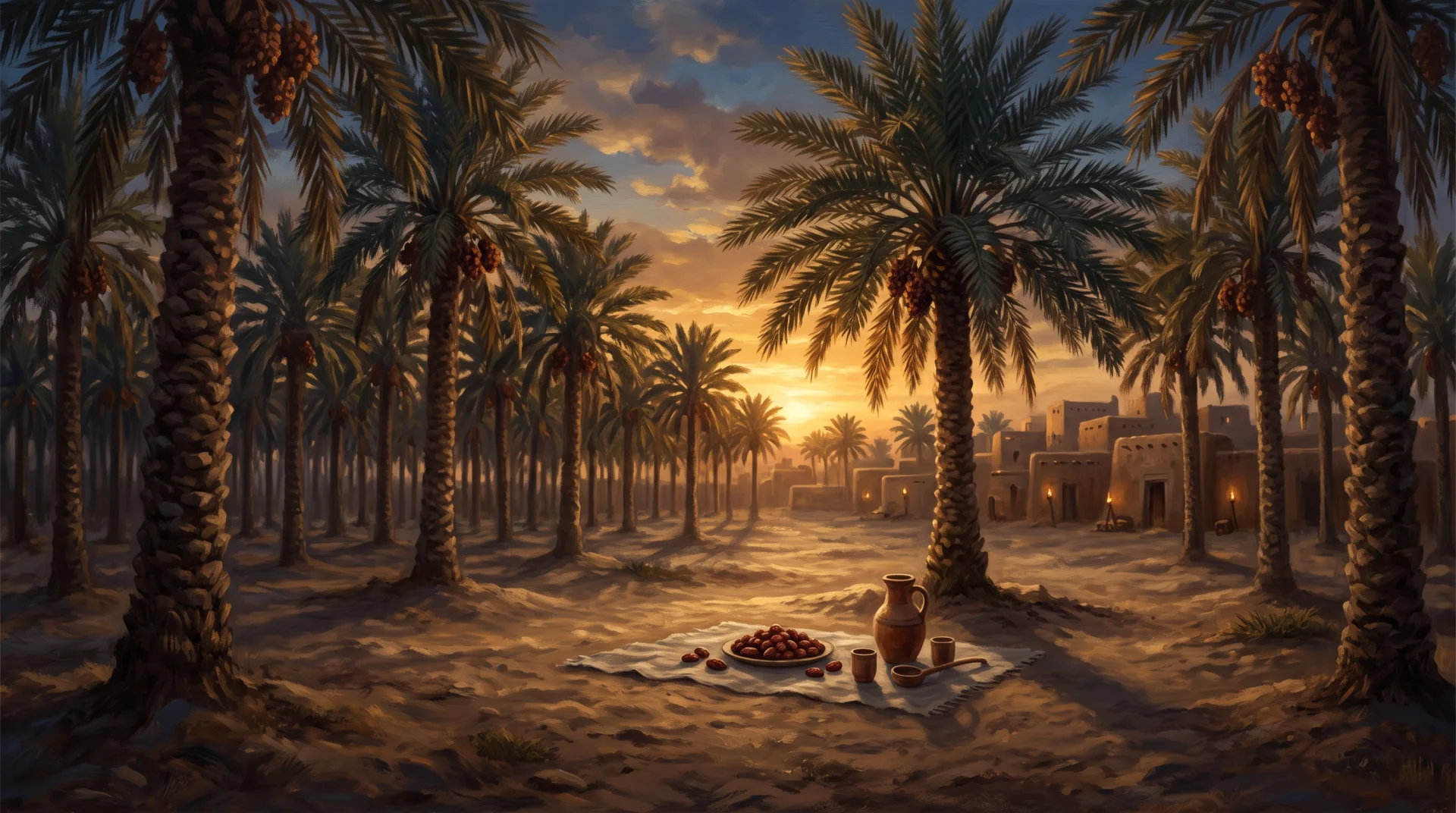
The author invites the reader to hear God explain this wondrous trait of the Ansar: those who had settled in the home and in faith before them love those who emigrated to them and find no need in their hearts for what the emigrants were given, and prefer them over themselves even if they are in need (al-Hashr 9). Khasasah means poverty, and the truth many of us miss is that the Ansar were extremely poor, though some thought them rich because of their generous gifts to their brothers the Muhajirun. The secret of the Ansar's poverty, he says, is that they were originally emigrants.
Scene 3
The Marib Dam and the Flood of al-Arim
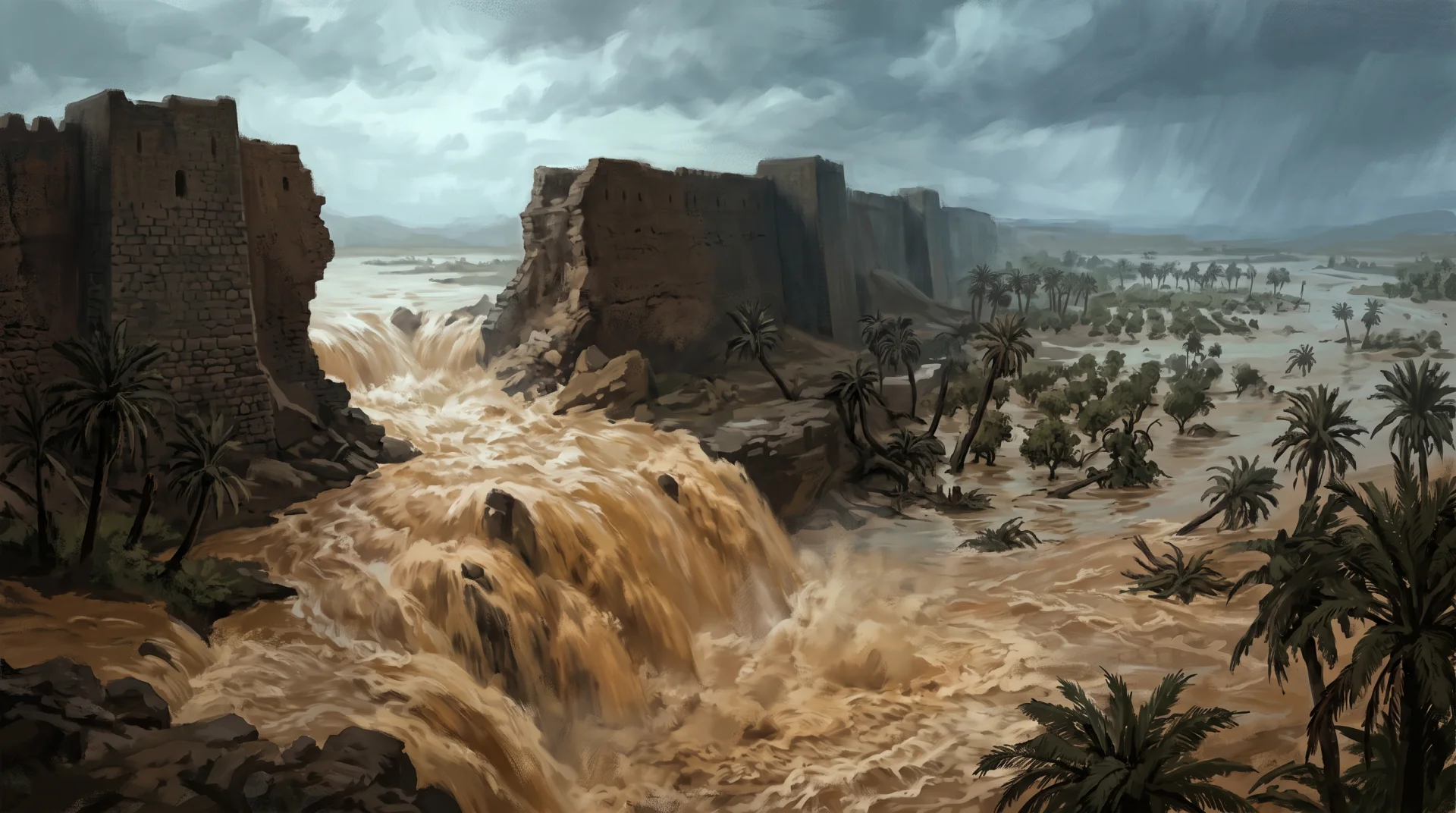
The Ansar are part of the Yemeni tribe of Azd, which lived in "Happy Yemen" enjoying the economic prosperity the Marib Dam provided. When the dam collapsed in 542 CE, Yemen entered a long period of drought and poverty, for God sent a flood called "Sayl al-Arim", mentioned in the Quran (Saba 16). All the orchards, vineyards and gardens the Sabaeans had tended for centuries perished, and they suffered a long stagnation after which they never recovered, so the Yemeni tribes migrated when the means of life ran out, among them the tribe of Azd.
Scene 4
The Lineage of Azd and Its Branches
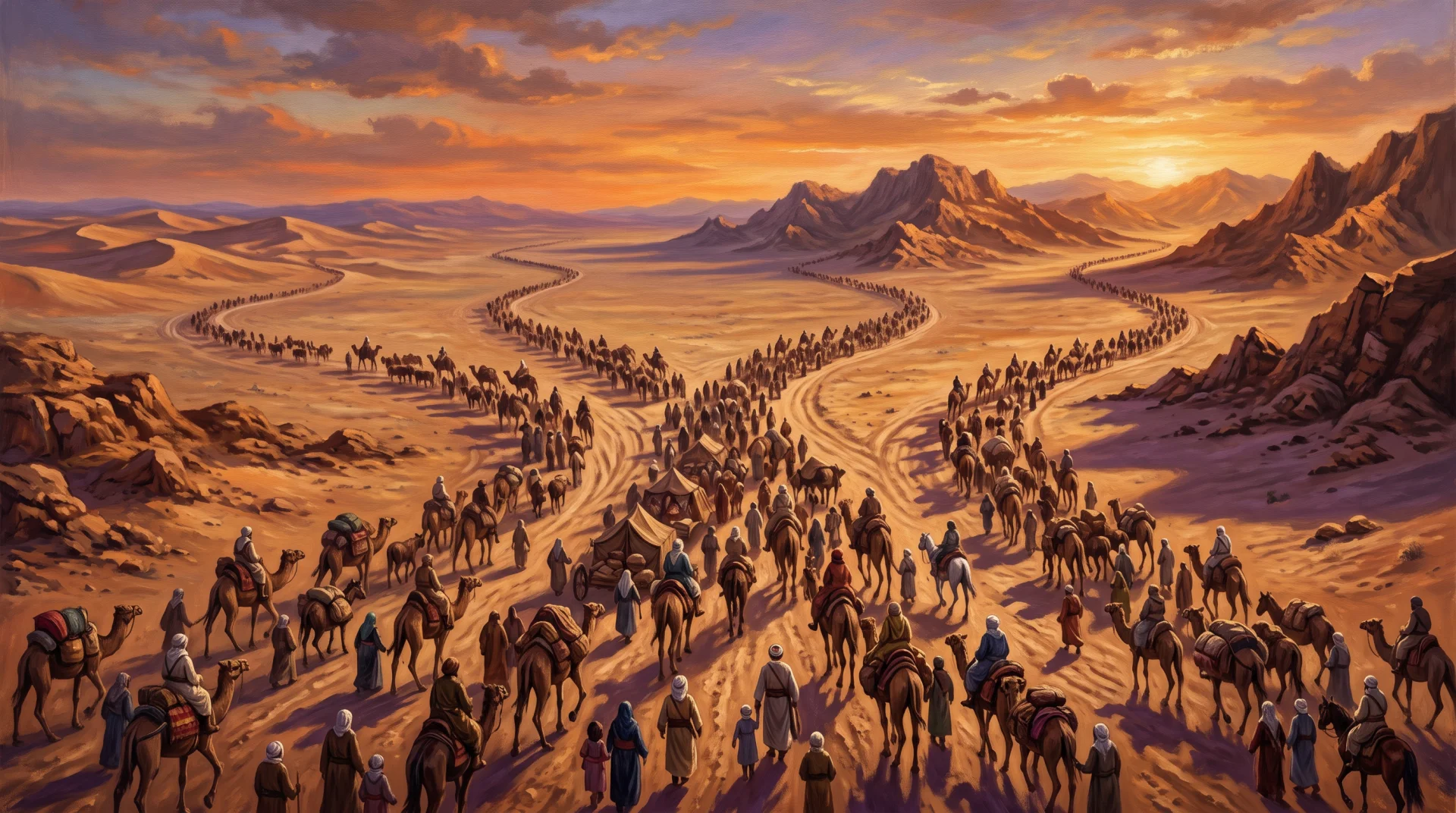
The author traces the Azd, al-Azd ibn al-Ghawth, back through Qahtan and Abir (who is Hud, peace be upon him) and Sam to Noah. The tribe migrated north and split: one branch, the Ghassanids, settled southern Syria and northern Jordan; another stayed in Mecca and, lagging on the road, was named Khuza'ah; one settled the land of Ghamid; Amir ibn Hawalah settled the fertile Wadi Turbah, from which the author says his own ancestors the Turabin are named. The most important section settled Yathrib and divided into two tribes, the Aws and the Khazraj, who would support God and His Messenger and be called by a new name that history would remember: the Ansar.
Scene 5
The First Factor: the Jews
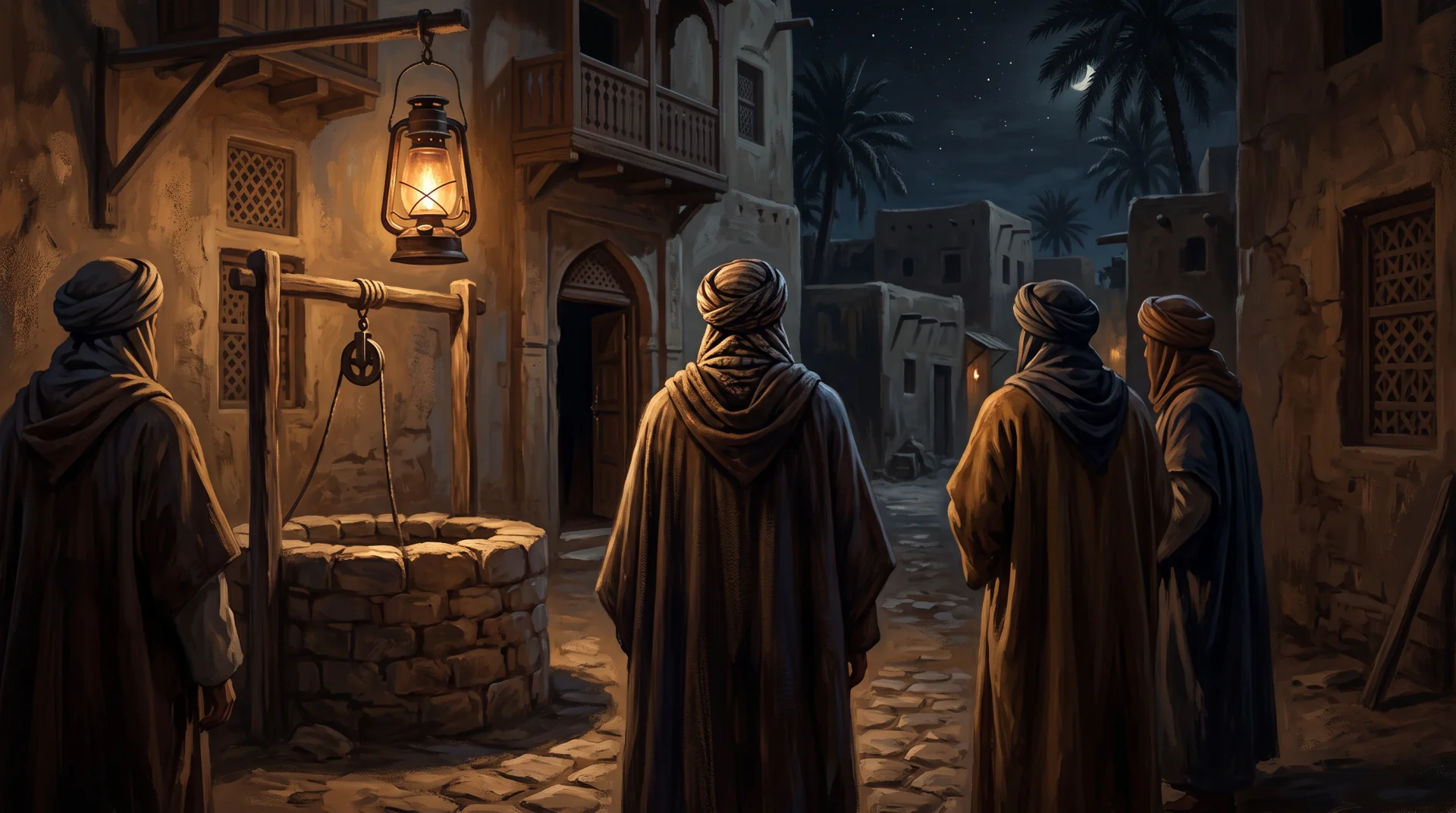
At a time when the greatest tribes refused to support the Messenger even after knowing his call was true, as the tribe of Shayban did, the Aws and Khazraj offered him shelter and support in their city with astonishing speed. The author lists five factors, the first being the Jews, who threatened the Aws and Khazraj that they would kill them as 'Ad and Iram were killed when the prophet of the end of time came whom the Jews would follow. When the Messenger met a group of the Aws and Khazraj in Mecca and called them to Islam, they said to one another that this was the prophet the Jews threaten them with, and they must not let them reach him first, and they declared Islam at once.
Scene 6
Isaiah and the Oasis of Tayma
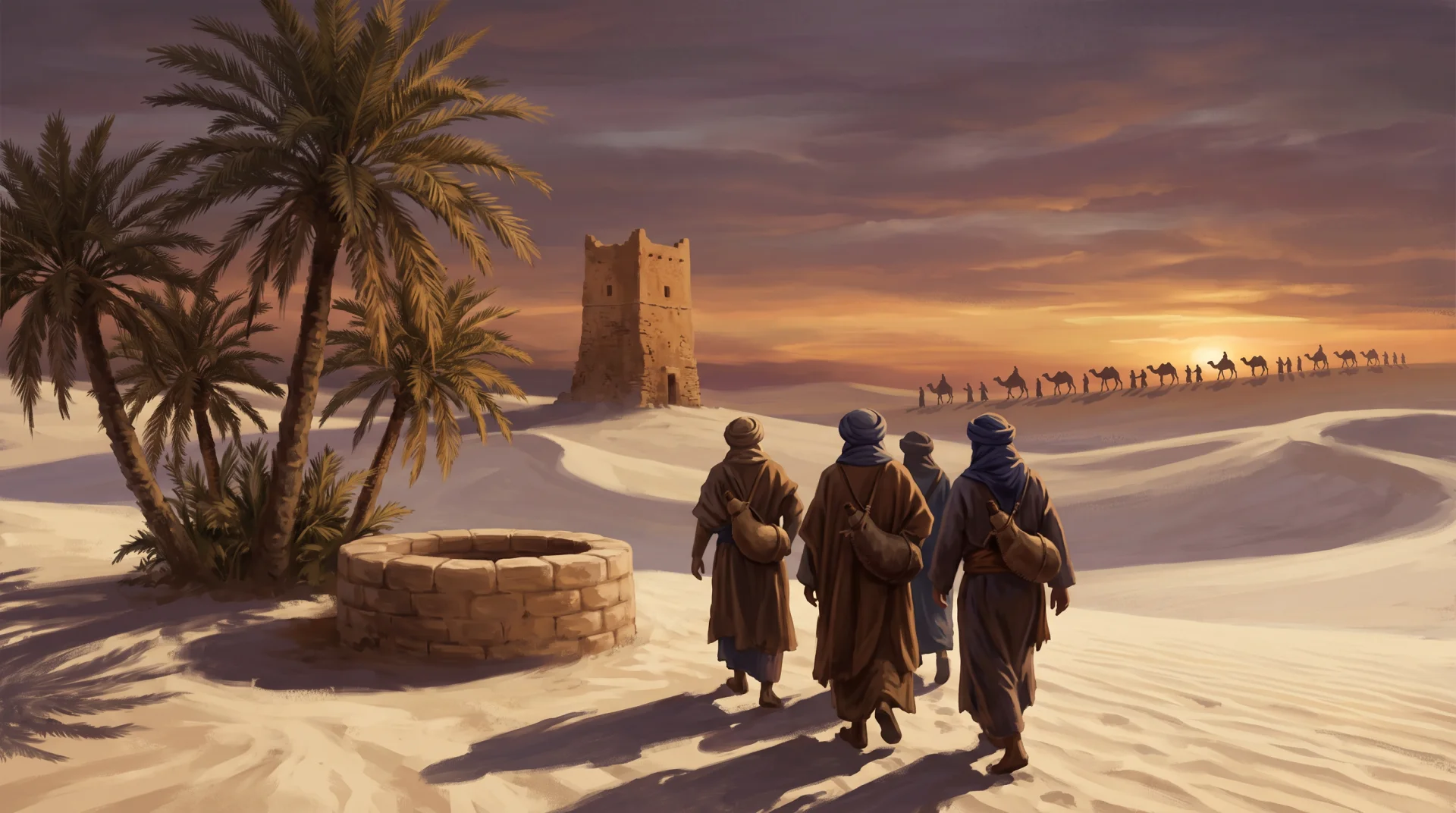
The author asks why the Jews settled Yathrib and nearby towns like Khaybar and Tayma, and answers that they awaited the prophet of the end of time there because they knew he would migrate to it. In the story of Salman al-Farisi the man of Amorium told him to migrate to Yathrib without naming it. In the Bible, in Isaiah chapter 21, he found an oracle concerning Arabia about bringing water to the thirsty and fleeing from swords, ending that within a year all the glory of Kedar will fail. He sees in it the story of the Hijra, Kedar being an ancestor of Quraysh, and a war "within a year" after the Hijra, the period after which the great Battle of Badr took place.
Scene 7
The Day of Bu'ath and the Yemeni Roots
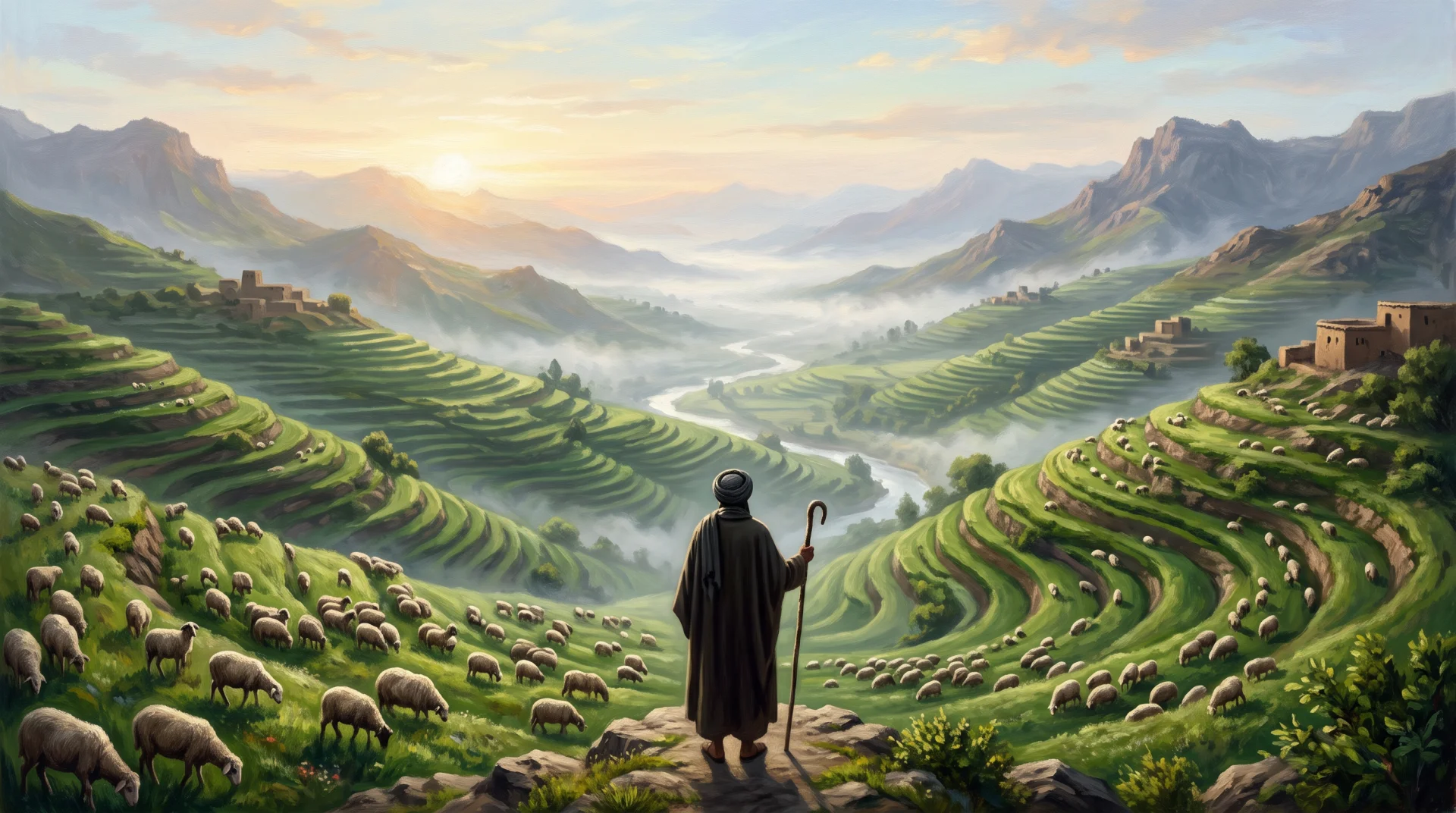
The second factor was the Day of Bu'ath, a fierce battle between the cousins Aws and Khazraj, by the plot of the Jews of Yathrib, five years before Islam, in which their greatest leaders were killed, so they felt they needed a wise man to unite their ranks again, and the Messenger was like a savior. The third was the Yemeni roots: Yemenis are softer in heart and are shepherds of sheep, while the Adnani Arabs of Quraysh are camel herders, and tending sheep needs calm and long reflection, which is why all the prophets tended sheep, as Moses said, "and I beat down leaves with it for my sheep". The hadith says that faith is Yemeni, and that pride and arrogance are among camel owners, tranquility and dignity among the people of sheep.
Scene 8
Mus'ab ibn Umayr and Sa'd ibn Mu'adh
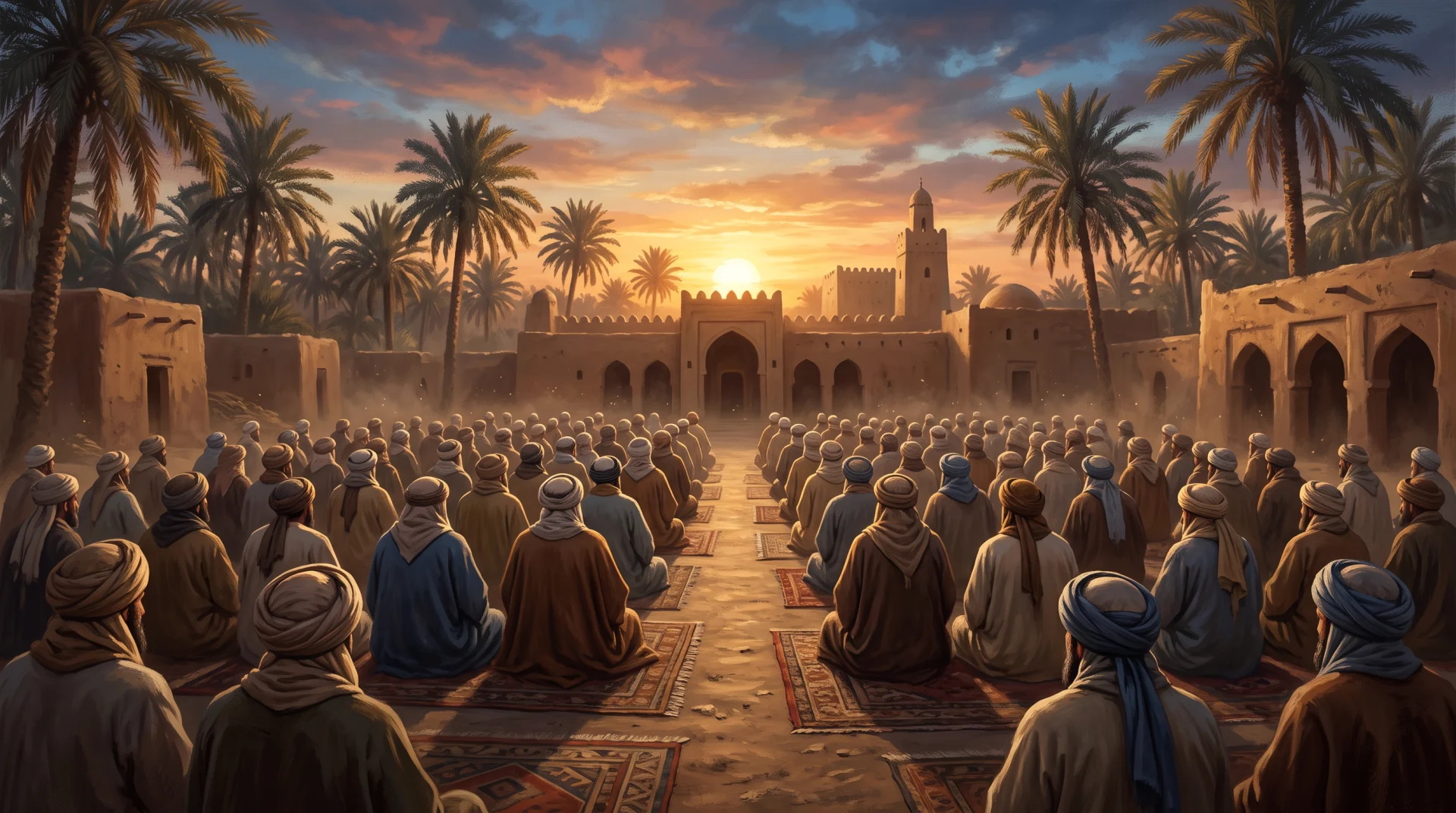
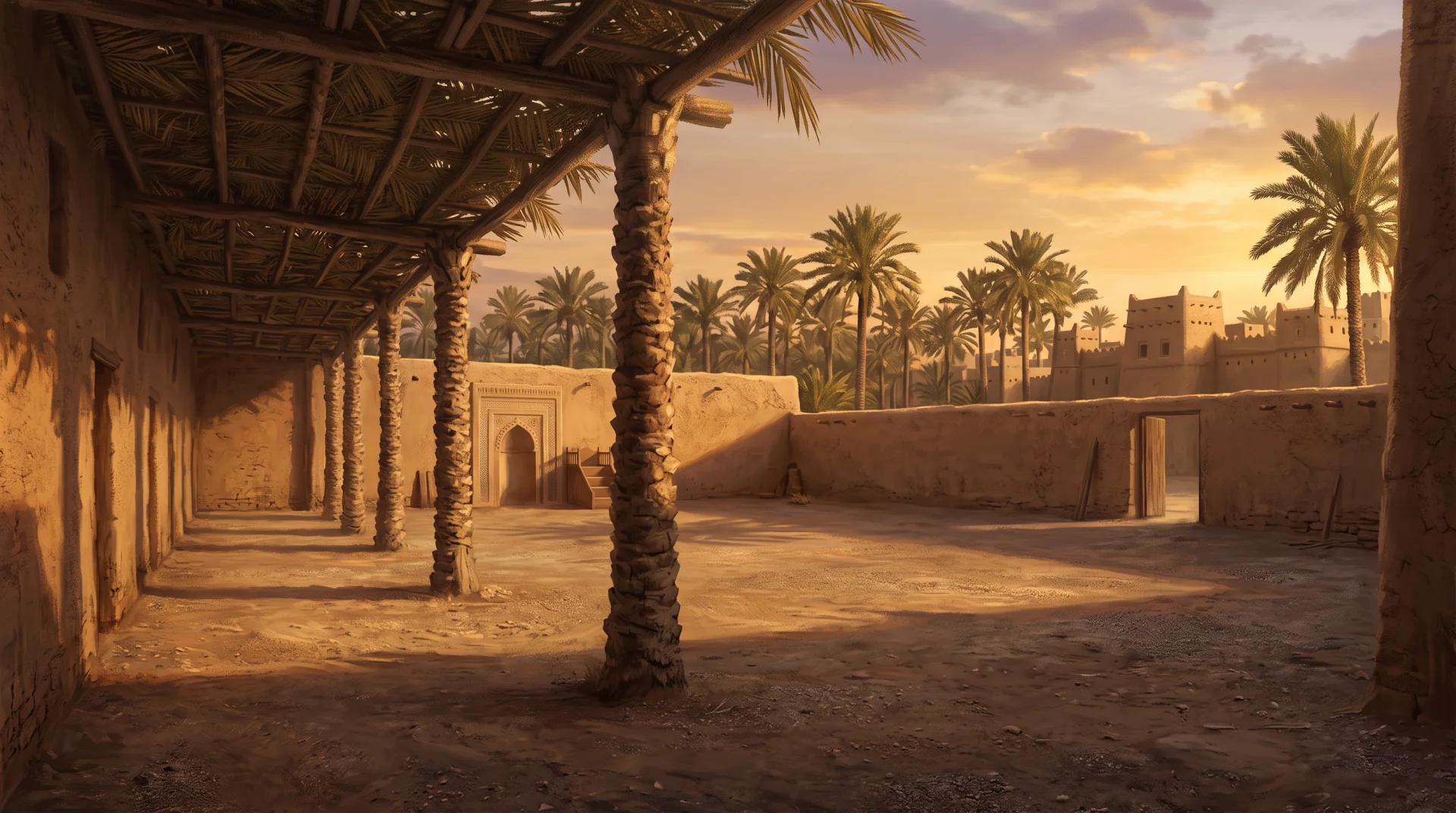
The fourth factor was the giant Mus'ab ibn Umayr, the first ambassador in Islam, whom the Messenger sent with the Ansar to teach them their religion and call their people. In just one year, most of his mission, the greatest leaders of the Ansar embraced Islam at his hands through his gentle style and distinguished moral refinement. The fifth was the hero Sa'd ibn Mu'adh, master of the Aws, who after embracing Islam gathered his people and declared himself free of them if they did not become Muslim at once, and they all did out of love for him. He was martyred after al-Ahzab because of the treachery of Banu Qurayzah; Abu Bakr and Umar wept for him until their weeping was heard in the streets of Mecca, as the book prints it, and the Throne of the Merciful shook at his death.
Scene 9
They Gave Everything and Took Nothing
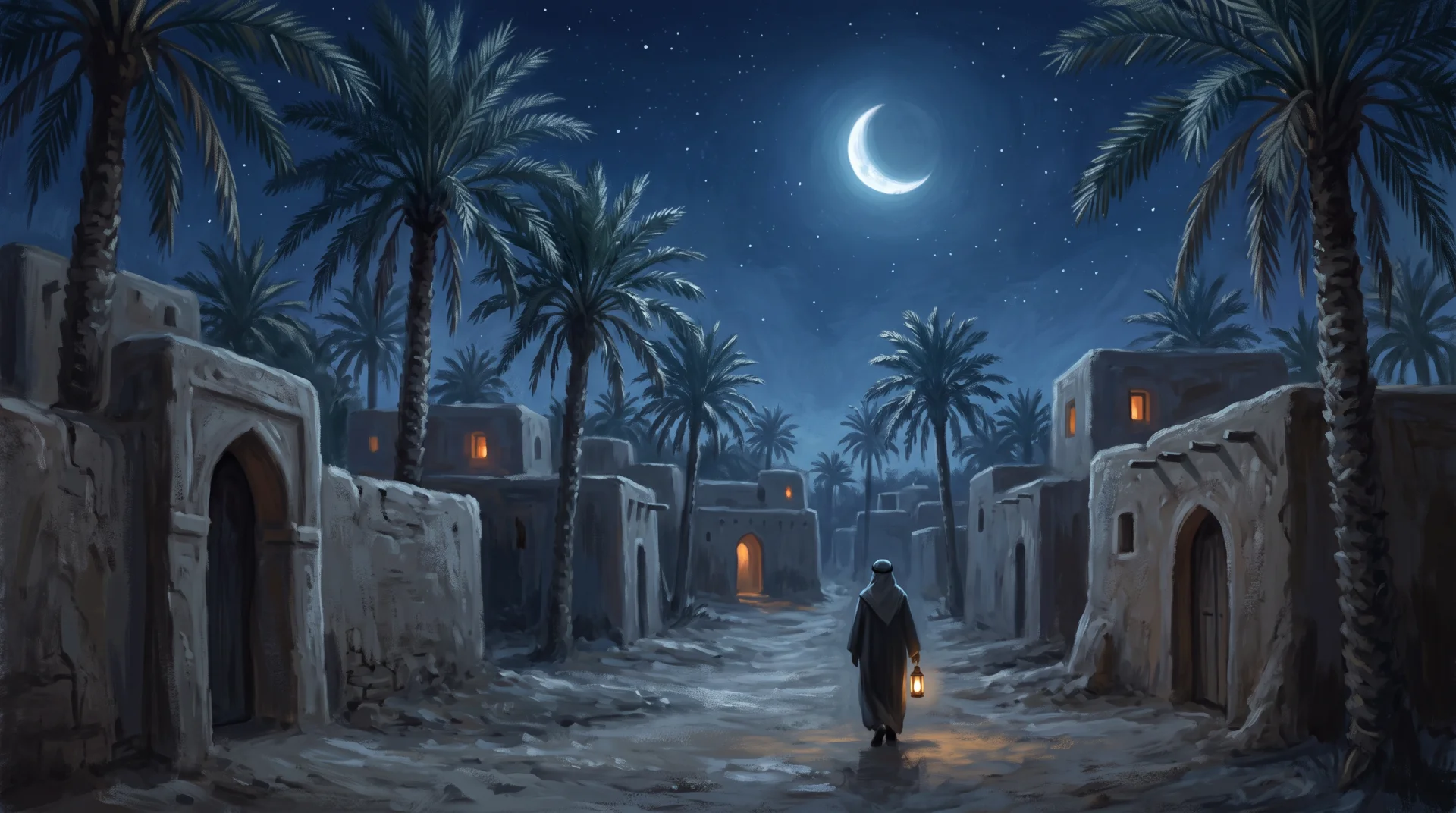
The author says this was a brief glimpse of a group unmatched in human history, a group that gives and does not take. The Ansar were poor before Islam and stayed poor after it. For all they gave Islam, history never records that they asked for a single post in any Islamic state; no Ansari became caliph or even minister, though Medina, the capital of the Rightly Guided Caliphate, is their city and Abu Bakr, Umar, Uthman, Ali and Muhammad himself were refugees with them. He asks whether any people in history made the refugees among them rulers over them, and answers: none but the Ansar of Muhammad.
Scene 10
May God Reward You, O Ansar
The author thanks the Ansar with the Messenger's words, "O God, forgive the Ansar, the sons of the Ansar, and the sons of the sons of the Ansar", and calls on the youth of Islam to honor the Ansar of their Prophet and the Companions of Muhammad. He says it is time to silence the tongues of "the unclean dogs of Iran" who attack the honor of the Companions morning and evening, and to support the Ansar, who supported Muhammad with their souls, with our tongues and pens: "and God is able to give them victory". He ends by turning to a unique Ansari most of us have never heard of, whose story and heroism are legendary: the commander of the Muhammadan commando forces.
These are English scene notes. The full chapter text, as the author wrote it, is in the app.