


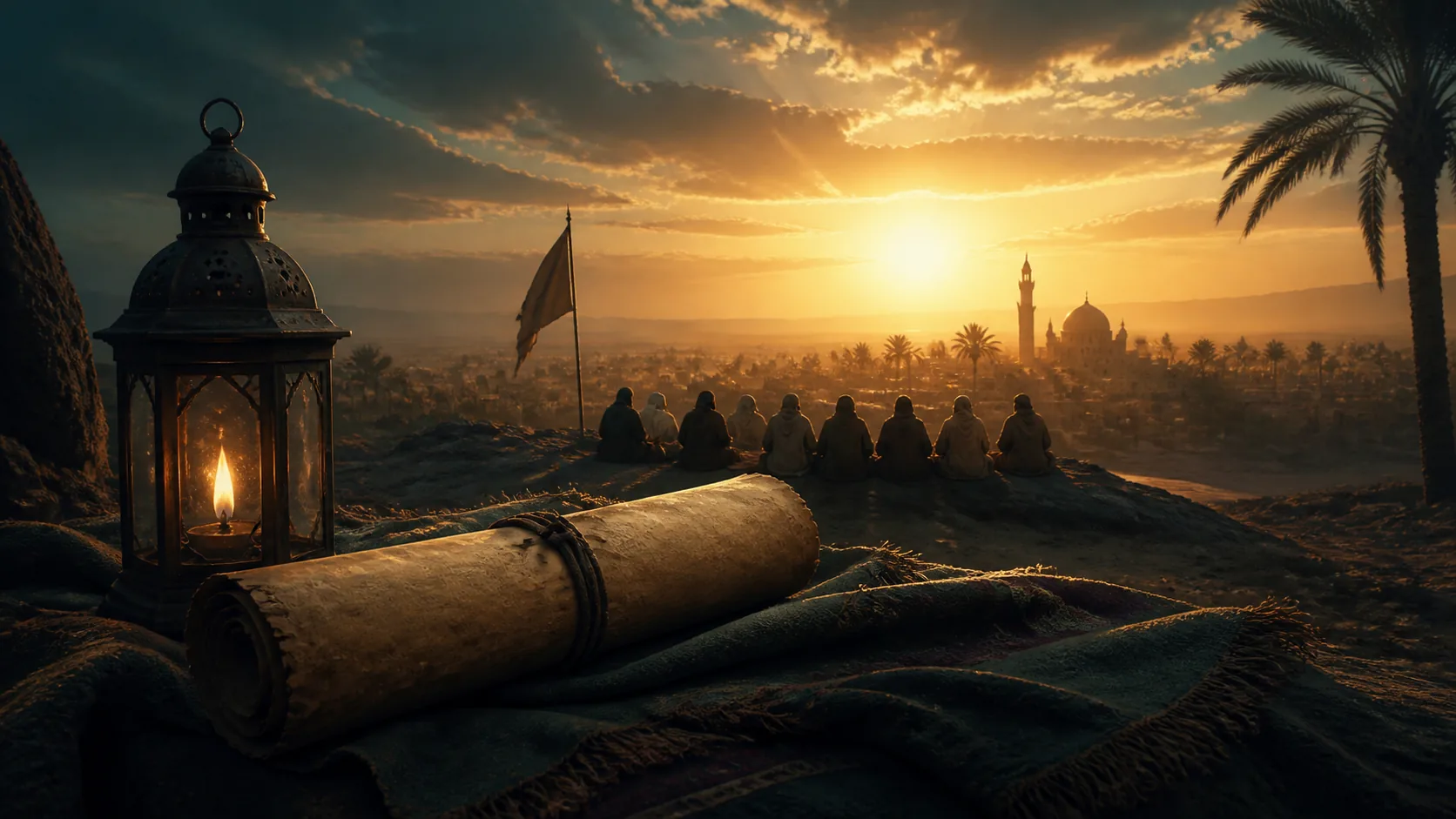
Scene 1
The First Call and the Companions' Pledge
The chapter on the Companions opens with the Quranic words "Muhammad is the Messenger of God, and those with him". It then quotes al-Miqdad ibn Amr's pledge to the Prophet ﷺ: unlike the Israelites who told Moses to go and fight with his Lord while they sat, the Companions would fight alongside him.
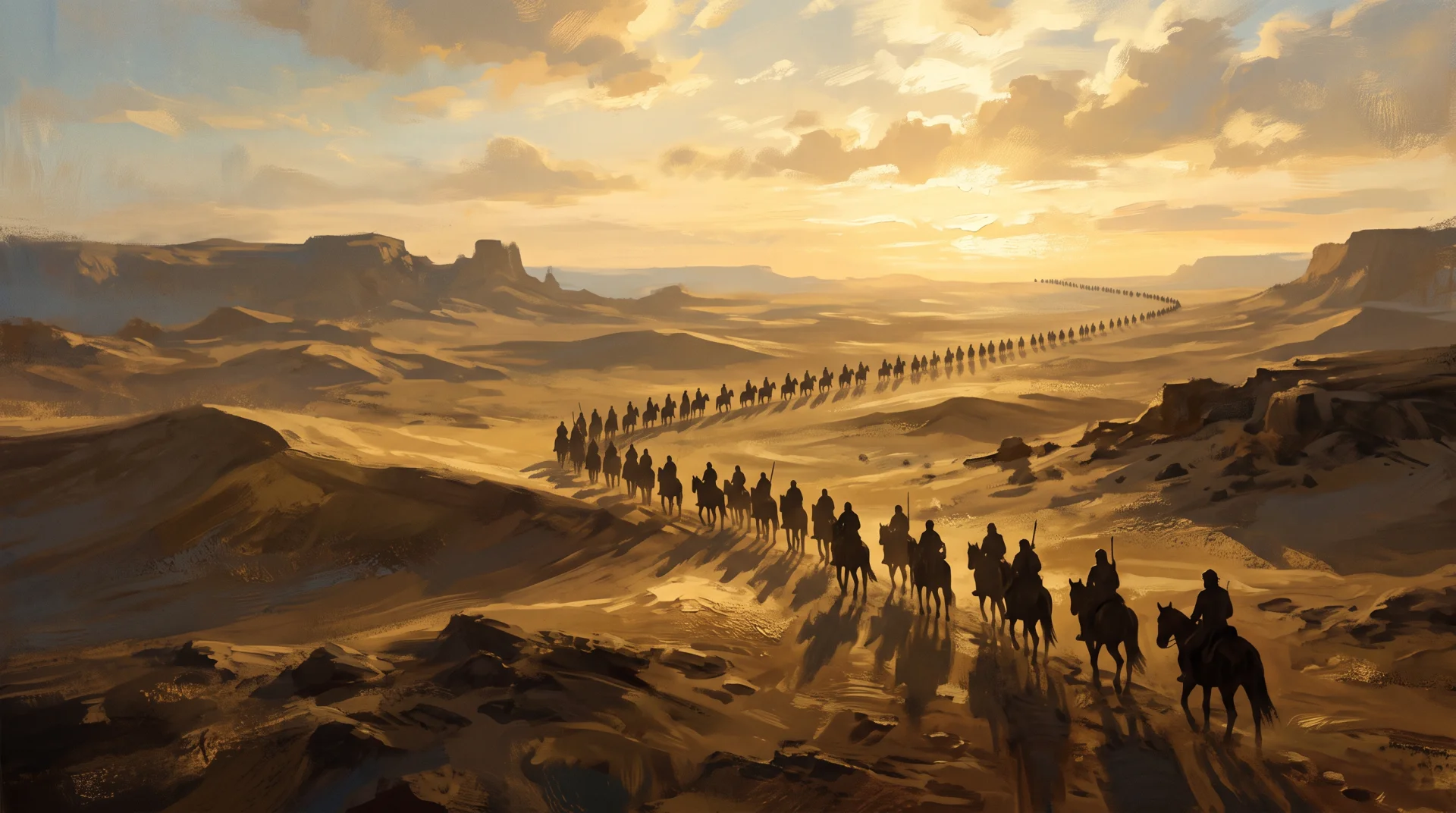
Scene 2
A Whole Generation of Greats in a Single Nation
It is not strange for one great man to arise in a nation, as Genghis Khan, Alexander, Bismarck and Garibaldi did. What is unique, the author says, is an entire generation of greats appearing at once, through whom God changed the whole earth until the Day of Resurrection: the Companions of Muhammad ﷺ.
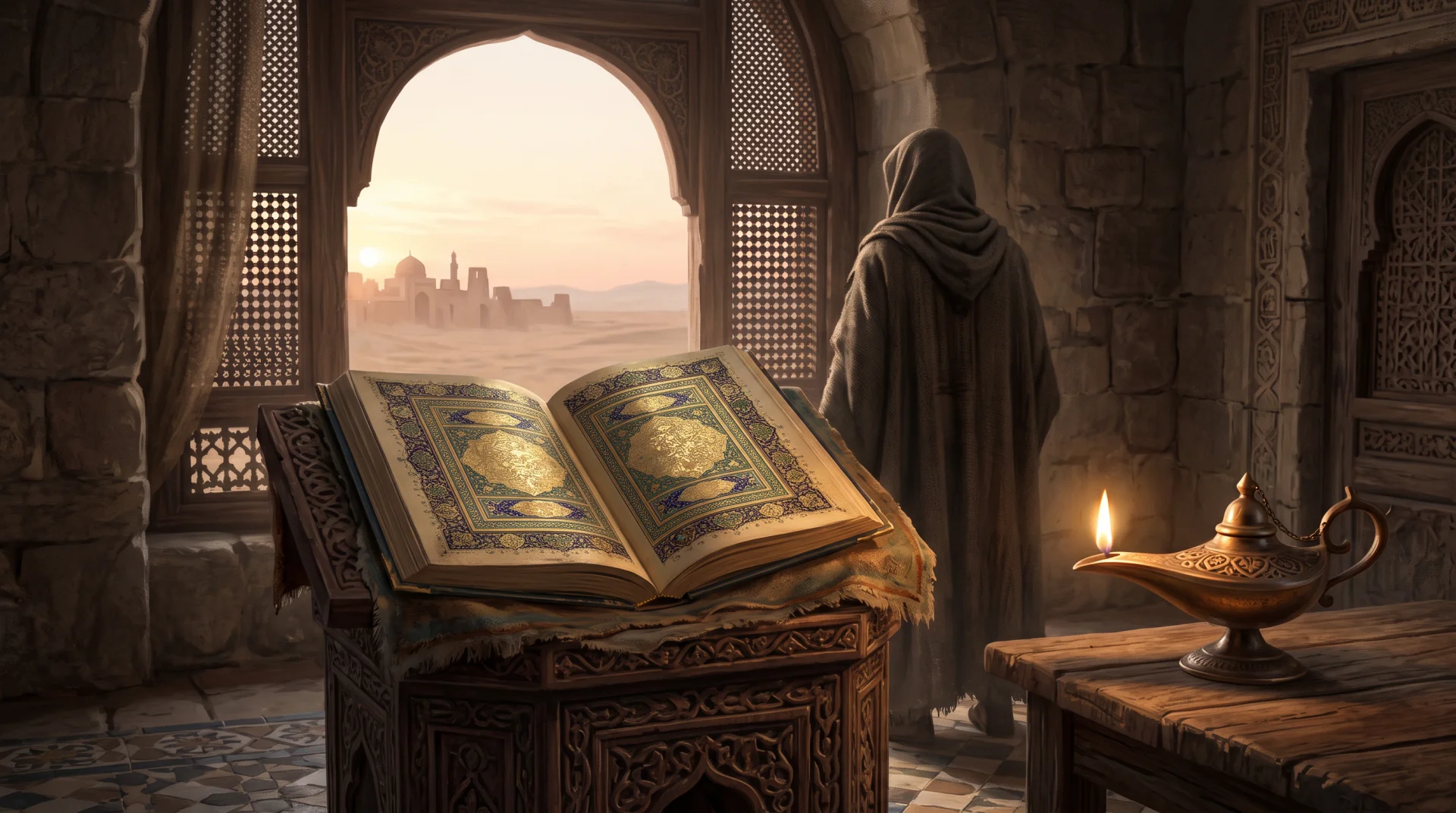
Scene 3
Defining a Companion and the All-Encompassing Verse
A Companion is anyone who met the Prophet ﷺ as a Muslim and died as one. God describes them in a verse of Surat al-Fath which, the author notes with wonder, is the only verse in the Quran containing every letter of the Arabic alphabet; he then quotes verse 29 in full.

Scene 4
The Seedling That Grew Strong
The author unpacks the verse's image: a seedling sends out shoots that surround and strengthen it until it stands tall, delighting the sowers and enraging disbelievers. The Prophet ﷺ is the seedling and the Companions the supporting shoots. Whoever harbours resentment toward any Companion, he warns, falls under the verse's words about those enraged by them.
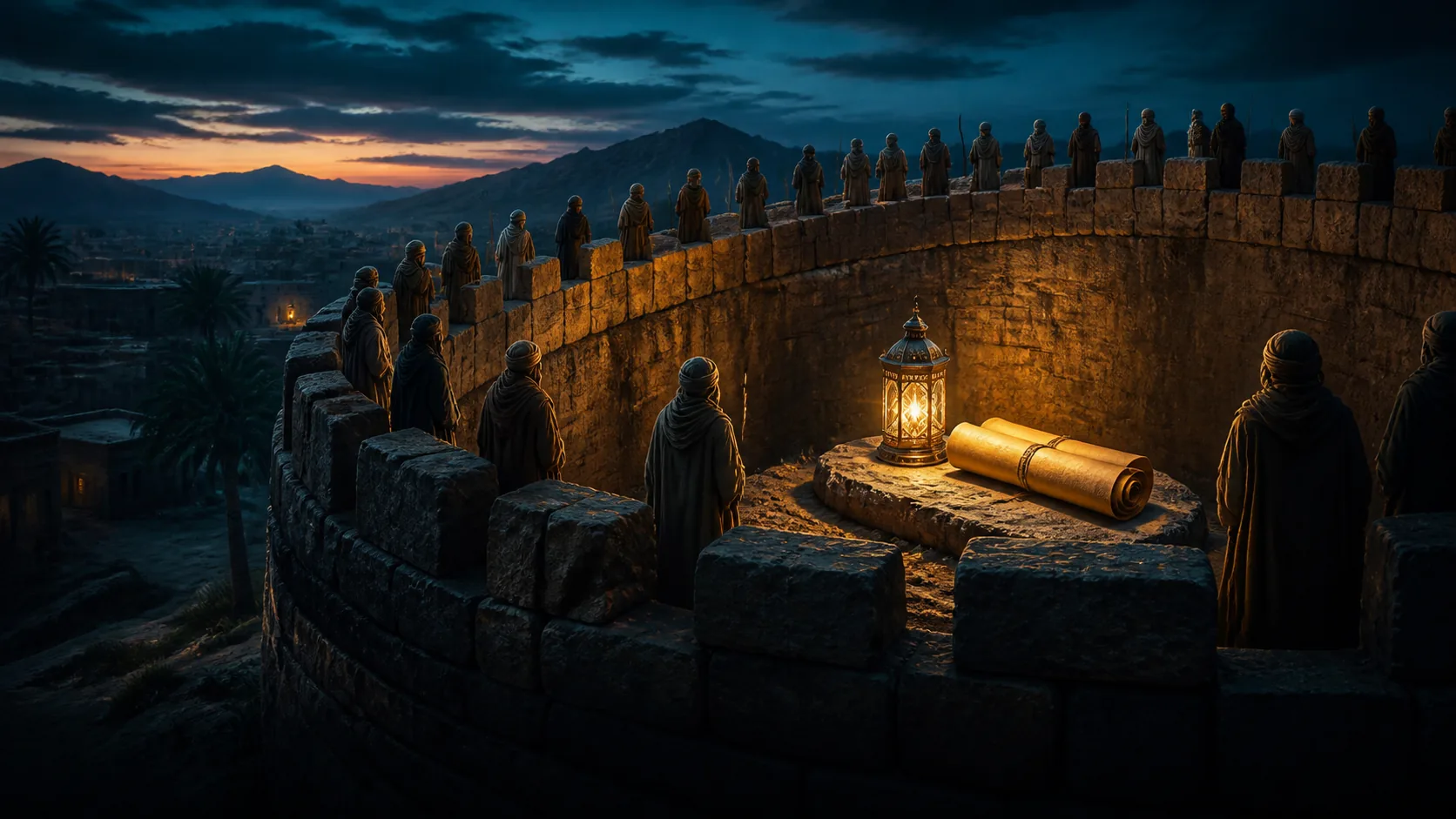
Scene 5
The Wall That Protects the Message
It is now clear, the book says, why media campaigns are waged against the Companions of the Prophet ﷺ: they are the solid wall surrounding the heart of the structure, the Messenger of Allah himself. If these invaders destroy that wall, the way opens to attack the heart. If we leave the Orientalists and the hypocrites with them to attack and cast doubt on the Companions, the assault will soon reach the Prophet ﷺ, for the invaders' first target is Muhammad, the Messenger of Allah.
Scene 6
Guarding the Transmission and Defending the Companions
Attacking any Companion endangers Islam, since they transmitted the Quran and the Sunnah; doubting the transmitter means doubting what was transmitted. The author argues that defending them is defending Islam itself, as they defended the Prophet ﷺ with their lives, and says three factors shaped each of them into a great figure.
Scene 7
Divine Selection and the Meeting of Paths
The first factor is divine selection: God chose helpers to complete the Prophet's ﷺ mission and carry it on unaltered. The author sees this in the Aws and Khazraj, who migrated from Yemen to Yathrib after the Marib dam collapsed, and in Salman al-Farisi, whom bandits carried against his will to Yathrib itself.
Scene 8
Muhammad's Training and the School of Revelation
The second factor is the Prophet's ﷺ own training. The Companions learned directly from humanity's first teacher and drank from the spring while it was pure. Having lived through the revelation and known its occasions, their understanding and application of the Quran and Sunnah is the correct one, which later Muslims are obliged to follow.

Scene 9
The Inner Struggle Before the Sword
The third factor is inner struggle. To young people who demand that the door of jihad be opened, the author says each should first ask whether he prays Fajr on time, rises at night or can even give up smoking. Bearing arms is the end of the road, not its beginning; steel hardens only in fire.
Scene 10
A Generation Forged in Fire
Musab ibn Umayr's skin grew rough in Mecca before he carried the banner at Uhud. The Companions needed one year in Medina to win at Badr but thirteen in Mecca to become fearless; night prayer was obligatory and fighting forbidden throughout. The author then asks which battalion of Companions was the greatest in history.
These are English scene notes. The full chapter text, as the author wrote it, is in the app.