


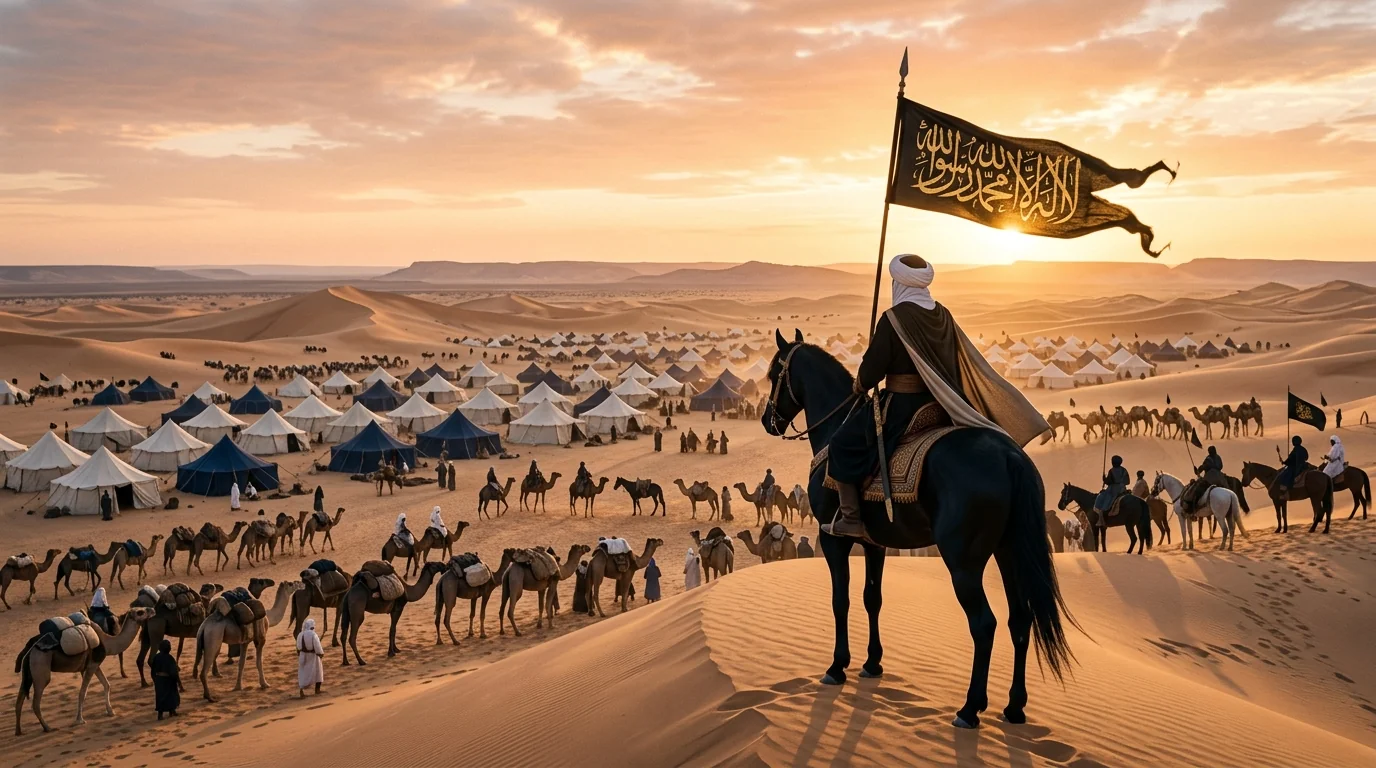
Scene 1
The Almoravid Banner Passes to the Lamtuna
The Lamtuna joined Ibn Yasin through Yahya ibn Omar, who died days later. His brother Abu Bakr ibn Omar became chief of the tribe, then leader of the Almoravids after Ibn Yasin's death. He strove across Mauritania and Senegal to return the Berber tribes to true Islam, and the movement became a major force in West Africa.
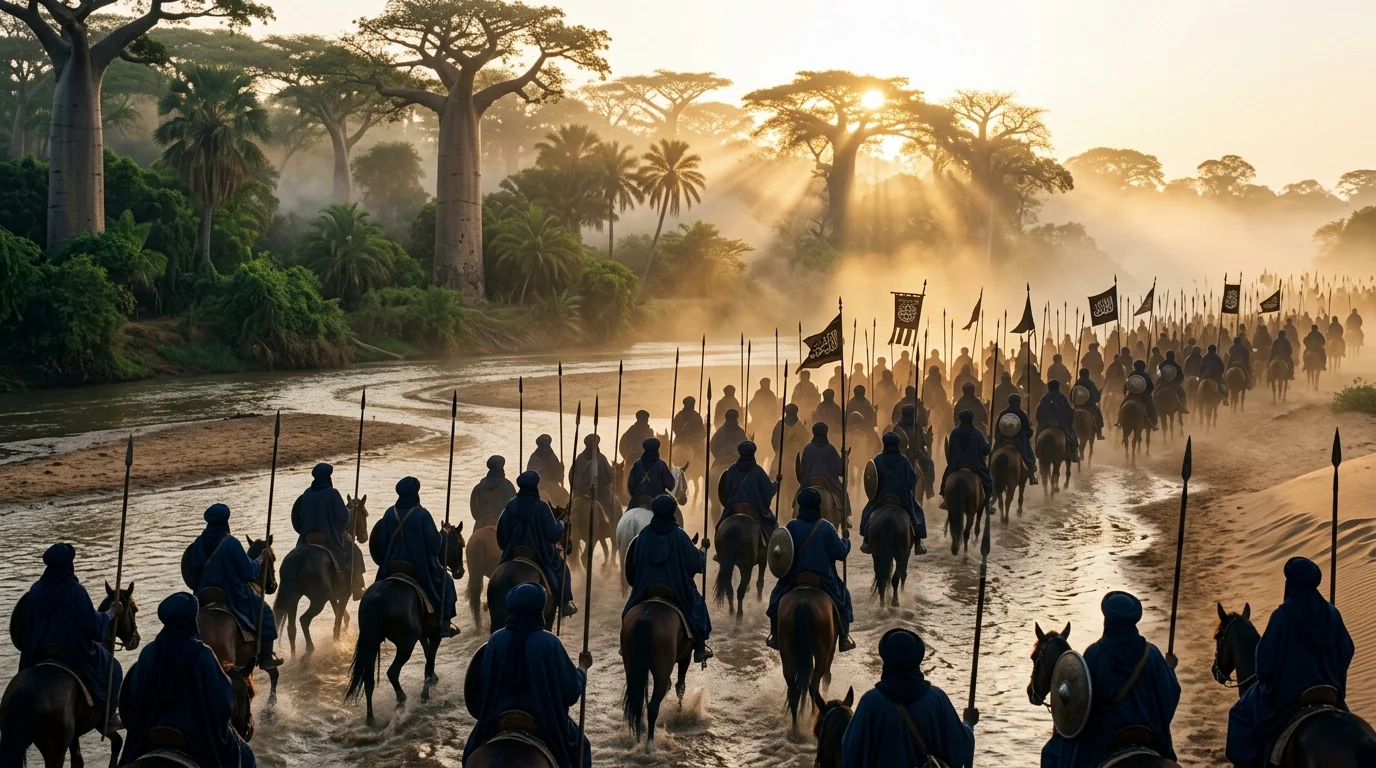
Scene 2
Peace in Senegal and the March into the Interior
Two years into his rule, in 453 AH, Abu Bakr took half the Almoravid cavalry to reconcile two Muslim groups in southern Senegal, leaving the young state to a cousin. He found people there still worshipping trees and idols and invited them to Islam. His love of the call exceeded his love of the throne, so he pressed deeper.
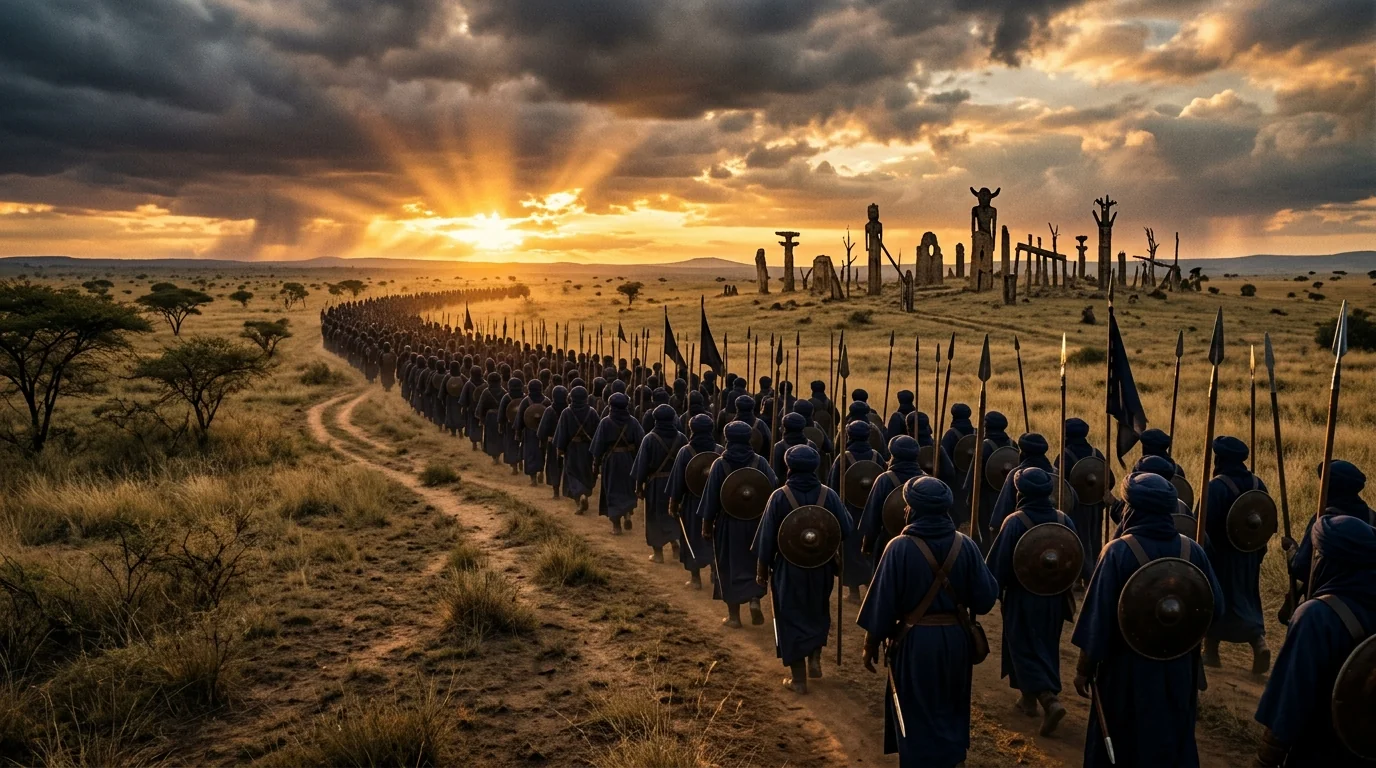
Scene 3
Battalions of Tawhid and the Fall of Pagan Thrones
With seven thousand Almoravids he fought pagan rulers who barred preachers from reaching the oppressed, and Africans entered the faith in throngs. Forgetting the throne he had left to his cousin, he carried Islam to whole countries; the author lists twenty, among them Senegal, Nigeria, Ghana, Mali, Niger, Chad, Guinea and Congo.
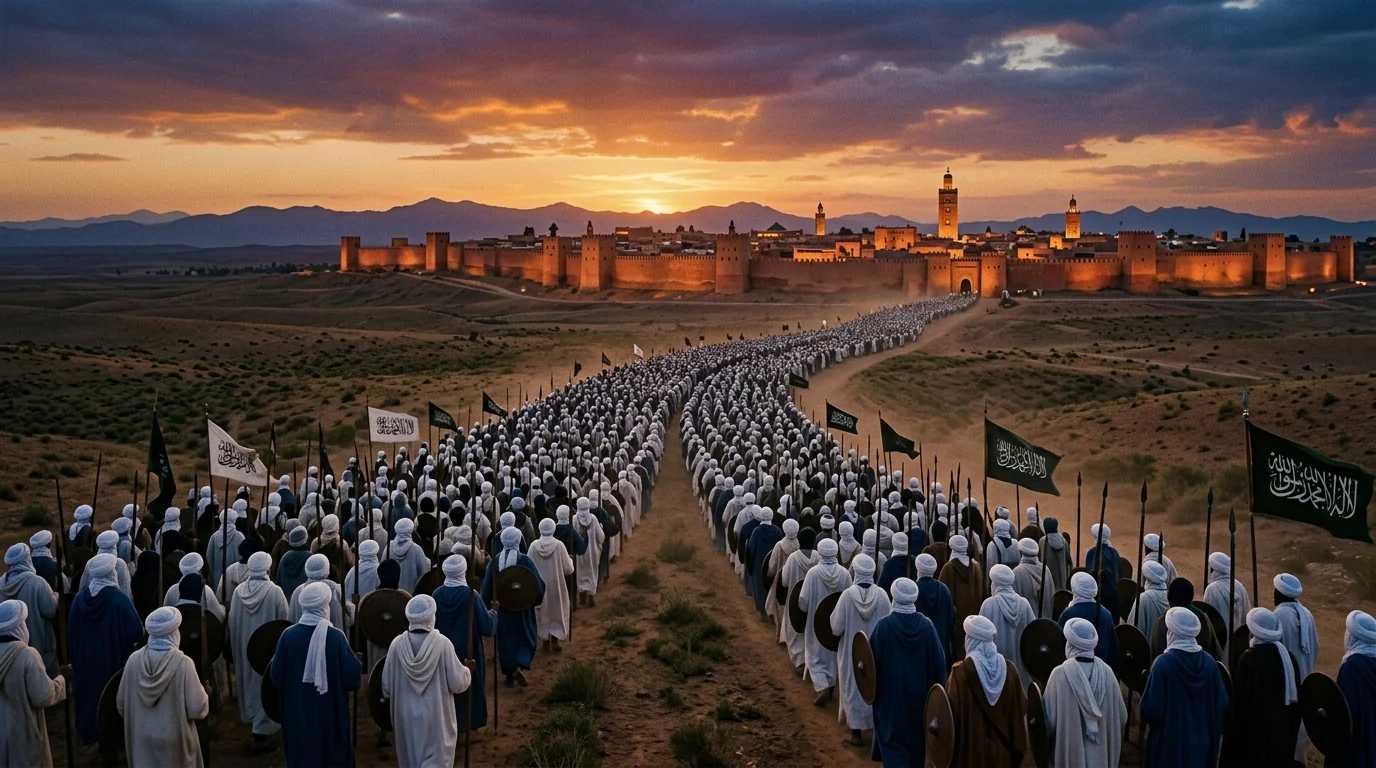
Scene 4
An Army of Half a Million and the Conqueror's Return
After fifteen years of calling to God, the sheikh returned in 468 AH with half a million African soldiers. At Marrakesh, the capital his cousin had built, he found the Berber tribes united and Mauritania, Morocco, Algeria and Tunisia added to the state, which now stretched from Tunisia to Guinea-Bissau and from Algeria to Gabon.
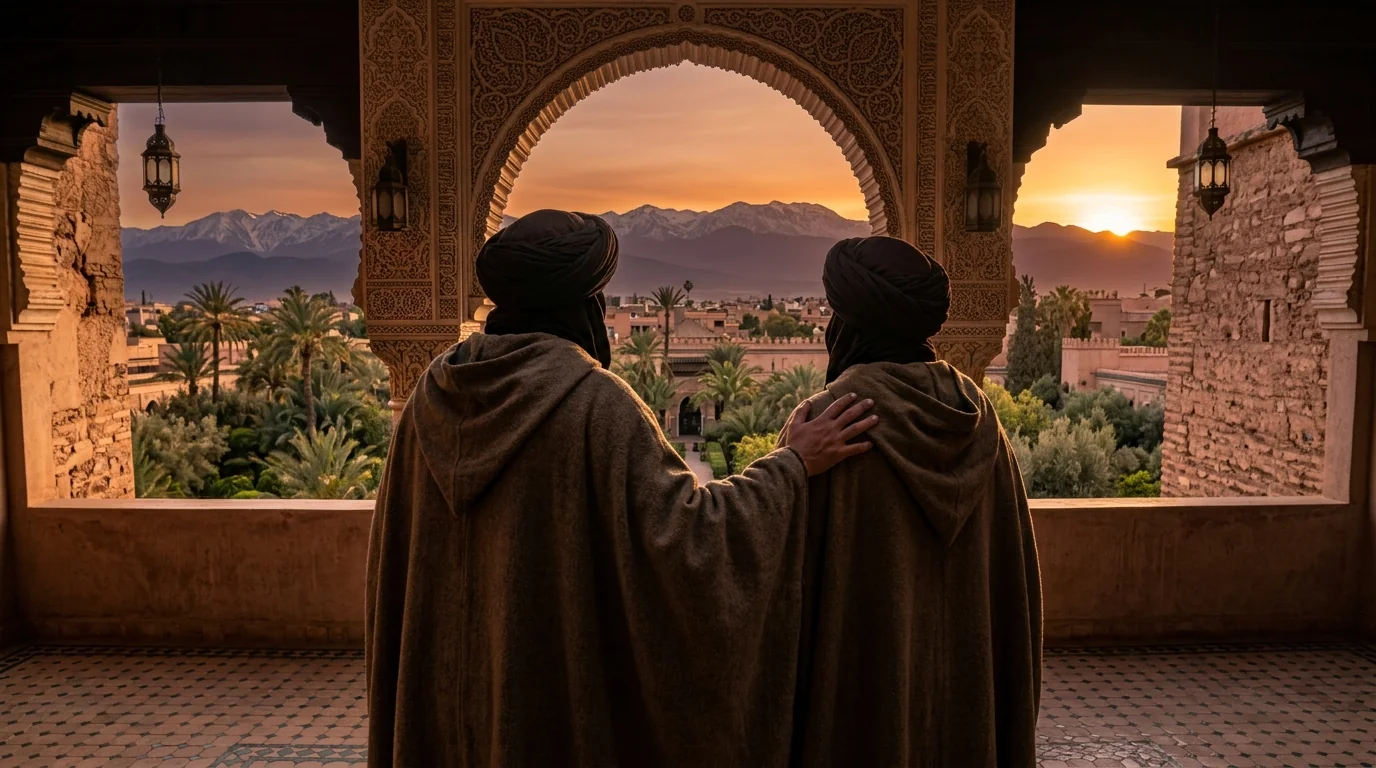
Scene 5
Reunion in Marrakesh and Tears for the Beginnings
In Marrakesh the two cousins embraced after long separation. They remembered their people's state before Ibn Yasin, how he taught tawhid from a worn tent and endured beating, expulsion and the burning of his house without despair. Seeing the empire they now ruled, both wept, and the cousin offered to hand leadership back.
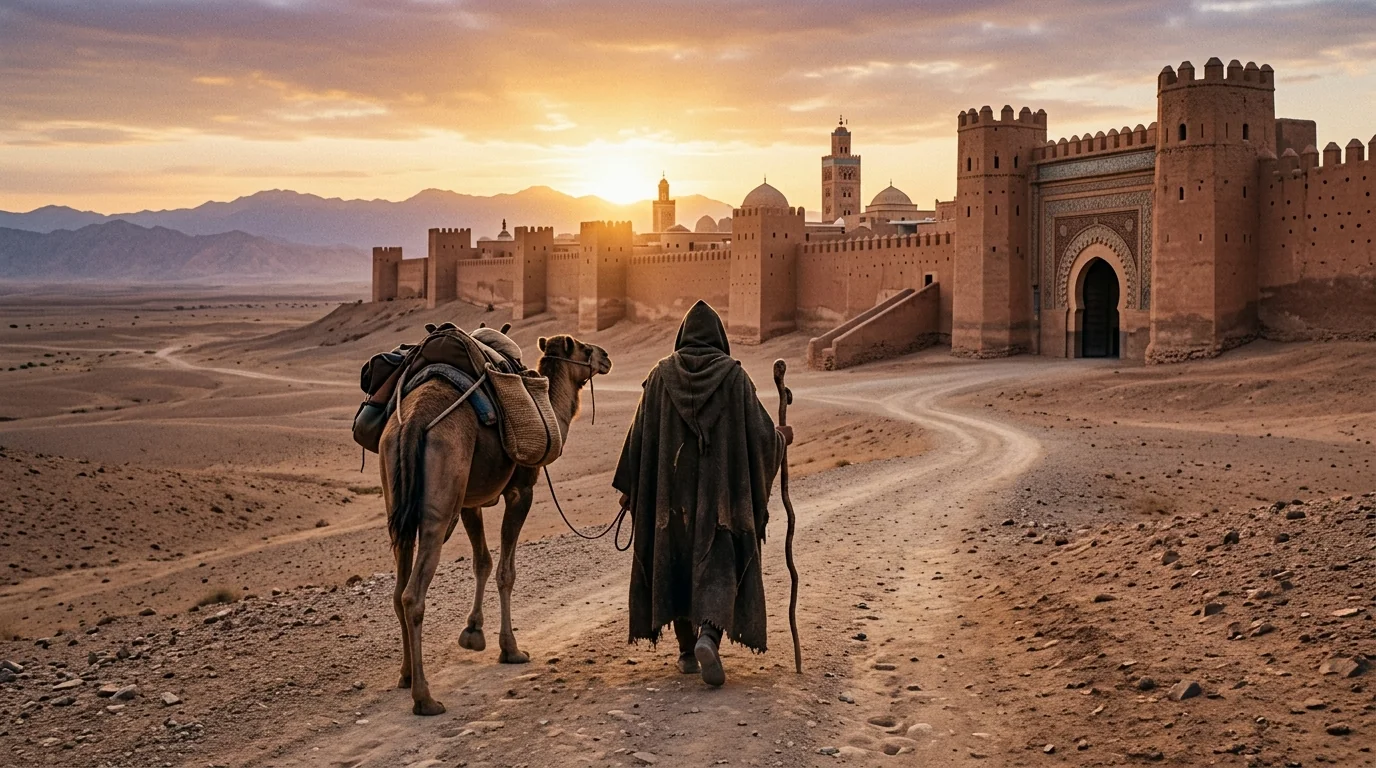
Scene 6
Choosing the Hereafter over the Greatest of Thrones
Then Sheikh Abu Bakr ibn Omar did something the author says is found only in the history of the Muslim nation: he refused to take up the reins of the empire. He preferred to leave rule to his cousin and carry on calling people to God, and that was not all.

Scene 7
A Treacherous Arrow and the Conqueror's Martyrdom
Abu Bakr told his wife he had devoted himself to God and would divorce her so as not to wrong her, bade his weeping cousin farewell and returned to the heart of Africa. On a preaching journey in an equatorial forest, a pagan king's arrow struck his heart. The author says he shares the reward of every Muslim there.

Scene 8
The Crossing to al-Andalus and the Taifa Kings
Before continuing the Almoravid story and naming Abu Bakr's cousin, the author takes the reader from Marrakesh to Tangier and across the Strait of Gibraltar to see al-Andalus at that same time. He asks what the Taifa kings' story was, and which Taifa king nonetheless earned a place among the hundred.
These are English scene notes. The full chapter text, as the author wrote it, is in the app.