


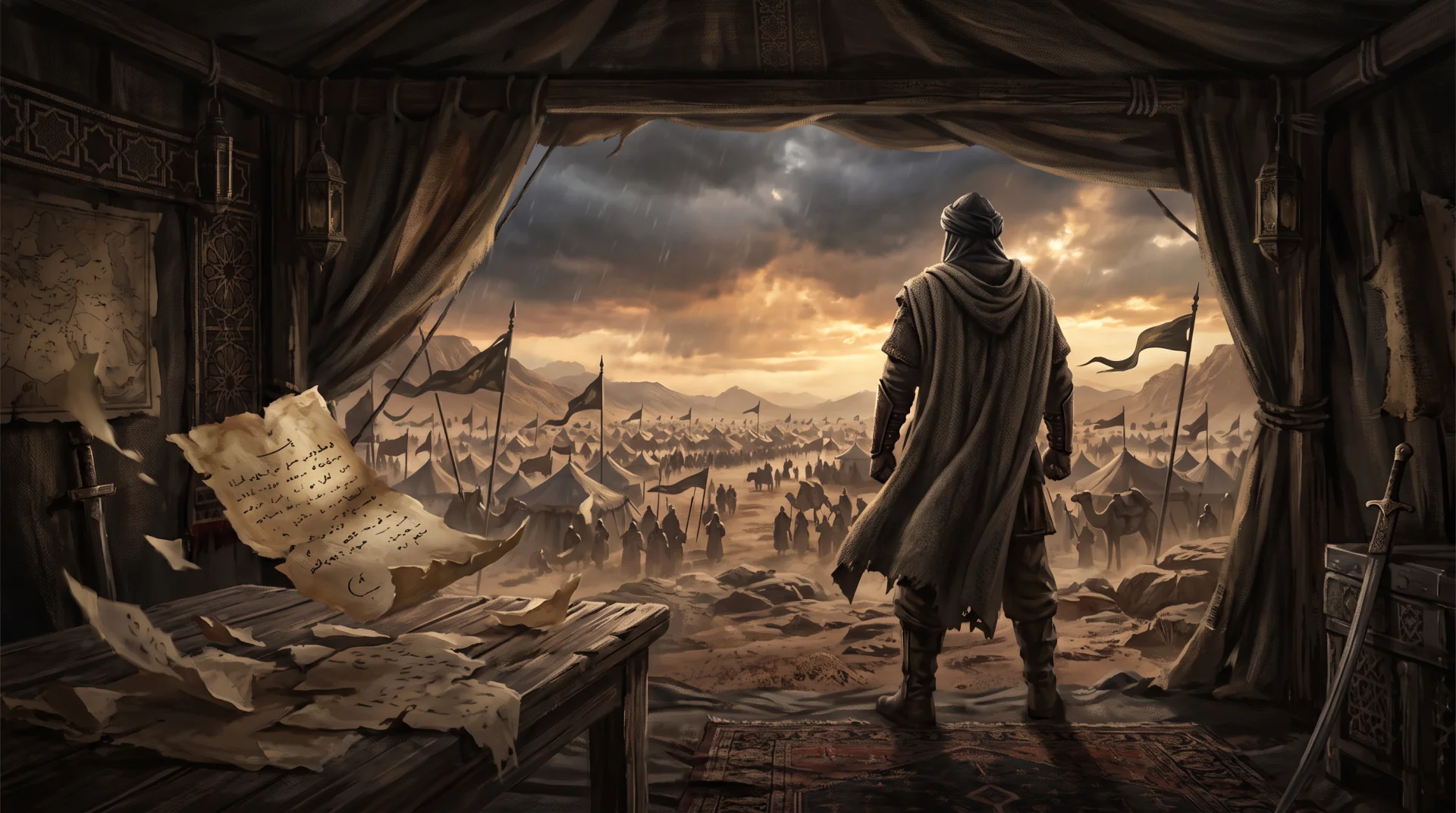
Scene 1
The Reply to Alfonso's Letter: The Answer Is What You See
The chapter opens with the story that when Alfonso's letter reached Prince Yaqub, he tore it and wrote on the back of a piece of it a Quranic verse, 'Go back to them, we shall come to them with forces they cannot resist', and added: the answer is what you will see, not what you hear.
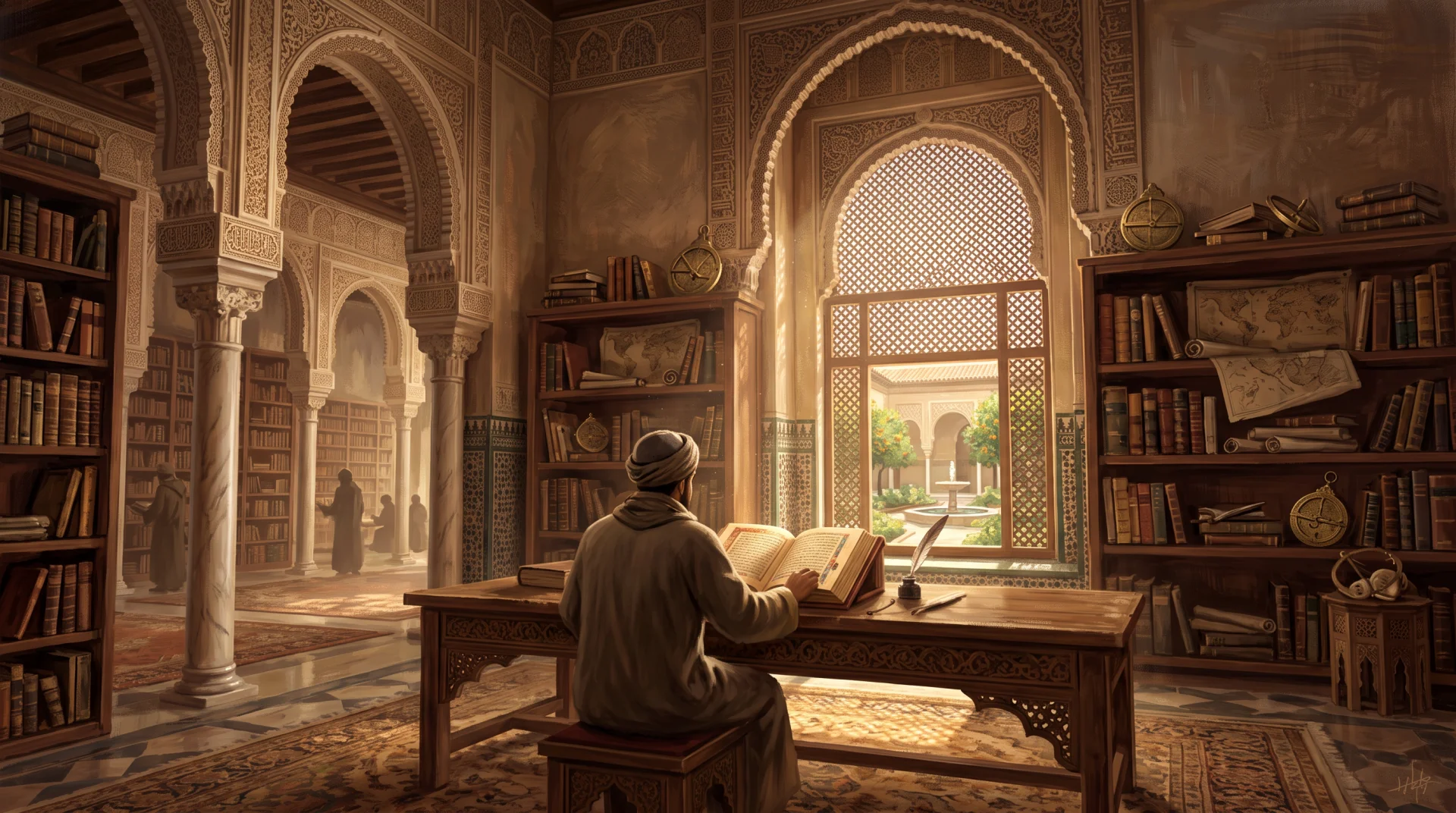
Scene 2
What the History of al-Andalus Teaches the Youth
The author did not want to end al-Andalus without this great commander. The book has sailed through al-Andalus from Musa ibn Nusayr and Tariq ibn Ziyad to its fall and the revolt of Muhammad ibn Umayya. He dwelt on it not to cry over spilt milk but because its victories, glories and defeats form a clear curriculum for the youth: Muslims won with the fewest numbers when they held to the faith and lost when love of the world entered their hearts.
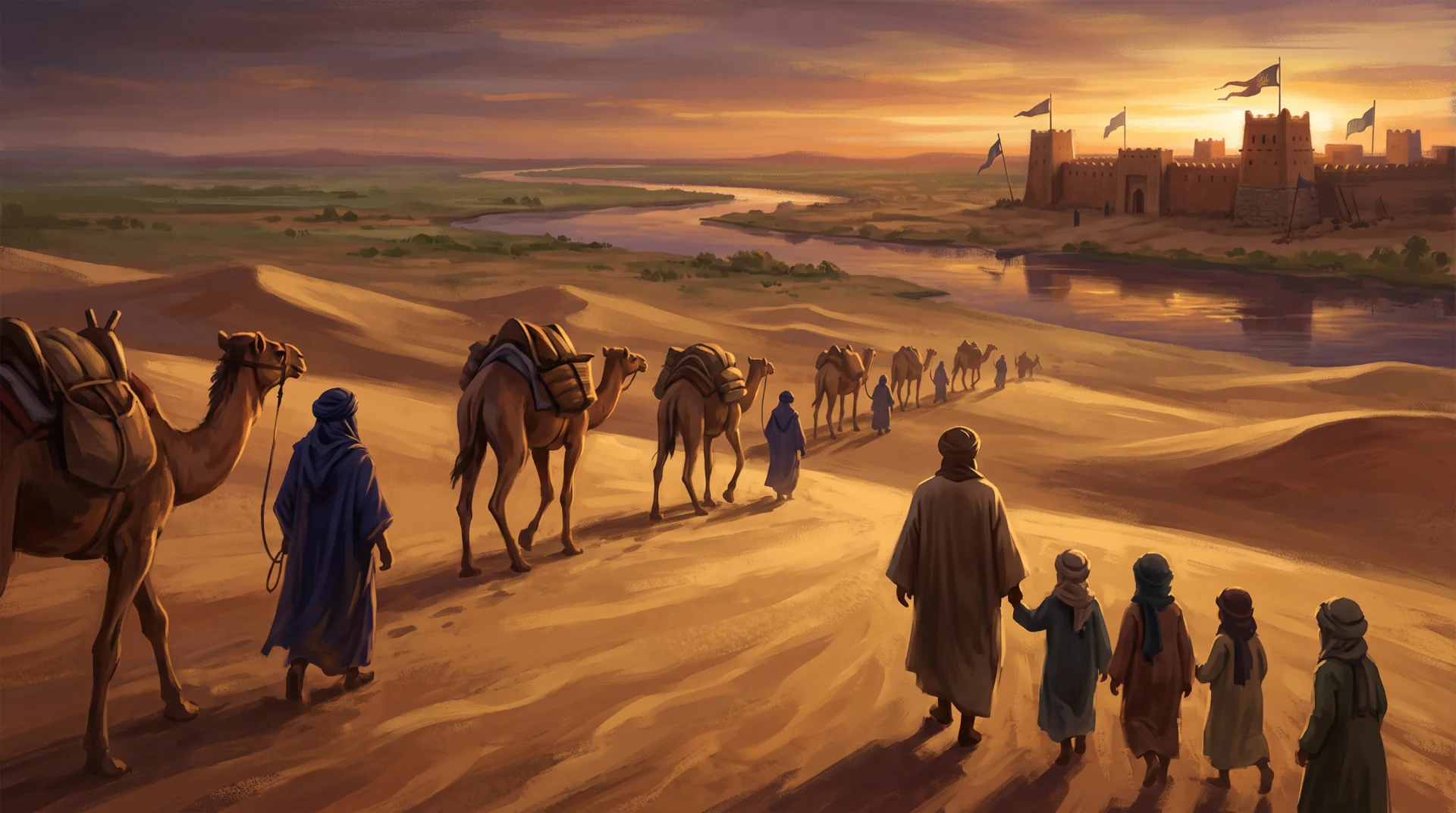
Scene 3
Ibn Yasin, Muhammad al-Faqih and the Betrayal of the Ubaydis
The author recalls how a few men turned the Muslims from defeat to decisive victory, and how one man, Sheikh Abdullah ibn Yasin, turned a small group of camel herders on the Senegal border into the kings of the greatest empire Africa had known. He recalls Muhammad al-Faqih, who lost al-Andalus through love of the world, the Moroccan men who kept rescuing it, and the Ubaydi (Fatimid) betrayals, supplying the Crusaders with weapons. He says reading this story would teach the youth how to raise the nation.
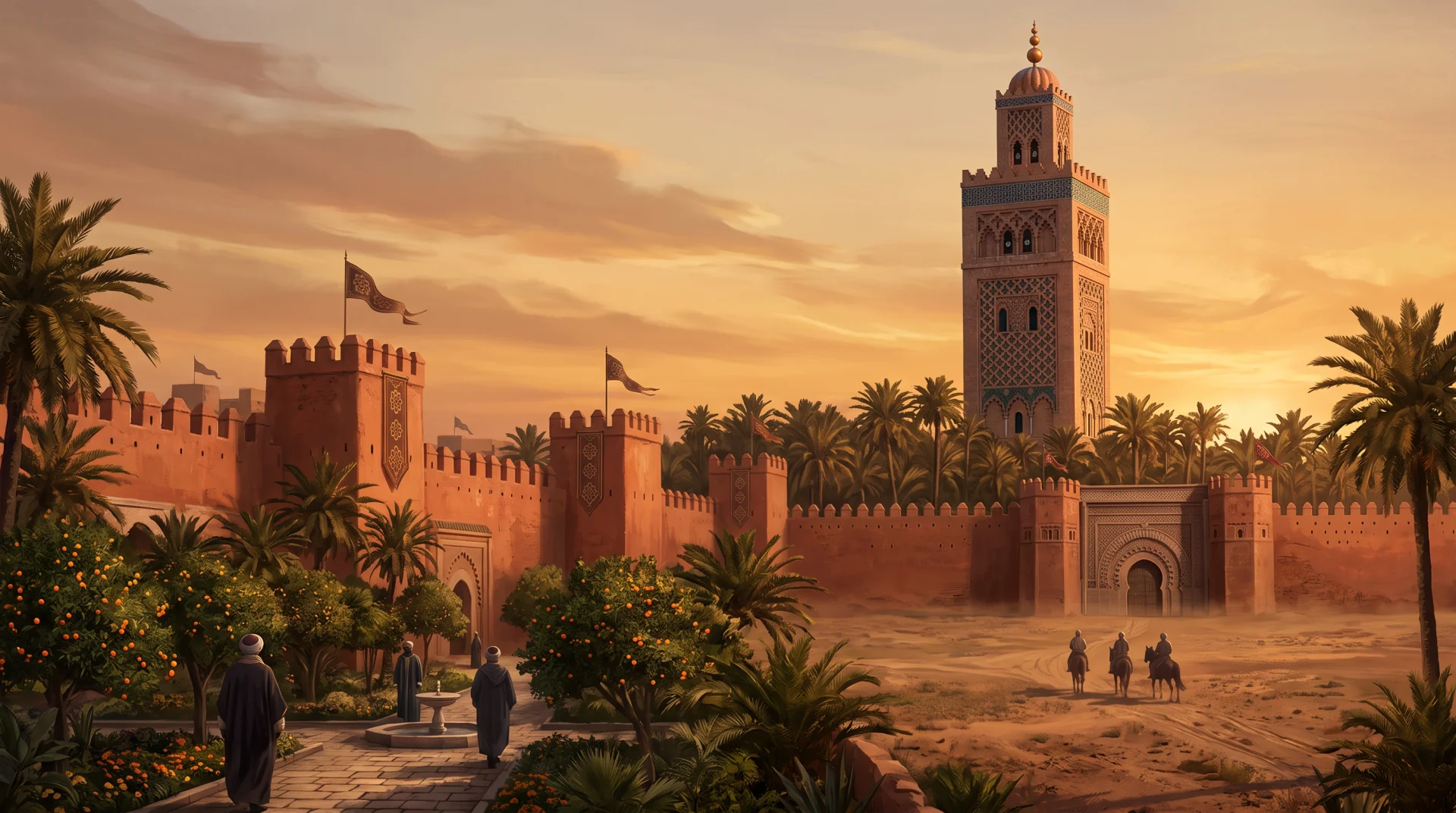
Scene 4
The Almohads After the Almoravids
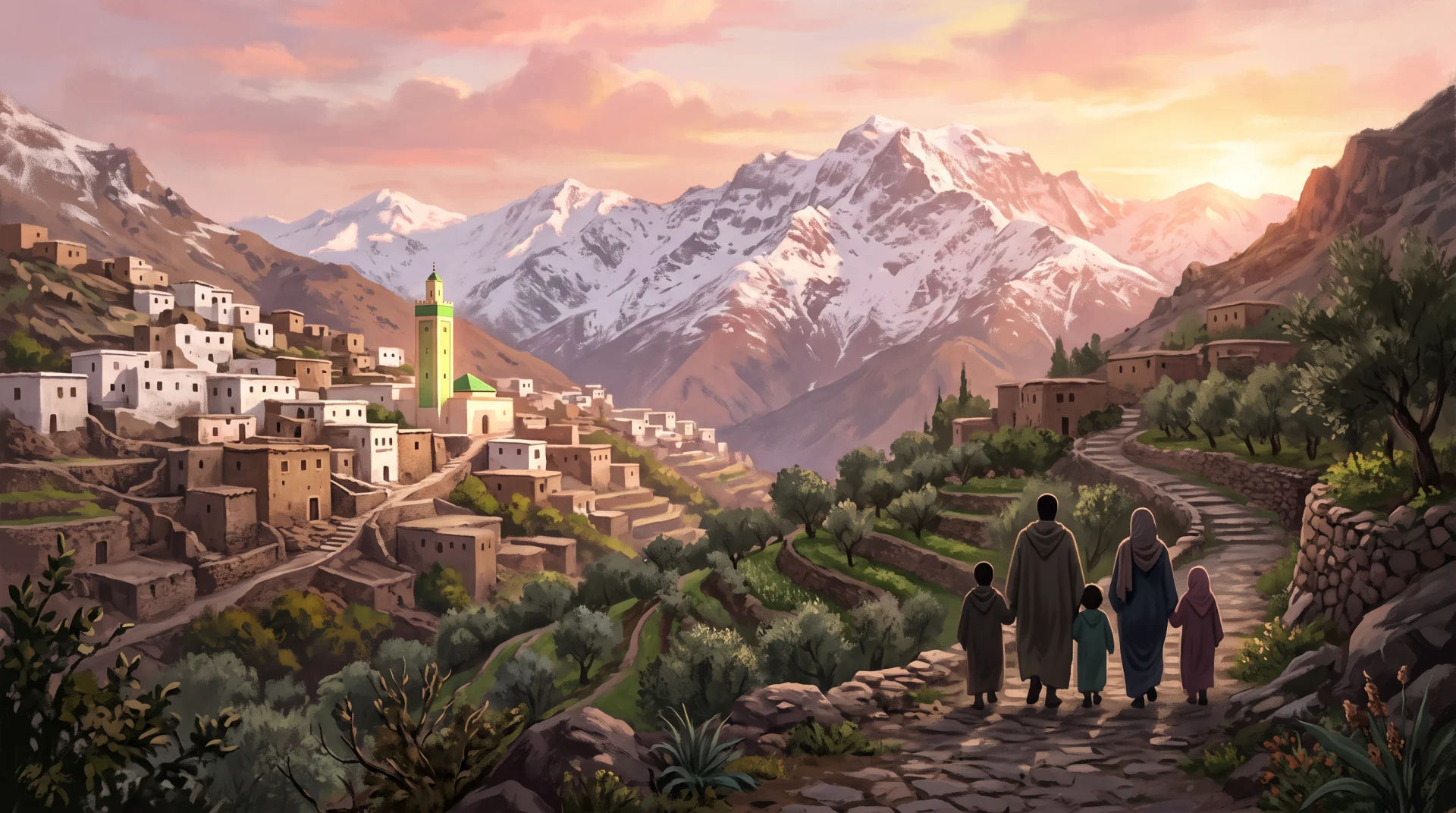
Our hero is Abu Yusuf Yaqub al-Mansur al-Muwahhidi. The Almohads ruled the Muslim Maghreb and al-Andalus after the collapse of the Almoravid state.
Scene 5
Defending Morocco and the Honour of its Women
The author pauses at Morocco, which he says now faces a fierce campaign by Crusaders and their agents to stain the country's reputation, including filthy voices attacking the honourable women of Morocco. Those women, he says, are the same ones who bore men such as Yusuf ibn Tashfin, both Abu Yusuf Yaqub al-Mansurs and Muhammad ibn Abd al-Karim al-Khattabi, and he calls on Muslims to defend the honour of the nation.
Scene 6
Ibn Tumart and Abu Yusuf's Correction of Course
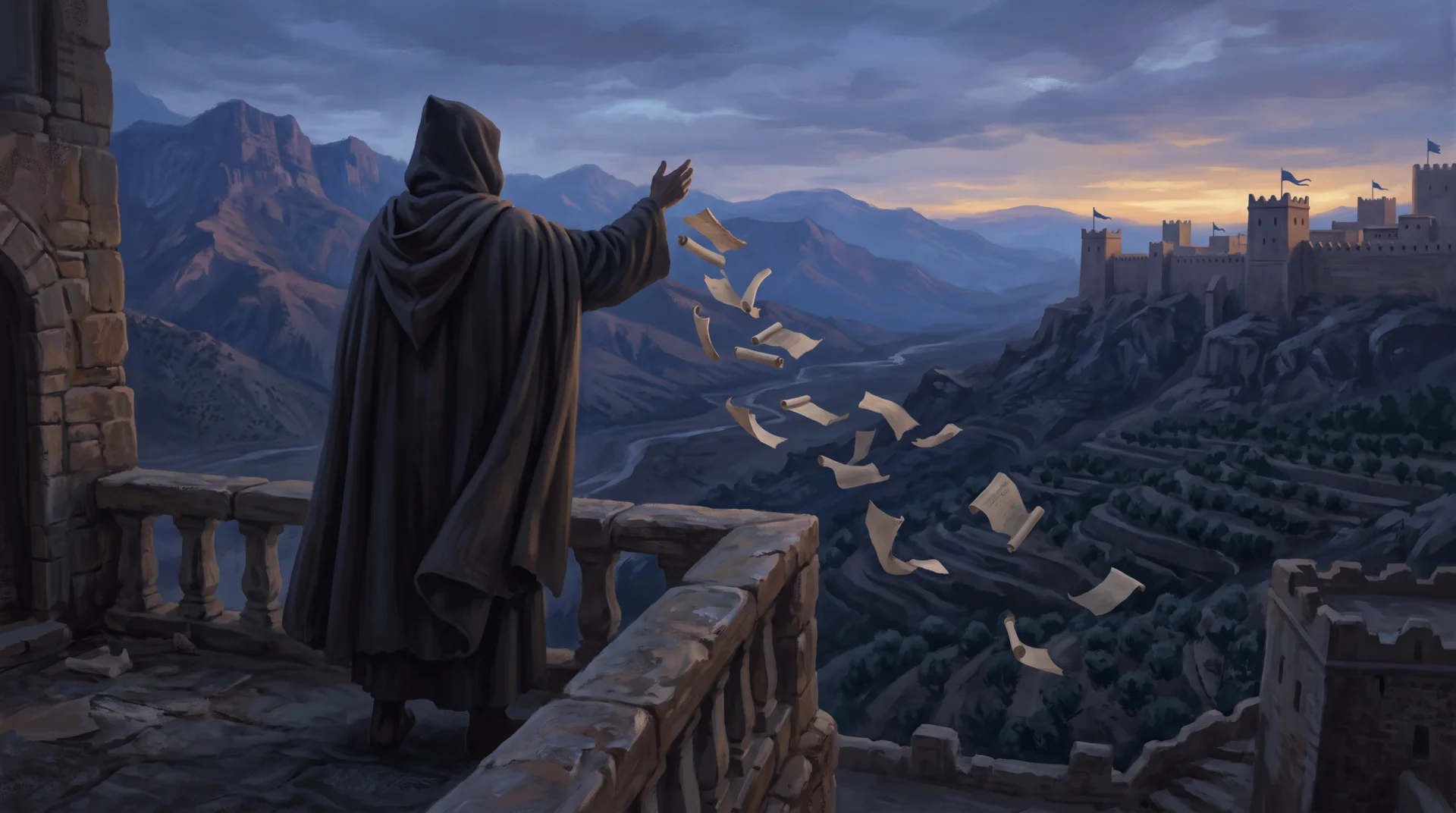
The author says some will be surprised that the Almohad state was founded by Muhammad ibn Tumart, a man of deviant creed and thought who studied in the Shia schools of Iraq, took from Magian and Greek philosophies and from the Mu'tazila, and came to consider himself the awaited Mahdi. Abu Yusuf Yaqub al-Mansur declared the corruption of ibn Tumart's ideas, and the author says correcting one's ideas is no shame, while persisting in error is the great fault.
Scene 7
Alfonso VIII and Abu Yusuf's March
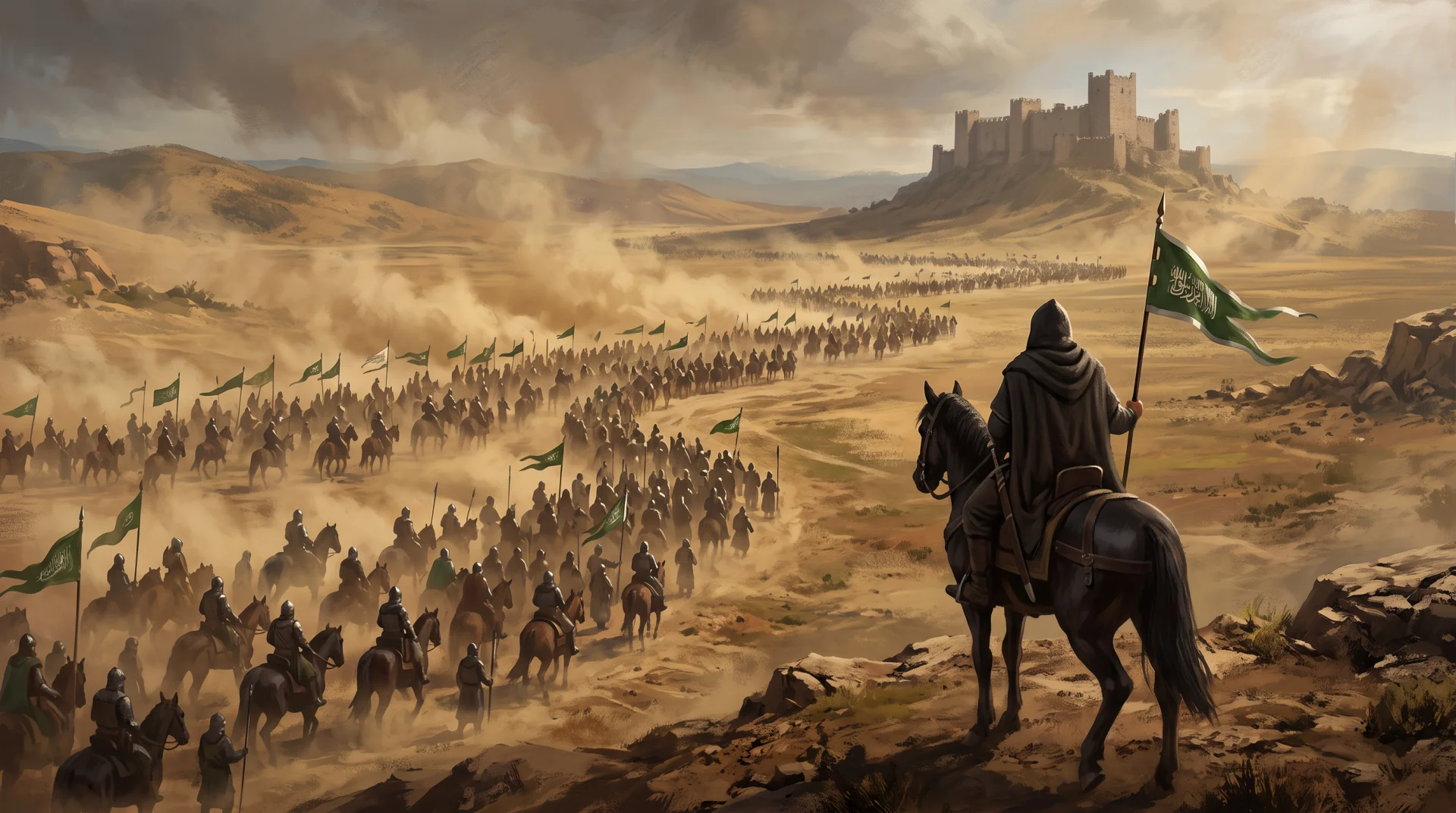
In this time a criminal king, Alfonso VIII, appeared in Castile, not the Alfonso defeated at al-Zallaqa. He ravaged Muslim Andalusia, killing the old and violating women. Al-Andalus used to import victory from the Maghreb, so Abu Yusuf marched with an army of 200,000 mujahideen from North Africa to the aid of his brothers, answering an insulting message Alfonso had sent.
Scene 8
The Immortal Battle of Alarcos
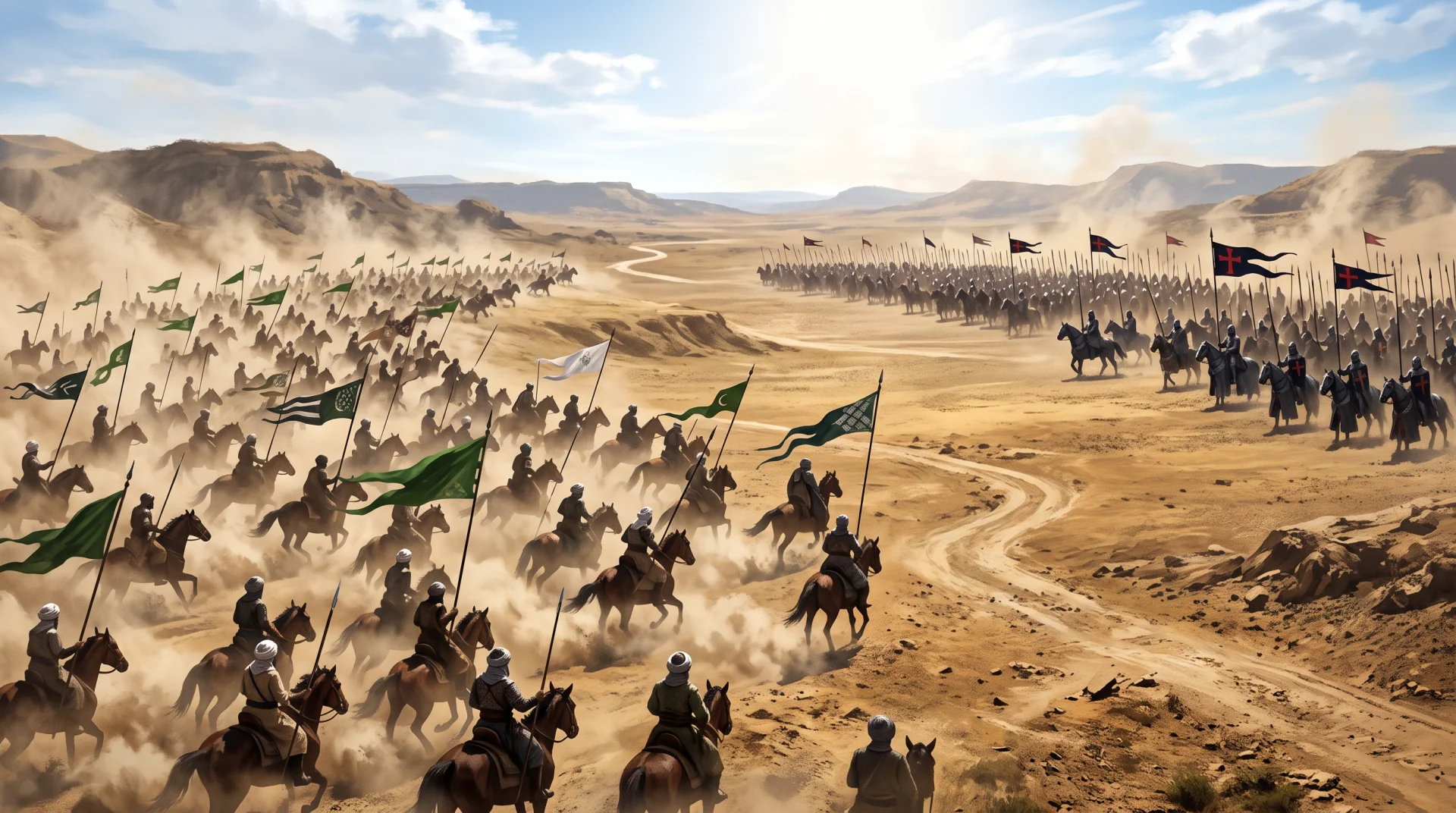
The Christians declared maximum emergency after the Pope called a general mobilisation, assembling Dutch, German, French and Spanish forces into an army of a quarter of a million men with crosses raised high. The two hosts met on the ninth of Sha'ban 591 AH at the Battle of Alarcos, where the Muslims won the greatest victory in all of Andalusian history, exceeding al-Zallaqa. News of it rang from pulpits across the Almohad state and reached the East, and Muslims prayed prayers of thanks.
Scene 9
Saladin: The Eastern Victory Eight Years Before Alarcos
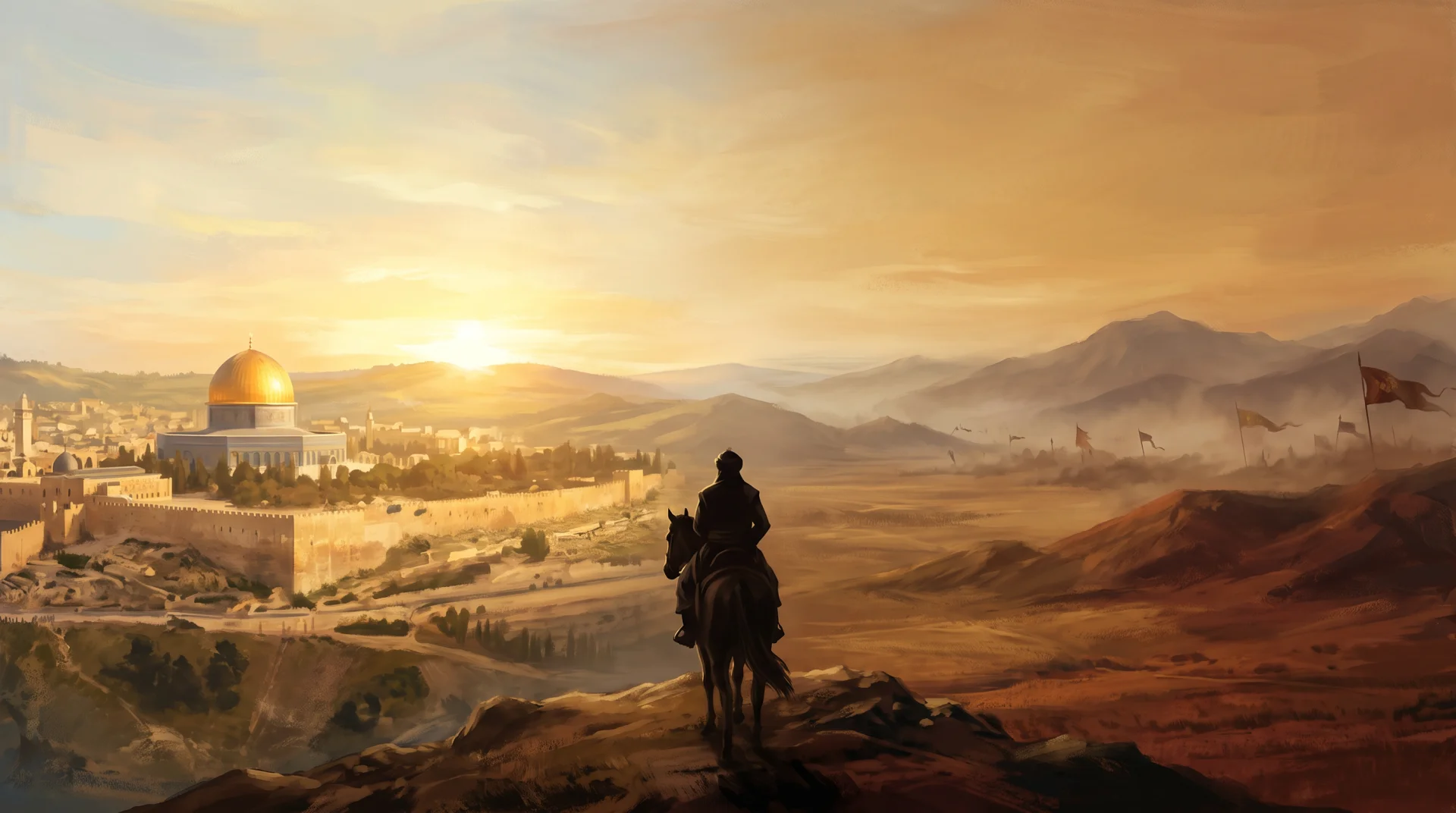
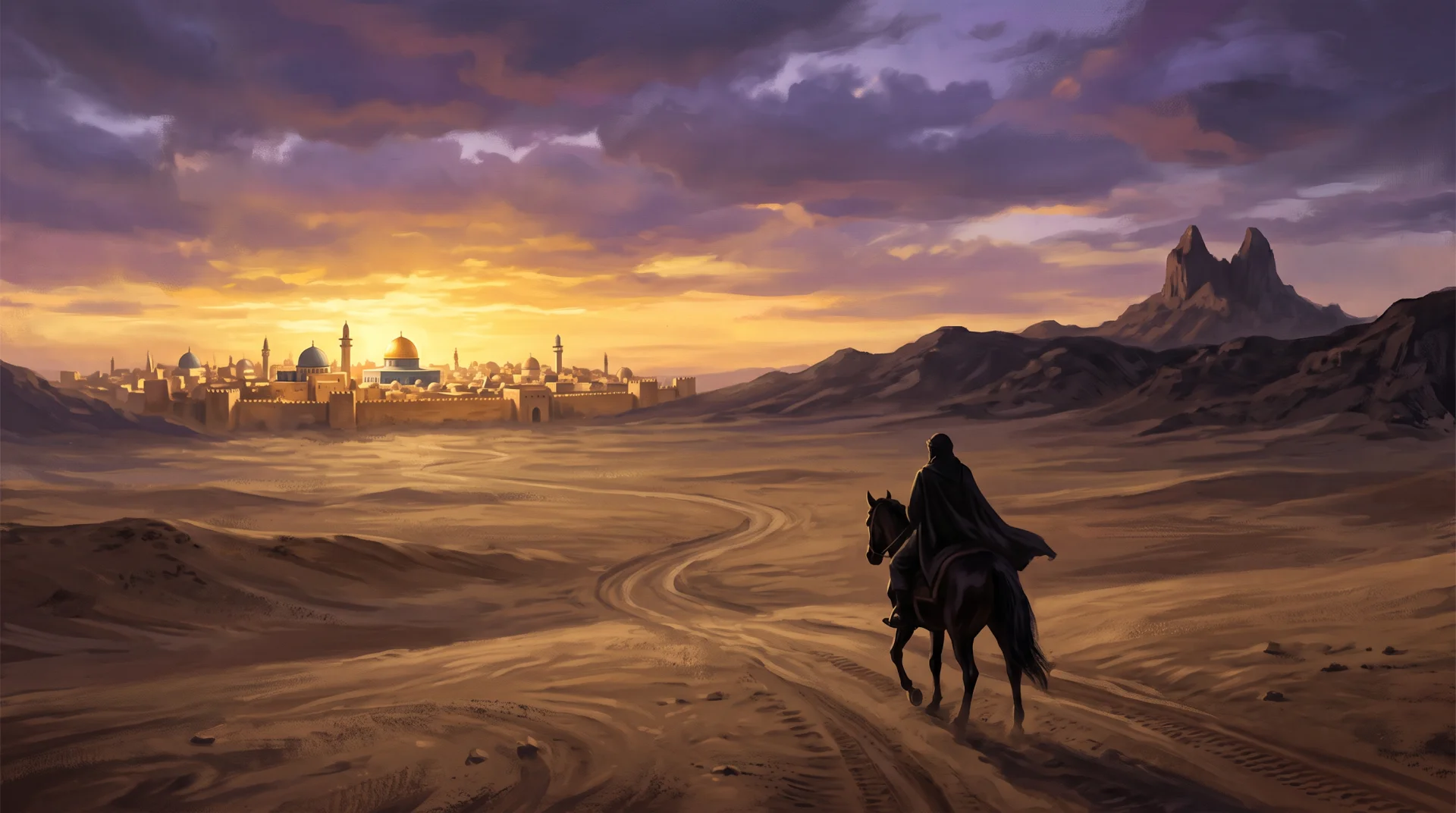
The author says many of us never heard of al-Mansur al-Muwahhidi or Alarcos, but all of us have heard of another great figure of the Muslim nation, who eight years earlier defeated the Crusaders in a battle in which he liberated Jerusalem, so that his victory in the Muslim East coincided with the Muslims' victory at Alarcos in the Muslim West.
Scene 10
Who Is the Most Famous Figure After the Messenger of God?
The chapter ends with questions: who is the hero of the most famous Islamic figure on earth after the Messenger of God, peace be upon him? Why was his fame widespread in West and East alike? What is the story of the immortal battle of Hattin, and how was he able to make this great victory? To be continued.
These are English scene notes. The full chapter text, as the author wrote it, is in the app.