



Scene 1
The Eagle of Green Tunisia
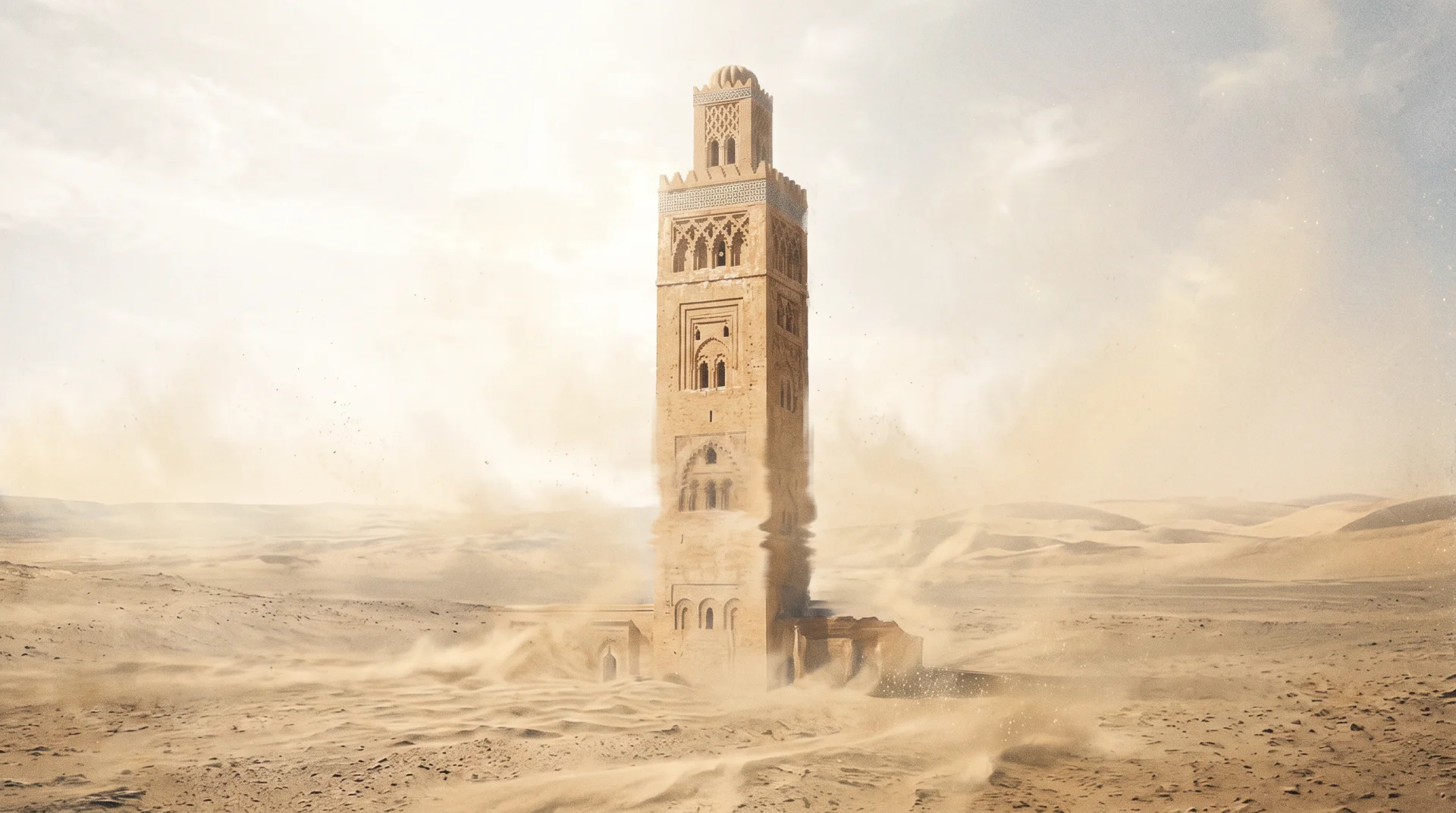
The chapter is titled 'The Eagle of Green Tunisia' (Abd al-Aziz al-Tha'alibi). It opens with the words of the Iraqi poet Ma'ruf al-Rusafi that al-Tha'alibi was the greatest Arab orator this century had known, and al-Tha'alibi's words at the Jerusalem conference: the first concern of every Muslim should be thinking about how to recover the glory of this nation, then working to achieve it.
Scene 2
The Theory of 'Killing the Personality'
Among the clauses of the 'historical invasion' theory explained at the start of the book is one called 'killing the personality': turning the hero or symbol into nothing, or at best into a mirage, by a constant organized campaign of distortion in which the hero becomes a coward, the fighter a traitor and the scholar a madman. The real target, the author says, is you and me: the idea of the role model falls in our eyes, we find no historical hero to draw the ways of victory from, and are left to admit we are a nation with no history, sometimes with a filthy history, shrinking in our own eyes until we become a forgotten memory in history.

Scene 3
The Forgotten Eagle
Our great Islamic hero is a kind of the forgotten group whose personality was killed in history. How many of us have heard even once of this Tunisian eagle who flew high not only over the Atlas mountains in Tunisia but over the Himalayas in India, the plateaus of Anatolia in Turkey and the peaks of the Alps in France, as if the clouds and mountain peaks kept embracing his wings, making him a great hero among the hundred great men of the nation of Islam? Let the hearts be humble, the eyes stare and the tongues be silent.

Scene 4
A Man Worth a Nation
The author says he has not the slightest doubt that if there were only ten like this great leader in our time, the situation of Muslims would be turned upside down. Al-Tha'alibi was a man worth a nation; he took on his shoulders the responsibility of restoring the glory of Islam without waiting for anyone's help, travelling across the wastelands and seas of the earth like one of the first generation of brave Companions who crossed the earth to spread the call of the Messenger of God.
Scene 5
The Child on the Beach of Tunis
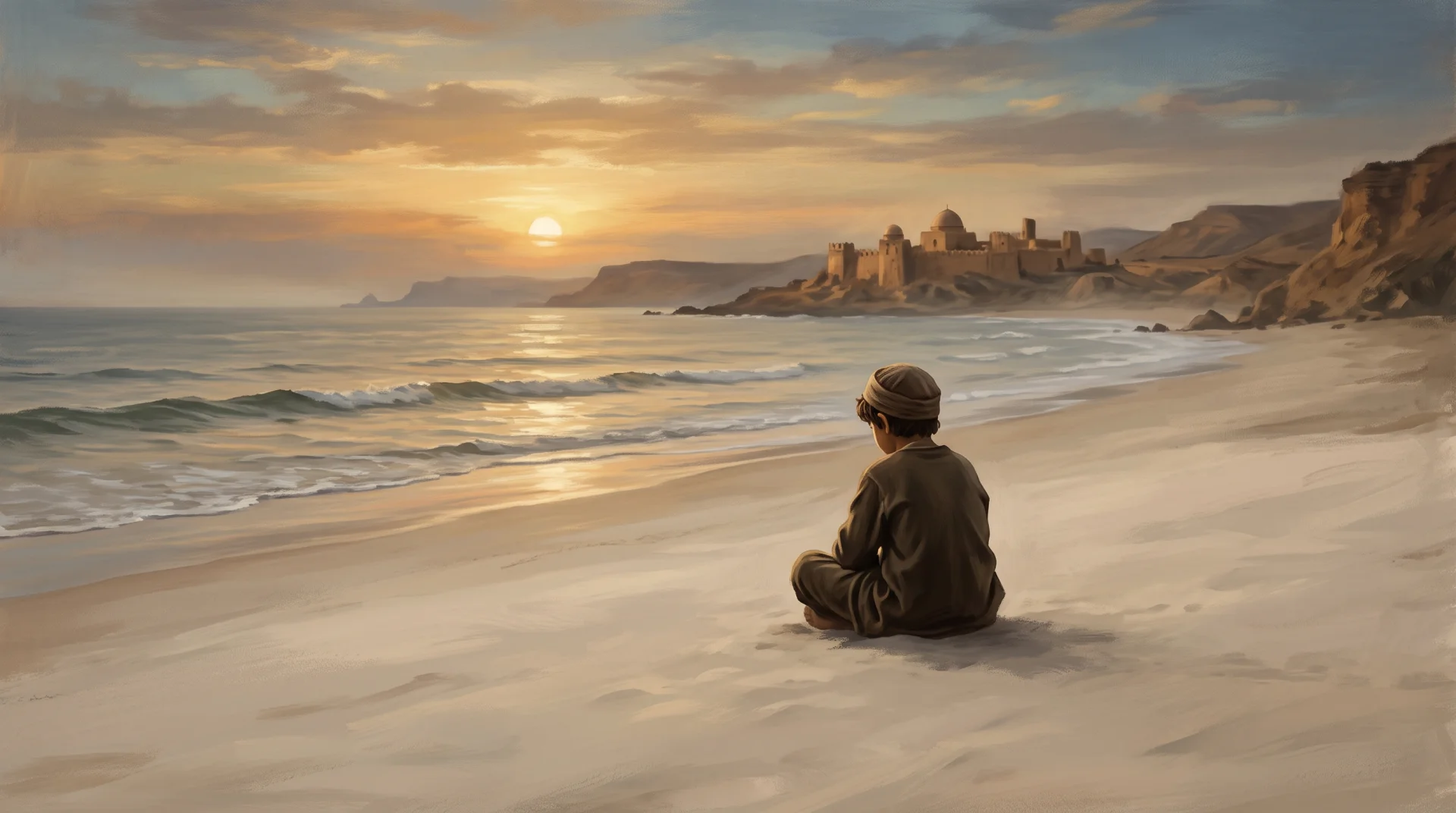
One day in 1881 a Tunisian mother lost her small son and searched for him in the streets of Tunis until she found him sitting alone on the soft sand of the shore, not yet seven years old, weeping. She thought another child had hit him, but he said: 'Mother, nobody hit me, but don't you see the French entering our country? They are occupying Tunisia and will leave only if we fight them!' This moment, the author says, was the birth of the legend of the mujahid leader Abd al-Aziz al-Tha'alibi, who from then carried the concern of freeing Tunisia and became a fighter against France's generals, who occupied Tunisia with the worn-out pretext of 'spreading civilization and ending reactionism'.
Scene 6
Tunisia Falls to the French
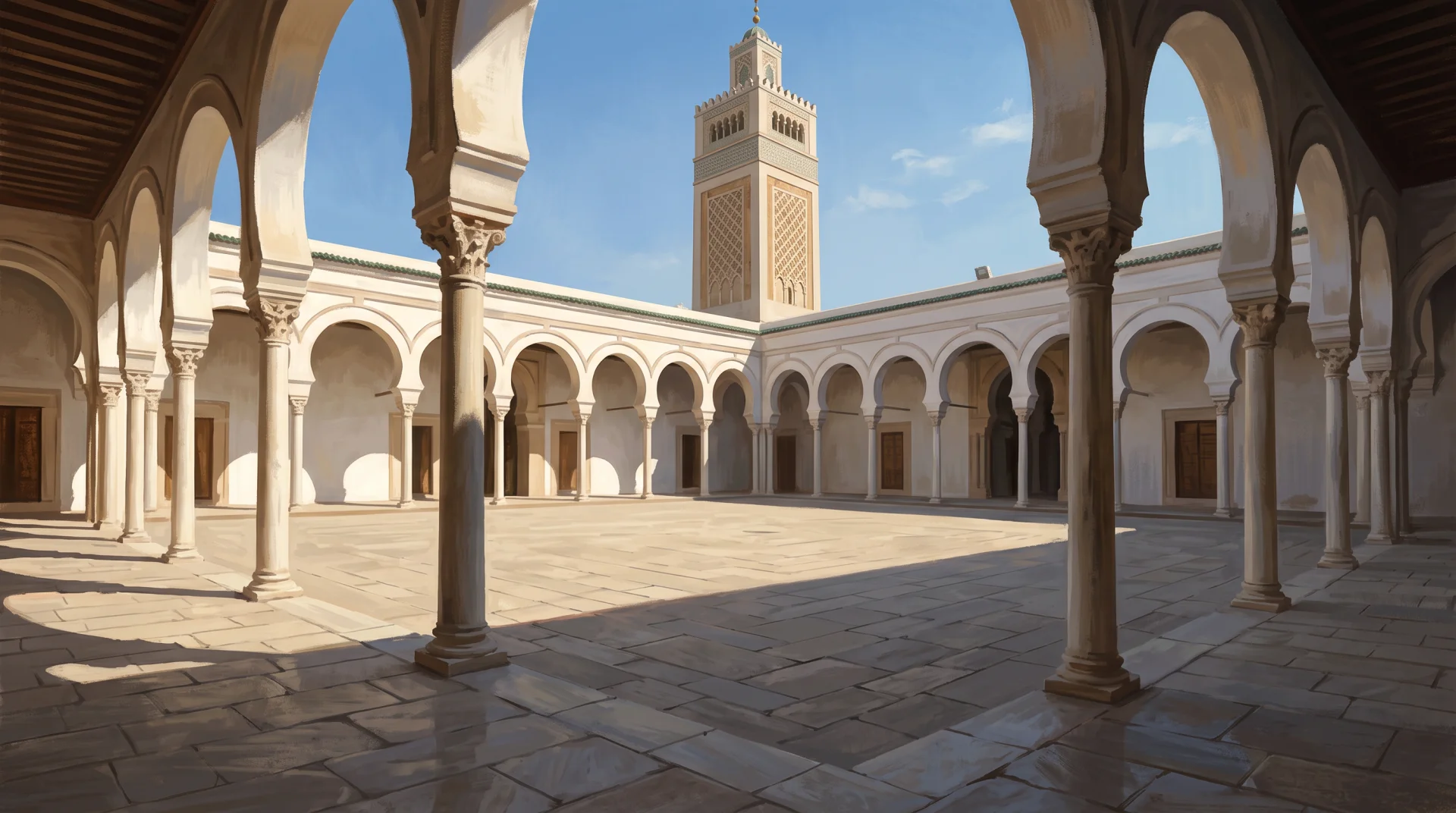
But few of us know that Tunisia was then a land flourishing in science and civilization, with steady steps toward progress and building at the hands of Khayr al-Din al-Tunisi, Sheikh Mahmud Qabadu and others. This did not last: the country soon fell into French hands in 1881 after tribal border skirmishes between Tunisia and Algeria that France used as a pretext, and the protectorate was declared on 12 May 1882. France appointed a Frenchman, Louis Machuel, head of education; he seized everything to do with education and culture, changed the system of the Zaytuna University, and put French ahead of Arabic in the curricula, stopping the scientific revival there.
Scene 7
Reform and the Rise of al-Tha'alibi
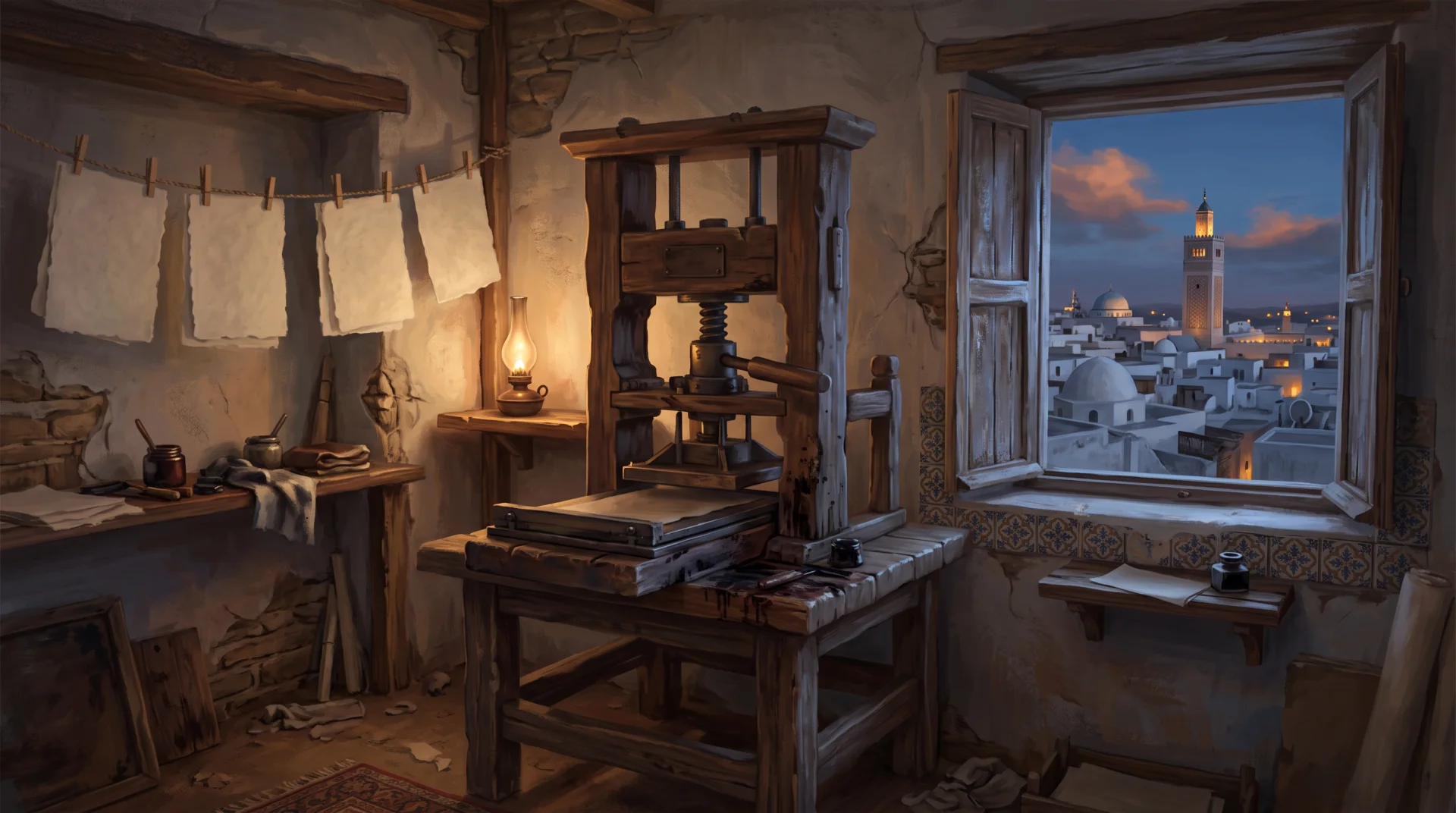
France then restricted Tunisians' civil liberties, moved the administration to French systems, made French the official language and neglected the Zaytuna and the Bardo military school. Khayr al-Din's absence affected morale; he resigned before the occupation and became grand vizier in the Ottoman state. Sheikh Salim Bu Hajib and al-Bashir ibn Mustafa Safar founded the 'Hadira' society and weekly paper and the Khalduniyya school in 1896. Then Abd al-Aziz al-Tha'alibi emerged, born in 1293 H, 1874, in Tunis, of Algerian origin, raised by his mujahid grandfather who taught him the Quran and the basics of grammar and creed. He joined the National Party in 1895, then founded the Islamic National Party and the paper 'Sabil al-Rashad', which was stopped after a year. He went to Istanbul by Greece and Bulgaria in 1898, discussed the Tunisian cause with the Ottomans, and returned in 1902 to find the French promoting Sufi thought; he resisted it, calling people to pray to God alone and not seek blessing from graves and saints, so France arrested him in 1906 for 'fighting the saints'.

Scene 8
Prison, Exile and Iraq
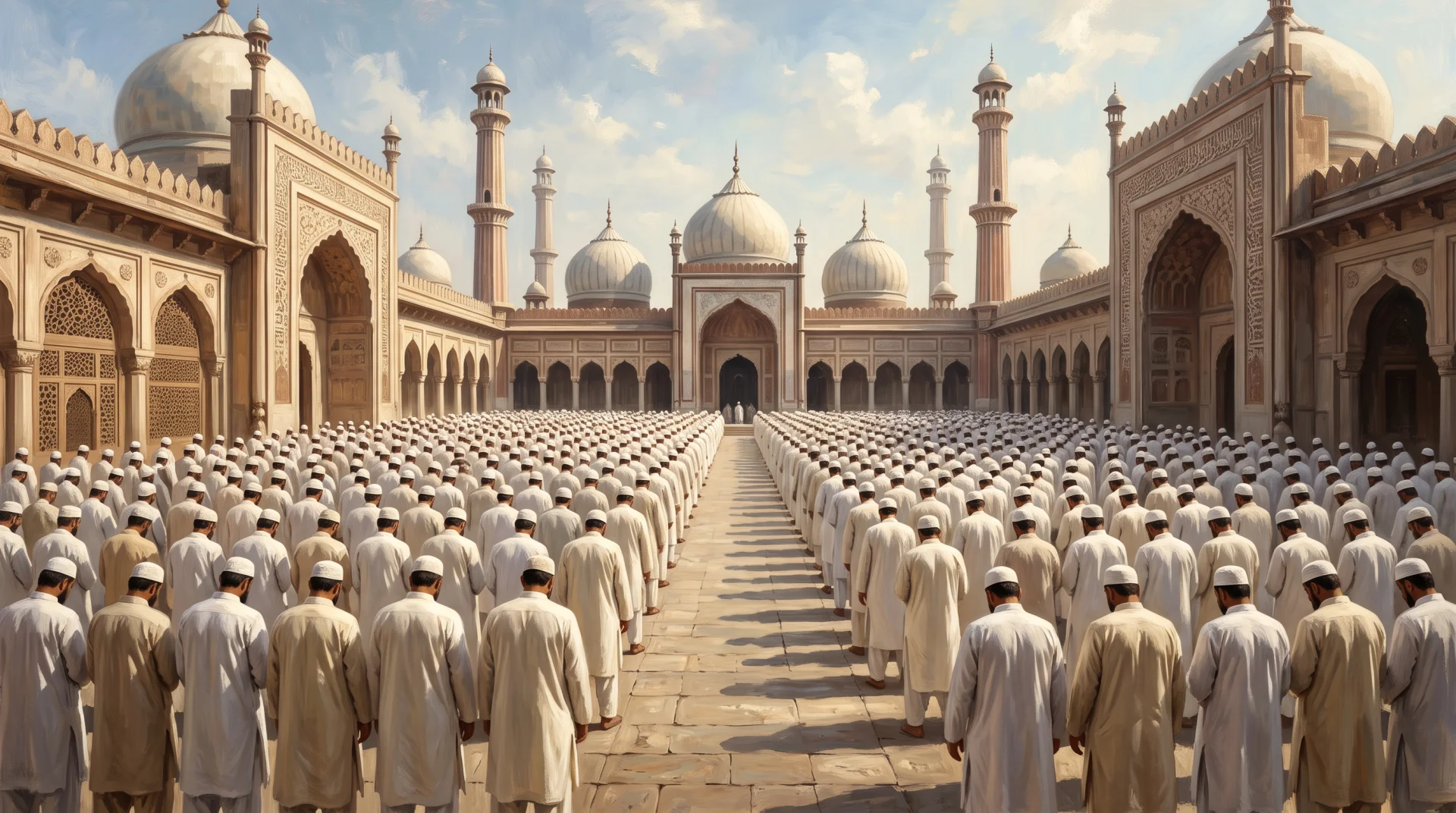
After the Sufi scholars who worked with the French occupation raised white flags reading 'Kill al-Tha'alibi the unbeliever!', and when Italy occupied Libya in 1911 and he tried to help the mujahidin, the French arrested him again in 1912 and expelled him; the country went on strike and the people insisted on his return, so he came back in 1914 and kept working in reform until he was arrested in 1920 and jailed, then left the country in 1923 for Italy, France, Egypt and the Hijaz, and settled in Iraq as a professor in the universities of Baghdad from 1925 to 1930. Iraq sent him to supervise its student mission to Egypt, and he represented Iraq at the 1925 Caliphate Conference in Egypt called by the Sheikh of al-Azhar after the fall of the caliphate.
Scene 9
Calling to Islam in India and Asia
Al-Tha'alibi then left Iraq for Egypt, and from there travelled to China, Singapore, Burma and India, calling people to Islam. He studied the condition of the Hindu untouchables and wrote in the papers that the only solution to their problem is in Islam, and thousands of Indians became Muslim at the hands of this Tunisian hero. He returned to Tunisia for the last time to a warm welcome from its Muslim people, and went on fighting the French with his articles and writings until he died, may God have mercy on him, in 1944 after a full life of struggle and travel without weariness for raising the banner of Islam again.
Scene 10
Another Hero in the Heart of the Muslim World
While al-Tha'alibi fought the French in Tunisia, the author says, there was someone fighting the French, the English, the Italians and the Zionists in the heart of the Muslim world. He asks who this great Islamic mujahid is who carved his name in Palestine in letters of light, how the Zionists entered this holy land, whether the Palestinians really sold their land to the Jews, and what the story of the great Qassam revolution is.
These are English scene notes. The full chapter text, as the author wrote it, is in the app.