


Scene 1
A Horseman Raised in a Bedouin Tent
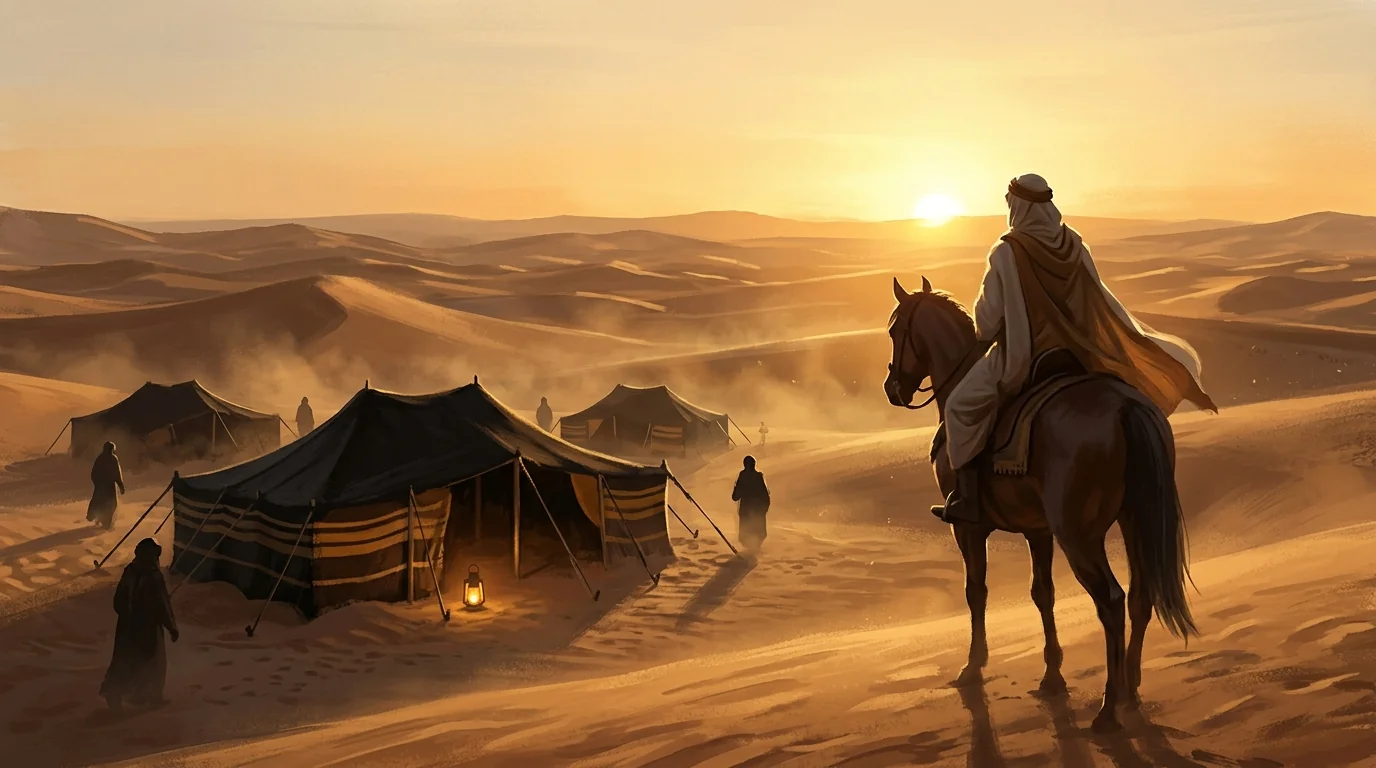
The story starts in a Bedouin tent of Qurayshi descent. Al-Mukhtar ibn Omar died on his way to the pilgrimage, leaving an orphan, Omar, who grew up in the desert a peerless horseman. Around 1900 he fought the French invaders alongside the Muslims of Chad, spread Islam among African tribes, then devoted himself to teaching.
Scene 2
The 1911 Invasion and the Phantom of the Desert
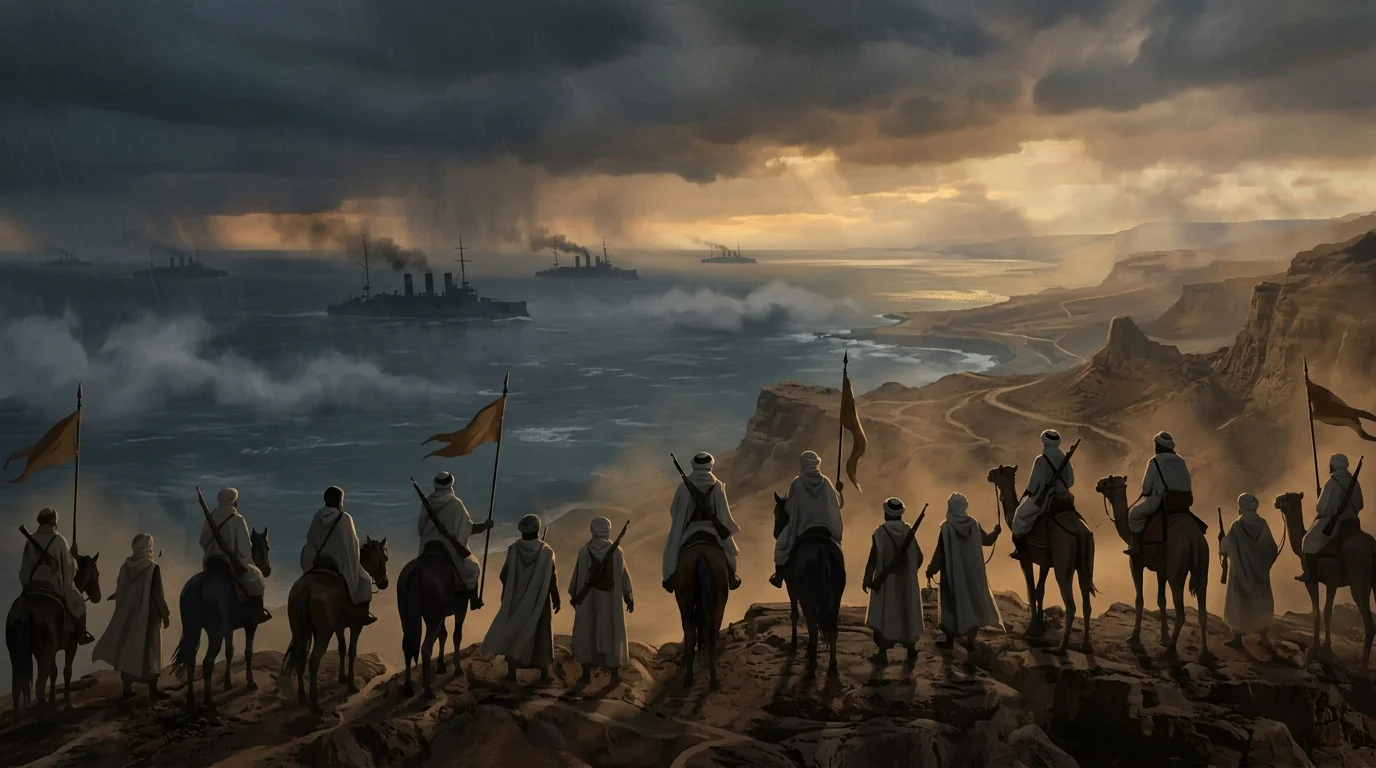
On 29 September 1911 Italy sent its warships to occupy Libya, and al-Mukhtar returned to armed struggle, organising the fighters and launching raid after raid. Four Italian governments fell over the defeats. Mussolini took it on himself to end the legend and sent Graziani, who carried out an unprecedented plan of extermination.
Scene 3
The Barbed-Wire Wall and the Tragedy of the Camps
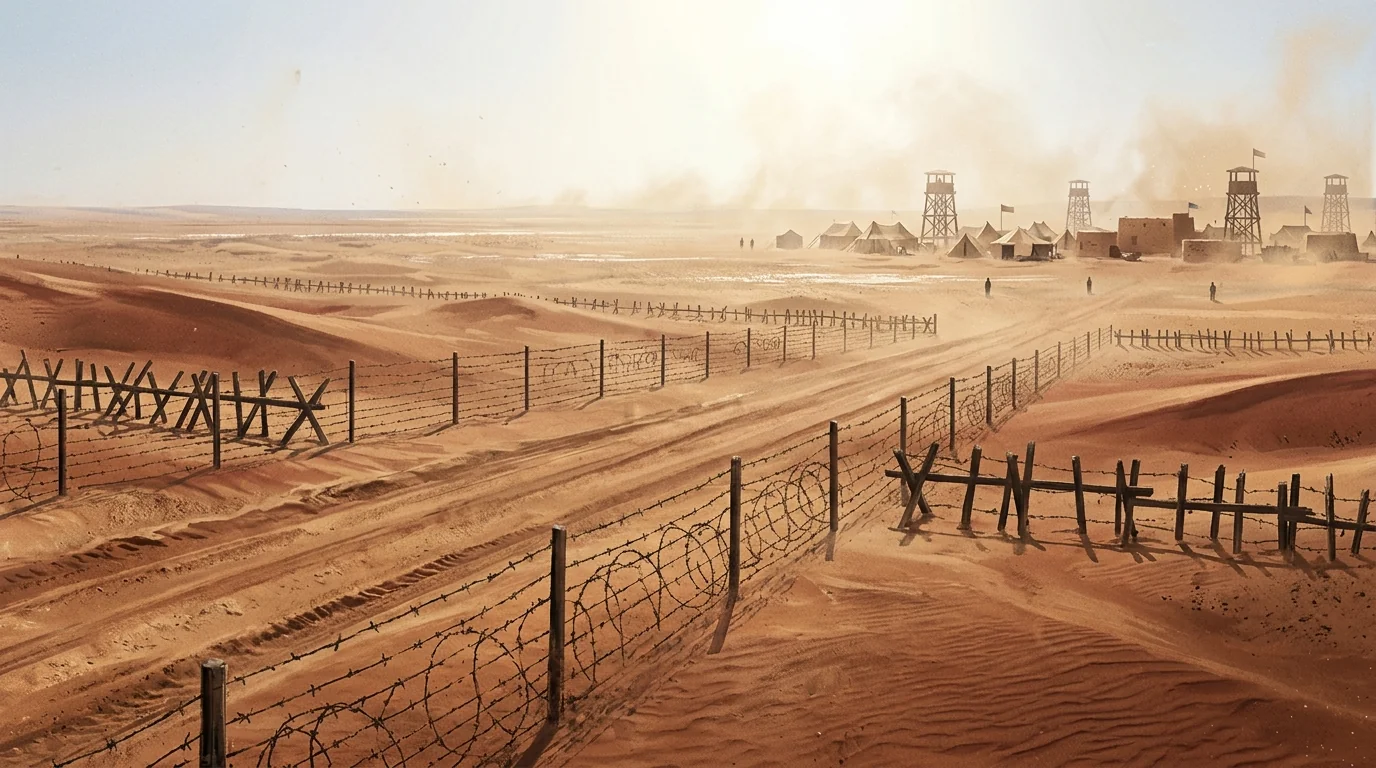
Graziani built a vast barbed-wire barrier on the Egyptian border to cut off supplies, then crowded eighty thousand Libyans with their livestock into a camp meant for ten thousand; only fifteen thousand survived. The author recounts the bombing of Kufra, assaults on women, elders thrown from aircraft, and children taken to be baptised.
Scene 4
A Cry of Conscience in Burning Tripoli
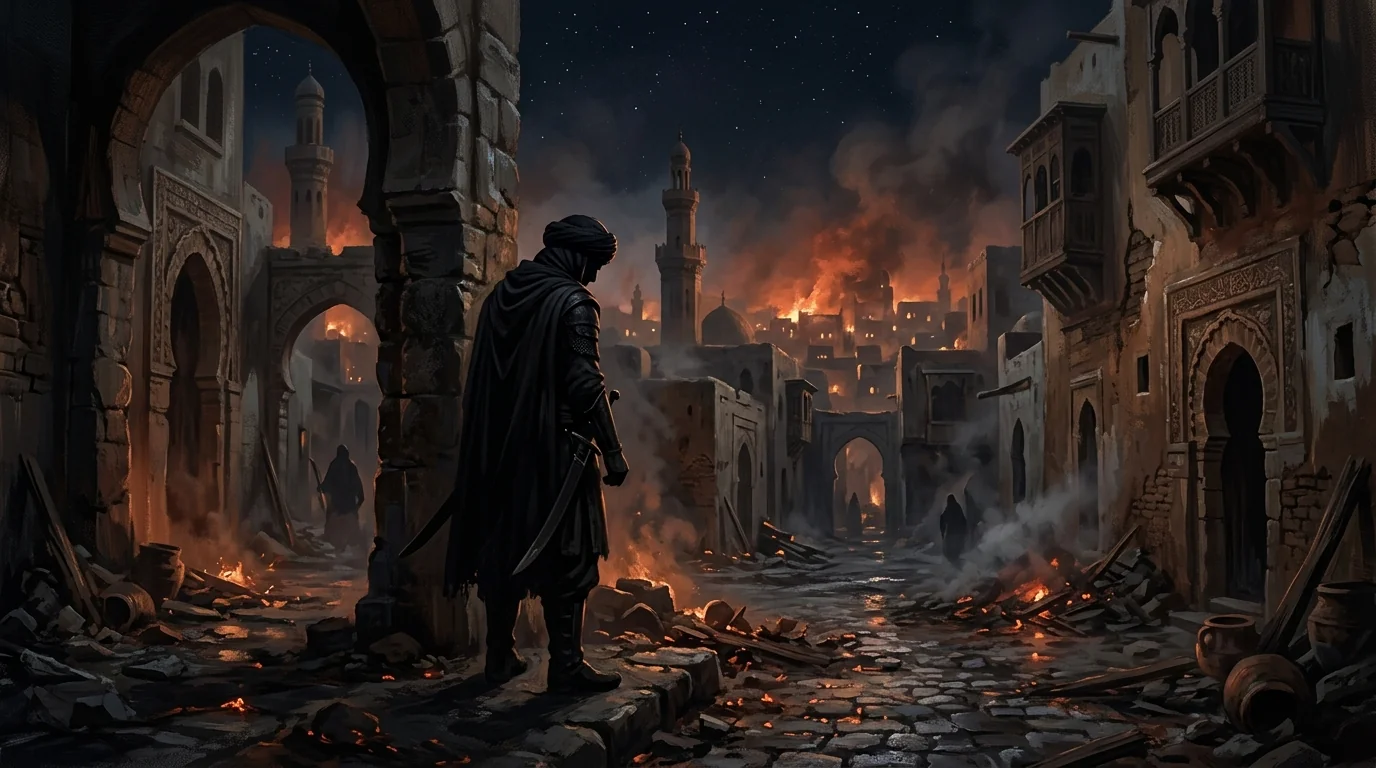
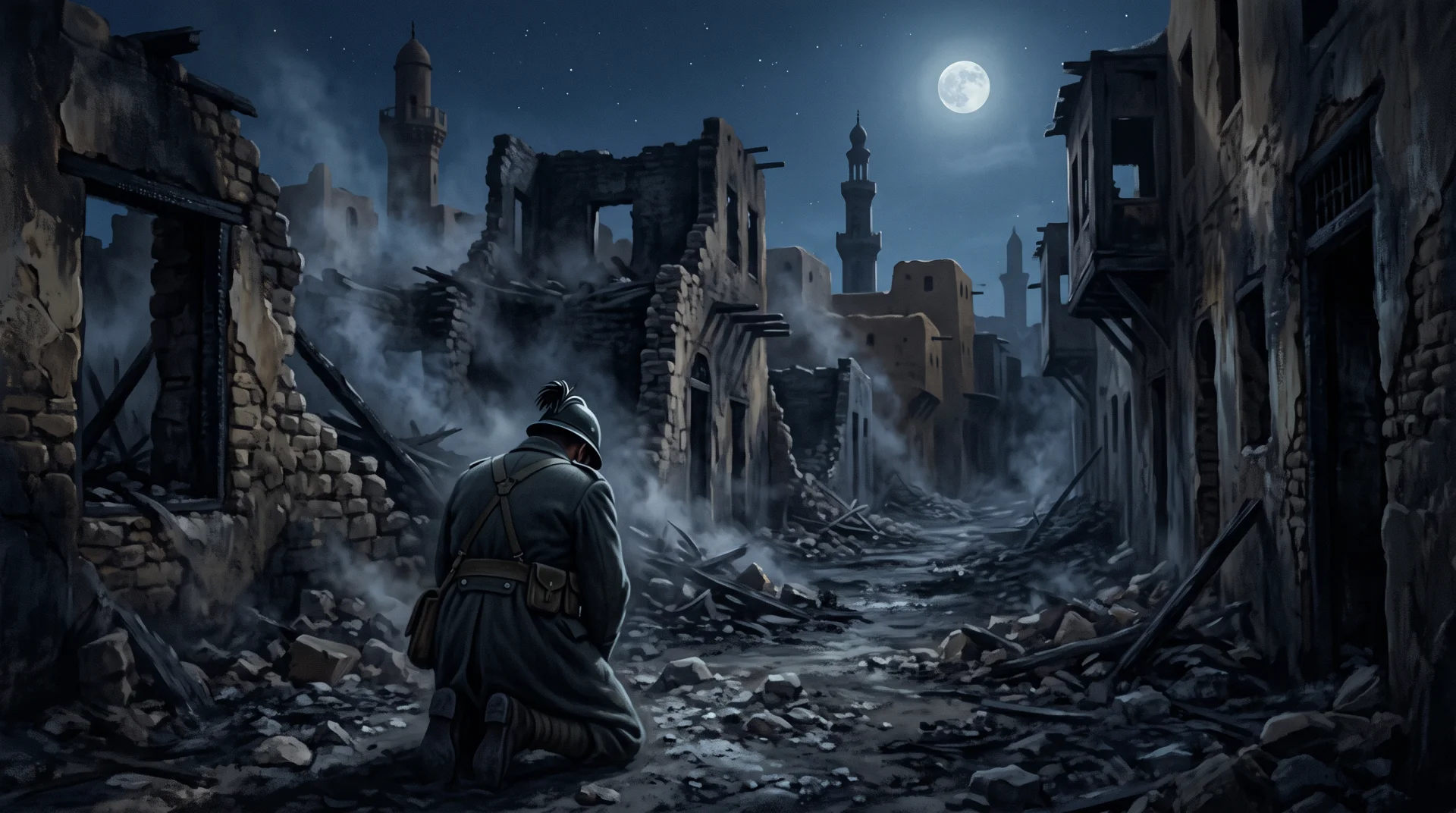
The author quotes the memoirs of an honourable Italian soldier. Soldiers burned a whole quarter near the Bank of Rome in Tripoli, and among the charred bodies he found an old Libyan still alive, reaching out for help. A Catholic monk from the military hospital promised to see to him and sent the soldier off to report.
Scene 5
The Old Man's Charred Body Haunts the Soldier's Conscience
Unable to sleep, the soldier returned at midnight and found the old man burned to death, his hand still raised. He wept, thought of shooting the monk and himself, then deserted to expose the army's crimes in the press. The author says he stops here to spare the reader more such horrors.

Scene 6
The Worshipper's Prayer Niche in the Desert
Meanwhile Omar al-Mukhtar moved with the fighters through Libya's scorching desert, laying ambushes for Italian soldiers and setting the Fascist camps ablaze. He divided his time between jihad and night prayer, completing the whole Quran once a week even on days of fighting, and sleeping two or three hours at most.
Scene 7
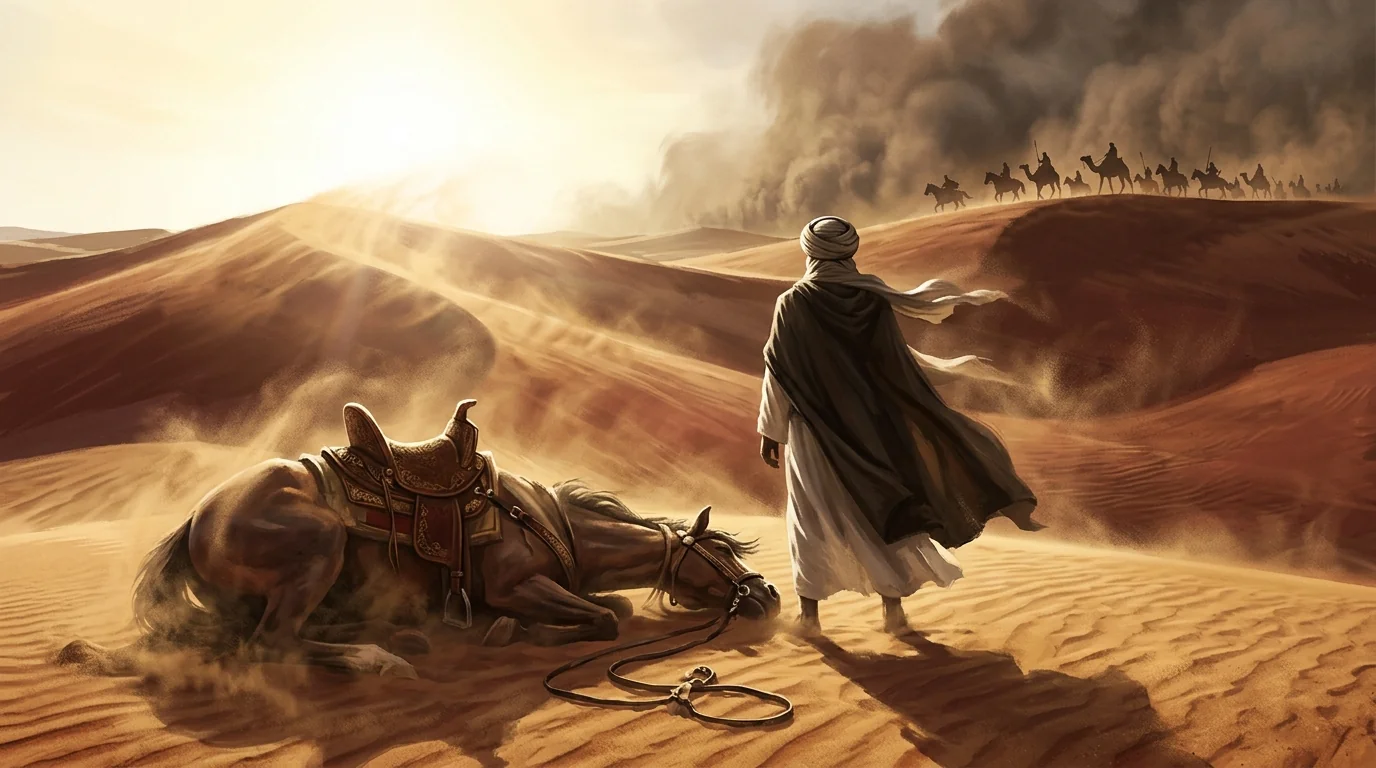
The Fallen Horse and the Ambush in the Sands
Then came the day an Italian ambush surprised him. His horse was hit and the old man fell, crawling across the burning sand until Italian mercenaries seized him. Graziani hurried to meet the feared Lion of the Desert, and the author hands over to Graziani's own account of the meeting in his book Cyrenaica Pacified.
Scene 8
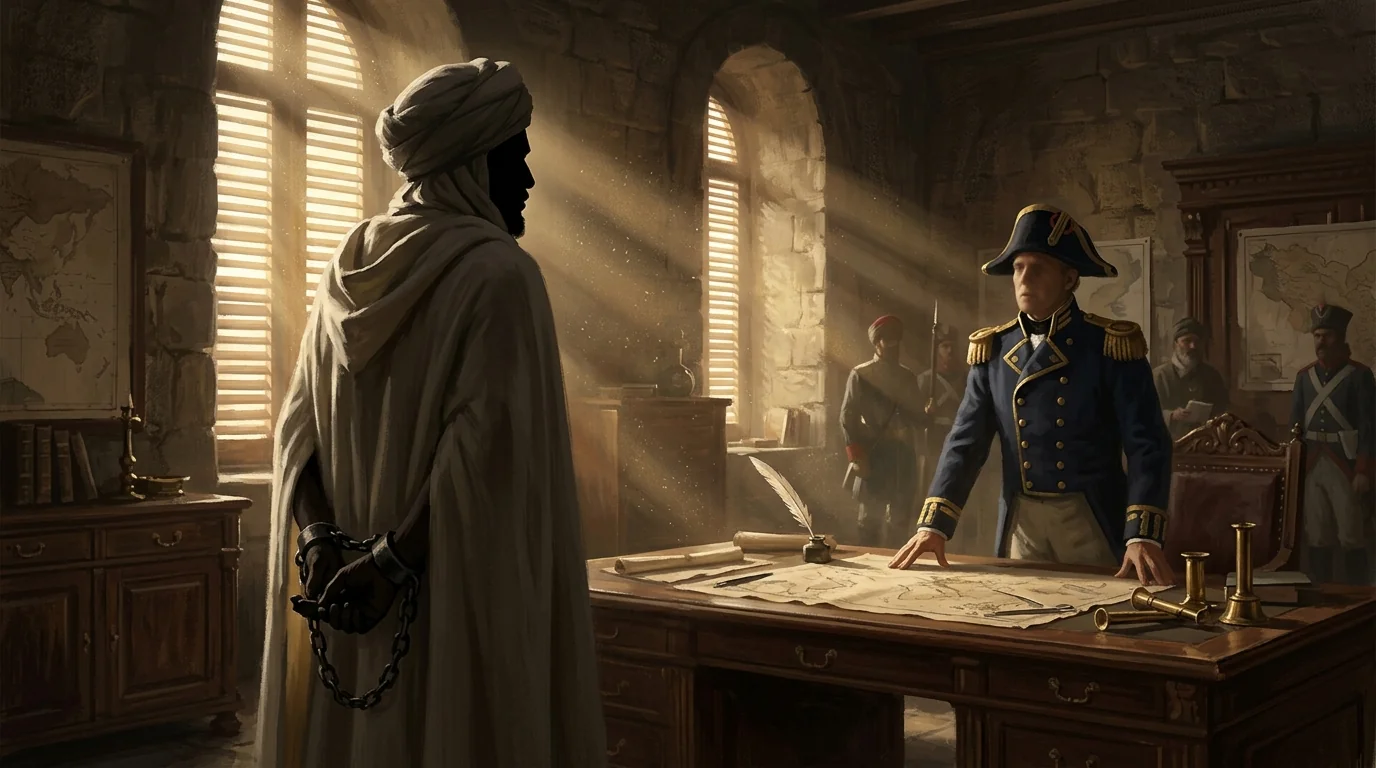
"We Never Surrender: We Win or We Die"
Graziani describes al-Mukhtar standing in chains with dignity, answering calmly that he fought for his religion and homeland and sought only to expel the usurpers. Asked how soon he could order the rebels to lay down arms, he replied, "We never surrender; we die or we win." Graziani admits his own lips trembled.
Scene 9
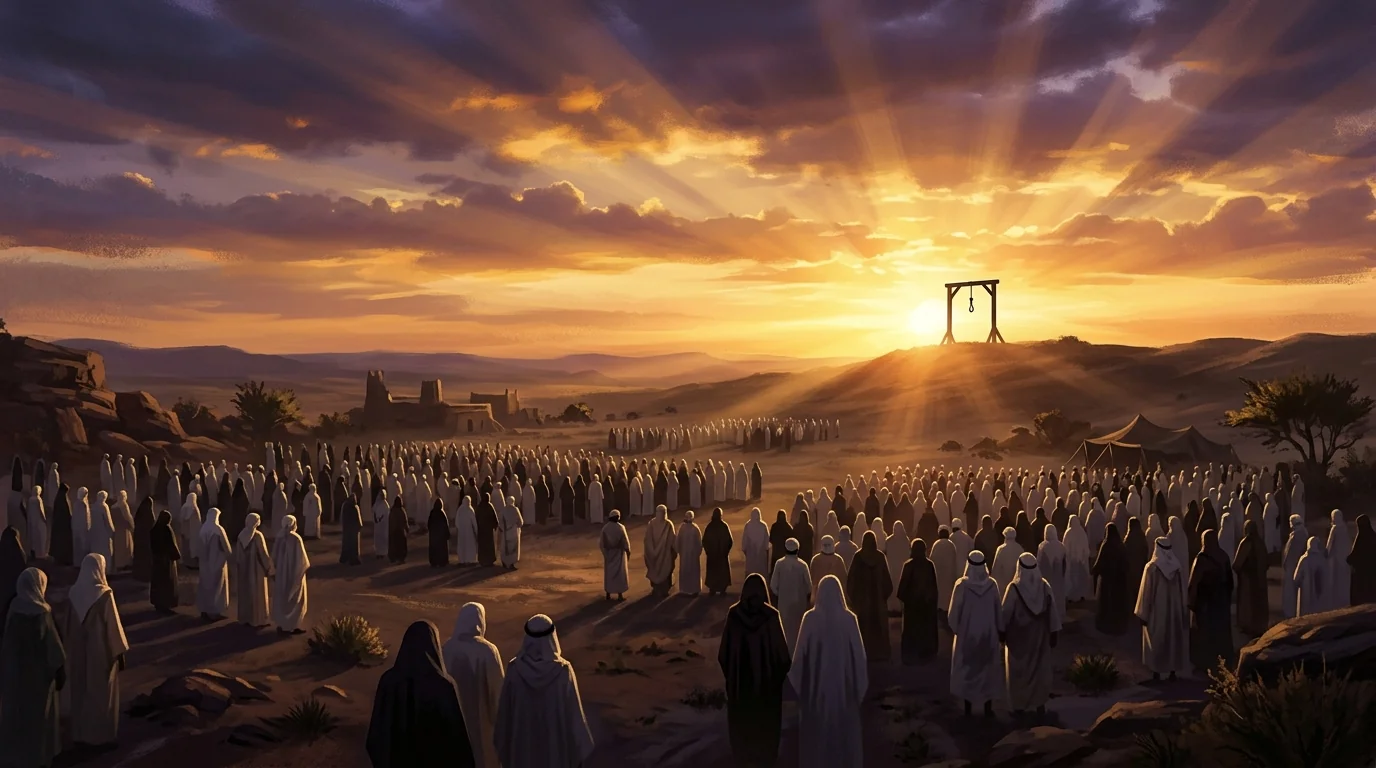
The Gallows of Immortality and the Dawn of al-Faruq
Al-Mukhtar was tried by a court that had already decided his execution, and in 1931, past seventy-five, he was hanged before his people, having planted the spirit of jihad in Libyan hearts. The author then reflects on the beloved name Omar and announces the next great figure: Omar ibn al-Khattab, al-Faruq.
These are English scene notes. The full chapter text, as the author wrote it, is in the app.