


Scene 1
The Hundredth Great One (?)
The chapter is titled The Hundredth Great One, with a question mark, and opens with the verse of Tarafa ibn al-Abd: when the people ask who is the young hero, I think I am the one meant, so I did not grow lazy or dull.
Scene 2
Who Is the Hundredth Great One?
The hundredth great one is the person this ummah has been waiting for for years, the one who will bring back the glory of Islam. The author says he may be a woman like Hajar, or a man like Abu Ubaydah ibn al-Jarrah; young like Talha or Muhammad al-Fatih, or older like Musa ibn Nusayr and Ibn Tashfin; a child like Ibn al-Awwam or the unknown boy of Yarmuk; white like Muawiyah and Harun, brown like Nur al-Din Zengi, fair like Tariq ibn Ziyad; Indian like Deedat, European like Anselm Turmeda, American like Malcolm X, Asian like Lapu-Lapu; of the Berbers or of the Arabs.
Scene 3
A King or a Poor Man
He may be a king like the Negus, a prince, a president like Abraham Lincoln, rich like Abd al-Rahman ibn Awf, or poor like Abu Hurayrah. A tender poet like Zuhayr ibn Abi Sulma, a giant horseman like Muhammad ibn Maslamah, a scholar, an inventor like Ibn Firnas, a sailor like Piri Reis, an adventurer like Ibn Fadlan, a rich merchant spending on Islam like Uthman. He may be Turkish like Qutuz, Persian like Salman, Kurdish like Salah al-Din; a late starter like Ibn Taymiyyah or Bukhari, a pair like the Barbarossa brothers, a trio, or a quartet like the four Abdullahs; in a time of glory like the Umayyads or a time of humiliation like the Taifa kings.
Scene 4
From Which Setting?
He may have grown up in a Bedouin setting like Ibn Abd al-Wahhab and Omar al-Mukhtar, or in the city like Abd al-Rahman al-Nasir; a media man like Ka'b ibn Zuhayr, a preacher like Abdullah ibn Yasin, a commander like Khalid ibn al-Walid or a brave soldier like Zayd ibn al-Khattab. He may be raised in an unbelieving setting like Zayd ibn Amr ibn Nufayl, or a righteous one like Ibn Abbas; a Christian into whose heart God casts Islam like Sughatir, the bishop of the Romans, a secular man like the French scientist Maurice Bucaille, or a Muslim who repents like the three who stayed behind.
Scene 5
Women, Fathers and Teachers
The great one may be a great woman who changed the course of history like the mother of Moses, with a righteous husband like Khadija or a husband who was a devil like the wife of Pharaoh, unmarried like Mary daughter of Imran; a sacrificing mother like Pharaoh's hairdresser, a brave girl like Fatima, a divine scholar like Aisha. Or a father who makes his son a conqueror as Sultan Murad II made al-Fatih, a teacher who shakes the earth with his voice like the eagle of Tunisia, Abd al-Aziz al-Thaalibi, the commander who saves Islam from the new Safavids like Selim I, or from the new Crusaders like Suleiman al-Qanuni.
Scene 6
From the Land of Heroes
He may come from the blessed Levant like Sulayman al-Halabi and Izz al-Din al-Qassam, be an Egyptian giant like al-Jirjawi, come from the land of heroes in Algeria like Ibn Badis and Emir Abd al-Qadir, from the Moroccan factory of men that produced al-Khattabi and al-Marini, from happy Yemen like al-Shawkani, or from the great sons of the Arabian Gulf who led the generation of the awakening. He may come from the womb of the new Ottoman state, or from nuclear Pakistan founded by Muhammad Ali Jinnah.
Scene 7
Like the Heroic Ansar
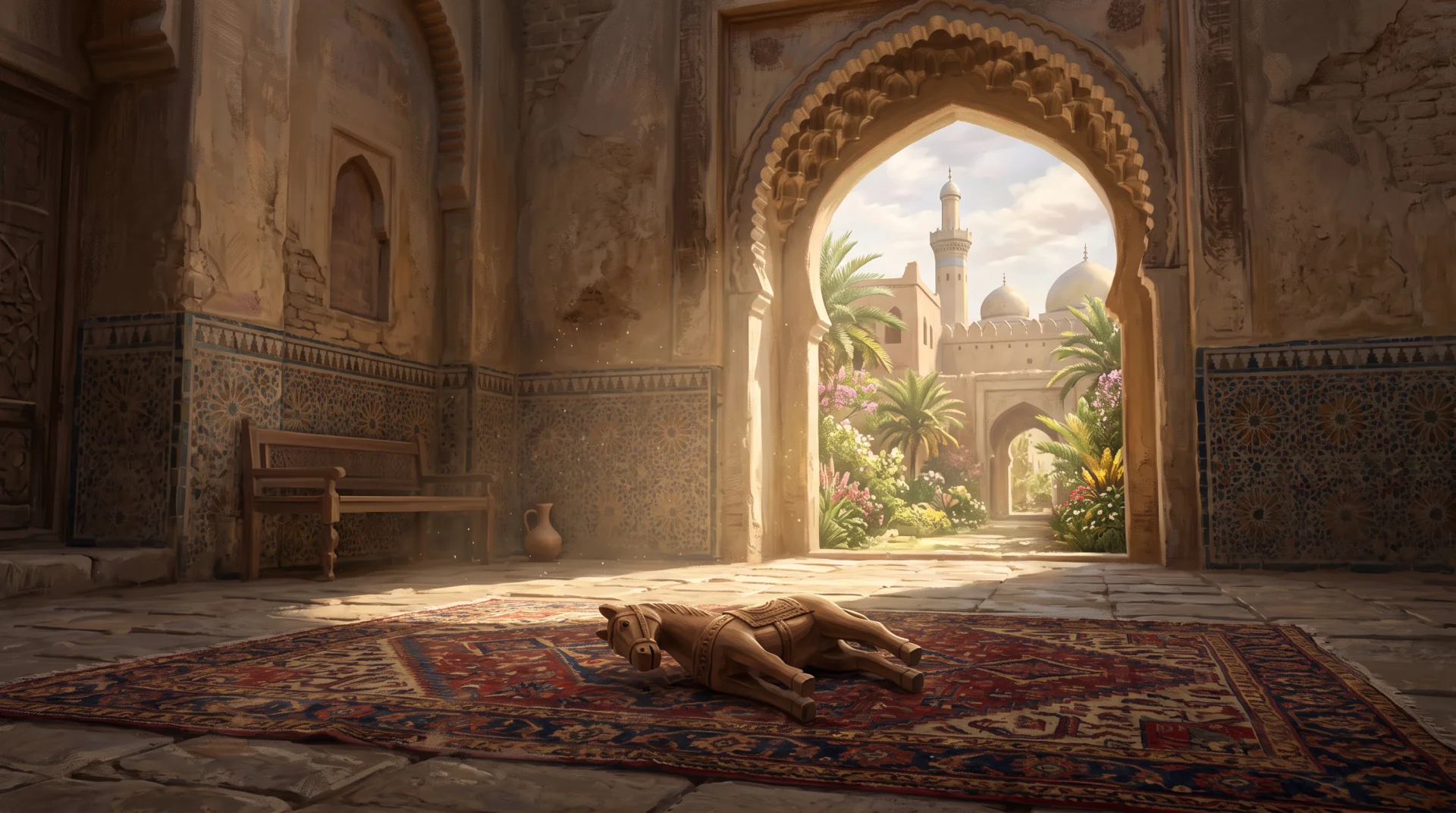
He may be the child playing with his doll in front of you, who will carry the banner carried by Caliph Abdul Hamid II to become the 103rd caliph of the Messenger of God. He may be a great leader who unites the ummah as al-Hasan ibn Ali did, or like his father Ali, who fought the takfiri Khawarij; a leader who destroys the greatest empires as Umar did, or a bold horseman who crushes the armies of injustice as Sa'd did. The awaited hero will certainly be like the heroic Ansar who supported Islam. The author then quotes two verses: if history knew Aws and Khazraj, then for God there are Aws and Khazraj to come, and the treasures of the unseen hide patient vanguards that come out despite the plots.
Scene 8
It May Be You
The awaited great one may be you, the author says, yes you. What prevents it? Or the child you bring sweets for, your son, your daughter, your wife, someone you know or someone you do not. Who he is does not matter; what matters is that each of us takes on his shoulders reviving the glory of this great ummah. And there is a truth he does not know whether the reader grasps: Islam will triumph through you or through someone else.
Scene 9
The Return of Islam Is a Matter of Time
God does not need you to give His religion victory; you are the one who needs Him in the simplest matters of your life. So take hold of yourself before time takes hold of you, and join the caravan of the great. The author says that from his reading of history the return of Islam is only a matter of time, and all the historical indicators drawn from the repeated lessons of history point beyond doubt that its return to the top of the civilizational pyramid will take no more than a few years, he means counted years and not decades.
Scene 10
Glad Tidings
The author says Muslims have in fact already entered the stage of rising for several years: the years of civilizational decline in the fourteenth Hijri century have passed, and Muslims are now, praise God, at the centre of world press attention. Whatever the image of Muslims in global media, positive or negative, you as a Muslim have become a hard number in the international equation: one of every four people on earth, your religion the fastest spreading in the world, especially in America and Europe, and your brothers returning day by day to the correct Islam far from innovation and takfir. If things continue for only a few years, he says, then be glad of good news.
These are English scene notes. The full chapter text, as the author wrote it, is in the app.