


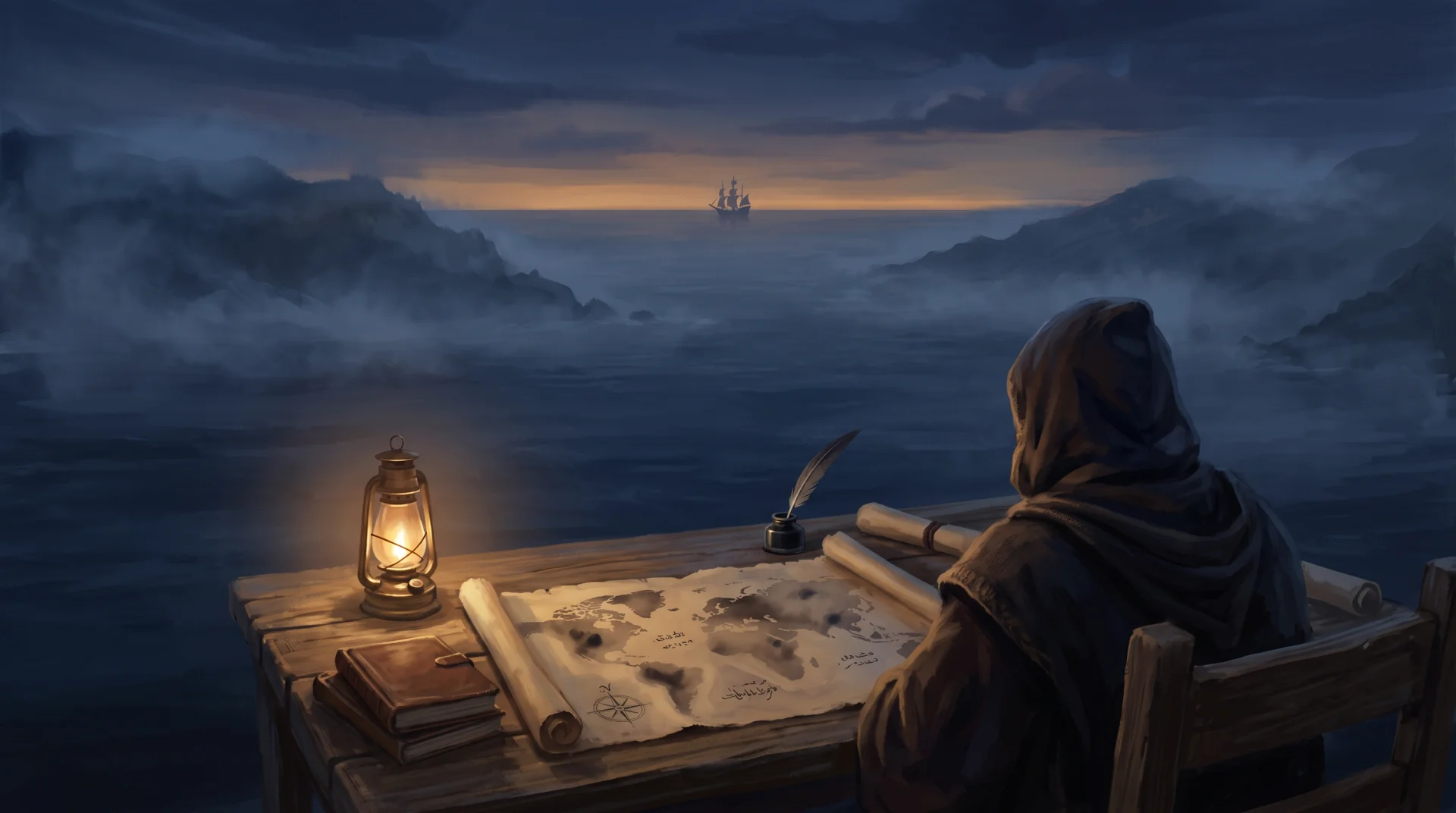
Scene 1
A Truth Buried Beyond the Sea of Darkness
The chapter "The Muslims Whom Muslims Do Not Know (the Red Indians!)" opens with Harvard professor Leon Vernel's statement, from "Africa and the Discovery of America", that Columbus was fully aware of the Islamic presence in America before his arrival. The author says he was stunned to learn that all America's inhabitants were Muslims. He first recounts the Western version: unknown continents until 1492, Columbus sailing for Ferdinand and Isabella, Amerigo Vespucci, and uncivilised cannibal "Red Indians", yet tens of millions of them were killed by white Europeans supposedly spreading civilisation.
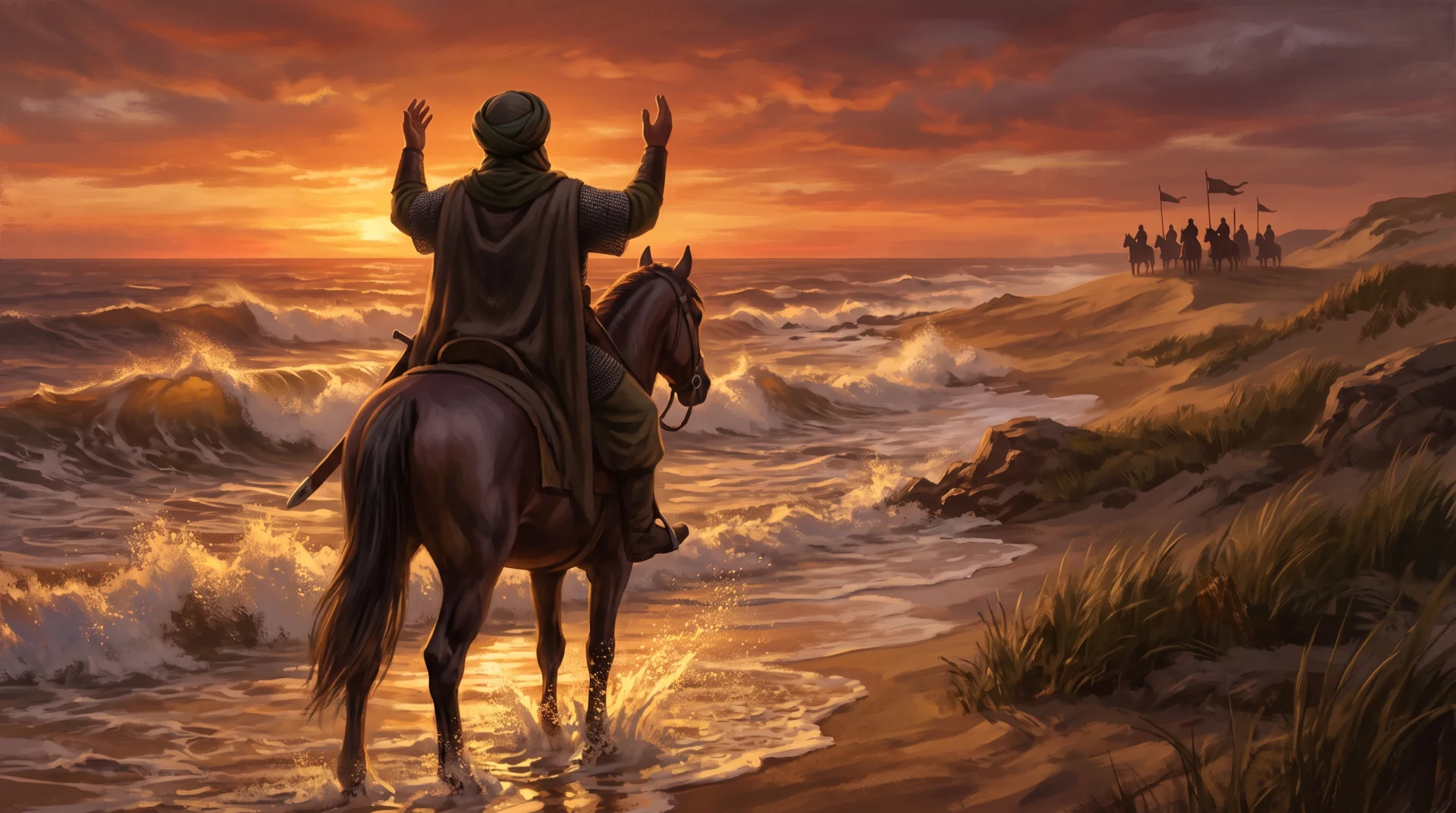
Scene 2
Uqba ibn Nafi on the Shore of the Atlantic
The author calls that account "mere nonsense" by which Europeans justified exterminating the Red Indian people. The secret kept for centuries in the archives of Spain and Portugal, he says, is that the Red Indians were Islamic peoples exterminated out of "a Crusader motive, hateful of Islam and Muslims". The story begins in 63 AH with the Umayyad horseman Uqba ibn Nafi weeping on the Atlantic's eastern shore: "O Allah, had I known there was land beyond this sea, I would have waded to it in Your cause to raise upon it the word: there is no god but Allah!"
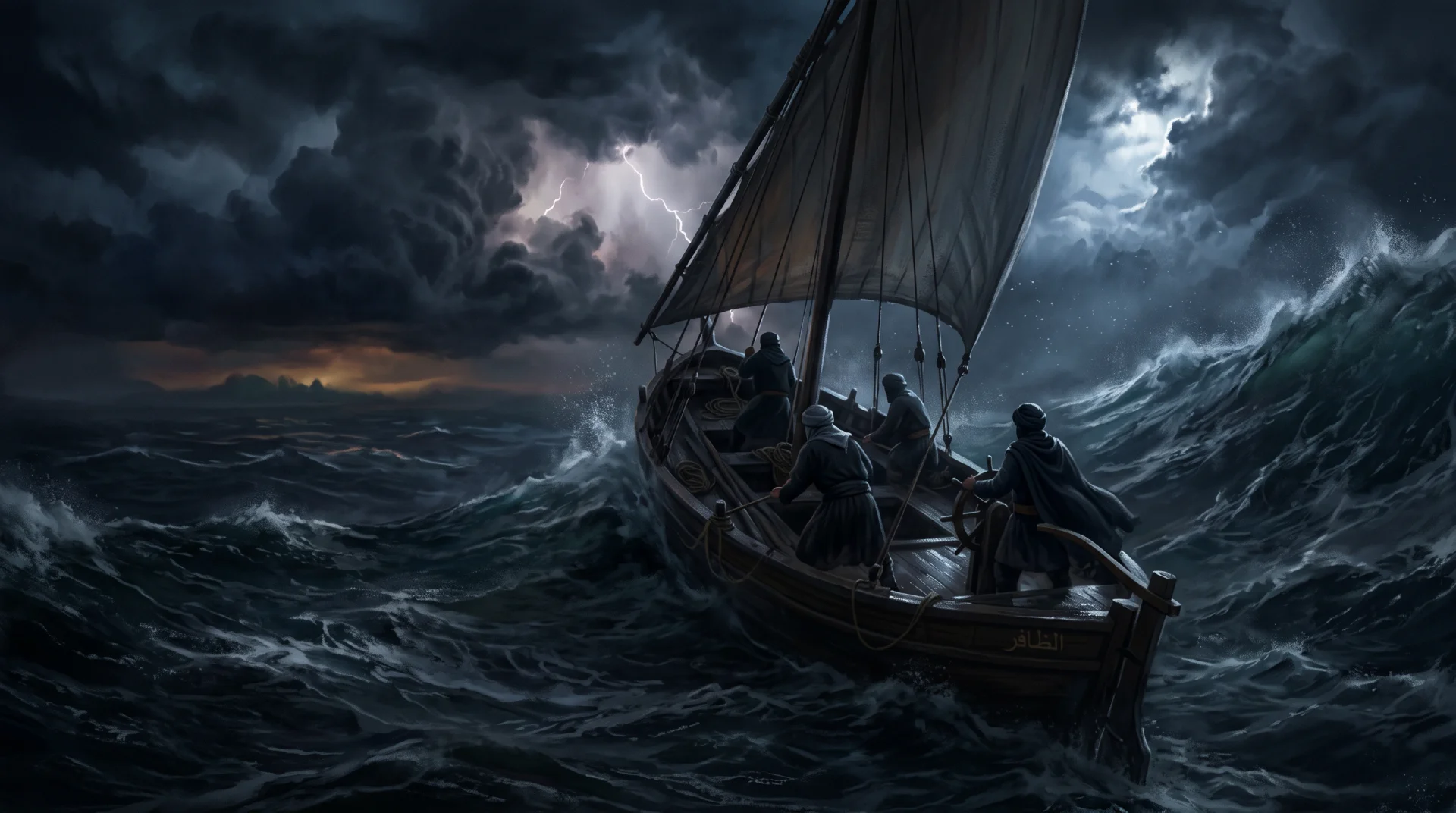
Scene 3
Cordoba's Adventurers Cross the Sea of Darkness
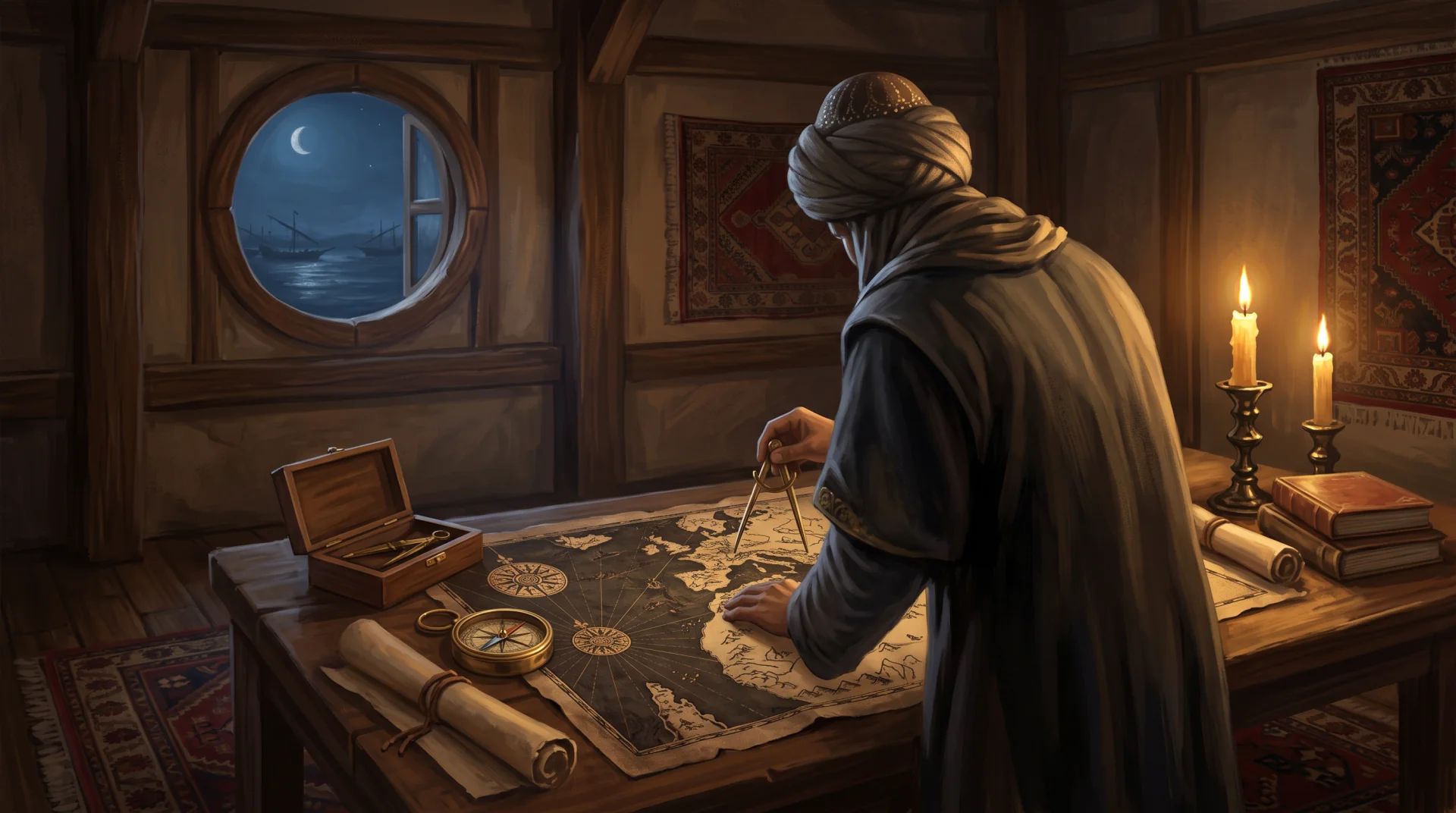
First century AH: Imam al-Sha'bi, in Abu Bakr al-Khallal's "al-Hathth ala al-Tijara", spoke of servants of Allah beyond Andalusia whose pebbles are pearls and rubies, mountains gold and silver. Fourth century AH: al-Mas'udi, in "Muruj al-Dhahab" written in 956 CE, and Abu Hamid al-Gharnati mention the Cordoban adventurer Khashkhash ibn Sa'id ibn al-Aswad crossing the Sea of Darkness and returning in 889 CE; al-Mas'udi's map shows an "unknown land". Fifth century AH: the Berber sheikh Yasin al-Jazuli, father of the Almoravids' founder, crossed to north of Brazil and spread Islam; cities there still bear the names Tlemcen, Marrakesh and Fez.
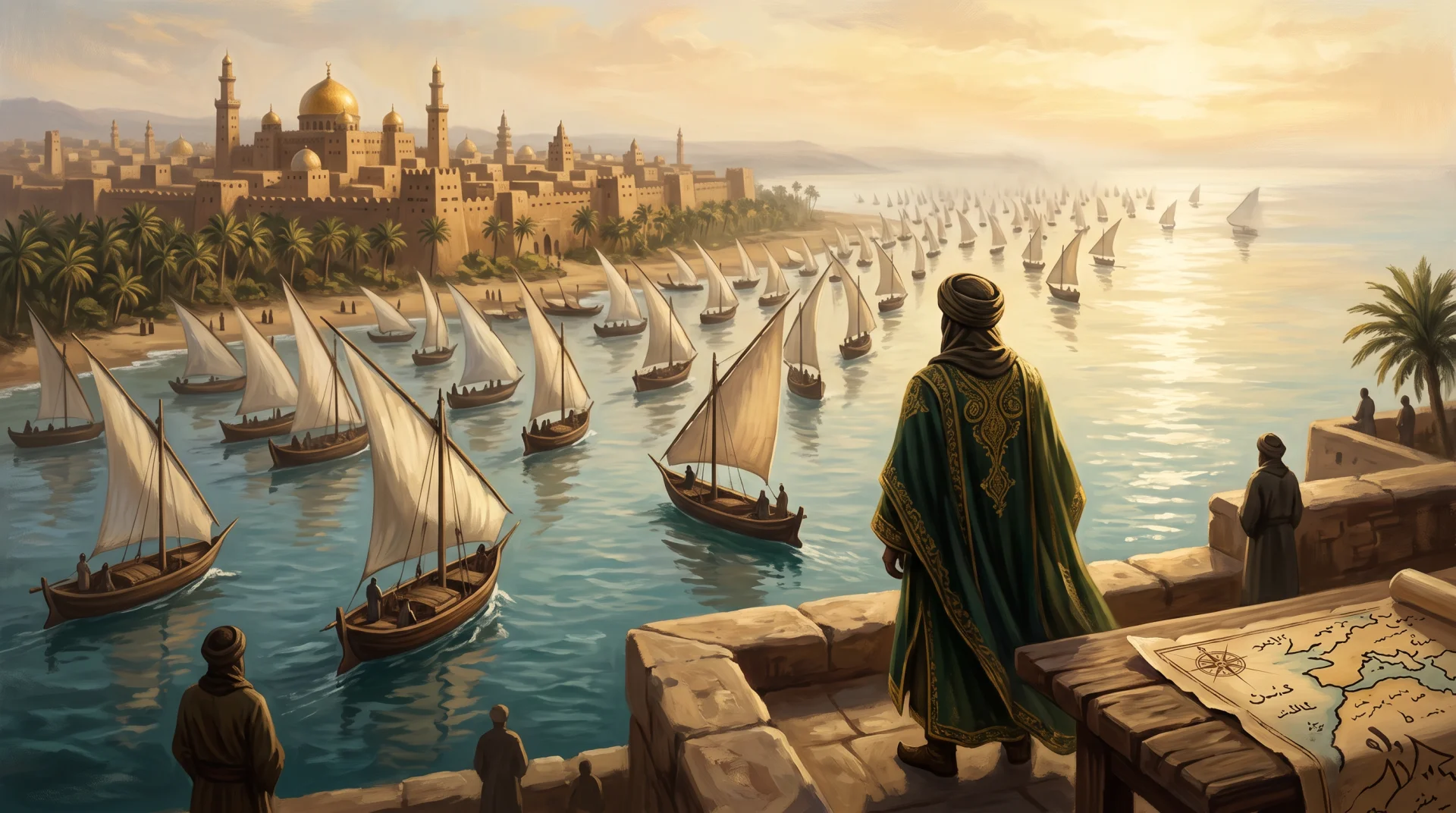
Scene 4
Lisbon, Mansa Musa and the Fleet of Mali
Sixth century AH: al-Sharif al-Idrisi (1099-1180 CE) relates in "al-Mamalik wa'l-Masalik" how young adventurers sailed from Muslim-held Lisbon across the Sea of Darkness and found people speaking Arabic: proof, the book says, of an earlier Islamic presence, apparently in the Caribbean islands, Cuba or Hispaniola. In 1327 CE Shihab al-Din al-Umari records that Mansa Musa of Mali, on hajj in 1327, said his predecessor built two hundred ships, crossed the Atlantic and never returned. Kufic Arabic and Mandinka inscriptions were found in Peru, Brazil and the southern United States, and some Indian tribes still write in Mandinka letters.
Scene 5
The Piri Reis Map Reveals the Secret
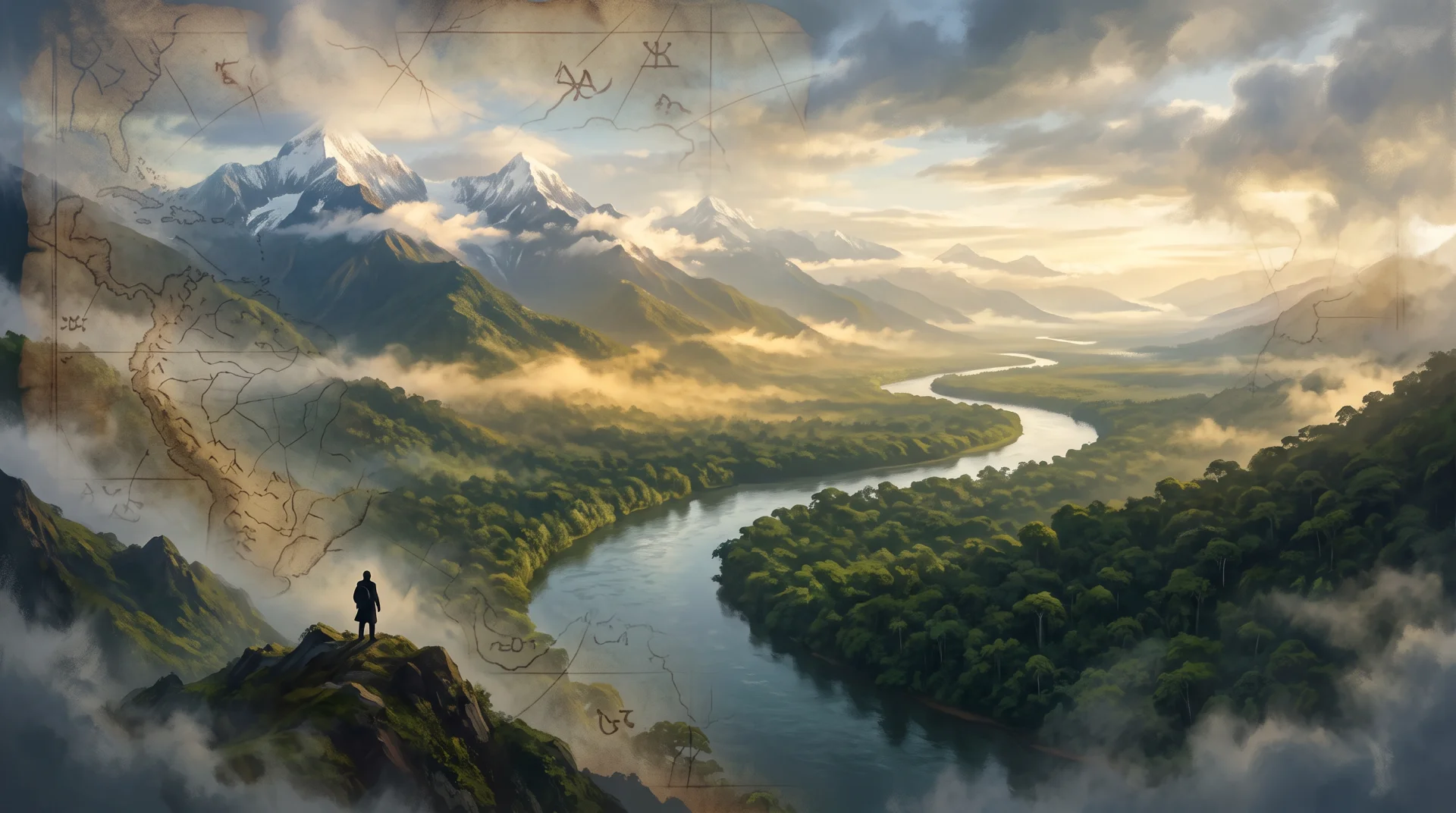
1493: Columbus writes in his memoirs that the Red Indians wear cotton dress like that of the Muslim women of Granada, and that he found a mosque in Cuba; the first truce document between him and the Red Indians bears an Arabic signature by an Indian named Muhammad. 1564: a European map of Florida shows cities named Marrakesh, Majorca and Cadiz. 1929: the Turks discovered Piri Reis's Atlantic map, drawn in 919 AH, about 1510-1515 CE, detailing American coasts and rivers Europeans discovered only in 1540-1560, based on some ninety maps of his and earlier Andalusian and Moroccan sailors.
Scene 6
The Andes and the Amazon on the Maps
The map shows in detail the Andes, the mountains of Chile, which Europeans reached only in 1527, rivers in Colombia and the Amazon with its mouth. 1920: Harvard professor Leon Vernel wrote "Africa and the Discovery of America", saying Columbus was fully aware of the Islamic presence, and that Muslim Mandinka spread through central and north America, intermarrying with the "Iroquois" and "Algonquin" tribes, and reached Canada. 1960: the French writer Jim Covin, in "Les Berberes d'Amerique", mentions a Muslim Berber tribe called "Almami", meaning "the imam", mostly in Honduras before Columbus.
Scene 7
Inscriptions and Peoples on the Shores of the Caribbean
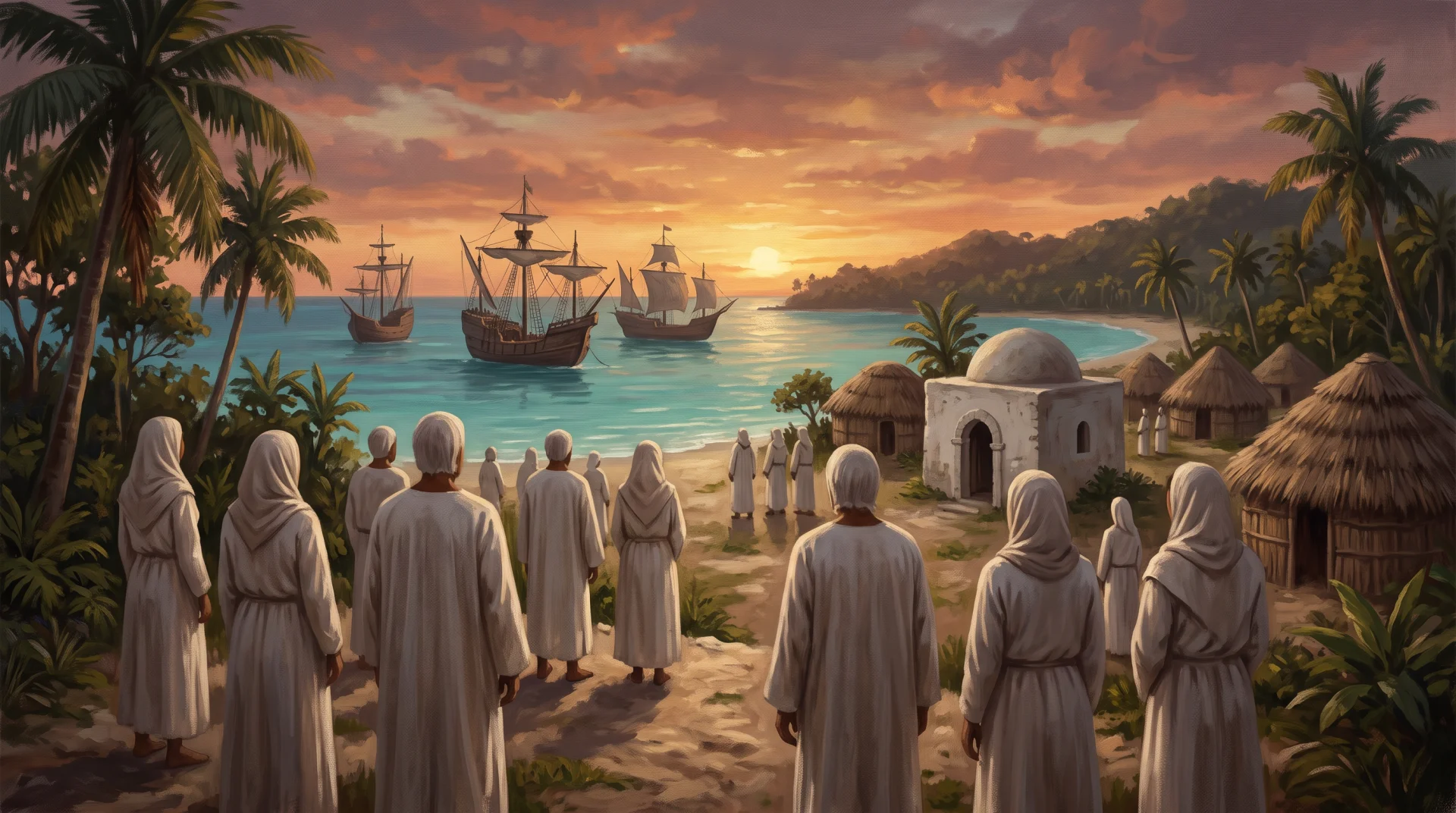
1978: Manuel Irosco Ibera's "Historia Antigua de la Conquista de Mexico" says Central America and Brazil were colonies of black peoples from Africa. 1775: the monk Francisco Garces found a black tribe mixed with Red Indians in New Mexico, and statues; since there are no blacks in America, the book says, they were doubtless African Muslims who went to spread Islam. 1946: "Mieramos" wrote in Belize's Daily Clarion that when Columbus discovered the West Indies in 1493 he found the "Caribs", white, coarse-haired farmers and fishermen, a peaceful monotheist people whose religion was Islam and language Arabic.
Scene 8
A Duchess's Documents and Stones Bearing Arabic Inscriptions
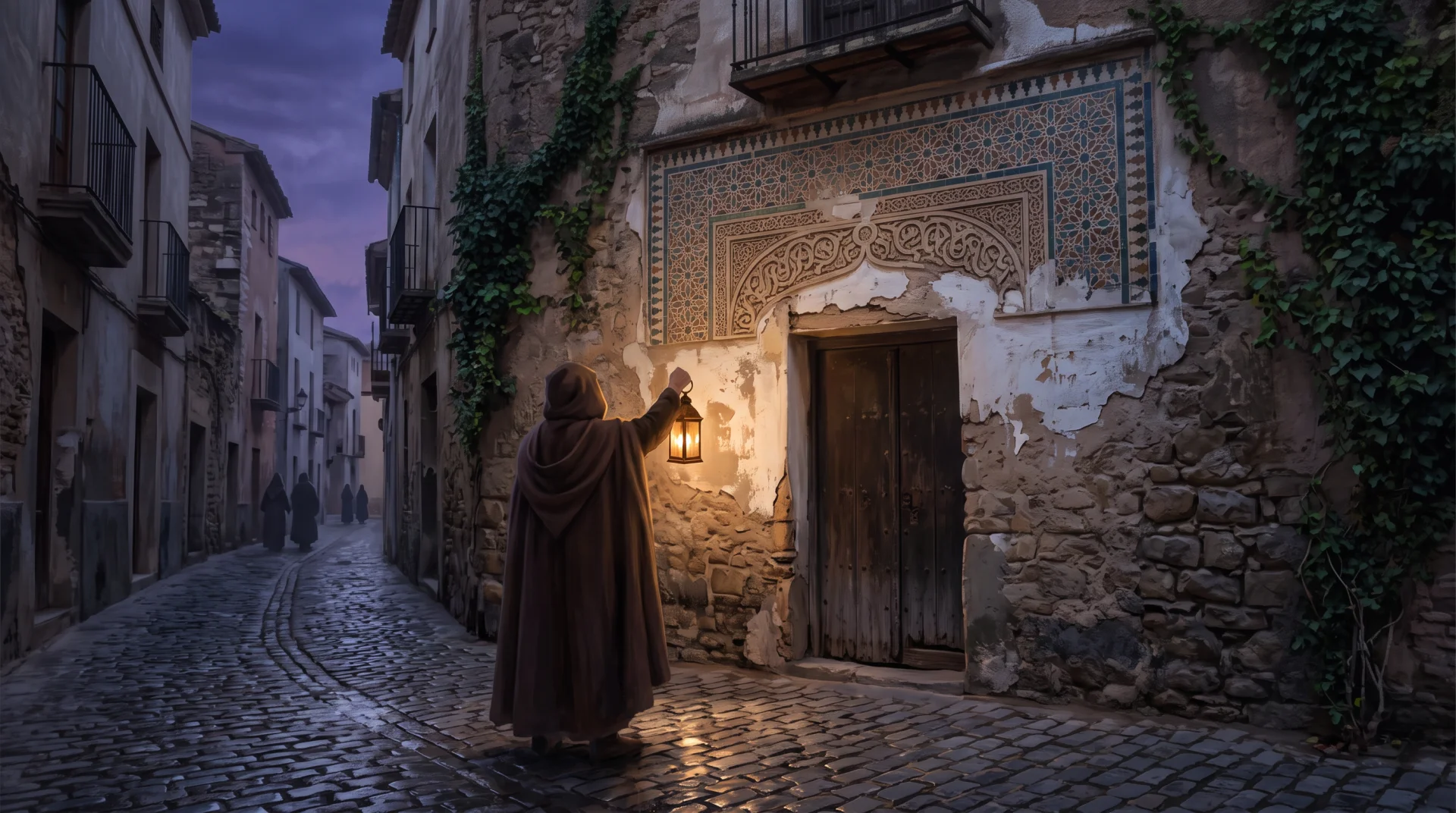
2000: Luisa Isabel Alvarez de Toledo, Duchess of Medina Sidonia, discovered while restoring her palace in Sanlucar de Barrameda Arabic documents from the Andalusian era fully describing America and its Muslims before Columbus, hidden by her ancestors; fearing the Spaniards would burn them, she put them in a book, "Africa versus America", before dying in 2008. Arabic writing was found carved in American caves; in San Juan, Puerto Rico, stones and a mosaic doorway read "There is no victor but Allah"; and church ceilings in Bahia and Salvador bear Quranic verses. Were these churches originally mosques of the Red Indians?
Scene 9
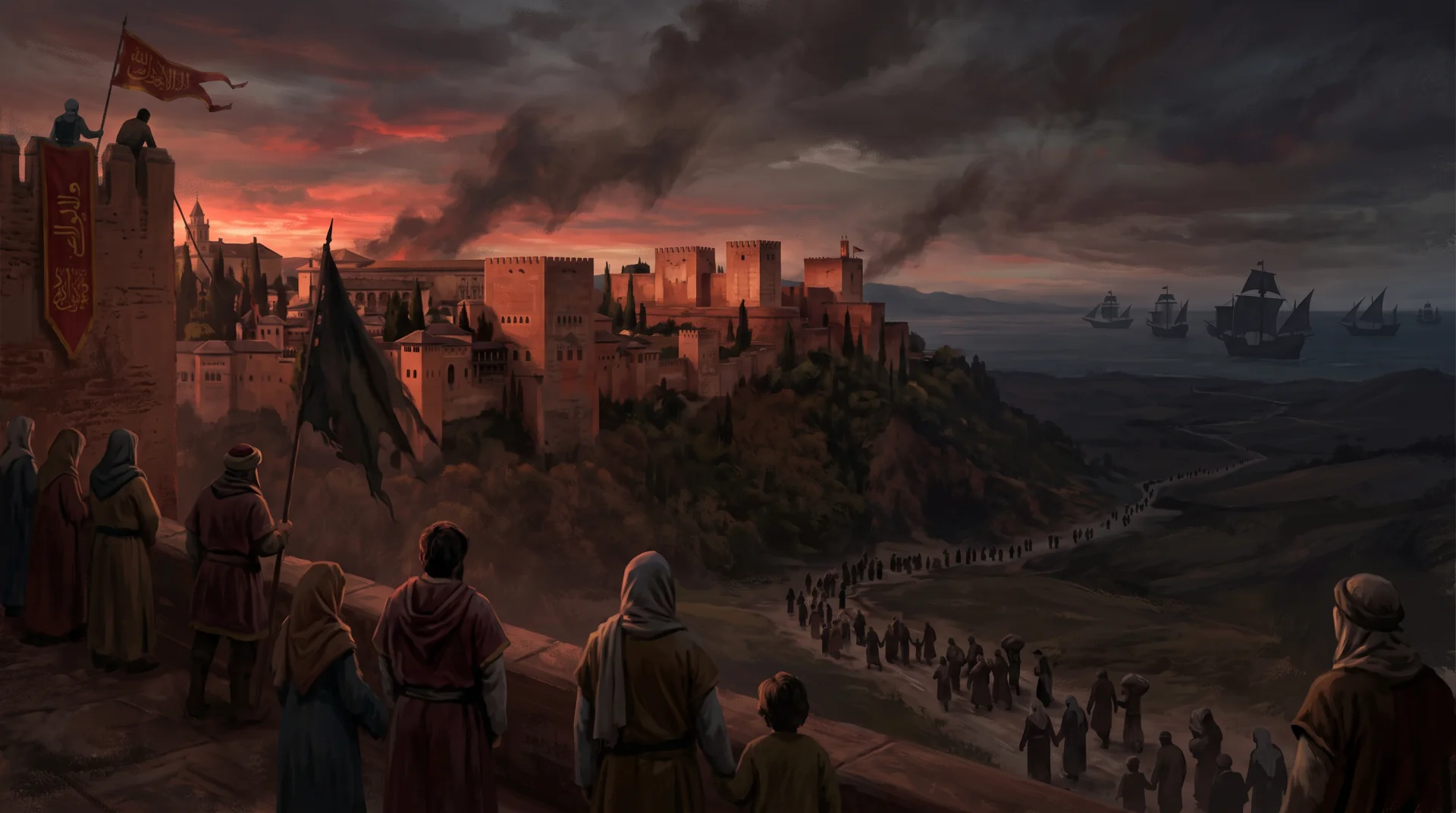
The Invaders' Ships and the Twilight of Granada
Of 100 million Red Indians, mostly or all Muslims, the book says, there remain figures the author "dedicates to every filthy one" who says Islam spread by the sword: 200 thousand in Brazil, 150 thousand in the United States, ten million in Peru; they should now be a billion Muslims. "Those lowlifes exterminated them to crush Islam." In 1492 "the two Crusaders" Ferdinand II and Isabella I took Granada; "this filthy woman Isabella", who boasted she had bathed only on the day of her birth in 1451 and her wedding night in 1461, wanted to crush America's Muslims too.
Scene 10
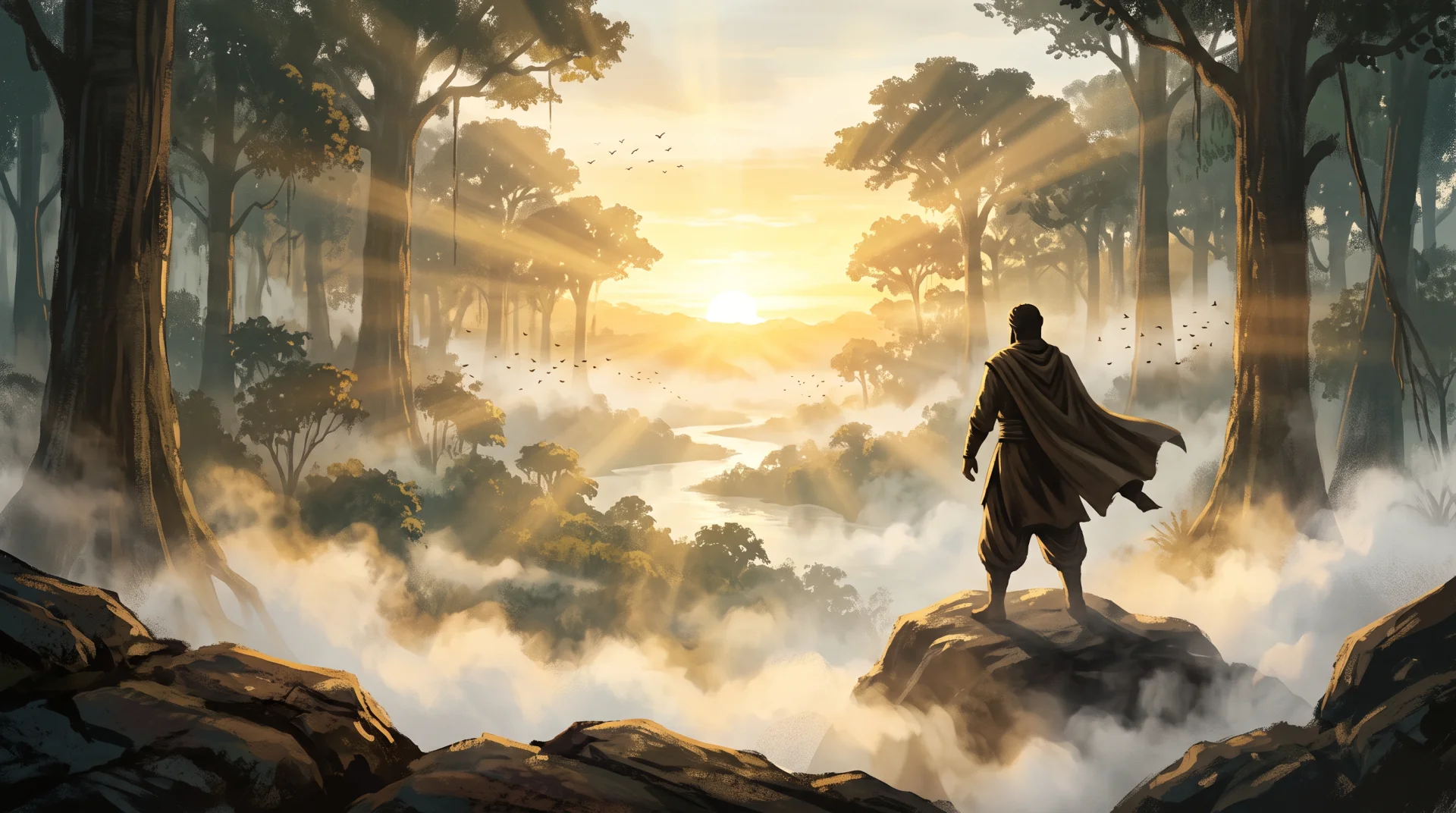
A Giant Rises from the Jungles of the Amazon
Officially: demand that "the ruining states" (especially Spain and Portugal) open their secret archives on the fate of "our brothers the Red Indians" and compensate the survivors. Popularly: whoever can translate this, into Spanish especially, should spread it; if South America's remaining Red Indians knew their ancestors' Islamic history they would embrace Islam in droves. But the Crusaders forgot we are a nation that never dies: after more than a century and a half of killing, torture and forced Christianisation, a great Islamic giant rose from the Amazon jungles against "those Crusader killers" to found the Islamic State of Brazil.
These are English scene notes. The full chapter text, as the author wrote it, is in the app.